

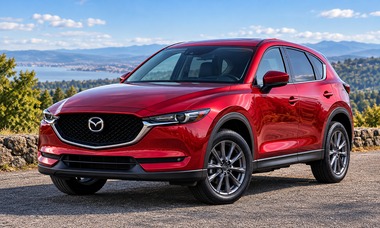
Is the Mazda CX-5 reliable? What are the best model years to buy, which years deserve extra caution, and how many miles can a CX-5 last?
The Mazda CX-5 is one of the more appealing used compact SUVs. It combines a comfortable, upscale interior with enjoyable handling, good fuel economy and generally strong reliability. Unlike some competitors, it also uses a conventional six-speed automatic transmission rather than a continuously variable transmission (CVT).
However, not every CX-5 has the same reliability history. Certain models have experienced cylinder-head problems, some early turbocharged engines developed coolant leaks, and particular 2021 turbo models have been affected by excessive oil consumption.
This guide covers the 2013–2025 U.S.-market Mazda CX-5, including its two generations, naturally aspirated and turbocharged engines, front-wheel drive (FWD) and all-wheel drive (AWD), and the most important issues to check before buying.
In This Guide
- What are the best Mazda CX-5 model years to buy?
- Which CX-5 years should you avoid or inspect more carefully?
- How many miles can a Mazda CX-5 last?
- Common problems on first- and second-generation models
- 2.0L, 2.5L and 2.5L turbo engine reliability
- Cracked cylinder heads, coolant leaks and oil consumption
- Automatic transmission and AWD reliability
- Maintenance costs and used-car inspection advice
Or, Looking For "New"?
If you're also considering a new CX-5, you may want to come back to this and take a look at a handy technique that locates the dealer in your area most ready to make price concessions.
Mazda CX-5 Reliability Overview
The Mazda CX-5 has a generally good reliability record and is one of the compact SUVs I'd readily consider as a used purchase. Its naturally aspirated Skyactiv-G four-cylinder engines and conventional six-speed automatic transmission provide a relatively straightforward mechanical combination.
The 2013–2016 first generation is particularly attractive to buyers who want a simpler vehicle. The early 2.0-liter engine is economical but modest in performance, while the 2.5-liter introduced for 2014 provides better acceleration without adding a turbocharger. These engines have established a solid durability record when properly maintained.
The 2017–2025 second generation is quieter, more refined and more upscale. Its basic mechanical design remains sound, although several important changes affect reliability. Cylinder deactivation was introduced on certain naturally aspirated 2.5-liter engines for 2018, while an optional turbocharged 2.5-liter engine arrived for 2019.
Some cylinder-deactivation engines have developed cylinder-head cracks that can cause external oil leaks. Certain 2019–2020 turbo engines have experienced cylinder-head coolant leaks, and some 2021 turbo models have had excessive oil consumption associated with valve stem seals.
These are legitimate inspection concerns, but they don't mean most CX-5s will develop serious engine problems. Many have accumulated substantial mileage without major repairs.
What do we mean by "common problems"? The issues discussed in this guide are recognized or frequently reported concerns that used CX-5 buyers should know about. They don't necessarily affect most vehicles, and not every issue applies to every model year or engine. Our goal is to help you recognize potential trouble spots and choose a well-maintained example with confidence.
Bottom Line: The CX-5 is a strong used-SUV choice. For buyers prioritizing long-term reliability, I'd concentrate on a well-maintained 2016–2017 or 2022–2025 naturally aspirated 2.5-liter model, while recognizing that many other years can also be excellent purchases.
Mazda CX-5 Reliability at a Glance
| Model Years | Reliability Outlook |
|---|---|
| 2013 | First-year model with an economical 2.0L engine; inspect for age-related wear and early-production issues. |
| 2014–2015 | Generally durable engines and conventional transmissions; good older choices when maintained. |
| 2016 | Mature first-generation design; attractive mechanically, although individual recalls and condition require attention. |
| 2017 | First year of the second generation, retaining a relatively straightforward naturally aspirated 2.5L powertrain. |
| 2018 | Cylinder deactivation introduced on the 2.5L; inspect carefully for oil leaks and engine-related service history. |
| 2019–2020 | Good overall vehicles, but inspect cylinder-deactivation engines and check turbo models for coolant leaks. |
| 2021 | More refined model; certain turbo engines have valve stem seal oil-consumption concerns. |
| 2022–2023 | Among the most appealing modern CX-5 years, with mature production and generally favorable reliability. |
| 2024–2025 | Newer, well-developed second-generation models; verify engine configuration, maintenance and recalls. |
How Many Miles Can a Mazda CX-5 Last?
A well-maintained Mazda CX-5 can realistically last 180,000–220,000 miles, with some examples reaching 250,000 miles or more.
The naturally aspirated Skyactiv-G engines are generally durable, and Mazda's conventional six-speed automatic transmission has a favorable long-term reputation compared with some more complicated alternatives.
However, engine configuration, maintenance history and driving conditions matter. A neglected CX-5 can develop expensive problems well before 150,000 miles, while a carefully maintained example may remain dependable far beyond that.
- 100,000 miles: Not unusually high for a properly maintained CX-5. Check maintenance history, leaks and suspension condition.
- 150,000 miles: A realistic milestone for a healthy engine and transmission, although wear-related repairs become more likely.
- 200,000 miles: Achievable, particularly with a well-maintained naturally aspirated engine.
- 250,000+ miles: Possible, but substantial maintenance and occasional major repairs may be necessary.
Bottom Line: The CX-5 has good long-term mileage potential. Its strongest advantage is a relatively durable engine-and-transmission combination, particularly in naturally aspirated models without the more complicated features found on certain later engines.
What Are the Best Mazda CX-5 Model Years to Buy?
The best used CX-5 years offer a combination of proven engine reliability, reasonable age, manageable maintenance costs and fewer known major mechanical concerns.
2022–2025 Mazda CX-5: Best Modern Choices
For buyers seeking a newer CX-5, I'd start with the 2022–2025 models, particularly those equipped with the naturally aspirated 2.5-liter engine.
These vehicles benefit from years of second-generation development and offer excellent interiors, modern safety equipment and enjoyable driving dynamics.
The naturally aspirated engine is generally the simpler long-term choice. The turbocharged version offers noticeably stronger acceleration, but its added components and higher potential repair costs make maintenance history especially important.
The 2022 refresh also brought updated styling and standard AWD in the U.S. market.
2016 Mazda CX-5: A Good Older Used Choice
The 2016 CX-5 represents the mature end of first-generation production. It offers the established 2.5-liter engine, a conventional automatic transmission and relatively modest mechanical complexity.
Its age means suspension wear, electrical accessories, brakes, rust and previous maintenance now deserve close attention. Check the VIN for outstanding recalls, too.
For buyers who don't need the latest technology, a well-maintained 2016 can still be an appealing used SUV.
2017 Mazda CX-5: A Strong Balance of Simplicity and Refinement
The redesigned 2017 CX-5 brought a quieter cabin, improved ride quality and a more upscale interior while retaining the naturally aspirated 2.5-liter engine.
It predates the introduction of cylinder deactivation on later U.S. models, making it an interesting choice for buyers who want the second-generation design with a simpler engine configuration.
Although it was the first year of a redesign, the basic engine and automatic transmission were already well established.
What Mazda CX-5 Model Years Should You Avoid or Inspect More Carefully?
There are no CX-5 years I'd automatically reject, but several deserve additional attention because of known engine concerns or their age.
| Model Years | What to Check |
|---|---|
| 2013 | First-year production issues, suspension wear, accessories and overall vehicle age. |
| 2016 | Individual recall history, older-vehicle wear and any evidence of engine or cooling-system neglect. |
| 2018–2021 non-turbo | Potential cylinder-head oil leaks on engines equipped with cylinder deactivation; confirm engine configuration and inspect carefully. |
| 2019–2020 turbo | Possible cylinder-head coolant leaks; verify Mazda CSP11 eligibility and repair history. |
| 2021 turbo | Potential excessive oil consumption from valve stem seals; check Mazda SSPD5 eligibility and repair records. |
Buyer Tip: A documented repair performed with updated Mazda parts can make an otherwise concerning vehicle worth considering. Don't assume that every engine from an affected model year has the problem.
Pricing
Knowing which CX-5 model years to concentrate on is step 1. Step 2 is knowing how to actually get an excellent used CX-5 price.
Also, getting a strong trade-in allowance usually has the biggest impact on your final price. See KBB versus Edmunds Appraisals - Which Is Better to learn about getting accurate and fair trade-in values before negotiating with a dealer.
Mazda CX-5 Reliability by Generation
2013–2016: First-Generation Mazda CX-5
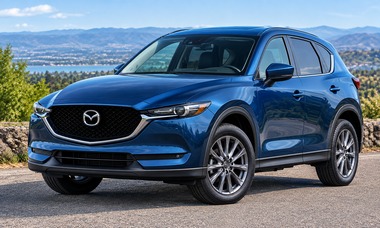
The first-generation Mazda CX-5 introduced Mazda's Skyactiv approach to efficient engines, lightweight construction and responsive handling.
The original 2013 model used a 2.0-liter naturally aspirated four-cylinder engine. It provides good fuel economy but modest acceleration, especially with passengers or cargo.
For 2014, Mazda introduced a stronger 2.5-liter naturally aspirated four-cylinder on higher trims, making the CX-5 more enjoyable to drive without requiring turbocharging.
Both engines are generally durable when properly maintained. Mazda offered manual transmissions on a limited number of early front-wheel-drive models, while most CX-5s use the company's conventional six-speed automatic.
Common Problems on 2013–2016 Mazda CX-5s
- Suspension wear: Struts, bushings and stabilizer links may produce clunks or looseness as mileage increases.
- Brake wear: Check for uneven pad wear, sticking calipers and corroded brake hardware.
- Oil leaks: Inspect the timing cover, valve-cover area and engine seals on older examples.
- Electrical accessories: Test door locks, windows, infotainment and other equipment.
- Air-conditioning performance: Check that the system cools consistently.
- Wheel bearings: Listen for humming or growling that changes with road speed.
- Rust and corrosion: Inspect the underbody, suspension mounting points and brake lines on vehicles from northern climates.
- Recall-related concerns: Check the VIN for outstanding campaigns rather than assuming an older vehicle has already received all applicable repairs.
Buyer Tip: I'd generally favor the 2.5-liter engine for its stronger performance. The 2.0-liter can still be an economical choice for buyers who don't mind slower acceleration.
Bottom Line: First-generation CX-5s offer good mechanical simplicity and can be dependable inexpensive transportation. At their current age, overall condition matters more than minor model-year differences.
2017–2021: Early Second-Generation Mazda CX-5
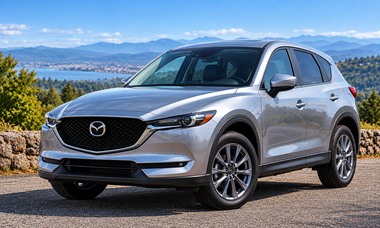
The redesigned 2017 CX-5 introduced a more refined interior, improved sound insulation and updated styling while retaining the familiar naturally aspirated 2.5-liter engine and six-speed automatic transmission.
For 2018, Mazda added cylinder deactivation to certain 2.5-liter engines. This system shuts down two cylinders during light-load driving to improve fuel economy.
Although the system can improve efficiency, some equipped engines have developed cylinder-head cracks that cause external oil leaks. Buyers should check for oil around the cylinder head and exhaust side of the engine.
The optional 2.5-liter Skyactiv-G turbocharged four-cylinder arrived for 2019, delivering substantially stronger acceleration. It also introduced different potential problems, particularly coolant leaks on certain 2019–2020 vehicles.
A limited-production 2.2-liter Skyactiv-D turbo-diesel was also offered in the U.S. for the 2019 model year. Because of its rarity, diesel-specific emissions equipment and maintenance requirements, I'd recommend a specialist inspection before purchasing one.
Common Problems on 2017–2021 Mazda CX-5s
- Cylinder-head oil leaks: Some naturally aspirated 2.5-liter engines with cylinder deactivation can develop cracks that cause external oil leakage.
- Turbo cylinder-head coolant leaks: Certain 2019–2020 turbo models may lose coolant through cracks near the exhaust-manifold area.
- 2021 turbo oil consumption: Some vehicles have valve stem seal problems that allow excessive oil consumption between changes.
- Hydraulic lifter ticking: Certain engines can develop tapping noises associated with hydraulic lash adjusters.
- Timing-cover oil seepage: Check for oil accumulation around the front engine cover.
- Infotainment problems: Screen freezing, restarting, touchscreen malfunction and connectivity issues have been reported.
- Brake and suspension wear: Inspect for sticking calipers, clunks and uneven tire wear.
- Power accessories: Check the liftgate, mirrors, locks, cameras and other electronic equipment.
Buyer Tip: The 2017 naturally aspirated model is especially interesting because it combines the newer body with a relatively simple engine. On 2018–2021 models, confirm the exact engine configuration and inspect for the problems associated with it.
Bottom Line: These CX-5s remain attractive used SUVs, but certain engine combinations require more careful inspection than the basic reliability reputation might suggest.
2022–2025: Later Second-Generation Mazda CX-5
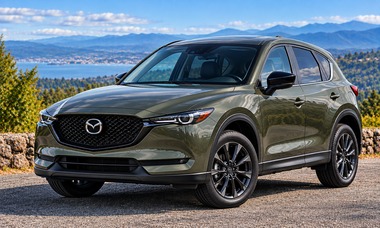
The 2022 CX-5 received updated styling and chassis refinements, while AWD became standard in the U.S. market.
These later models benefit from mature second-generation production and retain Mazda's conventional six-speed automatic transmission.
The naturally aspirated 2.5-liter engine is my preferred choice for buyers seeking the best balance of reliability, fuel economy and manageable repair complexity.
The turbocharged 2.5-liter offers considerably more performance and can also be a good choice, particularly with documented maintenance. However, turbocharging adds heat and mechanical complexity, making regular oil changes and cooling-system care especially important.
Common Problems on 2022–2025 Mazda CX-5s
- Oil seepage: Inspect the timing cover and engine seals, particularly on vehicles with a history of oil leakage.
- Engine-related concerns: Check service history and investigate abnormal noises or unexplained fluid loss rather than assuming newer production eliminates every earlier issue.
- Infotainment and connectivity glitches: Test smartphone integration, cameras, controls and software functions.
- Brake wear: Check for uneven pad wear, vibration and sticking calipers.
- AWD maintenance: Inspect the rear differential, driveline components and tire matching.
- Battery and electronic warnings: Check battery condition and investigate persistent dashboard messages.
Buyer Tip: For maximum mechanical simplicity, I'd choose a naturally aspirated 2.5-liter model. A turbocharged CX-5 is worth considering if stronger acceleration matters, but its service history should be especially convincing.
Bottom Line: The 2022–2025 CX-5 represents one of the strongest combinations of refinement, performance and established reliability in this model's history.
Which Mazda CX-5 Engine Is Most Reliable?
The naturally aspirated 2.5-liter Skyactiv-G four-cylinder is my overall choice for proven reliability, performance and reasonable mechanical simplicity.
| Engine | Reliability Assessment |
|---|---|
| 2.0L naturally aspirated four-cylinder | Generally durable and economical, but modest in acceleration. |
| 2.5L naturally aspirated four-cylinder without cylinder deactivation | Excellent combination of proven durability and straightforward design. |
| 2.5L naturally aspirated with cylinder deactivation | Generally good, but certain engines have cylinder-head oil-leak concerns. |
| 2.5L turbocharged four-cylinder | Strong performance, but greater complexity; verify coolant-leak and oil-consumption history on affected years. |
| 2.2L turbo-diesel | Rare U.S. option with specialized maintenance and emissions-system considerations. |
The naturally aspirated 2.5-liter offers ample power for everyday driving and avoids the turbocharger, additional plumbing and higher operating temperatures of the turbo engine.
However, engine configuration matters. A 2017 2.5-liter and a later cylinder-deactivation-equipped 2.5-liter don't necessarily have identical mechanical features or inspection concerns.
What Causes Mazda CX-5 Cylinder Head Problems?
One of the most important distinctions in CX-5 reliability is that naturally aspirated and turbocharged engines have experienced different cylinder-head concerns.
Cracked Cylinder Heads on Certain Non-Turbo 2.5L Engines
Some naturally aspirated 2.5-liter engines equipped with cylinder deactivation have developed cracks in the cylinder head, potentially allowing engine oil to leak externally.
The problem has been associated particularly with certain 2018–2021 vehicles, although inspection should be based on the exact engine configuration and service history rather than model year alone.
Possible warning signs include oil around the exhaust side of the engine, a burning-oil smell, visible seepage or a low oil level.
This is different from ordinary minor oil seepage at a gasket or timing cover. A cracked cylinder head can require a major repair.
Buyer Tip: Have a mechanic inspect the cylinder-head area carefully. Ask whether any previous cylinder-head repairs were performed and whether updated replacement parts were used.
2019–2020 Mazda CX-5 Turbo Coolant Leaks
Certain 2019–2020 CX-5s with the 2.5-liter turbocharged engine can develop cracks around the cylinder head near the exhaust manifold, causing coolant leakage.
Symptoms may include falling coolant levels, a coolant smell, visible leakage or overheating if the problem progresses.
Mazda established Customer Service Program CSP11, extending coverage for the specified cylinder-head coolant leak to 10 years or 120,000 miles on eligible vehicles, whichever occurs first.
Eligibility depends on the individual vehicle and the program's terms. This is a warranty extension for a specific condition, not a blanket replacement of every affected-year engine.
Buyer Tip: Before purchasing a 2019–2020 turbo CX-5, have a Mazda dealer check CSP11 eligibility and previous repair history using the VIN.
2021 Mazda CX-5 Turbo Oil Consumption
Certain 2021 CX-5 models equipped with the 2.5-liter turbocharged engine have experienced excessive oil consumption related to valve stem seals.
Owners may notice a low-engine-oil warning before the next scheduled oil change or find that the engine requires oil to be added between services.
Mazda established Special Service Program SSPD5 following a class-action settlement. Eligible vehicles received extended coverage associated with the valve stem seal issue, subject to the program's terms and VIN eligibility.
Ask whether the vehicle has experienced low-oil warnings, whether valve stem seals have been replaced, and whether Mazda has completed any applicable program work.
Bottom Line: These engine concerns are important, but they apply to particular configurations and production groups. They shouldn't be interpreted as evidence that most CX-5 engines fail.
How Reliable Is the Mazda CX-5 Automatic Transmission?
The Mazda CX-5 uses a conventional six-speed Skyactiv-Drive automatic transmission on most U.S. models rather than a CVT.
This transmission has a generally favorable durability record and is one of the reasons the CX-5 appeals to buyers seeking a relatively conventional powertrain.
Some owners have reported hesitation, harsh shifting, shuddering or unusual engagement behavior, but widespread transmission failure has not defined the CX-5's reliability history in the way it has for certain competing models.
On a used vehicle, check for smooth shifting during light and firm acceleration, proper engagement into Drive and Reverse, and abnormal vibration.
Transmission-fluid condition and service history also matter. Follow Mazda's recommendations for the exact model year and operating conditions rather than assuming every transmission needs the same maintenance schedule.
Buyer Tip: A CX-5 with smooth shifts and documented maintenance is generally a reassuring choice, but persistent shuddering or delayed engagement deserves professional diagnosis before purchase.
Mazda CX-5 FWD vs. AWD Reliability
Both front-wheel-drive and all-wheel-drive CX-5s can provide dependable service.
FWD models are mechanically simpler because they eliminate the rear driveline components required by AWD. That can mean fewer potential long-term repair items.
AWD is useful in snow, rain and slippery conditions, but buyers should inspect the rear differential, driveline seals, bearings and tire condition.
Closely matched tires are particularly important on AWD vehicles because substantial differences in tire circumference can place additional stress on drivetrain components.
For 2022 and later U.S. CX-5s, AWD became standard, so drivetrain choice is primarily a consideration when shopping earlier model years.
Bottom Line: FWD is the simpler choice when available, but a properly maintained AWD CX-5 can also be a reliable long-term vehicle.
Mazda CX-5 Maintenance and Repair Costs
Routine Mazda CX-5 maintenance is generally reasonable for a compact SUV. Naturally aspirated models tend to offer the most straightforward ownership experience, while turbocharged engines and AWD systems add potential repair complexity.
| Repair or Service | Estimated Cost |
|---|---|
| Oil and filter change | $65–$120+ |
| Spark plugs | $200–$450+ |
| Brake service, per axle | $350–$750+ |
| Battery replacement | $200–$400+ |
| Wheel bearing/hub | $350–$700+ |
| Alternator | $550–$1,000+ |
| Struts or shocks | $650–$1,400+ |
| Water pump or cooling-system repair | $450–$1,100+ |
| Air-conditioning repair | $300–$1,500+ |
| Major cylinder-head repair | $3,000–$6,000+ depending on engine and damage |
| Automatic transmission replacement | $4,000–$7,000+ |
These are broad planning estimates, not repair quotes. Actual costs vary by location, labor rates, model year, parts and the exact repair required. Warranty extensions or other manufacturer coverage may reduce eligible repair costs.
The CX-5's advantage is that many examples require little beyond routine maintenance and ordinary wear-item replacement. However, a major engine repair can still be expensive enough to influence the value of an older vehicle.
Speaking of possible unexpected costs, before agreeing to a dealer's numbers, see which dealer fees are legitimate, which can be negotiated, and which can be avoided.
What to Check Before Buying a Used Mazda CX-5
In addition to the normal used-car inspection items, pay particular attention to these potential CX-5-specific trouble spots.
- Engine oil and coolant: Check for leaks, low fluid levels and evidence of overheating, particularly on engines with known cylinder-head concerns.
- Engine configuration: Determine whether the vehicle has the naturally aspirated 2.5L, cylinder deactivation, turbocharging or the rare diesel engine.
- Turbo repair history: On eligible 2019–2020 turbo models, verify CSP11 coverage and any completed cylinder-head work.
- Oil-consumption history: On 2021 turbo models, check for low-oil warnings and SSPD5 eligibility.
- Transmission operation: Test for smooth shifting, proper engagement and abnormal shuddering.
- Electronics and AWD: Check infotainment, cameras, accessories, rear driveline condition and matched tires.
Always check the VIN for outstanding recalls through NHTSA's Recall Lookup, and have an independent mechanic perform a pre-purchase inspection.
Mazda CX-5 Alternatives to Consider
If you're considering a used CX-5, several competing compact SUVs are worth comparing. Each offers a different combination of reliability, comfort, space and driving character.
Honda CR-V: The CR-V generally offers more passenger and cargo space and has a strong long-term reliability reputation. The CX-5 is usually more enjoyable to drive and feels more upscale inside. See our Honda CR-V Reliability Guide.
Toyota RAV4: The RAV4 is known for durability, strong resale value and practical everyday transportation. Used prices may be higher than those of comparable CX-5s. See our Toyota RAV4 Reliability Guide.
Subaru Forester: The Forester offers excellent visibility, practical interior space and standard AWD on most U.S. models. Its CVT and engine history deserve model-year-specific research. See our Subaru Forester Reliability Guide.
Nissan Rogue: The Rogue offers a comfortable ride, good fuel economy and often attractive used prices. However, its CVT and newer VC-Turbo engine history deserve careful attention. See our Nissan Rogue Reliability Guide.
More On Mazda Model Reliability: If you may be looking at other Mazda models, visit our Mazda Reliability Guide to compare reliability, common problems, and the best years to buy across Mazda's most popular cars and SUVs.
Final Verdict: Is a Used Mazda CX-5 a Good Car to Buy?
Yes. The Mazda CX-5 is one of the better used compact SUVs to consider, particularly for buyers who value driving enjoyment, a comfortable interior and a generally durable conventional engine-and-transmission combination.
For an older, less expensive CX-5, I'd investigate the 2016–2017 models first. For a newer vehicle, the 2022–2025 naturally aspirated 2.5-liter models offer an especially appealing balance of refinement and established reliability.
The 2018–2021 years can also be good purchases, but buyers should pay closer attention to cylinder-head concerns on certain naturally aspirated engines and coolant-leak or oil-consumption history on specific turbo models. Documented repairs and manufacturer coverage can make a meaningful difference.
My recommendation: Favor a well-maintained CX-5 with a clean inspection and complete service records over one chosen solely because of its model year or low mileage. The CX-5's strong overall reliability makes it a vehicle I'd confidently put on a used-SUV shopping list, provided the individual example checks out.
Also, it's good to always know the value of your trade-in while you're evaluating your next possible purchase. Here's a good source for a quick and accurate appraisal: free trade-in appraisal.