

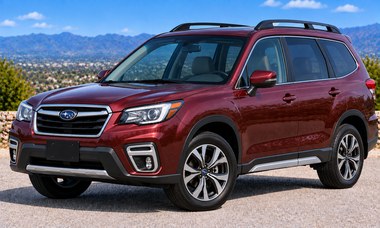
The Subaru Forester can be a very durable compact SUV, but reliability varies considerably by generation, engine and transmission. Well-maintained Foresters frequently reach high mileage, while neglected examples can become expensive because of head-gasket problems, oil consumption, cooling-system issues or CVT repairs.
The Forester is also unusual among compact SUVs because nearly every U.S. model combines a horizontally opposed boxer engine with standard all-wheel drive. That combination gives the Forester excellent traction and a low center of gravity, but it also creates maintenance and repair considerations that differ from competitors such as the Toyota RAV4, Honda CR-V and Hyundai Tucson.
This guide covers U.S.-market Subaru Foresters from 1998 through 2024, including the naturally aspirated and turbocharged engines, traditional automatic transmissions, manual transmissions and later continuously variable transmissions (CVTs).
In This Guide You'll Learn
- Which Subaru Forester years are generally the most reliable
- Which Forester years deserve extra caution
- How many miles a Subaru Forester can realistically last
- Which Forester engines are the better long-term choices
- Which years are most associated with head-gasket problems
- Which Foresters have a history of excessive oil consumption
- How Subaru Forester CVTs hold up at higher mileage
- What to look for before buying a high-mileage Forester
Or, Looking For "New"?
If you're also considering a new Forester, you may want to come back to this and take a look at a handy technique that locates the dealer in your area most ready to make price concessions.
Subaru Forester Reliability Overview
Overall, the Forester has a good but generation-dependent reliability record. Its reputation for longevity is deserved in many cases, and 150,000-mile Foresters are common enough that mileage alone should not scare away a used buyer. Reaching 200,000 miles is realistic when the vehicle has been properly maintained.
The problems change significantly by generation. Earlier Foresters are best known for head-gasket leakage, along with timing-belt and cooling-system maintenance. Later FB-series engines largely changed that equation but introduced a different concern: excessive oil consumption on some early examples.
Transmission history also changed. Early Foresters used conventional automatics or manuals, while the CVT became the dominant transmission beginning with the 2014 redesign. CVTs are not automatically unreliable, but their condition matters greatly because replacement can be expensive.
The Forester's standard AWD system adds useful capability but also means tire condition matters more than on many two-wheel-drive crossovers. Four closely matched tires are important because substantial differences in tire circumference can place unnecessary stress on the AWD drivetrain.
Subaru Forester Reliability at a Glance
| Category | Assessment |
|---|---|
| Overall Reliability | Good, but strongly dependent on generation and maintenance |
| Better Used Years | 2006-2008, 2010-2013 with proper maintenance, 2016-2018, 2020-2024 |
| Years Requiring Extra Caution | 1998-2005 for head-gasket/age concerns; 2011-2014 for oil consumption; early CVT models require careful inspection |
| Best Reliability Strategy | Naturally aspirated engine with excellent maintenance history |
| Major Older-Model Concern | Head-gasket leakage and overheating |
| Major Later-Model Concerns | Oil consumption on certain FB25 engines and CVT condition |
| Expected Lifespan | About 200,000 miles; well-maintained examples can reach 250,000+ miles |
How Many Miles Can a Subaru Forester Last?
A well-maintained Subaru Forester can realistically last around 200,000 miles, and good examples can reach 250,000 miles or more. The key is whether the engine, cooling system, transmission and AWD system have been maintained properly throughout the vehicle's life.
At 100,000 miles, a healthy Forester can still have a great deal of useful life remaining. This is not unusually high mileage for the model. On older Foresters, however, this is where documentation of timing-belt service, cooling-system work and head-gasket condition becomes increasingly important.
At 150,000 miles, condition matters far more than the odometer alone. A well-maintained Forester with documented service can still be a reasonable purchase, while a neglected vehicle may be approaching expensive engine, suspension or transmission work.
At 200,000 miles, the vehicle has demonstrated substantial durability. Buying one can still make sense at the right price, but oil consumption, coolant loss, wheel bearings, suspension wear, CV joints and transmission condition deserve careful attention.
A Forester with 250,000 miles or more is certainly possible, particularly when it has received frequent oil changes and any developing cooling-system or oil-consumption problems were addressed before they caused secondary damage. At that mileage, however, the individual vehicle's history matters much more than Subaru's overall reputation.
One of the biggest mistakes when shopping for an older Forester is assuming that Subaru's reputation for longevity makes maintenance history unimportant. The opposite is true: a carefully maintained 160,000-mile Forester can be a considerably safer purchase than an 85,000-mile example that has been overheated, run low on oil or poorly serviced.
Subaru Forester Reliability by Generation
1998-2002 Subaru Forester: Durable, but Head Gaskets and Age Matter
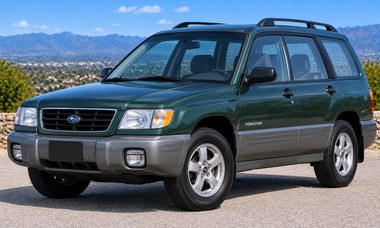
The first-generation Forester established the formula Subaru would follow for decades: boxer engine, standard all-wheel drive, practical wagon-like body and unusually good visibility.
U.S. Foresters used versions of Subaru's 2.5-liter EJ25 flat-four engine. These engines can accumulate substantial mileage, but head-gasket problems became one of the best-known weaknesses of older Subarus.
A head gasket does not necessarily fail suddenly. External coolant or oil seepage can develop gradually, while more serious internal leakage or overheating can eventually lead to major engine damage. A Forester that has already had high-quality head-gasket work performed can therefore be more attractive than a lower-mileage example with its original gaskets and questionable cooling-system history.
These engines also use a timing belt, making documented belt service important. On a vehicle this old, radiator condition, hoses, seals, wheel bearings, CV boots, suspension components and rust can be just as important as the engine itself.
Buyer Tip: Never buy an early Forester simply because the engine sounds good during a short test drive. Check carefully for coolant loss, oil or coolant leakage around the engine, overheating history and documentation of timing-belt and head-gasket work.
Bottom Line: Capable of high mileage, but age and head-gasket history now make condition more important than reputation.
2003-2008 Subaru Forester: One of the Better Older Foresters When Properly Maintained
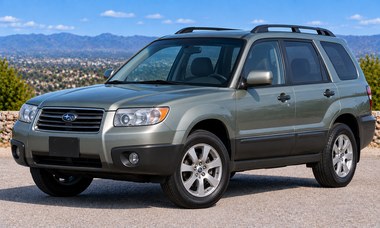
The second-generation Forester retained the basic Subaru formula while becoming more refined. Naturally aspirated models continued with the 2.5-liter EJ-series engine, while the Forester XT added turbocharged performance.
Head-gasket leakage remains the major issue to understand on naturally aspirated versions. By now, many surviving vehicles have already had gasket work performed. Documentation matters because the quality of the repair, associated machine work and replacement parts can affect whether the problem stays fixed.
The Forester XT is a different proposition. Its turbocharged engine provides much stronger performance but also adds heat, boost pressure and mechanical complexity. A modified or aggressively driven XT can carry substantially greater risk than an ordinary naturally aspirated Forester.
Timing-belt maintenance remains important on both naturally aspirated and turbocharged EJ engines. At today's vehicle ages, cooling-system condition and evidence of previous overheating deserve equal attention.
Buyer Tip: For dependable transportation rather than performance, a well-maintained naturally aspirated 2006-2008 Forester with documented major maintenance is generally a safer bet than an unknown-history XT.
Bottom Line: Among older Foresters, the later years of this generation can still be good high-mileage vehicles if head-gasket, timing-belt and cooling-system maintenance has been handled correctly.
2009-2013 Subaru Forester: Important Engine Transition Years
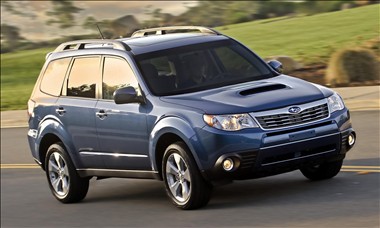
The third-generation Forester is particularly important because it spans a major engine transition. Earlier versions continued using the familiar EJ-series 2.5-liter engine, while 2011 naturally aspirated Foresters switched to Subaru's newer FB25 engine.
The FB25 uses a timing chain rather than the older EJ engine's timing belt, eliminating one major scheduled service item. It also moved the Forester away from the classic external head-gasket issue associated with many older naturally aspirated Subaru engines.
However, the early FB25 developed its own reliability concern: excessive oil consumption on some vehicles. Subaru issued a warranty extension covering excessive oil consumption on applicable 2011-2014 Foresters with the 2.5-liter FB engine, as well as certain 2015 manual-transmission Foresters.
This makes oil-level history particularly important on 2011-2013 models. An engine that consumes oil can survive a long time if the owner checks and replenishes it regularly, but allowing the level to fall substantially between oil changes can accelerate internal wear.
Turbocharged Forester XT models continued using EJ-series turbo engines during this generation and should be evaluated separately from the naturally aspirated FB25.
Buyer Tip: On a 2011-2013 naturally aspirated Forester, check the dipstick before starting the engine and ask directly how much oil, if any, the owner adds between changes. A documented engine repair or short-block replacement related to oil consumption can materially change the vehicle's history.
Bottom Line: Potentially durable and appealing used Foresters, but these transition years require careful attention to which engine is installed and whether it consumes oil.
2014-2018 Subaru Forester: CVT Reliability Becomes Part of the Equation
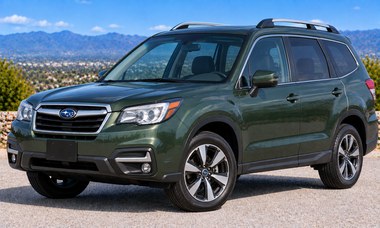
The fourth-generation Forester brought another major mechanical change: Subaru's Lineartronic CVT became the primary automatic transmission. Naturally aspirated models used the 2.5-liter FB25, while the performance-oriented 2.0XT used a turbocharged 2.0-liter direct-injected engine.
The CVT improves fuel economy and generally operates smoothly, but its condition matters because internal repairs or replacement can be expensive. During a test drive, watch for delayed engagement, shuddering, abnormal whining, warning lights or behavior that feels substantially different once the transmission is fully warmed.
Oil consumption remains particularly relevant to early fourth-generation vehicles. Subaru's oil-consumption warranty program included applicable 2014 Forester 2.5-liter models and certain 2015 manual-transmission vehicles. That does not mean every Forester from those years consumes excessive oil, but it makes documentation and an oil-level check worthwhile.
By the later years of this generation, the Forester had become a more mature package. 2016-2018 models are particularly interesting used choices because they retain the practical fourth-generation design while avoiding some of the uncertainty associated with the earliest FB25 production.
Some 2017 naturally aspirated Foresters with CVTs were also covered by a service campaign because the transmission fluid had not been filled to the specified level at the factory. As with any used Forester, VIN-specific campaign and recall history should be checked rather than assuming that every vehicle from a particular year was affected.
Buyer Tip: On 2014-2018 models, evaluate the engine and CVT separately. A quiet engine does not prove the transmission is healthy, and a smooth CVT does not tell you whether the engine consumes oil.
Bottom Line: Later examples can offer a very good combination of practicality and durability, but CVT condition becomes an important part of the buying decision.
2019-2024 Subaru Forester: Mature 2.5-Liter Engine and CVT Combination
The fifth-generation Forester arrived for 2019 and simplified the U.S. powertrain lineup around a 2.5-liter naturally aspirated boxer engine and Lineartronic CVT. The turbocharged XT disappeared, making the Forester less complicated to compare across trim levels.
These Foresters generally avoid the classic head-gasket reputation of the old EJ25 and are removed from the early FB25 oil-consumption years. That makes them appealing to buyers who like the Forester formula but do not want to inherit the best-known problems of older generations.
The CVT remains the component I'd evaluate most carefully on a higher-mileage example. Smooth operation, absence of warning lights and a good maintenance history are more meaningful than generalized claims that all Subaru CVTs are either excellent or troublesome.
The 2019 model was the first year of the redesign, so all else being equal, I generally prefer a 2020 or later example. By 2020 the generation was established, while enough of these vehicles have now accumulated meaningful mileage to provide more ownership history than the newest compact SUVs.
Buyer Tip: For buyers wanting a relatively recent Forester for long-term ownership, a well-maintained 2020-2024 example is where I'd concentrate much of the search, while recognizing that the newest years have not yet accumulated 150,000-200,000-mile histories.
Bottom Line: One of the strongest overall Forester generations so far, with fewer historical engine concerns but continued reason to pay attention to CVT maintenance and condition.
Subaru Forester Engine Reliability
The Forester's reliability reputation makes much more sense when the engines are separated into families. An older EJ25, early FB25, later FB25 and turbocharged XT engine should not be treated as though they have the same weaknesses.
EJ25 2.5-Liter Naturally Aspirated Engine
The EJ25 powered naturally aspirated Foresters for many years and is capable of very high mileage. Its reputation is dominated by head-gasket leakage, particularly on older versions.
A properly repaired EJ25 can continue for many years, so evidence of previous head-gasket work isn't necessarily negative. What matters is whether the repair was performed correctly and whether overheating damaged the engine before the repair.
The EJ25 also uses a timing belt. On an older Forester, documentation of timing-belt service is valuable because belt failure can lead to expensive engine damage.
FB25 2.5-Liter Naturally Aspirated Engine
The FB25 began appearing in the naturally aspirated Forester for 2011. Its timing chain eliminated routine timing-belt replacement, and the engine largely moved the Forester beyond the classic EJ-series head-gasket discussion.
The important early weakness is oil consumption. Subaru's own service information and warranty extension covered excessive oil consumption on applicable 2011-2014 Foresters with FB25 engines and certain 2015 manual-transmission vehicles.
Later FB25 applications are generally more attractive for used buyers. Regardless of year, however, checking the oil level regularly is good practice on any aging boxer engine.
Turbocharged Forester XT Engines
The Forester XT offered performance far beyond the ordinary compact-SUV norm. Earlier XTs used turbocharged EJ-series engines, while the 2014-2018 XT used Subaru's newer 2.0-liter direct-injected turbo engine.
Turbocharging itself does not make an engine unreliable, but these models introduce more heat and complexity and are more likely to have been driven aggressively or modified. Service history becomes particularly important.
For someone whose primary goal is maximum long-term reliability rather than acceleration, I generally favor the naturally aspirated Forester over an unknown-history XT.
Which Subaru Forester Engine Is Most Reliable?
For most used buyers, the best reliability strategy is a later naturally aspirated 2.5-liter Forester with excellent maintenance history. It avoids the turbocharger and performance-oriented ownership history of an XT while also avoiding the classic head-gasket concerns associated with many older EJ25 engines.
That doesn't mean an older EJ25 Forester is necessarily a poor choice. A vehicle with documented head-gasket, timing-belt and cooling-system work can be remarkably durable. At today's ages, however, finding one with that history becomes increasingly difficult.
I'd also be more cautious with the earliest FB25 engines if there is evidence of significant oil consumption. A later naturally aspirated Forester that maintains its oil level and has been serviced consistently is generally a better long-term bet.
What Are The Best Subaru Forester Years to Buy?
The best Forester years depend partly on whether you want an inexpensive older vehicle or a newer SUV with modern safety technology. Because Subaru changed engines and transmissions several times, some year groups are easier to recommend than others.
2006-2008 Subaru Forester
For buyers comfortable with an older vehicle, 2006-2008 Foresters can be excellent choices when their major maintenance has already been handled correctly. The naturally aspirated EJ25 is capable of high mileage, and these models use relatively simple conventional transmissions.
The catch is that head-gasket condition, timing-belt history and cooling-system maintenance are critical. I'd rather buy a documented 150,000-mile example with properly completed major engine maintenance than a 90,000-mile Forester with no records.
2010 Subaru Forester
The 2010 model is an interesting transitional choice. Naturally aspirated versions still use the older EJ-series engine and conventional four-speed automatic rather than the FB25/CVT combination that would arrive in stages over the next few years.
That means the familiar EJ25 head-gasket and timing-belt considerations still apply, but buyers who specifically want a traditional automatic may find a well-maintained 2010 attractive.
2016-2018 Subaru Forester
These later fourth-generation models are among the better choices for someone wanting a reasonably modern used Forester. They are removed from the earliest FB25 oil-consumption years and benefit from several years of development within the generation.
The CVT still needs to be evaluated carefully, but a 2016-2018 naturally aspirated Forester with documented maintenance can provide a good balance of fuel economy, practicality and longevity.
2020-2024 Subaru Forester
For buyers with a larger budget, 2020-2024 Foresters are where I'd concentrate much of the search. The powertrain is relatively straightforward by modern standards: a naturally aspirated 2.5-liter boxer engine, CVT and Subaru's standard AWD system.
The 2020-2021 models have more accumulated ownership history, while 2022-2024 examples benefit from being later in the generation. The newest vehicles are still too young for definitive 200,000-mile conclusions, but they avoid several of the major historical engine concerns associated with much older Foresters.
Which Subaru Forester Years Should You Avoid or Approach With Extra Caution?
A Forester appearing in this section isn't automatically a bad vehicle. Some individual examples have accumulated very high mileage. These are simply years where I'd demand stronger maintenance records and a more careful mechanical inspection before buying.
1998-2005 Subaru Forester
The earliest Foresters now combine two concerns: the well-known EJ25 head-gasket history and substantial vehicle age. Even if the engine is healthy, a 20-plus-year-old Forester can require suspension, cooling-system, electrical and drivetrain repairs simply because components have aged.
A documented head-gasket repair, timing-belt service and cooling-system history can make an enormous difference. Without those records, an apparently inexpensive Forester may carry significant deferred-maintenance risk.
2011-2014 Subaru Forester
These years deserve particular attention because of excessive oil consumption reported on some FB25 engines. Subaru extended warranty coverage for oil consumption on applicable vehicles, and some engines received repairs or short-block replacements.
That does not make every 2011-2014 Forester problematic. It does mean I'd want to know whether the engine consumes oil, whether an oil-consumption test was ever performed and whether significant engine work has already occurred.
2014 Subaru Forester
The 2014 Forester deserves an additional note because it was both the first year of a redesigned generation and the first Forester generation in which the CVT became the primary automatic transmission.
Combine that with the early FB25 oil-consumption history and there are enough variables that I'd generally choose a comparable later fourth-generation Forester when the price difference is reasonable.
2019 Subaru Forester
The 2019 Forester is not a year I'd automatically avoid. Its inclusion here is primarily because it was the first year of another major redesign.
When a similarly maintained 2020 or 2021 costs only modestly more, I'd generally prefer the later vehicle. A well-documented 2019 at an attractive price can still be a perfectly reasonable purchase.
Pricing
Knowing which Forester model years to concentrate on is step 1. Step 2 is knowing how to actually get an excellent used Forester price.
Also, getting a strong trade-in allowance often has the biggest impact on your final price. See KBB versus Edmunds Appraisals - Which Is Better to learn about getting accurate and fair trade-in values before negotiating with a dealer.
Subaru Forester CVT Reliability
The Subaru Lineartronic CVT is one of the most important components to evaluate on a 2014-and-newer Forester. It is not accurate to assume every Subaru CVT will fail, but failures can be expensive enough that transmission condition should influence which used Forester you buy.
Subaru extended CVT warranty coverage on many 2010-2015 model-year vehicles, including applicable Foresters, to 10 years or 100,000 miles. That historical warranty extension doesn't mean every transmission was defective, but it does reinforce the importance of evaluating earlier CVT-equipped Foresters carefully.
During a test drive, pay attention to delayed engagement when selecting Drive or Reverse, unusual shuddering, pronounced whining, warning lights or inconsistent operation after the transmission has warmed up. Some unusual engine-speed behavior is normal with a CVT, so the goal is to identify symptoms rather than judge it by the shift feel of a conventional automatic.
For high-mileage ownership, maintenance history is valuable. A Forester that has spent years towing, climbing steep grades or operating under severe conditions deserves additional scrutiny.
Subaru Forester vs. Hyundai Tucson Reliability
The Hyundai Tucson is one of the Forester's most direct alternatives, but the two take very different mechanical approaches. The Forester gives every buyer all-wheel drive and uses a boxer engine, while Tucson powertrains vary more substantially by generation and drivetrain. If you're comparing the two, see our Hyundai Tucson Reliability Guide before deciding which better fits your priorities.
Subaru Forester Maintenance and Repair Costs
Routine Forester maintenance is generally manageable, but some Subaru-specific repairs can be labor intensive. Head-gasket work on an older boxer engine and CVT replacement are the two expenses most likely to transform an inexpensive used Forester into a costly purchase.
| Typical Service or Repair | Approximate Cost |
|---|---|
| Oil and Filter Service | $60-$120+ |
| Brake Pads and Rotors | $400-$900+ per axle |
| Battery | $180-$350+ |
| Wheel Bearing / Hub | $400-$800+ each |
| CV Axle | $400-$900+ |
| Cooling-System Repair | $400-$1,200+ |
| Suspension Repairs | $700-$1,500+ |
| EJ25 Timing-Belt Service | $800-$1,500+ |
| Head-Gasket Repair | $2,000-$4,000+ |
| CVT Replacement | $5,000-$8,000+ |
| Engine Replacement | $5,000-$10,000+ |
These are broad estimates rather than repair quotes. Labor rates, parts choices and the amount of related work performed at the same time can substantially change the final cost.
Subaru Forester Maintenance After 100,000 Miles
A Forester reaching 100,000 miles is not necessarily approaching the end of its life. In fact, this is where good preventive maintenance can determine whether the vehicle eventually reaches 200,000 miles or becomes uneconomical much sooner.
- Check engine oil regularly between changes, especially on early FB25 engines.
- Inspect the cooling system carefully for leaks and deterioration.
- Verify timing-belt service on EJ-powered Foresters where applicable.
- Monitor CVT operation and investigate warning lights or unusual behavior promptly.
- Inspect wheel bearings, CV boots, axles and suspension components.
- Keep four closely matched tires on the vehicle.
- Watch for coolant or oil leakage around older EJ-series engines.
- Review differential and drivetrain maintenance appropriate to the specific year.
After 150,000 miles, I'd place considerably more value on documented maintenance than on small mileage differences. A carefully maintained Forester with 155,000 miles can easily be the better purchase than an 110,000-mile example with no service history.
What to Check Before Buying a Used Subaru Forester
A general pre-purchase inspection is worthwhile, but these checks are particularly important on a Forester:
1. Identify the Engine Family
Determine whether you're looking at an EJ25, early FB25, later FB25 or turbocharged XT. The reliability concerns differ enough that simply knowing "it's a 2.5-liter Forester" isn't sufficient.
2. Check Oil and Coolant Before the Engine Is Started
A low oil level can reveal consumption or poor maintenance, while unexplained coolant loss on an older EJ-powered Forester deserves investigation. Ideally, perform these checks before the seller has warmed the vehicle.
3. Investigate Head-Gasket and Oil-Consumption History
On older EJ-powered Foresters, ask whether the head gaskets have been replaced and request documentation. On early FB25 models, ask specifically about oil consumption and any oil-consumption testing or engine repairs.
4. Test the CVT Thoroughly
On 2014-and-newer automatic Foresters, drive long enough for the transmission to warm up. Check engagement from a stop, low-speed operation, acceleration and highway behavior rather than relying on a short parking-lot test.
Subaru Forester Pros and Cons
Pros
- 200,000-mile lifespan is realistic with proper maintenance
- Well-maintained examples can exceed 250,000 miles
- Standard all-wheel drive
- Excellent visibility and practical interior design
- Naturally aspirated engines available throughout most of its history
- Strong resale value
- Later models avoid many of the classic older-Subaru engine concerns
- Large supply of used vehicles and substantial owner knowledge about common problems
Cons
- Head-gasket problems are important on older EJ25-powered models
- Some early FB25 engines have excessive oil-consumption history
- CVT replacement can be very expensive
- AWD makes matched tire condition more important
- Turbocharged XT models require more careful evaluation
- Strong resale values can make good used Foresters relatively expensive
- Older examples may combine high mileage with significant deferred maintenance
Final Buyer Summary: Is the Subaru Forester Reliable?
Yes, the Subaru Forester can be a very reliable and long-lasting compact SUV, but choosing the right generation and maintenance history is critical. Its reputation for reaching high mileage is legitimate, yet the specific problems that threaten that longevity have changed substantially over the years.
Older 1998-2008 Foresters can be remarkably durable, but head-gasket condition, timing-belt service, cooling-system maintenance and age-related deterioration now dominate the buying decision. A properly maintained older Forester can be a better purchase than a lower-mileage neglected one.
The 2009-2013 generation requires more careful engine identification because it spans Subaru's transition from the EJ25 to the FB25. The newer engine reduced the classic head-gasket concern but brought oil-consumption issues on some early examples.
For buyers wanting a relatively affordable modern Forester, 2016-2018 models are among the better choices. They benefit from a more mature FB25 while retaining the practical fourth-generation design. The CVT should still be evaluated carefully.
For buyers with a larger budget, I'd put 2020-2024 Foresters near the top of the list. They avoid many of the engine issues that define older Foresters and provide modern safety equipment, although the newest years have not yet accumulated enough mileage for definitive 200,000-mile durability conclusions.
A properly maintained Forester can reasonably be expected to reach around 200,000 miles, and particularly good examples can reach 250,000 miles or more. Consistent oil changes, maintaining the proper oil level, preventing overheating, caring for the transmission and keeping four properly matched tires are major factors in getting there.
Best overall strategy: choose a naturally aspirated Forester from one of the stronger year groups, insist on excellent maintenance history, identify the exact engine before buying, and evaluate the CVT carefully on later models. With those precautions, the Forester remains one of the more compelling compact SUVs for buyers who intend to keep their vehicle well beyond 100,000 miles.
Also, Know Your Trade-In Value
While you're narrowing down your next vehicle choice, it's also highly recommended that you know the value of your trade-in. Having a realistic appraisal in hand can help you establish your budget and negotiate a better overall deal. Here's a good source for a quick and accurate appraisal: free trade-in appraisal.
What's Next?
Understand Dealer Fees
Before agreeing to a dealer's numbers, see which dealer fees are legitimate, which can be negotiated, and which can be avoided.