

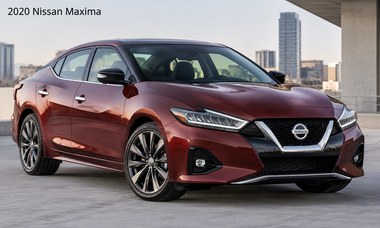
The Nissan Maxima has spent much of its history occupying an unusual position between an ordinary family sedan and an entry-level luxury or sport sedan. Its strong V6 engines, comfortable interior and relatively generous equipment can make a used Maxima appealing, but reliability varies considerably by model year and, especially, transmission.
One of the most important dividing lines is 2007. Earlier Maximas used conventional automatic or manual transmissions, while Nissan introduced the continuously variable transmission for the 2007 Maxima. From that point forward, CVT condition becomes one of the most important considerations when evaluating a used Maxima.
This guide covers 2000 through 2023 U.S.-market Nissan Maxima models. The Maxima was not offered as a 2015 U.S. model, and 2023 was its final model year.
In This Guide You'll Learn
- Which Nissan Maxima years are generally the best used-car choices
- Which Maxima years deserve extra caution
- Which Maxima generations used conventional automatics and which used CVTs
- How reliable the 3.0-liter and 3.5-liter V6 engines are
- Which Maxima powertrains are most attractive for long-term ownership
- How many miles a Nissan Maxima can realistically last
- The major problems to investigate before buying one
Nissan Maxima Reliability Overview
The Nissan Maxima can be a durable high-mileage sedan, but its reliability history is much easier to understand when the engine and transmission are evaluated separately. Nissan's V6 engines are generally one of the Maxima's strongest attributes. Transmission reliability is considerably more complicated.
The 2000–2001 Maxima used a 3.0-liter V6, while a more powerful 3.5-liter V6 arrived for 2002. Both engines can provide substantial service when maintained properly, and the 3.5-liter engine would remain fundamental to the Maxima for the rest of its production run.
The transmission is where the Maxima story changes. The 2000–2006 cars are particularly interesting today because buyers can find them with conventional automatic transmissions, and some years were also available with a manual. The CVT arrived for 2007 and became the Maxima's transmission thereafter.
That doesn't mean every CVT-equipped Maxima is unreliable. Nissan continued developing the transmission for many years, and later versions should not automatically be treated as equivalent to the earliest units. Nevertheless, CVT condition, service history and behavior during a thorough road test remain major factors when buying a 2007–2023 Maxima.
Nissan Maxima Reliability at a Glance
| Category | Assessment |
|---|---|
| Overall Reliability | Average to good in stronger years; transmission choice and condition are major factors |
| Best Used Years | Selected 2000–2003 pre-CVT cars, later seventh-generation models, and stronger later eighth-generation examples |
| Years Requiring Extra Inspection | 2004–2006 for conventional automatic issues; early CVT-equipped models and any Maxima showing transmission symptoms |
| Most Reliable Engines | 3.0-liter and well-maintained 3.5-liter V6 engines |
| Biggest Used-Car Concern | Transmission condition, particularly on CVT-equipped cars |
| Expected Lifespan | About 150,000–200,000 miles; well-maintained examples can exceed 200,000 miles |
How Many Miles Can a Nissan Maxima Last?
A well-maintained Nissan Maxima can realistically last about 150,000 to 200,000 miles, and good examples can exceed 200,000 miles. The V6 engines are frequently capable of substantial mileage, so transmission condition, previous maintenance and the increasing cost of age-related repairs often determine how long a Maxima remains practical to own.
At 100,000 miles: A Maxima with good maintenance should still have considerable useful life remaining. This is the point where we'd pay increasingly close attention to transmission history, oil leaks, engine mounts, suspension wear, cooling-system condition and whether scheduled maintenance has been performed.
At 150,000 miles: Vehicle history becomes more important than mileage alone. A properly maintained V6 can still be mechanically strong, but a CVT showing hesitation, shuddering, slipping or abnormal noise can make an otherwise attractive Maxima a poor financial risk.
At 200,000 miles: Reaching this mileage is entirely possible, especially with careful maintenance. Expect age-related repairs involving suspension components, mounts, wheel bearings, hoses, seals and electrical equipment even if the major powertrain components remain healthy.
Beyond 200,000 miles: Some Maximas continue considerably farther. At this point, the question is usually less about whether the V6 can keep running and more about whether the transmission and the rest of the car justify continued investment.
Nissan Maxima Reliability by Generation
2000–2003 Nissan Maxima: Strong V6 Engines and No CVT
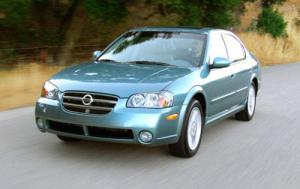
The 2000–2003 Maxima is particularly interesting to reliability-focused buyers because these cars predate Nissan's use of a CVT in the Maxima. The 2000–2001 models used a 3.0-liter V6, while the more powerful 3.5-liter V6 arrived for 2002.
Both engines have good long-term potential. The 3.0-liter V6 is comparatively simple and can be extremely durable when maintained, while the 3.5-liter V6 provides substantially stronger performance and would become Nissan's standard Maxima engine for more than two decades.
These Maximas used conventional transmissions, including traditional automatics and available manuals. That doesn't make the transmissions immune from wear or failure, but it gives buyers an alternative to the CVT that would become standard equipment later in the Maxima's life.
At more than two decades old, however, condition now matters enormously. Oil leaks, sensors, ignition components, engine mounts, suspension wear, wheel bearings, cooling-system components and electrical problems can all appear simply because of age and mileage.
Buyer Tip: A well-preserved 2000–2003 Maxima can be one of the most interesting older cars in the lineup for a buyer prioritizing mechanical simplicity. We'd still buy entirely on condition, maintenance history and a proper inspection.
2004–2008 Nissan Maxima: A Major Transmission Transition

The redesigned 2004 Maxima retained the 3.5-liter V6 but introduced a larger, more luxurious car. For reliability shoppers, this generation needs to be divided into two distinct periods rather than treated as a single group.
The 2004–2006 Maxima still used conventional transmissions. Automatic-equipped cars can develop harsh or delayed shifting and other transmission problems as they age, so "pre-CVT" should not be interpreted as "transmission-proof." The available manual transmission is comparatively uncommon today but can be particularly interesting to an enthusiast willing to evaluate clutch and gearbox condition.
The 2007–2008 Maxima changed to Nissan's Xtronic CVT. This is one of the most important reliability dividing lines in Maxima history. Nissan later extended CVT warranty coverage on certain early CVT-equipped vehicles, which is another reason we'd scrutinize these early CVT Maximas carefully.
Regardless of transmission, the 3.5-liter V6 remains one of this generation's better attributes. Higher-mileage cars can develop oil leaks, sensor problems, worn mounts and other age-related issues, but a healthy engine can remain strong well beyond 150,000 miles.
Buyer Tip: Don't lump all 2004–2008 Maximas together. A 2006 conventional-automatic Maxima and a 2007 CVT Maxima have meaningfully different transmission considerations even though they belong to the same generation.
2009–2014 Nissan Maxima: 3.5-Liter V6 and CVT
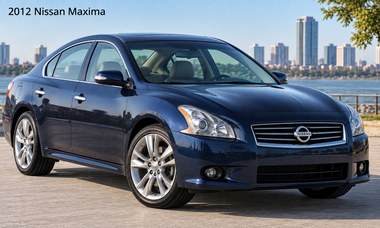
The seventh-generation Maxima arrived for 2009 with sharper styling and a more overtly sporting personality, but its basic powertrain formula remained familiar: a 3.5-liter V6 driving the front wheels through a CVT.
The engine continues to be the reassuring part of the package. With proper oil changes and cooling-system maintenance, the 3.5-liter V6 is capable of substantial mileage. As these cars age, oil leaks, motor mounts, sensors, ignition components and normal wear items become increasingly relevant.
The CVT deserves considerably more attention. A prospective purchase should accelerate smoothly and predictably without pronounced shuddering, slipping, delayed engagement, unusual whining or a noticeable loss of performance once the transmission becomes hot.
Later examples from this generation are generally more interesting to us than the earliest cars, assuming condition and service history are comparable. By then Nissan had accumulated considerably more experience with its high-output V6/CVT combination, although no high-mileage CVT should be purchased without a thorough road test.
Buyer Tip: A well-maintained later seventh-generation Maxima can provide a lot of performance and equipment for relatively little money. Just don't let a strong-running V6 distract you from evaluating the CVT equally carefully.
2016–2023 Nissan Maxima: Final Generation
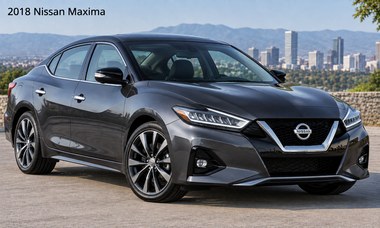
After skipping the 2015 model year, Nissan introduced a completely redesigned Maxima for 2016. The familiar 3.5-liter V6 remained, but the engine was extensively revised and produced 300 horsepower. Nissan again paired it exclusively with an Xtronic CVT.
This generation feels substantially more modern than the cars that came before it, with more sophisticated safety, infotainment and convenience technology. It can also be one of the most attractive Maxima generations for used-car shoppers because later examples are young enough to avoid many of the age-related problems affecting earlier cars.
CVT condition still matters. A newer transmission should not be assumed healthy simply because it has fewer miles. During a test drive, look for smooth power delivery under light and stronger acceleration, and pay attention to shuddering, hesitation, abnormal noise or warning lights.
The naturally aspirated 3.5-liter V6 is a significant attraction for buyers who prefer to avoid the turbocharged four-cylinder engines increasingly common in competing sedans. By this point Nissan had decades of experience developing this engine family, although the surrounding electronics and increasingly complex vehicle systems give buyers more equipment to inspect.
Because the Maxima was discontinued after 2023, buyers considering a late example should also compare its price with newer sedans and crossovers still available new. A lightly used Maxima isn't automatically the better value simply because it's pre-owned.
Buyer Tip: For most buyers who want a modern Maxima, we'd concentrate on a later final-generation example with complete service records and a smooth-performing CVT rather than simply choosing the lowest-mileage car available.
If you're serious about buying soon, I'd recommend reading my most effective negotiation methods for either new cars or used cars. Each explains a quick way to identify the dealerships most motivated to deal, no matter how busy they may seem, and how to follow up once you've found them. That can be the difference between getting a good price and getting a great one.
Nissan Maxima Engine Reliability
3.0-Liter VQ30DE V6: 2000–2001
The 3.0-liter V6 used in the 2000–2001 Maxima has a strong reputation for basic durability. It lacks the output of the later 3.5-liter engine, but its relatively straightforward design and conventional transmission pairings make these cars interesting to buyers who value simplicity.
At today's age, however, the condition of the individual engine matters much more than its original reputation. Oil leaks, ignition components, sensors, cooling-system deterioration and neglected maintenance can turn an otherwise durable engine into an expensive project.
3.5-Liter VQ35DE V6: 2002–2023
The 3.5-liter V6 is one of the defining features of the modern Maxima. Introduced for 2002, versions of this engine remained in the Maxima through the end of production. It provides strong performance and, with proper maintenance, can accumulate substantial mileage.
Higher-mileage examples can develop oil leaks, ignition or sensor problems, worn engine mounts and other age-related issues. Oil level and maintenance history deserve particular attention on any older 3.5-liter Maxima, but the basic engine is generally less concerning than the transmission on many used examples.
The engine was significantly revised for the final-generation Maxima, so the 3.5-liter V6 in a 2020 shouldn't be viewed as mechanically identical in every detail to the engine installed in a 2002 Maxima. What remained consistent was the naturally aspirated V6 layout and the engine family's long development history.
Which Nissan Maxima Engine Is Most Reliable?
Both the 3.0-liter and 3.5-liter V6 can be durable engines, but the 3.5-liter V6 is the more relevant choice for most used-Maxima shoppers because it powered the car from 2002 through 2023. A well-maintained 3.5-liter engine can remain strong at mileages where transmission condition has become the greater financial concern.
Buyers specifically seeking an older, mechanically simpler Maxima shouldn't overlook the 2000–2001 3.0-liter V6. But we'd choose between individual cars based more on maintenance, transmission condition and overall vehicle history than on a belief that one V6 is dramatically more durable than the other.
Common Nissan Maxima Problems by Generation
2000–2003 Maxima
- Oil leaks and aging seals: Increasingly common simply because these cars are now more than 20 years old.
- Ignition and sensor problems: Coils, sensors and related components can cause drivability problems as they age.
- Engine mounts: Worn mounts can create excessive vibration at idle or during acceleration.
- Suspension wear: Struts, bushings, bearings and related components should be evaluated carefully.
- Automatic transmission condition: Conventional does not mean indestructible; check for harsh, delayed or slipping shifts.
Buyer Tip: These can be durable cars, but at their present age we'd prioritize an unusually well-maintained example over a particular model year.
2004–2008 Maxima
- Conventional automatic problems on 2004–2006 cars: Harsh shifting, delayed engagement and transmission wear deserve attention.
- Early CVT concerns on 2007–2008 cars: Test these especially carefully for hesitation, shuddering, abnormal noise and inconsistent acceleration.
- Engine mounts: Excessive vibration can indicate deteriorated mounts.
- Oil leaks: Increasingly common as the 3.5-liter engines accumulate age and mileage.
- Suspension and steering wear: Clunks, looseness and uneven tire wear warrant investigation.
Buyer Tip: Identify the transmission before judging reliability. The 2004–2006 and 2007–2008 cars have distinctly different transmission risk profiles.
2009–2014 Maxima
- CVT wear or failure: The most financially important problem to investigate.
- Shuddering or hesitation: Abnormal vibration or inconsistent acceleration should never be dismissed as normal CVT operation.
- Engine mounts: A frequent source of excessive vibration on higher-mileage cars.
- Oil leaks: Inspect an older 3.5-liter V6 carefully for developing leaks.
- Suspension and wheel-bearing wear: Increasingly relevant as these cars pass 100,000 miles.
Buyer Tip: Later examples can offer strong value, but CVT condition should carry more weight than cosmetic condition or equipment level.
2016–2023 Maxima
- CVT behavior: Later versions benefited from continued development, but shuddering, hesitation or abnormal noise still warrants diagnosis.
- Electrical and infotainment equipment: Test cameras, screens, driver-assistance features and power accessories carefully.
- Engine and transmission mounts: Investigate unusual vibration rather than assuming it's normal.
- Suspension and wheel wear: Large wheels and lower-profile tires on some trims make tire and suspension condition especially worth checking.
- Normal high-mileage engine issues: Look for leaks and evidence of neglected oil or cooling-system maintenance.
Buyer Tip: A later final-generation Maxima with a documented service history and healthy CVT is generally where we'd concentrate if the budget permits.
Best Nissan Maxima Years to Buy
The best Nissan Maxima years depend partly on whether you want an older car with a conventional transmission or a newer Maxima with a CVT. There isn't one perfect year for every buyer, but several groups stand out.
2000–2003: Best Choice for Buyers Who Want to Avoid a CVT
The 2000–2003 Maximas are now quite old, but a well-preserved example has one important advantage: these cars predate the Maxima's CVT. They combine durable V6 engines with conventional automatic or available manual transmissions.
The 2002–2003 cars are especially interesting because they have the stronger 3.5-liter V6. At this age, however, we'd choose an exceptionally well-maintained 2001 over a neglected 2003 without hesitation.
2012–2014: Among the Better Older CVT Maximas
If you want a more modern Maxima without spending final-generation money, 2012–2014 models are among the years we'd investigate first. They retain the strong 3.5-liter V6 and come from the later part of the seventh generation.
These are still CVT-equipped cars, so transmission history and a thorough road test remain essential. A good 2012–2014 Maxima can nevertheless offer a compelling combination of performance, comfort and used-car value.
2019–2023: Best Overall Maxima Years for Most Buyers
For most buyers, we'd concentrate on 2019–2023 Maximas. These later final-generation cars benefit from years of development, have modern safety and convenience features, and are young enough that age-related deterioration should generally be less extensive than on earlier Maximas.
They're not immune to problems, and CVT condition still matters, but this is the group we'd favor for someone looking for the best overall balance of reliability, age, equipment and remaining useful life.
Nissan Maxima Years to Avoid or Approach With Extra Caution
Calling any Maxima year an automatic "avoid" can be misleading because maintenance and condition matter enormously on used cars. There are, however, several year groups where we'd require stronger evidence before buying.
2004–2006: Inspect the Conventional Automatic Carefully
These years have the advantage of being pre-CVT, but that doesn't necessarily make them the safest transmission choice. The conventional automatic can develop harsh shifting, delayed engagement and other problems.
A smooth, documented example may still be worth buying, particularly given the durability potential of the 3.5-liter V6. We'd simply avoid assuming that every pre-CVT Maxima is automatically preferable to every CVT-equipped one.
2007–2008: Early Maxima CVTs Deserve Extra Caution
The 2007–2008 Maximas are among the years we'd approach most cautiously. These were the first Maximas equipped with Nissan's CVT, making transmission condition particularly important.
Any hesitation, shuddering, whining, slipping sensation, delayed response or deterioration in performance after the transmission becomes hot would make us reconsider the purchase unless the cause had been professionally diagnosed.
2009–2011: Buy Primarily on CVT Condition and History
The early seventh-generation cars can be appealing and inexpensive, but we'd generally favor a comparable later seventh-generation Maxima. Again, the 3.5-liter V6 itself is usually less concerning than the transmission.
These aren't automatic rejects. A carefully maintained 2010 with excellent records and a smooth CVT can be a better purchase than a neglected later car. But the lower purchase price needs to be weighed against the financial consequences of a major transmission repair.
Which Nissan Maxima Generation Is Most Reliable?
For most buyers, the later 2016–2023 final-generation Maxima offers the best overall reliability proposition, particularly the 2019–2023 models. They're substantially newer than the earlier generations and benefit from continued development of the Maxima's V6/CVT powertrain.
Buyers whose highest priority is avoiding a CVT may reach a very different conclusion. A well-maintained 2000–2003 Maxima can be mechanically attractive because it combines a durable V6 with a conventional automatic or manual transmission. The tradeoff is that these cars are now old enough for age itself to create reliability problems.
The later 2009–2014 cars occupy the middle ground. They can be excellent values, particularly 2012–2014 examples, but we'd only buy one after establishing that the CVT operates properly.
Nissan Maxima CVT Reliability
The CVT is the single most important reliability issue to understand when shopping for a 2007–2023 Nissan Maxima. Nissan introduced the CVT to the Maxima for 2007 and continued using it through the final 2023 model year.
A CVT doesn't shift through fixed gears like a traditional automatic transmission. Under normal acceleration, engine speed can therefore behave differently than buyers accustomed to a conventional automatic expect. That characteristic alone shouldn't be mistaken for a problem.
What should concern you are symptoms such as:
- Shuddering or pronounced vibration during acceleration
- Hesitation when pulling away from a stop
- Delayed response after selecting Drive or Reverse
- Unusual whining or droning that changes with vehicle speed
- Engine speed increasing without corresponding acceleration
- Loss of performance after extended driving or when the transmission is hot
- Transmission-related warning lights or stored trouble codes
One of the most important test-drive lessons is to drive the car long enough for the transmission to reach normal operating temperature. A short trip around the dealership parking lot isn't enough. Some transmission problems become more noticeable after the car has been driven for a while.
Service history also matters. A seller who can document appropriate transmission maintenance gives us considerably more confidence than one who can't tell us whether the fluid has ever been serviced.
Most Serious Nissan Maxima Problems
1. CVT Failure or Serious CVT Problems
This is the repair with the greatest potential to change the economics of buying an older Maxima. A major CVT problem can cost thousands of dollars, potentially approaching or exceeding the value of an older car.
That's why we'd rather buy a somewhat higher-mileage Maxima with excellent records and a smooth transmission than a suspiciously cheap low-mileage car showing CVT symptoms.
2. Conventional Automatic Transmission Problems
The 2004–2006 Maxima avoids the CVT but has its own transmission concerns. Harsh shifts, delayed engagement, slipping or erratic operation shouldn't be ignored merely because the car has a traditional automatic.
3. Oil Leaks
Oil leaks become increasingly relevant as the 3.5-liter V6 ages. Some are relatively manageable, while others can require enough labor to become expensive. Look underneath the car and around the engine for fresh oil rather than assuming a minor-looking leak is harmless.
4. Engine and Transmission Mounts
Worn mounts can produce vibration at idle, when shifting into gear or during acceleration. This isn't usually comparable to a transmission replacement financially, but replacing multiple mounts can still become a significant repair.
5. Suspension and Wheel-Bearing Wear
Clunks, humming noises, loose steering feel and uneven tire wear become increasingly common concerns as mileage accumulates. Later Maximas equipped with large wheels and low-profile tires also deserve careful tire and wheel inspection.
6. Electrical and Convenience Equipment
As the Maxima became more sophisticated, there was simply more equipment to potentially malfunction. On newer examples, test the infotainment system, cameras, climate controls, power accessories and driver-assistance equipment rather than assuming everything works.
7. Cooling-System and Age-Related Problems
On older Maximas, hoses, radiators, thermostats and other cooling-system components deserve attention. Overheating can turn an otherwise durable V6 into a very expensive problem, so evidence of cooling-system neglect shouldn't be taken lightly.
Nissan Maxima Maintenance and Repair Costs
Routine Maxima maintenance is generally manageable for a V6 sedan, but an older car's ownership cost can change dramatically if it needs a transmission or several age-related repairs at once.
| Service or Repair | Approximate Cost |
|---|---|
| Oil and filter change | $60–$120+ |
| Front or rear brake service | $400–$900+ |
| Battery replacement | $180–$350+ |
| Wheel bearing | $400–$800+ |
| Engine or transmission mount repair | $400–$1,200+ |
| Cooling-system repair | $400–$1,200+ |
| Suspension repairs | $700–$1,800+ |
| Significant oil-leak repair | $300–$1,500+ |
| Major CVT replacement | $4,000–$8,000+ depending on parts and labor |
These are broad repair ranges rather than quotes. Labor rates, location, replacement-part choice and the exact repair required can substantially change the final cost.
Typical Nissan Maxima Maintenance After 100,000 Miles
A Maxima can have plenty of life remaining at 100,000 miles, but this is where deferred maintenance starts becoming much more important. We'd want to know what has already been serviced rather than simply looking at the odometer.
- Verify oil-change history and continue regular engine-oil service
- Review transmission service history, particularly on CVT-equipped cars
- Inspect the cooling system, hoses and evidence of coolant leakage
- Inspect engine and transmission mounts for deterioration
- Check struts, bushings, wheel bearings and steering components
- Inspect brakes and tires, including uneven tire wear
- Address oil leaks before they become substantially worse
- Check ignition components and investigate any stored trouble codes
By 150,000 miles, we'd budget for occasional repairs even on a good Maxima. That's normal for a vehicle with substantial mileage and doesn't necessarily mean the car is nearing the end of its useful life.
What to Check Before Buying a Used Nissan Maxima
Rather than running through a generic used-car checklist, we'd concentrate on the Maxima-specific issues most capable of turning a good-looking car into an expensive purchase.
- Drive the transmission fully warmed up: On a CVT Maxima, watch for shuddering, hesitation, whining, delayed engagement or inconsistent acceleration. On a conventional automatic, check for harsh or delayed shifts.
- Scan the car for trouble codes: Don't rely solely on the absence of a dashboard warning light. Stored or pending codes can reveal developing powertrain problems.
- Inspect the V6 for leaks and neglected maintenance: The engines can last a long time, but a poorly maintained example loses much of that advantage.
- Check for excessive vibration: Vibration at idle, in gear or during acceleration can point toward deteriorated engine or transmission mounts and sometimes other drivetrain problems.
- Check Nissan's VIN-specific recall history: Recall applicability varies by model year and individual vehicle, so verify that outstanding recall work has been completed.
Nissan Maxima Pros and Cons
Pros
- Strong naturally aspirated V6 performance
- Comfortable highway cruiser
- Often well equipped for its used-car price
- Later models offer modern safety and convenience technology
- V6 engines can provide substantial high-mileage service
- Older pre-CVT models give buyers a conventional-transmission alternative
Cons
- CVT reliability is an important concern on 2007–2023 models
- Major transmission repairs can overwhelm the value of an older Maxima
- 2004–2006 conventional automatics also require careful inspection
- Older cars increasingly face age-related suspension, mount and oil-leak repairs
- Large wheels and low-profile tires on some later trims can increase tire and wheel costs
- The Maxima was discontinued after 2023
And another con ... even a good price on the vehicle doesn't necessarily mean you're getting a good deal.
There are other numbers besides price that can significantly affect the final out-the-door cost. A well-negotiated selling price can quickly lose its advantage if the dealer makes up for the concession with a below-market trade-in offer. Also, dealer fees and add-ons can further increase the final cost, making it important to learn which fees you must pay, can negotiate, or should avoid.
To become better informed about these important but often-confusing parts of the deal, be sure to see my articles on trade-ins and dealer fees.
Final Nissan Maxima Reliability and Buyer Summary
The Nissan Maxima can be a good used sedan, particularly for someone who wants strong V6 performance, comfort and considerable equipment without paying luxury-car prices. But choosing the right year and transmission condition matters considerably more than simply deciding whether the Maxima is "reliable."
For buyers interested in an older Maxima without a CVT, the 2000–2003 models are particularly interesting, although their age means condition is now critical. The 2004–2006 cars retain conventional transmissions but deserve careful automatic-transmission testing.
The 2007–2008 Maximas deserve greater caution because they represent the earliest CVT-equipped years. Among the seventh-generation cars, we'd generally favor 2012–2014 examples with good service records and a transmission that performs properly both cold and fully warmed up.
For most buyers seeking a modern Maxima, 2019–2023 models are our preferred group. They combine the mature final-generation design with the durable 3.5-liter V6 and substantially newer vehicle systems. CVT condition remains important, but these later cars provide the best overall balance for many shoppers.
Expect approximately 150,000 to 200,000 miles from a properly maintained Maxima, with good examples capable of exceeding 200,000 miles. The V6 itself is often capable of substantial longevity. On CVT-equipped Maximas, the transmission may ultimately have more influence over the vehicle's economical lifespan than the engine.
The most important rule when buying one is simple: don't buy a Maxima based solely on year, mileage or appearance. A slightly higher-mileage car with excellent maintenance records, a healthy transmission and evidence of responsible ownership can be a much better purchase than a lower-mileage example with an uncertain history.
For more Nissan model reliability information, see our Nissan Reliability and Problems Guide for comparisons with other used Nissan cars, SUVs and trucks.
Some Insider Insights: