

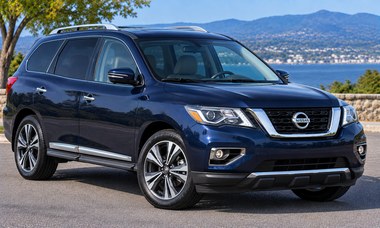
The Nissan Pathfinder can be a durable 200,000-mile SUV, but its reliability history is unusually dependent on generation. Over the years, the Pathfinder changed from a rugged truck-based SUV with conventional transmissions to a three-row crossover with a CVT, and then back to a conventional automatic transmission for the latest generation.
Those changes make the model year extremely important. Some older Pathfinders have strong engines and drivetrains capable of very high mileage, while certain years have expensive problems involving radiators, transmissions, timing chains or CVTs.
This guide covers 1996 through 2024 U.S.-market Nissan Pathfinders, including the 3.3L, 3.5L and 4.0L V6 engines, conventional automatic and manual transmissions, Nissan's Xtronic CVT, two-wheel drive and four-wheel drive, and the newer nine-speed automatic. Nissan did not sell a 2021 Pathfinder in the U.S.; the redesigned model returned for 2022.
In This Guide You'll Learn
- Which Nissan Pathfinder years are generally the most reliable
- Which Pathfinder years deserve extra caution
- How reliability changed from the truck-based models to the crossover generations
- Which Pathfinder engine has the strongest high-mileage record
- Why certain 2005-2010 models can develop serious radiator and transmission problems
- Which Pathfinder years have CVT problems
- Why the 2022 redesign's nine-speed automatic is important
- How long a Nissan Pathfinder can realistically last
- Whether 150,000, 200,000 or 250,000 miles is realistic
- The major engine, transmission, cooling-system, suspension and four-wheel-drive problems to watch for
Nissan Pathfinder Reliability Overview
Overall Pathfinder reliability ranges from very good to troublesome depending on the generation. This is one Nissan where a broad statement such as "Pathfinders are reliable" or "Pathfinders have bad transmissions" misses much of the story.
The 1996-2004 Pathfinder is an old-school SUV by today's standards. These vehicles use conventional transmissions and relatively straightforward engines. The later 3.5L V6 models can be especially durable, but age, corrosion and deferred maintenance now dominate the buying decision.
The 2005-2012 Pathfinder returned to body-on-frame construction and paired Nissan's strong 4.0L VQ40DE V6 with a conventional five-speed automatic. Unfortunately, certain years developed one of the most important Pathfinder problems: an internal radiator failure could allow coolant and automatic-transmission fluid to mix, potentially destroying the transmission. Timing-chain-related problems are another concern on some early examples.
The Pathfinder changed dramatically for 2013. It became a car-based three-row crossover and paired its 3.5L V6 with a CVT. The earliest 2013-2014 models are particularly important to investigate because of CVT judder, shuddering and failure concerns. Later years became more attractive, especially as the generation matured.
The redesigned 2022-2024 Pathfinder retained a naturally aspirated 3.5L V6 but abandoned the CVT in favor of a nine-speed conventional automatic transmission. For buyers concerned about Nissan CVTs, that's one of the most significant improvements in Pathfinder history.
Bottom Line: The Pathfinder has several genuinely strong used-car years, but the specific generation and transmission matter enormously. A properly selected and maintained Pathfinder can be a long-lived SUV; choosing the wrong year without understanding its known problems can result in a very expensive repair.
Nissan Pathfinder Reliability at a Glance
| Category | What Used-Car Buyers Should Know |
|---|---|
| Overall Reliability | Highly generation-dependent; several durable powertrains but some years have serious transmission-related risks |
| Best Older Choices | Later 1996-2004 models and properly sorted later 2005-2012 examples can provide excellent mileage |
| Years Requiring Extra Inspection | Early 2005-2010 R51 models for radiator/transmission contamination and 2013-2014 models for CVT problems |
| Most Proven Engines | 3.5L VQ35DE and 4.0L VQ40DE V6 engines have strong high-mileage potential when maintained |
| Major 2005-2012 Concern | Radiator failure allowing coolant and transmission fluid to mix on affected vehicles |
| Major 2013-2020 Concern | CVT reliability, particularly on earlier examples |
| 2022-2024 Advantage | Conventional nine-speed automatic replaces the previous CVT |
| Expected Lifespan | Approximately 180,000-220,000 miles is realistic with good maintenance; strong examples can exceed 250,000 miles |
Possibly Buying Soon? Avoid These Dealer Traps
Before you sign, learn:
- What you don't know about dealer trade-in offers could cost you
- Which dealer fees you must pay, can negotiate, or should avoid
How Many Miles Can a Nissan Pathfinder Last?
A well-maintained Nissan Pathfinder can realistically last 180,000 to 220,000 miles, while particularly well-maintained examples can exceed 250,000 miles. The Pathfinder's ultimate lifespan, however, depends heavily on which generation and drivetrain you're considering.
The older naturally aspirated V6 engines are capable of substantial mileage. Both the 3.5L VQ35DE and 4.0L VQ40DE have demonstrated the ability to remain serviceable well beyond 200,000 miles when oil changes, cooling-system maintenance and other routine services aren't neglected.
On many Pathfinders, the engine isn't necessarily the component that determines when the vehicle reaches the end of its economical life. A transmission failure, severe corrosion, neglected cooling system, worn four-wheel-drive components or accumulated suspension repairs can become more important than the engine itself.
The 2013-2020 CVT-equipped Pathfinder deserves particular consideration. A 3.5L engine may be capable of substantial mileage, but the condition and history of the CVT can determine whether the entire vehicle makes economic sense at 150,000 miles or beyond.
The 2022-2024 Pathfinder eliminates that specific CVT concern by using a conventional nine-speed automatic. That's encouraging for long-term ownership, although these vehicles are still too young to claim that the complete powertrain has established a 200,000-mile track record.
Is 100,000 Miles a Lot for a Nissan Pathfinder?
100,000 miles isn't unusually high for a Pathfinder with good maintenance history. In fact, a well-kept V6 Pathfinder at 100,000 miles can have a substantial portion of its useful life remaining.
At this mileage, I'd become more interested in transmission history, cooling-system maintenance, suspension condition, oil leaks, wheel bearings and four-wheel-drive components. On 2005-2010 models, verifying how the radiator/transmission contamination risk was addressed is especially important.
Can a Nissan Pathfinder Last 200,000 Miles?
Yes. 200,000 miles is a realistic target for a well-maintained Nissan Pathfinder. The older 3.5L and 4.0L V6 engines are particularly capable of reaching this mileage.
A Pathfinder that reaches 200,000 miles won't necessarily do so without repairs. Engine mounts, wheel bearings, suspension components, cooling-system parts, sensors, air-conditioning equipment and driveline components may require replacement along the way.
Can a Pathfinder Last 250,000 Miles or More?
250,000 miles or more is achievable, but it shouldn't be assumed. At this mileage, maintenance history becomes much more important than the model's general reputation.
An older Pathfinder with documented cooling-system work, transmission maintenance and suspension repairs may actually be a better high-mileage prospect than a lower-mileage example that has received little beyond oil changes.
Nissan Pathfinder Reliability by Generation
1996-2004 Nissan Pathfinder: Simple, Durable and Now Heavily Dependent on Condition
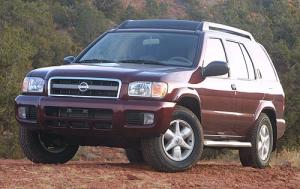
The 1996-2004 Pathfinder represents an older and mechanically simpler era. These SUVs use conventional transmissions and avoid both the radiator-related transmission problem associated with the next generation and the CVT used in later Pathfinders.
Early models use Nissan's 3.3L VG33E V6. It isn't particularly powerful by modern standards, but it has a reputation for being a tough, relatively straightforward engine when maintained.
For 2001, Nissan introduced the considerably more powerful 3.5L VQ35DE V6. This engine became one of Nissan's most important V6 designs and can provide excellent longevity.
The 3.5L is the engine I'd generally favor if choosing between similarly maintained examples, although these vehicles are now old enough that overall condition matters more than a modest difference in engine preference.
Rust deserves serious attention, especially on vehicles from northern climates. Suspension wear, leaking seals, deteriorated hoses, engine mounts, steering components and electrical problems can also accumulate simply because these Pathfinders are now more than two decades old.
Common 1996-2004 Pathfinder Problems
- Oil leaks as engines age
- Cooling-system deterioration
- Engine and transmission mount wear
- Suspension and steering wear
- Wheel-bearing and driveline noise
- Air-conditioning problems
- Electrical and power-accessory problems
- Exhaust-system deterioration
- Four-wheel-drive component wear
- Rust and structural corrosion
Buyer Tip: Don't buy one of these simply because someone describes it as an "old reliable Nissan." At this age, inspect the underside and mechanical condition carefully. A rust-free 200,000-mile Pathfinder can be a much better vehicle than a neglected 130,000-mile example.
Bottom Line: A clean 2001-2004 Pathfinder with the 3.5L V6 can still be an impressive high-mileage SUV, but condition and corrosion now matter more than its original reliability reputation.
2005-2012 Nissan Pathfinder: Strong 4.0L V6, but a Major Radiator/Transmission Risk
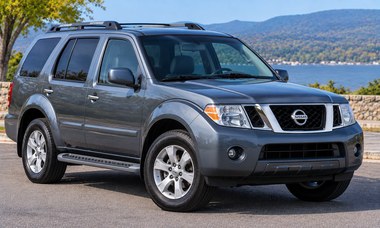
The Pathfinder changed significantly for 2005. The R51 generation returned to body-on-frame construction and became a more substantial truck-based SUV with greater towing and off-road capability.
Most models use Nissan's 4.0L VQ40DE V6 paired with a five-speed conventional automatic transmission. The 4.0L can be an excellent high-mileage engine, making this generation potentially very attractive to someone who wants a traditional SUV.
Unfortunately, the early years have a major weakness that every used buyer should understand.
Pathfinder Radiator and Transmission Failure: The "Strawberry Milkshake" Problem
On affected Pathfinders, an internal failure in the radiator's transmission-fluid cooler could allow engine coolant and automatic-transmission fluid to mix.
The contaminated fluid can develop a pink or strawberry-milkshake-like appearance—hence the nickname often used for the problem. More importantly, contamination can severely damage the automatic transmission.
This is not simply a minor radiator leak. If the problem progresses far enough, the owner can face both cooling-system work and an extremely expensive transmission repair.
The issue is associated primarily with earlier R51 Pathfinders, particularly 2005-2010 models. When considering one today, determine whether the original radiator was replaced with an updated unit or whether another appropriate preventive repair was performed.
A properly addressed R51 can be a completely different ownership proposition from one still carrying an unknown original radiator.
Pathfinder Timing-Chain Problems
Some early 4.0L V6 Pathfinders also developed timing-chain guide/tensioner-related noise and wear. A whining or buzzing sound that changes with engine speed deserves investigation.
The VQ40DE itself can be a very durable engine, so this shouldn't be interpreted to mean the entire engine design is unreliable. It does mean an early example with suspicious timing-chain noise shouldn't be purchased without determining the cause.
Common 2005-2012 Pathfinder Problems
- Radiator failure and coolant/transmission-fluid contamination on affected early models
- Transmission damage resulting from fluid contamination
- Timing-chain guide/tensioner wear on some early 4.0L engines
- Oil leaks as mileage increases
- Wheel-bearing wear
- Suspension bushing and shock wear
- Engine and transmission mount deterioration
- Fuel-level sending-unit problems
- Air-conditioning and electrical problems
- Four-wheel-drive and driveline wear
- Rust and corrosion
Buyer Tip: On a 2005-2010 Pathfinder, documentation showing that the radiator issue has been properly addressed is extremely valuable. Don't rely solely on the fact that the transmission currently shifts normally.
Bottom Line: Once its known weaknesses are addressed, the 2005-2012 Pathfinder can be one of the more appealing high-mileage Pathfinders because the 4.0L V6 and conventional automatic are fundamentally capable of long service. Later years in the generation are particularly interesting.
2013-2020 Nissan Pathfinder: Comfortable Crossover, but CVT Reliability Matters
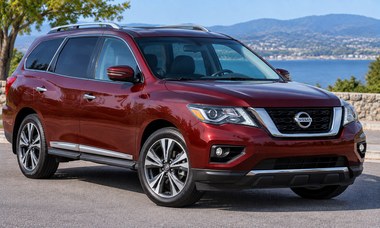
The 2013 Pathfinder was a radical departure from its predecessor. Nissan replaced the body-on-frame SUV with a unibody three-row crossover designed more for family transportation, comfort and fuel economy than rugged off-road use.
The familiar 3.5L VQ35DE V6 remained, but Nissan paired it with an Xtronic CVT rather than a conventional automatic.
The engine itself is generally one of this generation's stronger components. The CVT is what makes model year and maintenance history particularly important.
The 2013 and 2014 Pathfinders deserve the greatest caution. Early examples developed complaints involving CVT judder, shuddering, vibration, hesitation and transmission failure. These aren't symptoms I'd dismiss as simply the normal operating feel of a continuously variable transmission.
Later examples benefited from revisions and additional production maturity. The 2017 model year brought a significant refresh, including a revised direct-injected 3.5L V6 with considerably more power. For shoppers interested in this generation, later 2017-2020 models are generally more attractive starting points than the earliest cars.
Front-wheel drive and four-wheel drive were available. A front-wheel-drive Pathfinder is mechanically simpler, while four-wheel drive provides useful additional traction but adds components that should be inspected as mileage increases.
Common 2013-2020 Pathfinder Problems
- CVT juddering and shuddering, particularly on early models
- CVT hesitation or delayed acceleration
- Transmission noise or failure on affected vehicles
- Oil leaks and consumption as mileage increases
- Engine and transmission mount wear
- Wheel-bearing and suspension problems
- Air-conditioning problems
- Electrical and infotainment glitches
- Power liftgate and accessory issues
- Four-wheel-drive component wear
Buyer Tip: If considering a 2013-2020 Pathfinder, drive it long enough for the CVT to become fully warm. Any pronounced juddering, shuddering, hesitation or abnormal transmission noise deserves investigation before purchase.
Bottom Line: I'd be particularly cautious with 2013-2014 Pathfinders. Later 2017-2020 examples are more appealing, but CVT condition and service history remain central to the buying decision.
2022-2024 Nissan Pathfinder: The CVT Is Gone
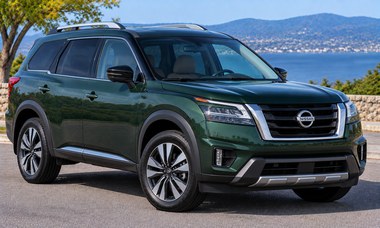
After skipping the 2021 model year in the U.S., Nissan introduced a completely redesigned Pathfinder for 2022.
The new model retains a 3.5L naturally aspirated V6, but the most important reliability change is behind the engine: Nissan replaced the previous CVT with a nine-speed conventional automatic transmission.
For buyers who liked the Pathfinder but were reluctant to own a CVT-equipped three-row SUV, this change removes one of the previous generation's biggest concerns.
The naturally aspirated V6 is also appealing from a long-term complexity standpoint. The Pathfinder doesn't rely on a small turbocharged engine to move a relatively large three-row vehicle.
That doesn't mean the newest Pathfinder is automatically proven to be the most durable generation ever built. The 2022 model is the first year of a complete redesign, and even 2023-2024 vehicles haven't accumulated enough age and mileage to establish a genuine 200,000-mile reliability record.
The nine-speed automatic can display shift behavior that feels different from the old CVT, and any persistent harsh shifting, hesitation or abnormal behavior should still be investigated. Replacing the CVT reduces one important historical concern; it doesn't make the transmission maintenance-free.
Common 2022-2024 Pathfinder Concerns
- Occasional transmission shift-quality complaints
- Infotainment and connectivity glitches
- Driver-assistance sensor or warning issues
- Battery and electrical problems
- Power-accessory problems
- Suspension noise or ride-related complaints on some vehicles
- Long-term nine-speed transmission durability is still developing
Buyer Tip: I'd generally prefer a 2023-2024 example over an otherwise equivalent 2022 because the first model year of any complete redesign carries additional uncertainty.
Bottom Line: The 2022-2024 Pathfinder is promising for long-term ownership because it combines a naturally aspirated V6 with a conventional nine-speed automatic rather than a CVT. It's simply too early to give it the same proven high-mileage endorsement as the best older Pathfinders.
How Nissan Pathfinder Reliability Changed Over the Years
| Pathfinder Years | Main Reliability Consideration |
|---|---|
| 1996-2000 | Simple 3.3L V6 drivetrain; age and corrosion now dominate the buying decision |
| 2001-2004 | Strong 3.5L V6 and conventional transmissions; potentially excellent longevity if condition is good |
| 2005-2010 | Strong 4.0L V6 but major radiator/transmission contamination risk must be investigated |
| 2011-2012 | Mature R51 years and among the more attractive traditional truck-based Pathfinders |
| 2013-2014 | Early crossover/CVT years; significant transmission scrutiny required |
| 2015-2016 | Improved from earliest years but CVT history remains important |
| 2017-2020 | Later, more mature version of the CVT generation and generally the preferred years within it |
| 2022 | First year of redesign; conventional nine-speed automatic replaces CVT |
| 2023-2024 | Promising newer choices but not old enough for firm long-term durability conclusions |
Nissan Pathfinder Engine Reliability
3.3L V6 Reliability
The VG33E 3.3L V6 in earlier 1996-2000 Pathfinders is an old-fashioned engine compared with Nissan's later VQ-series V6s. It isn't especially powerful or fuel efficient, but durability can be excellent.
At this point, however, age-related deterioration matters much more than the engine's original reputation. Cooling-system condition, leaks, hoses, seals and previous maintenance should drive the buying decision.
3.5L V6 Reliability
The VQ35-series 3.5L V6 has powered multiple Pathfinder generations and has a strong basic durability record.
It first appeared in the Pathfinder for 2001 and later returned as the engine used throughout the 2013-2020 crossover generation. A substantially revised direct-injected version arrived for 2017, and the 3.5L continues in the 2022-2024 Pathfinder.
With proper maintenance, a 3.5L Pathfinder can reach 200,000 miles or more. On the 2013-2020 generation, I'd generally be more concerned about CVT history than the basic durability of the V6.
4.0L V6 Reliability
The VQ40DE 4.0L V6 used in 2005-2012 Pathfinders is one of the engines I'd particularly consider for high-mileage ownership.
It's powerful, relatively straightforward and capable of substantial mileage. Early timing-chain guide/tensioner problems deserve attention, but a properly maintained 4.0L that doesn't exhibit timing-chain problems can be a very durable engine.
Importantly, the notorious radiator problem doesn't mean the 4.0L engine itself is unreliable. The radiator can contaminate the automatic transmission, which is a separate issue from basic engine durability.
Which Nissan Pathfinder Powertrain Is Best for Long-Term Reliability?
For proven high-mileage durability, the later 2005-2012 4.0L V6 with the conventional five-speed automatic is one of the most interesting Pathfinder combinations—provided the radiator/transmission contamination issue has been eliminated and the vehicle has been properly maintained.
The 2001-2004 3.5L Pathfinder is mechanically appealing as well, but finding a rust-free, carefully maintained example becomes more difficult as these vehicles age.
Among newer Pathfinders, the 2022-2024 3.5L V6 and nine-speed automatic is the combination I'd favor over the preceding CVT drivetrain for long-term ownership. It has a sensible mechanical layout, but it hasn't yet accumulated enough years to prove that expectation at 200,000-plus miles.
Buyer Takeaway: Pathfinder reliability isn't simply a question of choosing the newest vehicle. Some of the strongest high-mileage examples come from older generations with proven V6 engines and conventional automatics. The key is understanding the major weakness of each generation and verifying that the particular Pathfinder you're buying hasn't inherited it.
For more Nissan model reliability information, see our Nissan Reliability and Problems Guide. This comprehensive guide details the best used Nissan models and years, common problems to watch for, the best years to buy or those to avoid, and more.
Best Nissan Pathfinder Years to Buy
The best Nissan Pathfinder years depend heavily on whether you want a traditional truck-based SUV or a newer three-row crossover. Unlike some vehicles where reliability changes gradually, the Pathfinder has several distinct mechanical eras with very different strengths and weaknesses.
| Pathfinder Years | Why They Stand Out |
|---|---|
| 2001-2004 | Durable 3.5L V6 with conventional transmissions; age and rust are now the primary concerns |
| 2011-2012 | Mature truck-based R51 models with strong 4.0L V6 and conventional automatic; later production reduces concern about the notorious early radiator issue |
| 2017-2020 | Preferred years of the crossover/CVT generation, although transmission history still matters |
| 2023-2024 | Newer design with naturally aspirated 3.5L V6 and conventional nine-speed automatic; avoids the previous generation's CVT |
Best Older Pathfinders: A well-preserved 2001-2004 model can be an excellent high-mileage SUV. The 3.5L V6 is capable of substantial mileage, and these vehicles avoid both the R51 radiator/transmission problem and later CVT concerns.
Best Truck-Based Pathfinders: I'd put 2011-2012 near the top of the list. They combine the rugged R51 platform, strong 4.0L V6 and conventional automatic with the advantages of being late-production examples.
Best CVT-Generation Pathfinders: If shopping the 2013-2020 generation, I'd concentrate primarily on 2017-2020. These are substantially more appealing to me than the earliest 2013-2014 models, although I'd still evaluate the CVT carefully.
Best Newer Pathfinders: I'd generally favor 2023-2024 over the first-year 2022. The nine-speed conventional automatic is an important advantage for buyers who specifically want to avoid a Nissan CVT.
Nissan Pathfinder Years to Avoid or Approach With Caution
No Pathfinder year is automatically a bad purchase. A vehicle with documented repairs and excellent maintenance can be preferable to a supposedly better year that has been neglected. Still, several groups deserve extra caution.
| Pathfinder Years | Why Use More Caution |
|---|---|
| 1996-2000 | Potentially durable but now old enough that rust and age-related deterioration can dominate reliability |
| 2005-2010 | Radiator/transmission-fluid contamination risk on affected vehicles; some early 4.0L engines also have timing-chain concerns |
| 2013-2014 | Early CVT-equipped crossover years with significant judder, shudder and transmission concerns |
| 2015-2016 | Generally preferable to the earliest CVT years but transmission condition and history remain important |
| 2022 | First year of a complete redesign and new nine-speed transmission application |
Years I'd Be Most Careful With: The two groups that deserve the most investigation are 2005-2010 because of the radiator/transmission contamination issue and 2013-2014 because of early CVT problems.
Which Nissan Pathfinder Generation Is Most Reliable?
There isn't one Pathfinder generation that wins every reliability comparison because the older and newer models are fundamentally different vehicles.
The 1996-2004 Pathfinder benefits from relatively straightforward engines and conventional transmissions. A well-maintained 2001-2004 3.5L model can be exceptionally durable, but age and corrosion now make finding a truly good one increasingly difficult.
The 2005-2012 R51 has perhaps the most interesting long-term potential. Its 4.0L V6 and conventional automatic can provide excellent mileage, and the later 2011-2012 models avoid much of the concern associated with the earlier radiator problem. These are also genuine truck-based SUVs rather than crossovers.
The 2013-2020 generation is less attractive from a pure drivetrain-reliability standpoint because of its CVT. Later 2017-2020 examples are preferable, but the transmission remains a consideration that doesn't exist in the same way on the preceding generation.
The 2022-2024 generation has an encouraging mechanical layout: naturally aspirated V6 power and a conventional nine-speed automatic. It may eventually prove to be one of the better Pathfinder generations, but there isn't yet enough high-mileage history to place it ahead of the best older models.
Most Proven Pathfinder Generation: For a buyer who values established high-mileage durability, I'd give a slight advantage to a properly maintained later 2005-2012 R51 Pathfinder, particularly 2011-2012.
Which Nissan Pathfinder Engine Is Most Reliable?
Nissan's naturally aspirated V6 engines are one of the Pathfinder's greatest strengths.
The older 3.3L VG33E is rugged and relatively simple, but Pathfinders using it are now old enough that the engine's reputation is less important than the condition of the complete vehicle.
The 3.5L VQ35-series V6 has an excellent basic durability record and has appeared in several very different Pathfinder generations. Properly maintained examples can exceed 200,000 miles.
The 4.0L VQ40DE is particularly appealing for a traditional Pathfinder. It produces good power, has demonstrated substantial high-mileage capability and is paired with a conventional automatic. Early timing-chain-related problems are the major engine-specific qualification.
Most Reliable Pathfinder Engine: I'd give the 4.0L VQ40DE a slight edge for proven Pathfinder-specific high-mileage durability, with the 3.5L VQ35 family close behind. Both can be excellent engines when properly maintained.
Nissan Pathfinder Transmission Reliability
Transmission reliability is where the Pathfinder generations differ most dramatically.
1996-2004 Conventional Transmissions
These older Pathfinders use traditional manual or automatic transmissions rather than CVTs. At their current age, maintenance history, fluid condition and previous use matter more than broad concerns about the original design.
A healthy conventional transmission is one reason a well-maintained older Pathfinder can remain attractive to someone seeking a mechanically straightforward high-mileage SUV.
2005-2012 Five-Speed Automatic
The conventional five-speed automatic used with the 4.0L V6 can provide long service. Its reputation, however, became intertwined with the radiator problem on early R51 Pathfinders.
The distinction is important: the transmission itself isn't necessarily the underlying problem when coolant contamination destroys it. Failure of the radiator's internal transmission cooler can introduce coolant into the transmission fluid, causing severe internal damage.
A later R51—or an earlier one with documented radiator replacement and an uncontaminated transmission—can therefore be a much better proposition than the generation's reputation initially suggests.
2013-2020 Pathfinder CVT Reliability
The CVT is the primary drivetrain concern on the 2013-2020 Pathfinder, particularly during the earliest years.
Symptoms can include juddering, shuddering, vibration, hesitation, unusual transmission noise and poor acceleration. A failing transmission can turn an otherwise comfortable and useful family crossover into an expensive ownership experience.
The 2013-2014 models deserve the greatest caution. Later vehicles benefited from revisions and production maturity, and I'd generally favor 2017-2020 when shopping this generation.
There is no dependable mileage at which a Pathfinder CVT automatically fails. Some provide substantial service life while others develop problems much earlier. That's why actual operating condition and maintenance history matter more than relying on a predetermined mileage limit.
2022-2024 Nine-Speed Automatic Reliability
The switch from a CVT to a nine-speed conventional automatic is one of the biggest reasons the latest Pathfinder is interesting from a long-term ownership perspective.
It eliminates the previous generation's specific CVT design from the equation. However, that shouldn't be interpreted as proof that every nine-speed Pathfinder will be trouble-free.
Shift quality should still be evaluated carefully. Persistent harsh engagement, delayed response or abnormal shifting deserves investigation, particularly on a used vehicle.
The larger unanswered question is simply longevity. These Pathfinders haven't been on the road long enough to establish the 150,000- and 200,000-mile history available for older powertrains.
Most Common Nissan Pathfinder Problems
1. Radiator and Transmission-Fluid Contamination
This is one of the most important problems associated with the Pathfinder and deserves special attention on 2005-2010 R51 models.
An internal radiator failure can allow coolant and automatic-transmission fluid to mix. If contamination progresses, serious transmission damage can result.
When buying one of these Pathfinders, documentation that the vulnerable radiator was replaced or otherwise properly addressed can materially change how I'd evaluate the vehicle.
2. CVT Judder, Shudder and Failure
The CVT is the defining reliability concern of the 2013-2020 Pathfinder, particularly early 2013-2014 models.
Don't dismiss pronounced vibration, juddering, hesitation or transmission noise as simply the unusual feel of a CVT. A healthy continuously variable transmission should operate smoothly.
3. 4.0L V6 Timing-Chain Problems
Some early VQ40DE engines developed wear involving timing-chain guides or related components.
A pronounced whining or buzzing noise that changes with engine speed deserves professional diagnosis. The 4.0L remains a fundamentally durable engine, but correcting timing-chain problems can be expensive.
4. Oil Leaks and Oil Consumption
High-mileage V6 Pathfinders can develop oil leaks or begin consuming oil between changes.
Minor seepage on an old SUV isn't necessarily alarming, but substantial leakage or repeatedly operating the engine with a low oil level can lead to much more serious problems.
5. Suspension and Wheel-Bearing Wear
Pathfinders are heavier than Nissan's passenger cars, and suspension components can accumulate significant wear with age and mileage.
Listen for clunks over bumps, humming or growling from wheel bearings, and check for uneven tire wear. Truck-based Pathfinders that have towed or traveled off road deserve particularly careful suspension inspection.
6. Four-Wheel-Drive and Driveline Problems
Four-wheel-drive Pathfinders have additional transfer-case, driveshaft, differential and axle components that can eventually develop leaks or wear.
Check for vibration, binding, abnormal noises and fluid leakage. On applicable models, verify that the four-wheel-drive system actually engages and operates properly.
7. Fuel-Level Sending-Unit Problems
Some older Pathfinders can develop inaccurate fuel-gauge readings caused by sending-unit or related problems.
This isn't comparable in severity to transmission failure, but an unreliable fuel gauge can become more than an inconvenience if the driver doesn't realize the indicated fuel level is inaccurate.
8. Electrical, Infotainment and Accessory Problems
As Pathfinders became more sophisticated, the number of electronic systems increased substantially.
Newer models can experience infotainment glitches, camera or sensor issues, driver-assistance warnings and power-accessory problems. Older vehicles may have problems with windows, locks, switches and other age-related electrical components.
Nissan Pathfinder Maintenance and Repair Costs
Routine Pathfinder maintenance isn't unusually expensive for a midsize SUV, but major drivetrain repairs can be costly. That's particularly important when evaluating an older Pathfinder whose market value may be only a few thousand dollars.
| Repair or Service | Typical Cost Range |
|---|---|
| Oil and filter change | $70-$140+ |
| Automatic/CVT fluid service | $200-$450+ |
| Spark plugs | $300-$650+ |
| Brake service per axle | $450-$900+ |
| Wheel bearing/hub | $450-$850+ |
| Engine mount replacement | $450-$1,000+ |
| Radiator replacement | $700-$1,300+ |
| Alternator | $650-$1,200+ |
| Air-conditioning repair | $400-$1,800+ |
| Struts/shocks | $800-$1,800+ |
| Timing-chain repair | $1,500-$3,000+ |
| CVT replacement | $4,500-$7,500+ |
| Conventional transmission replacement | $4,000-$7,000+ |
| Major engine repair/replacement | $5,000-$9,000+ |
These are broad estimates rather than repair quotes. Actual costs vary considerably with model year, labor rates, location and whether new, remanufactured or aftermarket parts are used.
The important financial lesson is that preventing or identifying a major drivetrain problem before purchase matters far more than saving a few hundred dollars on the initial price.
Maintenance to Expect After 100,000 Miles
A Pathfinder with 100,000 miles can have a great deal of useful life remaining, particularly when the engine and transmission have been properly maintained.
- Continue regular engine oil and filter changes
- Service the automatic transmission or CVT with the correct fluid
- Replace spark plugs when due
- Maintain engine coolant and inspect the complete cooling system
- Inspect belts, tensioners and hoses
- Check for engine and transmission oil leaks
- Inspect wheel bearings, shocks, struts and suspension bushings
- Service transfer-case and differential fluids on applicable models
- Inspect driveshafts, CV joints and other four-wheel-drive components
- Monitor engine and transmission mounts
- Maintain brakes and tires, especially on vehicles used for towing
For an older R51 Pathfinder, cooling-system history deserves special attention. For a 2013-2020 Pathfinder, I'd put CVT condition and maintenance near the top of the list.
What to Check Before Buying a Used Nissan Pathfinder
Beyond a normal pre-purchase inspection, concentrate on the problems specific to the Pathfinder generation you're considering:
- 2005-2010: Determine whether the radiator/transmission contamination risk has been properly addressed and inspect the transmission fluid for any evidence of contamination.
- Early 4.0L models: Listen for abnormal timing-chain whine or buzzing that changes with engine speed.
- 2013-2020: Drive long enough to fully warm the CVT and check carefully for juddering, shuddering, hesitation or abnormal noise.
- Four-wheel-drive models: Verify proper 4WD operation and listen for transfer-case, differential or driveline noise.
- Older truck-based Pathfinders: Inspect the underside carefully for structural corrosion and evidence of hard towing or off-road use.
But Before You Buy Any Vehicle ...
Please learn:
- How to avoid giving the dealer the upper hand on a "used" car price
- How to avoid overpaying for a "new" car
Buyer Tip: The Pathfinder has several problems that are highly generation-specific. Knowing whether you're inspecting a radiator-risk R51, an early CVT crossover or a newer nine-speed model is much more useful than applying the same generic checklist to every Pathfinder.
Nissan Pathfinder Pros and Cons
Pros
- Several naturally aspirated V6 engines with strong high-mileage potential
- 200,000 miles is realistic with proper maintenance
- Truck-based generations provide genuine towing and SUV capability
- Later R51 models combine strong 4.0L power with a conventional automatic
- 2013-2020 models provide useful three-row crossover practicality
- Later 2017-2020 examples are preferable to early CVT models
- 2022-2024 models eliminate the CVT
- Newer models retain a naturally aspirated V6 rather than switching to a small turbo engine
- Good used selection across a wide range of prices
Cons
- Reliability varies dramatically by generation
- 2005-2010 models can suffer severe radiator/transmission-fluid contamination
- Some early 4.0L engines have timing-chain concerns
- 2013-2014 CVT-equipped Pathfinders deserve significant caution
- CVT replacement can be extremely expensive
- Older examples can have significant rust and age-related deterioration
- Four-wheel-drive systems add maintenance and potential repair costs
- 2022-2024 nine-speed models don't yet have extensive high-mileage history
Final Buyer Summary: Is the Nissan Pathfinder Reliable?
The Nissan Pathfinder can be a very reliable and long-lived SUV, but this is one vehicle where choosing the right generation is essential.
The 1996-2004 Pathfinder offers relatively simple mechanicals and conventional transmissions. I'd particularly like a well-maintained 2001-2004 3.5L example, but age and rust now matter more than the model's original reputation.
The truck-based 2005-2012 Pathfinder has one of the most capable powertrains in the model's history. Its 4.0L V6 can deliver excellent mileage, and the conventional five-speed automatic avoids CVT concerns. However, 2005-2010 models must be investigated for the radiator/transmission contamination problem. For this generation, 2011-2012 are especially attractive used choices.
The 2013-2020 Pathfinder is a much different vehicle. It's a comfortable and practical family crossover, but the CVT becomes the major reliability question. I'd be particularly cautious with 2013-2014 models and would generally concentrate on 2017-2020 if shopping this generation.
The redesigned 2022-2024 Pathfinder addresses one of the biggest concerns by replacing the CVT with a conventional nine-speed automatic. I'd lean toward 2023-2024 over the first-year 2022 when price and condition are similar. These newer Pathfinders look promising, but they haven't yet accumulated enough mileage to establish a true 200,000-mile record.
If I wanted a traditional Pathfinder with proven high-mileage potential, I'd start with a carefully maintained 2011-2012 4.0L V6. If I wanted something substantially newer, I'd consider a 2023-2024 3.5L with the nine-speed automatic. For the crossover generation in between, I'd shop selectively and put CVT condition ahead of low mileage or cosmetic appearance.
Buyer Takeaway: A good Pathfinder can realistically provide 180,000 to 220,000 miles, and strong examples can exceed 250,000 miles. The secret isn't simply buying a Pathfinder—it's avoiding or properly accounting for the specific weakness of the generation you're considering. Radiator history on early R51 models and CVT history on 2013-2020 models can matter more than the number showing on the odometer.