

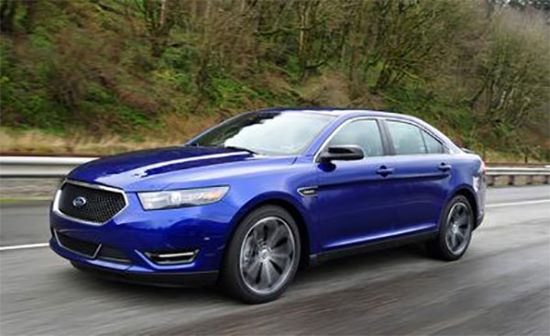
Which Ford Taurus years are the most reliable? Which years should you avoid? And if you're shopping for a used Taurus, which engines and generations offer the best combination of reliability, comfort, and long-term value?
The Ford Taurus has an unusually long history, but the cars sold from 2000 through 2019 fall into several very different groups. The 2000-2007 Taurus was a relatively simple front-wheel-drive family sedan, while the Taurus that returned for 2008 was a larger and substantially different vehicle. Ford redesigned it again for 2010, creating the final generation that remained in production through 2019.
Reliability varies accordingly. The older 3.0-liter V6 engines can be remarkably durable, although automatic transmission condition becomes increasingly important as these cars age. Later Taurus models use a 3.5-liter V6 with considerably more power, but its internally mounted water pump creates one potentially expensive long-term concern.
This guide covers U.S.-market Ford Taurus model years from 2000 through 2019, including reliability by generation, common problems, engine differences, years to avoid or inspect carefully, repair costs, expected lifespan, and the best years to buy.
In This Guide You'll Learn
- How reliable the Ford Taurus is over the long term
- Which Ford Taurus years are the best choices
- Which Taurus years require extra inspection
- The most common problems by generation
- Which Ford Taurus engines are the most reliable
- Why the 3.5-liter V6 water pump deserves special attention
- How AWD affects long-term ownership costs
- How much common Taurus repairs can cost
- How long a Ford Taurus can last
- What to inspect before buying a used Taurus
Is the Ford Taurus Reliable?
Overall, the Ford Taurus can be a reliable used sedan, but the answer depends heavily on which generation you're considering.
The 2000-2007 Taurus uses relatively straightforward mechanical components. Buyers could get a 3.0-liter Vulcan V6 or, in earlier years, a more powerful 3.0-liter Duratec V6. Both engines can provide excellent longevity with regular maintenance. The Vulcan in particular is known for its simple design and ability to accumulate high mileage.
The automatic transmission deserves more attention. Transmission problems can turn an otherwise inexpensive older Taurus into an uneconomical repair, so smooth shifting and a documented service history are valuable. Cooling-system leaks, suspension wear, electrical problems, and rust also become increasingly important simply because these cars are now old.
The 2008-2009 Taurus is substantially different. Ford applied the Taurus name to the vehicle previously sold as the Ford Five Hundred, creating a larger sedan with a 3.5-liter naturally aspirated V6 and available all-wheel drive.
The 2010 redesign continued the basic large-sedan formula while adding more sophisticated electronics, safety features, and eventually several engine choices. Most mainstream models use the 3.5-liter naturally aspirated V6, while the Taurus SHO uses a much more powerful 3.5-liter twin-turbocharged EcoBoost V6.
The 3.5-liter V6 family can provide substantial mileage, but the transverse installation uses an internally mounted water pump. Replacement is labor-intensive, and a serious internal failure can allow coolant to contaminate the engine oil and potentially cause major engine damage. This makes cooling-system condition particularly important when evaluating a higher-mileage Taurus.
Strengths
- Durable 3.0-liter V6 engines in many older models
- 3.5-liter V6 can provide high mileage with proper maintenance
- Comfortable ride and spacious interior
- Excellent parts availability
- Reasonable routine maintenance costs
- Later models offer strong safety and comfort features for the money
- Used purchase prices can be attractive compared with similar large sedans
Potential Weaknesses
- Automatic transmission problems on some older cars
- Internal water pump on later 3.5-liter V6 engines
- PTU and AWD drivetrain concerns on certain all-wheel-drive models
- Suspension wear as mileage increases
- Cooling-system and electrical problems on older cars
- Greater repair complexity on Taurus SHO models
- Rust can be significant on older cars from northern climates
Bottom Line: The Ford Taurus can provide 200,000 miles or more of useful service, but the major risk changes with the generation. On a 2000-2007 Taurus, transmission and age-related condition deserve particular attention. On later 3.5-liter cars, water pump history and cooling-system condition become especially important.
Reliability at a Glance
| Category | Our Assessment |
|---|---|
| Overall Reliability | Average to Above Average with the right year and maintenance |
| Strong Older Years | 2005-2006 |
| Strong Middle Years | 2008-2009 |
| Strong Later Choices | Selected well-maintained 2013-2019 models |
| Years Requiring Extra Inspection | 2000-2003 and early 2010-2012 final-generation models |
| Major Later-Model Concern | Internal water pump on 3.5-liter V6 engines |
| Expected Lifespan | 200,000-250,000+ miles with proper maintenance |
| Maintenance Costs | Low to Moderate normally; potentially high for major drivetrain repairs |
Buyer Tip: A Taurus can be inexpensive to buy but expensive to rescue from neglect. We'd rather pay more for a car with documented transmission, cooling-system, and fluid maintenance than save $1,000 on an example with an unknown history.
Possibly Buying Soon? Avoid These Dealer Traps
Before you sign, learn:
- What you don't know about dealer trade-in offers could cost you - Which dealer fees you must pay, can negotiate, or should avoid - How to avoid giving the dealer the upper hand on a used car price - How to avoid overpaying for a new car
Reliability by Generation
2000-2007: Fourth Generation
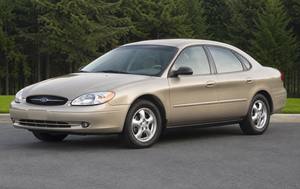
The 2000-2007 Taurus represents the final years of the traditional Taurus before Ford temporarily retired the name. These cars are mechanically straightforward by modern standards and can provide inexpensive transportation when properly maintained.
The engine lineup centered around two 3.0-liter naturally aspirated V6 engines. The simpler Vulcan V6 was available throughout this generation, while the dual-overhead-cam Duratec V6 provided substantially stronger performance and was offered during the earlier portion of the run. Both engines were paired with a four-speed automatic transmission.
The engines themselves are generally not the biggest concern today. Age, transmission condition, cooling-system maintenance, rust, suspension wear, and previous repairs often determine whether an individual Taurus is worth buying.
3.0-Liter Vulcan V6
The 3.0-liter naturally aspirated Vulcan V6 is one of the simplest engines found in the Taurus during this period. Performance is modest, but mechanical durability can be excellent.
The Vulcan remained available throughout the 2000-2007 generation and was the only engine offered during the final model years. Its relatively simple overhead-valve design is one reason these cars can remain inexpensive to repair.
At this age, buyers should expect some combination of oil leaks, cooling-system repairs, ignition components, sensors, engine mounts, and other normal wear items. Those problems don't necessarily make the car unreliable; they are part of owning a vehicle approaching or exceeding two decades of age.
Buyer Tip: Don't dismiss the Vulcan because of its modest horsepower. For someone seeking inexpensive transportation rather than performance, simplicity can be a major advantage.
3.0-Liter Duratec V6
The 3.0-liter naturally aspirated Duratec V6 uses a more sophisticated dual-overhead-cam design and provides noticeably stronger performance than the Vulcan.
The Duratec itself has proven capable of substantial mileage and can be an excellent engine when maintained properly. Ford offered it through the 2005 model year before simplifying the final years of the old Taurus lineup.
As with the Vulcan, the surrounding vehicle may become the limiting factor before the engine itself. Transmission condition, cooling-system repairs, suspension wear, air conditioning, and rust can determine whether a high-mileage car remains economical to own.
Automatic Transmission
The four-speed automatic transmission is one of the most important components to evaluate on a 2000-2007 Taurus. Some owners have experienced transmission failures, slipping, torque-converter problems, or harsh shifting as mileage increases.
During a test drive, the transmission should engage Drive and Reverse promptly and shift smoothly through every gear. Pay attention to slipping, delayed engagement, shuddering, unusual RPM fluctuations, or harsh shifts.
Because the market value of these cars is now relatively low, a major transmission replacement can easily exceed a significant percentage of the vehicle's value.
Common 2000-2007 Taurus Problems
- Automatic transmission wear or failure
- Cooling-system leaks
- Engine and transmission mount deterioration
- Front suspension and steering wear
- Strut and spring deterioration
- Wheel bearing wear
- Air conditioning problems
- Power window and electrical issues
- Oil leaks on higher-mileage engines
- Rust and underbody corrosion in northern climates
Buyer Tip: At this age, don't buy a 2000-2007 Taurus without getting underneath it. Rust, brake-line condition, suspension mounting points, and structural corrosion can matter more than whether the engine has 120,000 or 170,000 miles.
Bottom Line: A well-maintained 2000-2007 Taurus can still provide inexpensive transportation. The engines are generally durable, but transmission condition and age-related deterioration should determine whether an individual car is worth buying.
2005-2006: Among the Better Older Taurus Years
For someone specifically interested in the traditional Taurus, the 2005-2006 models are among the years we'd investigate first.
By this point the basic platform was mature, and these cars retain the straightforward mechanical design that makes an older Taurus inexpensive to maintain. The 2005 model could still be found with the more powerful 3.0-liter Duratec V6, while the later cars primarily rely on the simpler Vulcan.
Condition now matters far more than the small difference between these model years. A 2004 with excellent records and no rust can easily be a better purchase than a neglected 2006.
The 2007 Taurus is unusual because it was sold primarily into fleet channels rather than as a conventional retail model.
Buyer Tip: On any former fleet Taurus, investigate its previous use carefully. Fleet maintenance can be excellent, but rental, government, or commercial use can also mean extensive idling and many different drivers.
2008-2009: The Taurus Name Returns
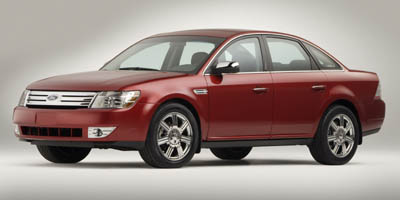
The Taurus changed dramatically for 2008. Ford revived the name by renaming and updating the Ford Five Hundred, creating a much larger sedan than the outgoing 2007 Taurus.
The new Taurus uses a 3.5-liter naturally aspirated V6 and six-speed automatic transmission. Front-wheel drive was standard, with all-wheel drive available.
These cars are roomy, comfortable, and can provide substantial mileage. They also introduced the 3.5-liter V6 configuration that makes water pump condition an important consideration for long-term ownership.
3.5-Liter Naturally Aspirated V6
The 3.5-liter naturally aspirated V6 provides considerably more power than the engines in the previous Taurus and can be a durable engine.
Its most important long-term concern is the water pump. Because the pump is internally mounted and driven within the engine's timing system, replacement requires substantially more labor than an ordinary external water pump.
More importantly, certain failures can allow coolant to contaminate the engine oil. If that happens and the vehicle continues to operate, severe internal engine damage can result.
This doesn't mean every 3.5-liter Taurus will experience catastrophic water pump failure. It does mean that unexplained coolant loss should never be ignored.
Water Pump Warning Signs
- Unexplained loss of coolant
- Coolant visible underneath the engine
- Coolant odor
- Engine overheating
- Milky or contaminated-looking engine oil
- Abnormal engine noise near the timing system
Buyer Tip: Check the coolant level before the test drive and again afterward. Also inspect the engine oil carefully. Any unexplained coolant loss on a 3.5-liter Taurus deserves professional diagnosis before purchase.
AWD and PTU Concerns
All-wheel drive makes the Taurus more capable in poor weather, but it adds additional components and potential repair costs.
The power transfer unit, or PTU, sends power toward the rear wheels. Heat and degraded lubricant can contribute to PTU wear, making fluid condition and evidence of leakage important on higher-mileage AWD cars.
Listen for whining, grinding, or other drivetrain noises and inspect underneath for fluid leakage.
Common 2008-2009 Taurus Problems
- Internal water pump concerns on the 3.5-liter V6
- PTU wear or leaks on AWD models
- Suspension and wheel bearing wear
- Air conditioning repairs
- Electrical and accessory problems as the cars age
- Normal transmission wear at higher mileage
Buyer Tip: A front-wheel-drive 2008-2009 Taurus eliminates the PTU and rear AWD hardware. If you don't need all-wheel drive, the simpler drivetrain can reduce long-term repair exposure.
Bottom Line: The 2008-2009 Taurus can be an appealing used large sedan, especially when purchased inexpensively with good maintenance records. But water pump condition should be part of every pre-purchase inspection.
2010-2019: Final Generation
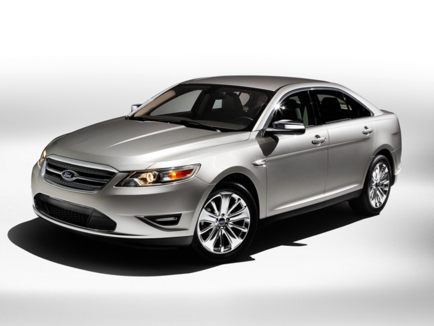
Ford redesigned the Taurus again for 2010, giving its large sedan more distinctive styling, substantially more technology, and a much more modern interior.
The 3.5-liter naturally aspirated V6 remained the primary engine, while Ford revived the Taurus SHO with a 3.5-liter twin-turbocharged EcoBoost V6 and standard all-wheel drive.
Later in the generation, Ford also offered a 2.0-liter turbocharged EcoBoost inline-four in certain front-wheel-drive models.
The final-generation Taurus can provide excellent highway comfort and substantial longevity, but it is considerably more complicated than the old 2000-2007 cars. Water pump condition, AWD components, electronics, transmission operation, and maintenance history all become important buying considerations.
3.5-Liter Naturally Aspirated V6
The naturally aspirated 3.5-liter V6 is the most common engine in this generation and generally provides strong performance without the added turbocharger complexity of the SHO.
With regular maintenance, the engine itself can reach 200,000 miles or more. The internal water pump remains the major concern.
Because water pump replacement is labor-intensive, documentation showing that it has already been professionally replaced can actually add value to a higher-mileage Taurus.
Buyer Tip: On a 3.5-liter Taurus approaching or exceeding 100,000 miles, ask specifically about water pump history rather than simply asking whether the car has been "regularly serviced."
Taurus SHO: 3.5-Liter Twin-Turbocharged EcoBoost V6
The Taurus SHO uses a 3.5-liter twin-turbocharged EcoBoost V6, transforming the large sedan into a surprisingly quick performance car.
The engine can be durable when properly maintained, but the SHO has considerably more mechanical complexity. Two turbochargers, all-wheel drive, additional heat, and higher drivetrain loads increase the number of expensive components that can eventually require attention.
Oil-change history is particularly important on turbocharged engines. Buyers should also investigate whether the car has been tuned or modified for additional boost.
A stock SHO with extensive maintenance records is generally preferable to a modified example with an uncertain history.
2.0-Liter EcoBoost Inline-Four
The 2.0-liter turbocharged EcoBoost inline-four was offered in certain later Taurus models as a fuel-economy alternative to the V6.
It provides adequate performance and avoids the 3.5-liter V6's internal water pump arrangement, but it introduces turbocharger and direct-injection complexity of its own.
Because the Taurus is a large and heavy sedan, many used-car buyers may find the naturally aspirated V6 a more appealing match when maintenance history is strong.
Common 2010-2019 Taurus Problems
- Internal water pump concerns on 3.5-liter V6 engines
- PTU wear and leakage on AWD models
- Turbocharger-related repairs on SHO models
- Transmission shift concerns on higher-mileage cars
- Wheel bearing and suspension wear
- Electronic and infotainment problems
- Power steering and steering-system concerns on certain cars
- Air conditioning and climate-control problems
Buyer Tip: Don't buy a high-mileage SHO simply because its purchase price has fallen dramatically. Performance-car depreciation doesn't make turbochargers, AWD components, transmissions, brakes, or other major repairs inexpensive.
Bottom Line: The 2010-2019 Taurus can be a durable and comfortable used sedan, but the safest purchase is usually a well-maintained, largely stock car with documented cooling-system and drivetrain maintenance. Later examples benefit from a more mature platform, but individual maintenance history remains more important than simply buying the newest year.
Best Ford Taurus Years to Buy
The best Ford Taurus years depend partly on whether you want the mechanical simplicity of the older Taurus or the additional power, safety equipment, and comfort of the later models.
For inexpensive transportation, the later years of the 2000-2007 generation can still be appealing if you find an unusually clean example. For a newer Taurus, we generally prefer later examples from the final generation, particularly when maintenance history is well documented.
| Model Years | Why We Recommend Them |
|---|---|
| 2005-2006 | Mature versions of the older Taurus with relatively simple mechanical systems and durable 3.0-liter V6 engines. |
| 2008-2009 | Comfortable, roomy sedans with the stronger 3.5-liter V6 and six-speed automatic. Water pump condition remains important. |
| 2013-2015 | Updated final-generation cars with improved features and several years of production experience behind them. |
| 2016-2019 | Among the newest Taurus choices, with a mature platform and modern safety and convenience features. |
Buyer Tip: Don't automatically choose a later Taurus because it's newer. A 2014 with complete maintenance records and evidence of cooling-system care can be a much better purchase than a neglected 2018.
Ford Taurus Years to Avoid or Inspect Carefully
There aren't many Taurus years we'd automatically reject based solely on the model year. The more useful approach is identifying years where age, drivetrain design, or early-production issues justify additional scrutiny.
| Model Years | Why Extra Inspection Is Important |
|---|---|
| 2000-2003 | These cars are now old enough that transmission condition, rust, suspension deterioration, cooling-system problems, and deferred maintenance are significant concerns. |
| 2010-2012 | Earlier years of the final-generation Taurus. Inspect the 3.5-liter V6 cooling system, transmission, electronics, and AWD system carefully. |
| Any High-Mileage 3.5-Liter V6 Taurus | Internal water pump condition becomes an important consideration because failure can become a major repair and potentially damage the engine. |
| High-Mileage Taurus SHO | Twin turbochargers, AWD, PTU components, performance use, and additional drivetrain complexity can create substantially greater repair exposure. |
Bottom Line: We'd be more concerned about a poorly maintained Taurus than a particular model year. But if two otherwise comparable cars are available, we'd generally favor a later, well-maintained example over an early final-generation car with an uncertain history.
Which Ford Taurus Engine Is Most Reliable?
The Taurus has several engines capable of high mileage, but each has a different balance of simplicity, performance, and potential repair expense.
3.0-Liter Vulcan V6
For pure simplicity, the naturally aspirated 3.0-liter Vulcan V6 is difficult to beat.
It isn't particularly powerful or sophisticated, but that's part of its appeal. With regular oil changes and proper cooling-system maintenance, these engines can run for very high mileage.
Today, the engine is often less concerning than the rest of the car. Transmission condition, rust, suspension wear, air conditioning, and electrical components may determine whether an older Taurus remains economical to own.
For someone seeking very inexpensive transportation, a clean Vulcan-powered Taurus with a good transmission can still make sense.
3.0-Liter Duratec V6
The naturally aspirated 3.0-liter Duratec V6 provides noticeably better performance while retaining a good reputation for longevity.
It's mechanically more sophisticated than the Vulcan, but it's still a relatively conventional naturally aspirated engine. A well-maintained Duratec Taurus can easily be preferable to a Vulcan-powered car in poorer overall condition.
3.5-Liter Naturally Aspirated V6
For buyers considering a 2008-2019 Taurus, the naturally aspirated 3.5-liter V6 is probably the best overall balance of performance and complexity.
It produces plenty of power for the large Taurus and avoids the twin turbochargers of the SHO.
The major caveat is the internal water pump. The pump's location makes replacement labor-intensive, and an internal failure can potentially contaminate the engine oil with coolant.
That doesn't make the 3.5-liter V6 a bad engine. It simply creates one expensive failure point that a used-car buyer needs to understand.
Buyer Tip: If you're considering a higher-mileage 3.5-liter Taurus and the water pump has already been replaced professionally with documentation, that can actually be a positive selling point.
3.5-Liter Twin-Turbocharged EcoBoost V6
The SHO's 3.5-liter twin-turbocharged EcoBoost V6 offers dramatically greater performance, but it isn't the engine we'd choose if minimum long-term ownership costs are the priority.
The engine adds two turbochargers, and the SHO also comes with AWD and the associated drivetrain hardware. Performance driving and aftermarket tuning can further increase mechanical stress.
That doesn't mean the SHO is unreliable. It means you're buying a performance sedan with correspondingly greater repair exposure.
2.0-Liter EcoBoost Inline-Four
The optional 2.0-liter turbocharged EcoBoost inline-four appeared in certain later Taurus models as a fuel-economy alternative to the V6.
It avoids the 3.5-liter V6's internal water-pump arrangement but adds turbocharger and direct-injection complexity.
For most used Taurus shoppers, we don't see enough advantage to make it our first choice over a properly maintained naturally aspirated 3.5-liter V6.
Bottom Line: For maximum simplicity, the old 3.0-liter Vulcan V6 is difficult to beat. For a modern Taurus, we'd generally favor the naturally aspirated 3.5-liter V6, provided the buyer understands and inspects for the internal water-pump concern.
Ford Taurus Repair & Maintenance Costs
Routine Taurus maintenance is generally reasonable for a large sedan. Oil changes, brakes, suspension repairs, ignition components, and other ordinary maintenance can usually be handled by independent repair shops.
The potential expenses come from major drivetrain repairs. An older Taurus may not be expensive to maintain routinely, but a transmission failure can exceed a significant percentage of the car's value. On later models, internal water pump, AWD, or SHO-specific repairs can also become costly.
| Maintenance or Repair | Typical Cost |
|---|---|
| Oil change | $60-$120 |
| Brake pads and rotors | $400-$900 |
| Wheel bearing replacement | $400-$800 |
| Engine or transmission mount | $300-$700 |
| Suspension repairs | $600-$1,500+ |
| Internal water pump replacement | $1,200-$2,500+ |
| PTU or AWD repair | $800-$2,000+ |
| Major transmission repair | $2,000-$4,000+ |
| SHO turbocharger-related repair | $1,500-$3,500+ |
These are approximate ranges. Actual costs vary substantially with model year, labor rates, geographic location, parts selection, and the extent of the repair.
The Taurus illustrates why purchase price shouldn't be the only consideration when shopping for an older sedan. A $5,000 SHO still has the mechanical complexity of a twin-turbocharged AWD performance vehicle.
Buyer Tip: Leave room in your budget after purchasing an inexpensive Taurus. Saving $1,500 on the purchase doesn't help much if the car immediately needs $2,500 in deferred repairs.
How Long Does a Ford Taurus Last?
A properly maintained Ford Taurus can reach 200,000 miles, and particularly well-maintained examples can exceed 250,000 miles.
The older 3.0-liter V6 engines are especially capable of high mileage. With those cars, the automatic transmission, rust, suspension, and accumulated age-related repairs may end the vehicle's economical life before the engine itself wears out.
The later 3.5-liter V6 can also reach high mileage, but cooling-system maintenance and water pump condition become important variables.
Typical Lifespan
- 150,000 miles: Very achievable for a properly maintained Taurus.
- 200,000 miles: A realistic target for the stronger drivetrains.
- 250,000 miles: Achievable with excellent maintenance and timely repairs.
- 300,000+ miles: Possible, but overall vehicle condition becomes increasingly important.
Mileage alone shouldn't determine whether you buy one.
A 170,000-mile Taurus with extensive records, a properly functioning transmission, minimal rust, and a documented water-pump replacement may actually represent less risk than a neglected 90,000-mile example.
Bottom Line: Around 200,000-250,000 miles is a reasonable lifespan expectation for a good Taurus. Beyond that, maintenance history and the condition of the entire vehicle become more important than the engine's theoretical lifespan.
Buying a Used Ford Taurus: What Matters Most?
Start by determining exactly which Taurus you're considering.
A 2005 Taurus and a 2015 Taurus share a name, but from a used-car standpoint they're substantially different vehicles with different strengths and potential problems.
On an older Taurus, transmission condition and corrosion deserve special attention. On later cars, add the internal water pump and AWD components to the inspection.
Before You Buy
- Identify the exact engine and drivetrain.
- Review maintenance and repair records.
- Check automatic transmission operation when cold and fully warmed up.
- Inspect engine oil and coolant condition.
- Check carefully for unexplained coolant loss on 3.5-liter V6 models.
- Ask whether the internal water pump has ever been replaced.
- Inspect AWD models for PTU leaks or drivetrain noise.
- Check older cars carefully for structural rust.
- Inspect suspension components, wheel bearings, and steering.
- Test the air conditioning and all electrical accessories.
- On an SHO, determine whether the engine has been tuned or modified.
- Check SHO turbocharger operation and maintenance history.
- Scan the vehicle for stored diagnostic trouble codes.
- Check the VIN for outstanding recalls.
- Have an independent mechanic perform a pre-purchase inspection.
Be particularly careful with former police Taurus models. Mileage alone doesn't tell the whole story because police vehicles can accumulate substantial engine idling hours in addition to road mileage.
Buyer Tip: A former police Taurus isn't automatically a bad purchase, but we'd want to know how it was used and maintained. Extensive idling, hard acceleration, curb impacts, and long hours of operation can create wear that isn't reflected by the odometer alone.
Pros & Cons of Buying a Used Ford Taurus
Pros
- Durable engines available across multiple generations
- Comfortable highway ride
- Spacious trunk
- Strong performance from later V6 models
- Relatively inexpensive used purchase prices
- Good parts availability
- 200,000+ miles possible with proper maintenance
- SHO offers substantial performance for relatively little purchase money
Cons
- Internal water pump is a significant concern on 3.5-liter V6 models
- Older cars can develop expensive transmission problems
- AWD adds PTU and drivetrain complexity
- SHO models can become expensive to repair
- Older examples may have substantial rust and deferred maintenance
- Later Taurus models are large outside but don't make especially efficient use of their exterior dimensions
- Depreciation can make major repairs exceed the value of older examples
Final Verdict
The Ford Taurus is a better used-car proposition than its low resale values sometimes suggest, but choosing the right version matters.
For someone looking for extremely inexpensive transportation, a clean 2005-2006 Taurus with the 3.0-liter V6 can still be appealing. The engines are relatively simple and durable, although transmission condition and age-related deterioration should be evaluated carefully.
The 2008-2009 Taurus offers substantially more room, power, and refinement. These cars can provide good longevity, but they introduce the 3.5-liter V6's internal water pump as an important buying consideration.
For buyers wanting something newer, we'd concentrate on well-maintained 2013-2019 models, particularly front-wheel-drive cars with the naturally aspirated 3.5-liter V6. These later cars offer an appealing combination of comfort, power, equipment, and purchase price, although water-pump history remains important.
The Taurus SHO is a different proposition. It's fast, comfortable, and unusually inexpensive on the used market, but the twin-turbocharged engine and AWD drivetrain mean it shouldn't be purchased with ordinary economy-car repair expectations.
Ultimately, the best Ford Taurus isn't necessarily the newest or lowest-mileage example. A strong maintenance history, smooth transmission, healthy cooling system, minimal rust, and evidence that previous owners addressed problems promptly are far more important.
Choose carefully, and a Ford Taurus can provide 200,000 to 250,000 miles or more of comfortable service without requiring the purchase price of a comparable newer sedan.
Also, More On Ford Reliability
If you'd like to compare different Ford models, or years, be sure to read our Ford Reliability & Problems: Best Used Fords & Years Guide. It highlights the models, best years to buy, common problems, and helps you choose the right vehicle.
Some Insider Insights: