

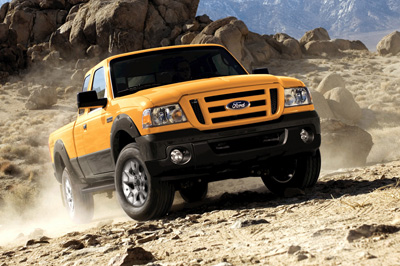
Which Ford Ranger years are the most reliable? Which years should you avoid? And if you're shopping for a used Ranger, which engines and generations offer the best combination of reliability, capability, and long-term value?
The Ford Ranger has a strong reputation for durability, particularly among the relatively simple compact trucks sold through 2011. Many older Rangers remain on the road with well over 200,000 miles, and carefully maintained examples can travel considerably farther.
There is one important gap in the Ranger's U.S. history. Ford discontinued the compact Ranger in the United States after the 2011 model year. There were no new U.S.-market Rangers for 2012 through 2018. The Ranger name continued in other countries, but Ford didn't bring the truck back to American showrooms until the 2019 model year.
That means a shopper comparing a 2011 Ranger with a 2019 Ranger is actually looking at two very different trucks. The older Ranger is a relatively small, simple compact pickup, while the 2019-2023 Ranger is a larger, more powerful midsize truck with a turbocharged engine, 10-speed automatic transmission, and substantially more technology.
This guide covers U.S.-market Ford Ranger model years from 1998 through 2023, including the 2012-2018 production gap, reliability by generation, common problems, engine differences, years to avoid or inspect carefully, repair costs, expected lifespan, and the best years to buy.
In This Guide You'll Learn
- How reliable the Ford Ranger is over the long term
- Which Ford Ranger years are the best choices
- Which Ranger years require extra inspection
- Why there were no U.S. Rangers from 2012 through 2018
- The most common problems by generation
- Which Ford Ranger engines are the most reliable
- How rust affects older Ranger buying decisions
- How much common Ranger repairs can cost
- How long a Ford Ranger can last
- What to inspect before buying a used Ranger
And I can't stress this enough:
Multiple dealers → compete for your business → you save
Is the Ford Ranger Reliable?
Overall, the Ford Ranger has an above-average reputation for long-term reliability, particularly the older 1998-2011 compact trucks. Their relatively simple engines, transmissions, and electronics helped many Rangers remain economical to repair long after passing 150,000 or 200,000 miles.
The older Ranger was also sold in enormous numbers, which means replacement parts remain readily available. Independent repair shops are familiar with the truck, and many mechanical repairs are relatively straightforward compared with newer pickups.
Engine choice matters. The four-cylinder Rangers are generally simple and durable, although performance can be modest. The 3.0-liter V6 is also known more for durability than power or fuel economy.
The 4.0-liter V6 provides much stronger performance and towing capability, but certain versions deserve additional scrutiny. In particular, earlier 4.0-liter single-overhead-cam V6 engines can develop timing-chain guide and tensioner problems that are considerably more expensive to repair than many typical Ranger issues.
On an older Ranger, however, the engine may not be the most important concern. Rust can determine whether the truck is worth buying at all. Frame corrosion, leaf-spring mounting areas, brake lines, fuel-system components, and body mounts deserve careful inspection on trucks that have spent years in areas where road salt is used.
The 2019-2023 Ranger is a very different vehicle. U.S. models use a 2.3-liter turbocharged EcoBoost inline-four paired with a 10-speed automatic transmission. This combination delivers far more power and torque than most older Rangers, but it also introduces additional mechanical and electronic complexity.
Strengths
- Excellent durability from many older Ranger engines
- Many examples capable of exceeding 200,000 miles
- Simple mechanical design on 1998-2011 trucks
- Excellent replacement-parts availability
- Relatively inexpensive repairs on many older models
- Strong resale demand for clean older Rangers
- Good towing and performance from 2019-2023 models
Potential Weaknesses
- Frame and underbody rust on older trucks
- Timing-chain problems on certain 4.0-liter V6 engines
- Automatic transmission wear on neglected high-mileage trucks
- Cooling-system and thermostat-housing leaks on some engines
- Front suspension and steering wear
- 10-speed automatic transmission complaints on some newer Rangers
- Greater repair complexity on 2019-2023 EcoBoost models
Bottom Line: The Ford Ranger can be an exceptionally durable used pickup. For 1998-2011 trucks, rust and overall condition are often more important than mileage alone. For 2019-2023 Rangers, maintenance history and drivetrain operation become increasingly important.
Reliability at a Glance
| Category | Our Assessment |
|---|---|
| Overall Reliability | Above Average |
| Best Older Years | 2006-2011 with a strong maintenance history |
| Best Newer Years | 2021-2023 |
| Years Requiring Extra Inspection | 1998-2002 and 2019-2020 |
| Major Older-Truck Concern | Rust and frame corrosion |
| Important V6 Concern | Timing-chain system on certain 4.0-liter SOHC engines |
| Expected Lifespan | 200,000-300,000+ miles with excellent maintenance |
| Maintenance Costs | Low to Moderate on older trucks; Moderate on 2019-2023 models |
Buyer Tip: Don't assume a low-mileage older Ranger is automatically better. A rust-free 180,000-mile truck with extensive maintenance records may be a far better purchase than a 90,000-mile Ranger with serious frame corrosion.
Reliability by Generation
1998-2011: Compact Ford Ranger
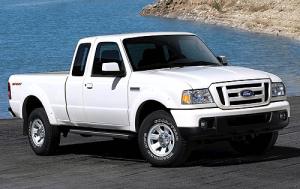
The 1998-2011 Ranger represents the final evolution of Ford's long-running compact pickup sold in the United States. Although Ford updated the styling, engines, safety equipment, and interiors over the years, the truck retained a relatively straightforward design.
Buyers could choose from several four-cylinder and V6 engines, rear-wheel drive or four-wheel drive, and manual or automatic transmissions. Regular-cab and extended-cab configurations were widely available.
One of the reasons these Rangers remain popular is their size. They are substantially smaller than today's midsize pickups, making them useful for owners who want a basic truck without the bulk of a modern Ranger or F-150.
Mechanical durability can be excellent. It isn't unusual to find Rangers from this era with more than 200,000 miles, and some reach 300,000 miles when rust doesn't end their useful lives first.
Four-Cylinder Ranger Engines
Four-cylinder Rangers were generally the simplest and most economical versions. Earlier trucks used a 2.5-liter naturally aspirated inline-four, while later models received a more modern 2.3-liter naturally aspirated inline-four.
These engines don't provide the towing capability or acceleration of the V6 options, but their simplicity can be an advantage for long-term ownership.
A four-cylinder Ranger with a manual transmission is one of the simplest combinations in the lineup and can provide excellent longevity when maintained properly.
Buyer Tip: If you don't need to tow heavy loads, don't automatically dismiss a four-cylinder Ranger. The reduced performance can be a worthwhile tradeoff for mechanical simplicity and lower operating costs.
3.0-Liter V6
The 3.0-liter naturally aspirated V6 is an interesting Ranger engine because it isn't particularly powerful or fuel efficient, but it has a reputation for being tough.
For buyers who value longevity more than acceleration, a well-maintained 3.0-liter Ranger can be an appealing used truck. As mileage increases, normal age-related problems such as oil leaks, cooling-system repairs, ignition components, and sensors become more likely.
Fuel economy isn't dramatically better than some larger engines, so the 3.0-liter's main appeal is durability rather than efficiency.
4.0-Liter V6
The 4.0-liter V6 is the strongest mainstream engine choice in many older Rangers and is better suited to towing, hauling, four-wheel-drive use, and buyers who want more responsive performance.
However, the exact version matters. Earlier Rangers used a 4.0-liter overhead-valve V6, while the 4.0-liter single-overhead-cam V6 became the important later version.
The 4.0-liter SOHC engine can provide high mileage, but its timing-chain system is considerably more complex. Worn guides, tensioners, or related components can create rattling noises, particularly during startup.
Timing-chain repairs can become expensive because of the engine's design and the location of some components. A pronounced chain rattle shouldn't be dismissed as normal engine noise.
Buyer Tip: When inspecting a 4.0-liter SOHC Ranger, try to hear the engine start completely cold. A seller who has already warmed the truck before you arrive may unintentionally or intentionally prevent you from hearing startup noises.
Common 1998-2011 Ranger Problems
- Frame and underbody corrosion
- Timing-chain guide and tensioner wear on certain 4.0-liter SOHC engines
- Thermostat housing and cooling-system leaks
- Automatic transmission wear at higher mileage
- Clutch wear on manual-transmission trucks
- Ball joint and suspension wear
- Wheel bearing and hub problems
- Fuel pump and electrical component failures with age
- Air conditioning repairs
- Oil leaks on higher-mileage engines
Buyer Tip: On a northern Ranger, get underneath the truck before becoming interested in the interior, mileage, or asking price. Severe structural rust can make an otherwise excellent-running Ranger a poor purchase.
Bottom Line: The 1998-2011 Ranger is one of the more durable inexpensive pickups available, but age and rust now separate the good trucks from the bad ones more than model year alone.
1998-2002: Earlier Rangers
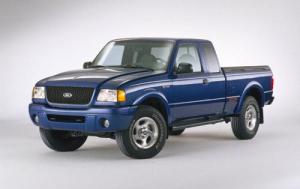
The 1998 model year brought substantial updates to the Ranger, including chassis and suspension changes. These earlier trucks can still be excellent work vehicles, but they are now old enough that age-related deterioration requires careful consideration.
The 2001 model year is particularly important because the 4.0-liter SOHC V6 became available in the Ranger. Its additional power was welcome, but early versions deserve extra attention for timing-chain noise and service history.
At this age, rubber hoses, seals, suspension bushings, brake lines, fuel-system components, electrical connections, and cooling-system parts may all require replacement regardless of mileage.
Buyer Tip: Treat any 1998-2002 Ranger as an individual vehicle rather than buying based on the Ranger's general reputation for durability. A professional inspection is particularly valuable on a truck more than two decades old.
2003-2005: Middle Years
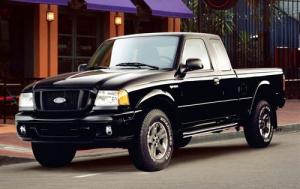
By the middle portion of this Ranger generation, Ford had several years to refine the truck. These models retain the mechanical simplicity that makes older Rangers appealing while generally avoiding some of the earliest production concerns.
Condition still varies enormously. Many Rangers were purchased specifically as work trucks, so inspect the bed, rear suspension, hitch area, drivetrain, and underside for evidence of heavy hauling or towing.
Four-wheel-drive trucks should also be checked carefully for proper engagement and front-drivetrain noise.
2006-2011: Final Compact Ranger Years
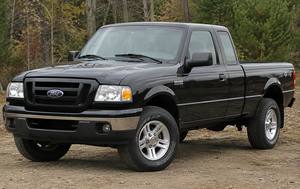
The final 2006-2011 Rangers are among our preferred years for buyers seeking the old-style compact truck. The basic platform was mature, and these trucks are several years newer than early examples while retaining straightforward mechanical systems.
That doesn't eliminate concerns about rust, timing-chain wear on 4.0-liter SOHC engines, or transmission condition. But a well-maintained late-production Ranger can still make an excellent inexpensive pickup.
The final 2011 model year has particular appeal for buyers who want the newest possible version of the traditional U.S. compact Ranger.
Buyer Tip: Clean 2006-2011 Rangers can command surprisingly strong prices. Don't pay a premium simply because a truck has low mileage; frame condition and maintenance history should justify the price.
Bottom Line: A rust-free 2006-2011 Ranger with a documented maintenance history is one of the strongest older Ranger choices.
What Happened to the Ford Ranger From 2012-2018?
There were no new Ford Rangers sold in the United States for model years 2012 through 2018.
Ford ended U.S. production of the compact Ranger after the 2011 model year. The Ranger name continued on pickups sold in international markets, but those trucks were not simply continuation models of the old U.S. compact Ranger.
Ford eventually decided to return to the American midsize-pickup market, and the Ranger reappeared in U.S. dealerships for the 2019 model year.
This distinction matters when researching reliability online. Information about a 2014 or 2016 Ford Ranger generally refers to an international-market truck, not a U.S.-market Ranger.
Buyer Tip: If you see a U.S. classified advertisement describing a truck as a 2012-2018 Ford Ranger, verify exactly what is being sold. It may be an imported vehicle, a listing error, or a vehicle originally sold outside the United States.
2019-2023: Ford Ranger Returns to the United States
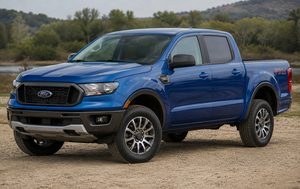
The Ranger returned for the 2019 model year, but it was no longer the small, basic compact pickup Americans remembered from 2011.
The new U.S. Ranger was a midsize truck offering substantially more horsepower, torque, towing capability, technology, and safety equipment.
Ford simplified the U.S. powertrain lineup by using a 2.3-liter turbocharged EcoBoost inline-four paired with a 10-speed automatic transmission.
The combination provides strong low-speed torque and surprisingly good performance for a four-cylinder truck. It also represents a major increase in complexity compared with an older naturally aspirated Ranger.
2.3-Liter EcoBoost Inline-Four
The 2.3-liter turbocharged EcoBoost engine can provide good durability when maintained properly. It produces substantially more power than the four-cylinder engines used in older Rangers and provides enough torque for towing and everyday truck use.
Regular oil changes with the correct oil specification are particularly important because the turbocharger depends on clean engine oil for lubrication and cooling.
Cooling-system condition also deserves attention. Any unexplained coolant loss, overheating history, abnormal exhaust smoke, or repeated check-engine lights should be investigated before purchase.
For long-term ownership, a completely stock truck with documented maintenance is generally preferable to one that has been aggressively tuned for additional boost or power.
10-Speed Automatic Transmission
The 2019-2023 Ranger uses a 10-speed automatic transmission designed to keep the turbocharged engine operating efficiently across a wide range of speeds and loads.
Many operate normally, but some owners have reported harsh shifts, hesitation, delayed engagement, or inconsistent shift behavior.
A used Ranger should be driven both cold and fully warmed up. Pay attention to low-speed shifting, moderate acceleration, highway operation, and transitions between Drive and Reverse.
Common 2019-2023 Ranger Problems
- Harsh or inconsistent automatic transmission shifting on some trucks
- Electronic and infotainment glitches
- Battery and charging-system problems
- Turbocharged engine components requiring careful maintenance
- Suspension and alignment issues on heavily used trucks
- Four-wheel-drive components requiring inspection on off-road vehicles
- Normal brake and tire wear accelerated by towing or heavy loads
Buyer Tip: Inspect the hitch, bed, underbody, skid plates, suspension, and tires for clues about how a newer Ranger was used. A truck that spent years towing or driving off-road can have considerably more drivetrain stress than its mileage suggests.
Bottom Line: The 2019-2023 Ranger is a capable and generally durable midsize pickup, but it is mechanically much more sophisticated than the 1998-2011 Ranger. Maintenance history and drivetrain behavior therefore deserve greater attention when buying used.
What Are The Best Ford Ranger Years to Buy?
The best Ford Ranger years depend partly on whether you want the simplicity of the older compact truck or the greater power, towing capability, and technology of the 2019-2023 midsize Ranger.
Among older trucks, we generally favor the later 2006-2011 models because they represent the most mature versions of the long-running compact Ranger. For the newer generation, the 2021-2023 models benefit from several years of production refinement after the Ranger returned to the U.S. market.
| Model Year | Why We Recommend It |
|---|---|
| 2006-2008 | Mature versions of the compact Ranger with simple drivetrains, excellent parts availability, and good long-term durability when rust-free. |
| 2009-2011 | Final years of the traditional compact Ranger and among our favorite older choices. Condition and rust remain more important than mileage alone. |
| 2021-2023 | Later versions of the returning midsize Ranger with several years of platform refinement. Strong 2.3-liter EcoBoost performance and modern safety technology. |
Buyer Tip: With an older Ranger, we'd put more emphasis on frame condition and maintenance history than the exact model year. A rust-free 2005 can easily be a better purchase than a badly corroded 2011.
Which Ford Ranger Years Should You Avoid or Inspect Carefully?
There are relatively few Ranger years we'd categorically tell buyers to avoid. Instead, certain years and configurations deserve additional inspection because of age, engine concerns, or first-year drivetrain issues.
| Model Year | Why Extra Inspection Is Important |
|---|---|
| 1998-2000 | These trucks are now more than 25 years old. Rust, cooling-system condition, suspension wear, brake lines, seals, and deferred maintenance are major considerations. |
| 2001-2003 with 4.0-liter SOHC V6 | Earlier versions of the 4.0-liter SOHC V6 deserve careful attention for timing-chain guide and tensioner noise. |
| 2019-2020 | First years after the Ranger returned to the U.S. market. Evaluate the 10-speed automatic carefully for harsh, delayed, or inconsistent shifting. |
Important: There are no U.S.-market 2012-2018 Rangers to classify as good or bad model years. Ford discontinued the American Ranger after 2011 and brought it back for 2019.
Bottom Line: We'd concentrate less on finding a supposedly perfect Ranger year and more on finding a rust-free older truck or a properly maintained newer truck with a drivetrain that operates correctly.
Which Ford Ranger Engine Is Most Reliable?
Several Ranger engines can provide excellent longevity, but the best choice depends on whether you value simplicity, power, towing capability, or fuel economy.
2.3-Liter Naturally Aspirated Inline-Four
The 2.3-liter naturally aspirated inline-four used in later versions of the older compact Ranger is one of our favorite choices for buyers prioritizing mechanical simplicity and long-term durability.
It doesn't provide the acceleration or towing ability of the V6 engines, but it avoids much of their additional complexity. When paired with a manual transmission, it creates an especially straightforward drivetrain.
A well-maintained four-cylinder Ranger can exceed 200,000 miles and potentially travel much farther.
3.0-Liter V6
The 3.0-liter naturally aspirated V6 is not one of Ford's most exciting engines. Power is modest, and fuel economy isn't dramatically better than the larger 4.0-liter V6.
What the 3.0-liter offers is durability. Properly maintained examples can accumulate very high mileage, making it a reasonable choice for buyers looking for a basic work truck.
At this age, cooling-system condition, oil leaks, ignition components, sensors, and maintenance history matter more than the basic engine design.
4.0-Liter V6
The 4.0-liter V6 is the better choice for buyers who need additional torque, towing capability, or stronger acceleration.
The earlier overhead-valve version has a reputation for being relatively rugged. The later 4.0-liter single-overhead-cam V6 provides stronger performance but uses a more complicated timing-chain system.
A properly maintained 4.0-liter SOHC engine can still provide substantial mileage, but timing-chain noise should never be ignored because repair costs can be significant.
2.3-Liter EcoBoost Inline-Four
The 2.3-liter turbocharged EcoBoost inline-four used in the 2019-2023 U.S. Ranger produces substantially more power and torque than the four-cylinder engines found in older Rangers.
It can also provide good long-term durability, but turbocharging and direct injection create more complexity. Regular oil changes, proper cooling-system maintenance, and avoiding questionable aftermarket tuning become especially important.
Buyer Tip: If maximum simplicity is the goal, an older naturally aspirated four-cylinder Ranger is difficult to beat. If you need modern towing capability and performance, the 2.3-liter EcoBoost is far more capable but also more complex.
Ford Ranger Repair & Maintenance Costs
Older Rangers are generally inexpensive pickups to maintain. Replacement parts are widely available, and most independent repair shops are familiar with their engines, transmissions, suspension systems, and four-wheel-drive components.
The largest potential expenses on an older truck include transmission repairs, 4.0-liter SOHC timing-chain work, four-wheel-drive repairs, and extensive rust-related work.
Newer 2019-2023 Rangers have more sophisticated turbocharged engines, electronics, and transmissions, so major repairs can be considerably more expensive.
| Maintenance or Repair | Typical Cost |
|---|---|
| Oil change | $70-$130 |
| Brake pads and rotors | $450-$900 |
| Wheel bearing or hub replacement | $400-$800 |
| Ball joints or front suspension repairs | $500-$1,200+ |
| Clutch replacement | $1,000-$1,800+ |
| 4.0-liter SOHC timing-chain repair | $1,500-$3,000+ |
| Major four-wheel-drive repair | $800-$2,000+ |
| Turbocharger replacement on newer Ranger | $1,500-$3,000+ |
Actual repair costs vary considerably depending on model year, engine, drivetrain, labor rates, geographic location, and whether original-equipment or aftermarket parts are used.
Buyer Tip: Be cautious about spending thousands of dollars repairing serious structural rust on an inexpensive older Ranger. Mechanical components can be replaced; severe frame deterioration can make the entire truck uneconomical or unsafe to restore.
How Long Does a Ford Ranger Last?
A properly maintained Ford Ranger can commonly reach 200,000 miles, and the best older trucks can exceed 250,000 or even 300,000 miles.
The relatively simple engines in the 1998-2011 Ranger are often capable of lasting longer than the rest of the truck. In areas where road salt is common, corrosion may end a Ranger's useful life before the engine wears out.
The 2019-2023 Ranger is capable of substantial mileage as well, although these trucks haven't been on the road as long as the older compact Rangers. Long-term durability will depend heavily on oil-change history, cooling-system maintenance, transmission condition, towing use, and turbocharger health.
Typical Lifespan
- 150,000 miles: Should not be considered unusually high for a properly maintained Ranger.
- 200,000 miles: Commonly achievable with good maintenance.
- 250,000 miles: Realistic for many well-maintained older Rangers.
- 300,000+ miles: Possible, particularly with simple older drivetrains and minimal rust.
Don't evaluate an older Ranger by mileage alone. A 220,000-mile truck from a dry climate can have considerably more useful life remaining than a 120,000-mile truck with serious structural corrosion.
Bottom Line: Around 200,000 to 250,000 miles is a reasonable lifespan expectation for a good Ranger, while exceptionally well-maintained older trucks can exceed 300,000 miles.
Buying a Used Ford Ranger: What Matters Most?
The most important inspection points depend on which Ranger you're considering.
On a 1998-2011 truck, start underneath. Frame condition, suspension mounting points, brake lines, fuel lines, and structural corrosion should be evaluated before worrying about cosmetic condition.
On a 2019-2023 Ranger, pay greater attention to maintenance history, transmission operation, turbocharged-engine condition, electronics, and evidence of heavy towing or off-road use.
Before You Buy
- Identify the exact engine and drivetrain.
- Review maintenance and repair records.
- Inspect the frame carefully for structural rust.
- Check leaf-spring and suspension mounting areas.
- Inspect brake and fuel lines for corrosion.
- Check engine oil and coolant condition.
- Look for oil, coolant, transmission, and differential leaks.
- Start 4.0-liter SOHC engines completely cold and listen for timing-chain rattle.
- Verify smooth automatic transmission operation.
- Check clutch operation on manual-transmission trucks.
- Test four-wheel drive in all available modes.
- Listen for wheel bearing, differential, and drivetrain noise.
- Inspect the hitch and bed for evidence of heavy towing or hauling.
- Check underneath newer trucks for off-road damage.
- Scan for stored diagnostic trouble codes.
- Verify applicable recalls have been completed.
- Have an independent mechanic perform a pre-purchase inspection.
For older Rangers, rust deserves enough emphasis to justify putting the truck on a lift before purchase. Surface corrosion is expected on many older pickups, but extensive scaling, perforation, or weakened structural mounting points are very different concerns.
Buyer Tip: If you're shopping outside the Rust Belt, a Ranger originally owned in a dry climate may be worth paying more for. A solid frame can add considerably more practical value than unusually low mileage.
Pros & Cons of Buying a Used Ford Ranger
Pros
- Excellent potential longevity
- Simple mechanical design on older trucks
- Excellent parts availability
- Relatively inexpensive older-truck repairs
- Compact dimensions of 1998-2011 models
- Strong resale demand for clean examples
- Modern 2019-2023 models offer strong towing and performance
Cons
- Serious rust possible on older trucks
- 4.0-liter SOHC timing-chain repairs can be expensive
- Clean older Rangers can command surprisingly high prices
- Some trucks have experienced years of hard work or off-road use
- Newer EcoBoost models are considerably more complex
- Some 2019-2023 trucks can exhibit undesirable transmission behavior
Final Verdict
The Ford Ranger deserves its reputation as a durable used pickup, but the Ranger sold from 1998 through 2011 and the one sold from 2019 through 2023 should almost be considered two different vehicles.
The older compact Ranger is appealing because of its simplicity. Four-cylinder and 3.0-liter V6 models can provide excellent longevity, while the 4.0-liter V6 offers stronger performance but requires additional attention to timing-chain condition on certain versions.
Among these older trucks, the 2006-2011 models are some of our favorite choices. But at this age, we'd rather buy a rust-free, well-maintained earlier Ranger than a newer truck with serious corrosion or a history of neglect.
Remember that there were no new U.S.-market Rangers for model years 2012 through 2018. Ford ended the traditional American compact Ranger after 2011 and returned with a substantially larger and more sophisticated midsize truck for 2019.
Among the newer Rangers, the 2021-2023 models are attractive choices for buyers who want greater towing capability, modern safety features, and considerably more performance. The 2.3-liter EcoBoost engine can be durable, but proper maintenance and smooth operation of the 10-speed automatic should be verified before purchase.
Ultimately, the best Ford Ranger isn't necessarily the newest truck or the one with the lowest mileage. For an older Ranger, structural condition can be more important than anything shown on the odometer. For a newer Ranger, maintenance history and drivetrain condition deserve greater emphasis.
Choose carefully, and a Ford Ranger can provide 200,000 to 250,000 miles of useful service, while particularly well-maintained older examples can exceed 300,000 miles.
Looking for More Ford Truck Model Reliability Information?
If you're comparing different Ford trucks, be sure to read our Ford Truck Reliability & Problems: Best Used Models & Years. It compares the F-150, Ranger, Super Duty, Maverick, and other popular Ford trucks, highlights the best years to buy, common problems, and helps you choose the right truck for your needs.
Also, More On Overall Ford Reliability
If you'd like to compare different Ford models, or years, be sure to read our Ford Reliability & Problems: Best Used Fords & Years Guide. It highlights the models, best years to buy, common problems, and helps you choose the right vehicle.
And Your Trade-In
Also, it's good to always know the value of your trade-in while you're evaluating your next possible purchase. Here's a good source for a quick and accurate appraisal: free trade-in appraisal.
What's Next?
If you may be buying soon, I'd recommend reading my most effective negotiation method for used cars. It explains a quick way to identify the dealerships most motivated to deal, no matter how busy they may seem, and how to follow up once you've found them. That can be the difference between getting a good price and getting a great one.
Or, if you'd consider buying a brand-new Ranger if you could get a lower-than-expected price, learn how to shop the dealer, not just the car.
And beware of "Dealer Fees": Before agreeing to a dealer's numbers, see which dealer fees are legitimate, which can be negotiated, and which can be avoided.
Some Inside Insights: