

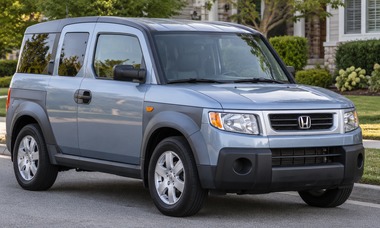
The 2003–2011 Honda Element still attracts used-car shoppers because its four-seat cabin, wide-opening side doors and flexible cargo space are difficult to duplicate. Its mechanical simplicity is appealing, too. Every Element used a 2.4-liter four-cylinder engine, and buyers could choose front-wheel drive or Honda's optional Real Time 4WD system.
But even the newest Element is now an older vehicle. A dependable engine cannot make up for severe structural rust, neglected fluids or years of deferred repairs. For an Element buyer today, condition and maintenance history matter more than choosing a supposedly trouble-free model year.
In This Guide
- How reliable is the Honda Element?
- How many miles can a Honda Element last?
- What problems should you check by model-year group?
- What causes common Element symptoms, including rear-end groaning and code P2646?
- How do you inspect a used Element for dangerous rust?
Honda Element Reliability Overview
The Honda Element can be a durable used vehicle, but its age makes a thorough inspection essential. Its 2.4-liter engine has a favorable reputation when maintained, and the Element does not have a continuously variable transmission, or CVT. Its distinctive interior also remains genuinely useful.
The largest buying risk is often underneath the vehicle. Corrosion around the rear suspension mounting points can be far more consequential than a worn interior or an ordinary engine repair. On a four-wheel-drive Element, the rear differential adds a maintenance item and a possible source of noise during tight turns. Engine warning lights, transmission behavior, suspension wear and the condition of the windows and doors also deserve attention.
| Model years | What changed | Main buying concerns |
|---|---|---|
| 2003–2006 | Original Element design and earlier powertrain specification | Structural rust, age-related repairs, transmission operation and maintenance history |
| 2007–2008 | Updated engine specification, five-speed automatic and additional standard safety equipment; SC trim introduced | Structural rust, four-wheel-drive maintenance, engine warning lights and suspension wear |
| 2009–2011 | Refreshed appearance and final production years | Structural rust, service history and the overall condition of an aging vehicle |
Important distinction: These are model-year groups within the Element's single generation. They are not separate generations, and a later year is not automatically the better purchase.
How Many Miles Can a Honda Element Last?
A well-maintained Honda Element can reach 200,000 miles, and 250,000 miles or more is possible. Those figures describe what a sound, properly maintained vehicle may achieve; they are not a guarantee for every original engine, transmission or four-wheel-drive component.
At 100,000 miles, look for evidence that routine maintenance has continued beyond basic oil changes. At 150,000 miles, pay close attention to fluid changes, leaks, suspension condition and how the transmission behaves during a long test drive. At 200,000 miles, a clean inspection and documented repairs matter considerably more than the odometer reading alone. At 250,000 miles, expect some major components to have needed attention and budget for additional age-related work.
Rust changes the calculation. An Element with 220,000 miles and sound rear suspension mounts may be a more sensible purchase than one with 120,000 miles and serious structural corrosion. Have a qualified mechanic inspect the underside on a lift before buying, particularly if the vehicle has spent time where roads are salted.
Honda Element Reliability by Model-Year Group
First and Only Generation: 2003–2011 Honda Element
All Elements share the same basic formula: a 2.4-liter naturally aspirated four-cylinder engine, four seats and an unusually adaptable cabin. Honda offered manual and conventional automatic transmissions during the model's run, along with front-wheel drive or optional Real Time 4WD on applicable versions. The sportier SC trim, introduced for 2007, has a lower stance and different suspension tuning; it should not be assumed to have the same ground clearance or equipment as another Element.
The engine's technical family name is K24: in ordinary terms, that is the Element's 2.4-liter four-cylinder Honda engine. Its generally strong reputation is a reason to consider an Element, but it does not replace checking oil level, cooling-system condition, warning lights and maintenance records on the individual vehicle.
2003–2006 Honda Element Reliability and Problems
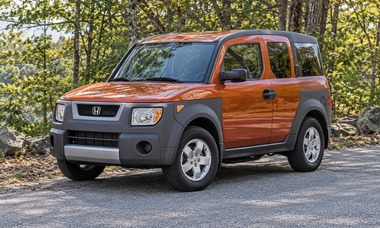
The earliest Elements offer the original design at a potentially lower purchase price. Their age is now the main issue: rubber parts, suspension components, exhaust systems, door hardware and electrical accessories may need attention even on examples with modest mileage. Check that the automatic shifts properly or, on a manual, that the clutch engages smoothly without slipping.
Do not assume an early Element is unreliable simply because of its model year. Likewise, do not rely on a seller's claim that “the engine lasts forever.” A vehicle that has spent two decades on salted roads needs a structural inspection regardless of how well it starts and drives.
2007–2008 Honda Element Reliability and Problems
Honda revised the Element for 2007. The updated 2.4-liter engine was rated at 166 horsepower, a five-speed automatic replaced the earlier automatic, and Honda listed features including side-curtain airbags and electronic stability control. The SC trim also joined the range.
These updates make a clean 2007–2008 Element appealing, but they do not remove the shared aging and rust concerns. On a four-wheel-drive model, ask for rear differential service records and make several slow, tight turns during the test drive. If the check-engine light is on, obtain the actual diagnostic codes before agreeing on a price.
2009–2011 Honda Element Reliability and Problems
The final-year Elements have the advantage of being somewhat newer and received revised exterior styling. That can make them attractive used buys, provided the price reflects their actual condition rather than rarity alone.
A 2009–2011 Element still needs the same underbody inspection as an early example. Review its service records, check every door and window, and test it from a cold start through a full drive. A later model with substantial rust or a persistent warning light is not automatically preferable to a well-kept older one.
Common Problems to Check on 2003–2011 Honda Elements
- Rear suspension mounting-area corrosion: Severe rust near the rear trailing-arm mounts can undermine the structure that holds the rear suspension in place. This deserves particular attention on vehicles exposed to road salt.
- Four-wheel-drive rear differential noise: Groaning or binding during slow, tight turns warrants an inspection and a review of rear differential fluid service. Other driveline or suspension faults can also make noise.
- Engine warning lights and reduced power: Honda issued service information covering an intermittent rocker-arm oil-pressure-switch fault on 2003–2011 Elements. Read the fault codes and diagnose the vehicle before replacing parts.
- Transmission or clutch wear: Check for delayed engagement or poor shifting in an automatic, and slipping or difficult shifts in a manual. Age and previous use matter more than a blanket claim about one transmission type.
- Suspension, brakes and exhaust wear: Inspect for clunks, uneven tire wear, braking vibration, leaks and exhaust corrosion. These repairs can add up on a vehicle this old.
- Power-window and door-hardware problems: Operate both windows and every door. A malfunction is usually less serious than structural rust, but it should still affect the purchase decision and price.
Common Element Questions
How Do I Check a Honda Element for Rear Trailing-Arm Rust?
Have a mechanic raise the Element and inspect the metal around both rear trailing-arm front mounting points and the surrounding rear structure. The trailing arms are suspension parts that help locate the rear wheels. Corrosion at their attachment points is more serious than surface rust on a replaceable component.
Ask the mechanic to look for perforation, weakened metal, previous patching and whether the mounting areas remain structurally sound. Photos taken from ground level are helpful for an initial look, but they do not replace an inspection on a lift. If severe corrosion is present, get a professional assessment before driving or buying the vehicle.
Recall location matters: Canada issued a rear-frame corrosion recall for certain 2003–2011 Elements in heavy road-salt areas. Do not assume that Canadian recall coverage applies to a U.S.-market Element. Check the specific vehicle's VIN for applicable recalls, and inspect its structure regardless of what a recall lookup shows.
Why Does a Honda Element Groan When Making Tight Turns?
On a four-wheel-drive Element, a groan or binding sensation during slow, tight turns can come from the rear differential. The differential is the unit that helps drive the rear wheels. Its fluid needs proper maintenance, and Honda specifies its own Dual Pump Fluid for applicable Elements.
Ask when the rear differential fluid was last changed and whether the correct fluid was used. A fluid service may address a fluid-related groan, but it is not a guaranteed cure: tires, wheel bearings, joints and other driveline parts can also cause noises. Have the source identified before treating the sound as a simple fluid issue or assuming that the entire differential has failed.
Why Does a Honda Element Lose Power or Show Code P2646?
P2646 points to a problem detected in the circuit for the engine's rocker-arm oil-pressure switch. In plain language, this switch helps the engine computer monitor part of the system that changes valve operation. Depending on the fault, an Element may illuminate its check-engine light or feel reluctant to accelerate.
Honda issued a service bulletin for 2003–2011 Elements describing an intermittent failure of this switch as one possible cause of P2646. That does not mean every Element with P2646 needs the same part. Check the oil level and condition, record all stored codes and have the fault diagnosed; related wiring, oil-pressure or valve-control issues may require different repairs. Do not buy a vehicle with a persistent reduced-power complaint on the assumption that clearing the code will fix it.
Does a Brief Cold-Start Rattle Mean a Honda Element Engine Is Failing?
A brief startup noise does not, by itself, establish that the engine is failing—or identify one specific defective part. Note how long the sound lasts, whether it occurs only after the vehicle has sat overnight and whether it continues after startup. Check the oil level and have a mechanic hear the engine start from cold.
Some online advice attributes every Honda four-cylinder startup rattle to a variable valve timing actuator, often called a VTC actuator. Honda's widely cited bulletin for that particular cold-start condition lists other Honda models, so I would not present it as a confirmed, all-years Element diagnosis. A persistent or worsening metallic noise deserves investigation before purchase.
Buyer Tip: Arrange a cold-start inspection and a substantial road test, then put the Element on a lift. On a four-wheel-drive model, test slow tight turns. Check the VIN for outstanding recalls, but evaluate rust and mechanical condition independently of recall status.
Bottom Line: A sound Element can be a useful, long-lasting used vehicle. The best purchase is one with solid rear suspension mounting areas, convincing maintenance records and no unresolved drivability problems, regardless of whether it is an early or late model.
What Are the Best Honda Element Years to Buy?
A well-maintained 2007–2011 Element is a good place to start shopping. The 2007 update brought a five-speed automatic transmission, revised engine specification and additional safety equipment. The 2009–2011 vehicles also have refreshed styling. These are useful differences, but they do not make a rusty or neglected later Element a better buy than a solid earlier one.
If you want a manual transmission, verify the equipment on the individual vehicle rather than assuming every late-model Element was available with one. If you want the optional four-wheel-drive system, confirm that the vehicle actually has it and look for evidence of rear differential maintenance.
| Model years | Why consider them? | What could change the decision? |
|---|---|---|
| 2007–2008 | Updated powertrain and safety equipment; potentially less expensive than the final years | Rust, neglected four-wheel-drive service or unresolved warning lights |
| 2009–2011 | Refreshed styling and the newest examples available | A high asking price unsupported by condition and maintenance records |
| 2003–2006 | Can be worthwhile when priced fairly and exceptionally well preserved | Greater age, older automatic transmission and structural corrosion |
My preference: I would buy the cleanest, best-documented Element I could find, with particular weight on the condition of its rear suspension mounting areas. I would not pay a large premium for a 2011 simply because it is the final model year.
Which Honda Element Years Should You Avoid?
Avoid an Element with serious structural rust, regardless of its model year. I would also pass on one with persistent reduced power, unexplained transmission problems or a seller unwilling to allow an independent inspection. Those are meaningful reasons to reject a specific vehicle; a year printed on an online complaints chart is not enough by itself.
Older summaries sometimes designate 2003, 2004, 2007 or 2008 as years to avoid. Complaint counts can help identify issues to investigate, but they do not establish that every vehicle from those years has the same defect. Early Elements have also had more years in which to accumulate mileage, neglect and repairs.
The better question is whether the particular Element has a sound structure, works properly on a full road test and has a credible maintenance history. A documented 2004 with minimal corrosion could be a better purchase than a severely rusted 2010.
How Much Does a Honda Element Cost to Maintain?
Routine Element maintenance is generally manageable, but an older example can need several repairs close together. RepairPal estimates average annual repair and maintenance costs of about $491 for the model. Treat that as a broad historical average, not a realistic promise that any particular 15- to 23-year-old Element will cost only $491 next year.
Oil and filter changes, brakes, tires, cooling-system service and transmission-fluid changes are ordinary ownership expenses. Four-wheel-drive models also need attention to the rear differential fluid. At higher mileage, budget for possible suspension work, exhaust repairs, air-conditioning problems, leaks and other age-related items.
A recent stack of receipts can be an advantage even if it shows that the seller spent money on repairs. It tells you what work was actually done. Conversely, a vehicle described as needing “nothing” but lacking records deserves a careful inspection and a repair reserve.
Is a Honda Element Expensive to Repair?
Many routine repairs are reasonably straightforward, but the cost depends heavily on what is wrong. A window regulator, brake repair or diagnosed engine switch fault is a very different decision from extensive corrosion where the rear suspension attaches to the vehicle.
Ask for a written estimate for any known problem before buying. Do not use a general annual-cost figure to justify overlooking structural rust or an unresolved drivability complaint. The purchase price, immediate repairs and likely upcoming maintenance all belong in the same calculation.
Honda Element Maintenance and High-Mileage Ownership
The Element's 2.4-liter engine benefits from regular oil changes and attention to leaks, overheating and abnormal noises. On an automatic, look for smooth engagement and shifts. On a manual, check clutch operation and shifting in every gear. Ask what transmission fluid was used and when it was changed.
For a four-wheel-drive Element, request records for the rear differential and pay attention to noises or binding during slow turns. Honda specifies Dual Pump Fluid for the rear differential on applicable vehicles. If the seller says the fluid was changed to cure a noise, confirm whether the symptom actually went away.
At this age, maintenance records are more useful than a claim that “all Elements run forever.” Confirm the work performed, its date and mileage, and whether any current symptoms remain after the repair.
What Should You Check Before Buying a Used Honda Element?
Along with a normal used-car inspection, I would concentrate on these Element-specific points:
- Rear suspension mounts: Have both rear trailing-arm mounting areas and the surrounding structure examined on a lift, especially on a vehicle from a road-salt region.
- Four-wheel-drive operation: If equipped, make several slow, tight turns and ask for rear differential fluid records.
- Engine codes and acceleration: Investigate any check-engine light, reduced power or stored code such as P2646 before purchase.
- Cold start: Hear the engine start after it has sat overnight. Note any prolonged rattle, grinding or other abnormal sound.
- Cabin hardware: Operate the side doors, rear hatch, both power windows and the seat-folding mechanisms.
- VIN-specific recalls: Check for open safety recalls and proof of completed work. A recall lookup does not replace the structural inspection.
Honda Element Pros and Cons
| Pros | Cons |
|---|---|
| Flexible cargo area and wide-opening side doors | Four-seat capacity limits its usefulness for some families |
| Durable 2.4-liter engine when properly maintained | Every example is now old enough to need careful inspection |
| Available four-wheel drive and manual transmission on applicable years | Rear suspension mounting-area corrosion can be a serious buying risk |
| Conventional automatic transmission rather than a CVT | Clean examples may command a premium because of the Element's unusual design |
Honda Element vs. Other Used Hondas
A Honda CR-V is the more conventional choice if you want a traditional rear seat and a wider range of model years. The Element is more appealing if its side doors and adaptable cargo space are central to how you will use the vehicle.
A Honda Fit is smaller and generally better suited to someone prioritizing compact dimensions and fuel economy. The Element offers a taller cargo area, easier loading of bulky items and available four-wheel drive.
Compare actual vehicles as carefully as the models. A sound CR-V or Fit may be a smarter purchase than an Element with expensive deferred repairs, while an unusually well-kept Element may justify its appeal.
Final Buyer Summary: Is a Used Honda Element Worth Buying?
Yes, a Honda Element can still be worth buying if its structure is sound and its price reflects its age and condition. Its versatile interior and potentially long-lived engine explain why buyers continue to seek it out. The strongest candidates have maintenance records, behave properly on a thorough test drive and pass an underbody inspection focused on the rear suspension mounting points.
Start with a 2007–2011 example if you prefer the updated specification, but remain open to an excellent earlier vehicle. Walk away from severe structural corrosion or unresolved mechanical symptoms, even when the seller emphasizes low mileage or the Element's reputation for longevity.
Also, Your Trade-In Value?
It's good to always know the value of your trade-in while you're evaluating your next possible purchase. Here's a good source for a quick and accurate appraisal: free trade-in appraisal.
What's Next?
Which Dealer Fees Are Actually Required?
Beware of "dealer fees". Before agreeing to a dealer's numbers, see which dealer fees are legitimate, which can be negotiated, and which can be avoided.
Want Some Negotiation Help?
For more help with the buying process, see my guides to buying a used car and negotiating a new car purchase.
Want More On Honda Reliability?
If you are interested in the reliability of other Honda models and years, be sure to read our Used Honda Reliability & Problems: Best Used Models & Years Guide. This comprehensive guide highlights the best years to buy or avoid, common problems, potential maintenance costs, and more, and will likely help you make the right choice for your needs.