

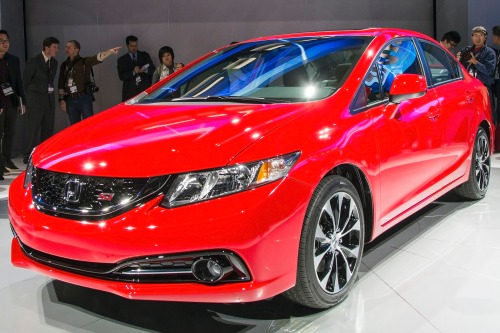
The Honda Civic has earned one of the strongest reputations for reliability of any compact car sold over the past several decades. Known for dependable engines, excellent fuel economy, low maintenance costs, and impressive longevity, the Civic has become a favorite among commuters, students, first-time buyers, and anyone looking for inexpensive, long-term transportation.
However, not every Civic is equally reliable. Some model years suffer from engine block cracking, excessive oil consumption, air conditioning failures, or early turbocharger concerns. Fortunately, most of these issues affected only certain generations or engines, while many Civics routinely exceed 250,000 miles with little more than regular maintenance.
This guide covers every Honda Civic sold from 2006 through 2023, highlighting the most reliable years, common problems, maintenance costs, expected lifespan, and what matters most when shopping for a used Civic.
What You'll Learn
- Which Honda Civic generations are the most reliable
- The best and worst Civic model years to buy
- Common engine, transmission, suspension, and electrical problems
- Expected maintenance and repair costs
- How long a Honda Civic can realistically last
- Which engines have the strongest long-term reputation
- What to inspect before buying a used Honda Civic
However, if you're also considering a new Civic, you may want to come back to this and take a look at a handy technique that locates the dealer most ready to make concessions.
Honda Civic Reliability Overview
Few compact cars have matched the Honda Civic's consistency over the past two decades. While competitors have periodically struggled with major drivetrain issues or declining quality, the Civic has remained one of the safest recommendations in the used compact car market.
Honda continuously refined the Civic throughout these four generations, improving safety, ride quality, fuel economy, interior refinement, and technology while maintaining the dependable engineering that built its reputation. The majority of Civics require little more than routine maintenance to provide many years of reliable service.
That doesn't mean every generation is trouble-free. Certain years deserve additional scrutiny because of engine block defects, air conditioning compressor failures, premature paint deterioration, oil dilution concerns on early turbocharged models, or CVT maintenance requirements. Fortunately, these problems are well documented and can usually be identified during a careful inspection.
Overall, the Honda Civic remains one of the very best choices for buyers seeking dependable, economical transportation with outstanding long-term value.
Honda Civic Reliability at a Glance
- Overall Reliability: Excellent
- Best Used Years: 2009–2011, 2014–2015, 2019–2021, 2022–2023
- Years Worth Extra Inspection: 2006, 2012, 2016 1.5 Turbo
- Most Reliable Engines: 1.8-liter inline-four (R18A), 2.0-liter inline-four (K20C2), naturally aspirated 2.0-liter hybrid
- Typical Lifespan: 250,000–350,000 miles with proper maintenance
- Annual Routine Maintenance: Approximately $350–$750
Buyer Tip: A Civic with complete maintenance records and regular fluid changes is usually a much better purchase than one with lower mileage but little documented service history.
Reliability by Generation
1. Eighth Generation (2006–2011)
Generation at a Glance
- Overall Reliability: Very Good to Excellent
- Best Years: 2009–2011
- Engines: 1.8-liter inline-four (R18A1), 2.0-liter inline-four (K20Z3 Si)
- Transmissions: Five-speed automatic, five-speed manual, six-speed manual (Si)
- What to Watch For: Engine block cracking on some early cars, air conditioning compressor failures, paint deterioration, suspension wear
The eighth-generation Civic introduced bold styling, a futuristic dashboard, improved crash protection, and excellent fuel economy. It quickly became one of Honda's best-selling vehicles worldwide and remains a common sight on today's roads.
The standard 1.8-liter R18A engine is exceptionally durable. With regular oil changes and basic maintenance, these engines frequently exceed 250,000 miles while requiring few significant repairs.
The Civic Si's high-revving 2.0-liter K20Z3 engine also enjoys an outstanding reputation for reliability. Enthusiast owners often praise its durability, provided it has not been heavily modified or abused.
The biggest concern during the early years involved engine block casting defects affecting some 2006–2008 vehicles. Honda extended warranty coverage for many affected cars, and most surviving examples have either already been repaired or have demonstrated that they were not affected.
Strengths
- Extremely durable R18A engine
- Outstanding fuel economy
- Low maintenance costs
- Excellent resale value
- Simple, proven mechanical design
- Widely available replacement parts
Common Problems
- Engine block cracking on some 2006–2008 vehicles
- Air conditioning compressor failures
- Clear coat and paint deterioration
- Motor mount wear
- Front suspension bushings
- Sun visor and interior trim issues
Buyer Tip: The 2009–2011 Civic is widely considered the sweet spot of this generation. Honda corrected many early production issues while retaining the outstanding durability of the R18A engine.
2. Ninth Generation (2012–2015)
Generation at a Glance
- Overall Reliability: Excellent
- Best Years: 2014–2015
- Engines: 1.8-liter inline-four (R18Z1), 2.4-liter inline-four (K24Z7 Si), 1.5-liter hybrid
- Transmissions: Five-speed automatic, CVT (2014–2015), five-speed manual, six-speed manual (Si)
- What to Watch For: Early interior quality complaints, CVT maintenance, starter wear, battery life
The ninth-generation Civic received mixed reviews when first introduced because many critics felt Honda had become too conservative. Honda responded quickly by updating the car for 2013 with improved interior materials, additional sound insulation, revised suspension tuning, and upgraded technology.
Mechanically, however, the ninth-generation Civic proved to be one of Honda's most dependable compact cars. The revised 1.8-liter engine remained exceptionally reliable while introducing improved fuel economy and lower emissions.
The sporty Civic Si adopted the 2.4-liter K24Z7 engine, providing stronger low-end torque while maintaining Honda's reputation for dependable high-mileage performance.
Honda also introduced a continuously variable transmission (CVT) for most 2014 and 2015 models. Unlike some competing CVTs, Honda's unit has generally developed a solid reliability record when serviced with the correct fluid at recommended intervals.
Strengths
- Outstanding overall reliability
- Excellent fuel economy
- Reliable R18 engine
- Improved ride quality after the 2013 refresh
- Low ownership costs
- Excellent resale value
Common Problems
- Starter motor failures
- Battery replacement at higher mileage
- CVT fluid neglected by some owners
- Minor interior rattles on early models
- Brake wear
Buyer Tip: The 2014 and 2015 Civic represent some of the best values in the used compact-car market. They combine mature engineering, excellent fuel economy, and outstanding long-term reliability.
3. Tenth Generation (2016–2021)
Generation at a Glance
- Overall Reliability: Very Good to Excellent
- Best Years: 2019–2021
- Engines: 2.0-liter inline-four (K20C2), 1.5-liter turbocharged inline-four (L15B7), 2.0-liter turbocharged inline-four (K20C1 Type R)
- Transmissions: CVT, six-speed manual
- What to Watch For: Oil dilution on early 1.5-liter turbo models, air conditioning condenser failures, fuel pump recalls
The tenth-generation Civic represented Honda's biggest redesign in years. The new platform improved handling, interior space, crash protection, fuel economy, and refinement while introducing turbocharged engines across much of the lineup.
The naturally aspirated 2.0-liter K20C2 engine quickly developed an excellent reputation for reliability. Buyers looking for maximum long-term durability with minimal complexity often seek out this engine.
The optional 1.5-liter turbocharged engine offers noticeably stronger performance and excellent fuel economy. Early production vehicles, however, generated concern over fuel dilution, particularly in cold climates and during repeated short-trip driving. Honda addressed the issue through software updates and production improvements, and later models have generally performed well.
Another well-known issue during this generation involved air conditioning condensers and compressors. Honda extended warranty coverage for many affected vehicles, making it important to verify repair history before purchasing.
The high-performance Civic Type R introduced the 2.0-liter turbocharged K20C1 engine, which has proven remarkably durable despite its impressive performance, provided maintenance has been performed consistently and modifications have been kept reasonable.
Strengths
- Excellent crash-test ratings
- Outstanding fuel economy
- Excellent K20C2 engine durability
- Modern interior and technology
- Comfortable ride with sporty handling
- Strong resale values
Common Problems
- Air conditioning condenser failures
- Fuel dilution on some early 1.5-liter turbo engines
- Fuel pump recalls
- Battery replacement
- Minor infotainment glitches
Buyer Tip: If shopping this generation, many buyers prefer the 2019–2021 models. They benefit from several years of refinement while retaining the excellent styling and driving characteristics introduced in 2016.
4. Eleventh Generation (2022–2023)
Generation at a Glance
- Overall Reliability: Excellent
- Best Years: 2022–2023
- Engines: 2.0-liter inline-four (K20C2), 1.5-liter turbocharged inline-four (L15CA), 2.0-liter hybrid inline-four (LFC)
- Transmissions: CVT, six-speed manual (Si), six-speed manual (Type R)
- What to Watch For: Recall completion, infotainment software updates, normal first-year inspections
The eleventh-generation Civic refined nearly everything buyers appreciated about its predecessor. Honda improved ride quality, cabin quietness, visibility, technology, and interior quality while retaining the dependable drivetrains that helped make the tenth generation successful.
Early reliability results have been extremely encouraging. Both the naturally aspirated 2.0-liter engine and the updated 1.5-liter turbocharged engine have demonstrated strong dependability, while Honda's newest hybrid system has continued the company's excellent reputation for reliable electrified powertrains.
Although these vehicles have not yet accumulated the extremely high mileages seen on earlier generations, there is little evidence to suggest that they will fall short of Honda's long-established reliability standards.
Strengths
- Excellent build quality
- Outstanding safety ratings
- Refined ride and handling
- Excellent fuel economy
- High-quality interior
- Strong predicted long-term reliability
Common Problems
- Minor software updates
- Occasional recall campaigns
- Very few widespread mechanical concerns reported so far
Buyer Tip: Buyers seeking the newest Civic with the fewest age-related maintenance concerns should focus on the 2022 and 2023 models. While they command higher prices, they combine Honda's latest technology with excellent early reliability.
How the Honda Civic Improved Over Time
| Generation | Major Improvements |
|---|---|
| 2006–2011 | Excellent fuel economy, durable R18 engine, improved safety, futuristic interior. |
| 2012–2015 | Better refinement after 2013, dependable CVT, improved interior quality. |
| 2016–2021 | Turbocharged engines, improved crash protection, larger interior, better technology. |
| 2022–2023 | Higher-quality interior, quieter ride, updated hybrid system, improved refinement. |
Reliability by Engine
- 1.8-liter inline-four (R18A1) — 2006–2011: One of Honda's most dependable engines. Regular maintenance commonly results in 250,000 to 350,000 miles.
- 1.8-liter inline-four (R18Z1) — 2012–2015: Continued the outstanding reliability of the earlier R18 while improving efficiency and emissions.
- 2.4-liter inline-four (K24Z7) — Civic Si: Strong, durable performance engine with excellent long-term reliability when properly maintained.
- 2.0-liter inline-four (K20C2) — 2016–2023: One of the best modern Honda engines, combining simplicity, fuel economy, and exceptional durability.
- 1.5-liter turbocharged inline-four (L15B7/L15CA) — 2016–2023: Strong overall reliability, although early models should be checked for completed software updates relating to fuel dilution concerns.
- 2.0-liter turbocharged inline-four (K20C1) — Type R: Extremely robust high-performance engine that has proven remarkably durable despite its performance capabilities.
- Hybrid powertrains — 2022–2023: Honda's newest hybrid system has demonstrated excellent early reliability while delivering exceptional fuel economy.
Common Problems to Watch For
Engine Block Cracking (2006–2008)
The most significant issue affecting the eighth-generation Civic involved engine block casting defects on some vehicles equipped with the 1.8-liter engine. Hairline cracks could eventually allow coolant to leak from the engine block.
Honda extended warranty coverage for affected vehicles, and many examples have already been repaired. Any remaining early Civic should be carefully inspected for coolant leaks around the engine block.
Typical Repair Costs
- Replacement engine (if required): $3,500–$6,500
- Cooling system diagnosis: $150–$300
Air Conditioning Compressor and Condenser Failures
Air conditioning issues have affected multiple Civic generations, particularly the 2006–2011 and 2016–2021 models. Condensers, compressors, and related components may eventually require replacement, although Honda extended warranty coverage for many condenser failures.
Typical Repair Costs
- Condenser replacement: $600–$1,200
- Compressor replacement: $900–$1,600
Fuel Dilution (2016–2018 1.5 Turbo)
Early tenth-generation Civics equipped with the 1.5-liter turbocharged engine generated concern because some owners reported gasoline mixing with engine oil during repeated short-trip driving, particularly in colder climates.
Honda responded with software updates and production improvements. Most owners have experienced excellent long-term reliability, but buyers should confirm that all applicable updates have been completed and that regular oil changes have been performed.
What to Check
- Verify Honda software updates have been completed.
- Review maintenance records for regular oil changes.
- Inspect the engine oil for proper level and condition.
Fuel Pump Recalls
Several tenth- and eleventh-generation Civics were included in fuel pump recall campaigns involving low-pressure fuel pumps that could fail unexpectedly and prevent the engine from starting or cause it to stall.
This issue is generally resolved once the recall has been completed.
What to Check
- Verify recall completion using the vehicle's VIN.
- Confirm smooth starting and consistent engine performance during the test drive.
Starter Motor Failures
Starter replacement becomes fairly common on Civics that have accumulated well over 100,000 miles. This is considered normal wear rather than a widespread design defect.
Typical Repair Cost
- Starter replacement: $450–$850
Paint and Clear Coat Deterioration
Some eighth-generation Civics developed premature clear coat failure, particularly on vehicles exposed to intense sunlight for many years. While primarily cosmetic, repainting can be expensive.
Typical Repair Costs
- Panel repaint: $500–$1,000
- Complete repaint (if desired): $4,000–$8,000+
Suspension Wear
As Civics approach 150,000 miles, suspension components such as struts, sway bar links, control arm bushings, and ball joints begin showing normal age-related wear. These repairs are expected on virtually any high-mileage compact car.
Typical Repair Costs
- Front struts: $700–$1,200
- Control arm bushings: $350–$800
- Sway bar links: $150–$350
Maintenance & Repair Cost Outlook
One of the Civic's greatest strengths is its exceptionally low ownership cost. Routine maintenance is inexpensive, replacement parts are plentiful, and major mechanical failures are relatively uncommon when maintenance is performed on schedule.
| Maintenance Item | Typical Cost |
|---|---|
| Routine annual maintenance | $350–$750 |
| Oil change | $60–$120 |
| Brake pads and rotors | $300–$650 |
| CVT fluid service | $180–$350 |
| Automatic transmission service | $180–$350 |
| Spark plugs | $220–$450 |
| Starter replacement | $450–$850 |
| Complete suspension refresh | $1,300–$2,800 |
Buyer Tip: Civics are inexpensive to maintain, but skipping routine services such as CVT fluid changes or coolant replacement can dramatically shorten component life.
In addition, your trade-in allowance, if you are doing that, also affects the overall potential cost analysis of moving into a Civic (KBB versus Edmunds Appraisals - Which Is Better).
How Long Does a Honda Civic Last?
The Honda Civic has earned one of the strongest reputations in the compact-car market for longevity. Properly maintained examples commonly exceed 250,000 miles, and many owners have driven well beyond 300,000 miles without requiring major engine or transmission repairs.
Regular oil changes, transmission or CVT fluid service, cooling system maintenance, and prompt repairs are far more important than mileage alone. A documented 180,000-mile Civic is often a safer purchase than a neglected 90,000-mile example.
| Component | Typical Life Expectancy |
|---|---|
| Engine | 250,000–350,000+ miles |
| Automatic transmission | 200,000–300,000 miles |
| CVT | 200,000+ miles |
| Manual transmission | 300,000+ miles with proper clutch maintenance |
| Hybrid battery | 150,000–250,000 miles |
| Suspension components | 120,000–180,000 miles |
| Starter and alternator | 150,000–220,000 miles |
Expected Maintenance After 100,000 Miles
Once a Civic reaches six-figure mileage, most repairs involve replacing normal wear items rather than correcting major design flaws. This is one reason the Civic remains such an affordable long-term vehicle to own.
- Suspension bushings and struts
- Starter or alternator replacement
- Brake components
- Wheel bearings
- Battery replacement
- Spark plugs
- Cooling system service
- CVT or transmission fluid service
Bottom Line: These are normal maintenance items on virtually every high-mileage vehicle and should not discourage buyers considering a well-maintained Civic.
Which Honda Civic Years Should You Avoid or Inspect Carefully?
- 2006: Carefully inspect for engine block cracking and air conditioning problems.
- 2007–2008: Verify the engine block is not affected by Honda's casting defect and inspect the air conditioning system.
- 2012: First year of the ninth generation. While generally reliable, later years benefited from interior and refinement improvements.
- 2016–2018 1.5 Turbo: Verify software updates and maintenance history relating to fuel dilution concerns.
None of these years should automatically be avoided. They simply deserve a more careful inspection before purchase.
What Are The Best Honda Civic Years to Buy?
- 2009–2011: Mature eighth-generation models with excellent reliability and low ownership costs.
- 2014–2015: Refined ninth-generation Civics that combine dependable engineering with improved comfort and technology.
- 2019–2021: Well-developed tenth-generation models benefiting from several years of engineering improvements.
- 2022–2023: The newest generation with excellent early reliability, improved refinement, and Honda's latest safety technology.
Best Honda Civic for Different Buyers
| If You Want... | Recommended Years |
|---|---|
| Lowest purchase price | 2009–2011 |
| Best overall value | 2014–2015 |
| Maximum long-term reliability | 2009–2011 or 2014–2015 |
| Best fuel economy | 2022–2023 Hybrid |
| Best performance | 2017–2021 Type R or Civic Si |
| Newest technology | 2022–2023 |
When it comes to exploring the Civic market or actually buying, it's usually best to visit one of the major online car listing sites and contact dealers about two or three specific vehicles that interest you. Once they respond, you'll get a better feel for how flexible their prices really are. And if you're closer to buying, it's an excellent way to create competition among dealers for your business, which can then lead to an even better price.
I happen to like Edmunds for this, but any of the major car listing websites can work.
Buying a Used Honda Civic: What Matters Most?
The Civic has earned its reputation by rewarding owners who perform routine maintenance consistently. As a result, maintenance history should always carry far more weight than mileage when shopping for a used Civic.
Complete service records showing regular oil changes, transmission or CVT fluid changes, cooling system maintenance, brake service, and recall completion are usually the strongest indicators of a well-cared-for vehicle.
Engine choice also deserves consideration. Buyers seeking the simplest, lowest-maintenance ownership experience will generally be happiest with the naturally aspirated 1.8-liter or 2.0-liter four-cylinder engines. These powerplants have repeatedly demonstrated exceptional durability with relatively few expensive repairs.
The 1.5-liter turbocharged engine offers noticeably stronger performance and excellent fuel economy, but buyers should verify that Honda's software updates have been completed and that oil changes have been performed regularly. Likewise, anyone considering an early eighth-generation Civic should inspect carefully for signs of engine block repairs and air conditioning work.
A professional pre-purchase inspection remains one of the smartest investments a buyer can make. Spending a few hundred dollars before purchasing can prevent thousands of dollars in unexpected repairs later.
Buyer Tip: Don't automatically reject a Civic with 180,000 miles if it has excellent maintenance records. It may prove to be a much better purchase than a lower-mileage example that has been neglected.
Pre-Purchase Inspection Checklist
- Review maintenance records and oil change history.
- Verify smooth transmission or CVT operation.
- Inspect for engine block coolant leaks on 2006–2008 models.
- Test the air conditioning thoroughly.
- Confirm recall work has been completed.
- Listen for suspension noises during the test drive.
- Inspect tires for uneven wear.
- Test all electronics, including infotainment, Bluetooth, backup camera, and climate controls.
- Inspect underneath for rust, leaks, or accident repairs.
- Always obtain a professional pre-purchase inspection before buying.
Pros and Cons
Pros
- Outstanding long-term reliability
- Excellent fuel economy
- Very low ownership costs
- Many examples exceed 250,000 miles
- Strong resale value
- Excellent safety ratings
- Large supply of affordable replacement parts
- Comfortable daily driver with dependable engineering
Cons
- Engine block cracking affected some 2006–2008 models
- Air conditioning failures on several generations
- Fuel dilution concerns on early 1.5-liter turbo models
- Road noise is higher than some competitors
- Paint and clear coat deterioration on some older vehicles
Honda Civic vs. Its Main Competitors
The Honda Civic competes with several excellent compact cars, but each has its own strengths. Here's how we'd choose based on your priorities.
| If You Want... | Our Recommendation |
|---|---|
| Highest overall reliability | Honda Civic or Toyota Corolla |
| Lowest ownership costs | Toyota Corolla |
| Sportiest driving experience | Mazda3 |
| Best value for the money | Hyundai Elantra |
| Best overall balance | Honda Civic |
Buyer Tip: The Toyota Corolla has a slight edge if maximum long-term reliability is your only concern. However, the Honda Civic offers one of the best overall combinations of reliability, fuel economy, driving enjoyment, comfort, and resale value, making it our top recommendation for most compact-car buyers.
Bottom Line: All five competitors have strengths, but the Honda Civic continues to set the benchmark for buyers looking for a dependable, well-rounded compact car that is enjoyable to own for the long term.
Should You Buy a Used Honda Civic?
Absolutely. The Honda Civic has earned its reputation as one of the most dependable compact cars ever built. It combines excellent fuel economy, low maintenance costs, strong resale value, and exceptional longevity in a package that appeals to nearly every type of buyer.
If your budget allows, the 2019–2021 Civic offers one of the best combinations of modern technology, safety, comfort, and reliability. Buyers seeking maximum value should strongly consider the 2014–2015 models, while those looking for inexpensive transportation can confidently shop well-maintained 2009–2011 examples.
Even high-mileage Civics often have many years of dependable service remaining, provided routine maintenance has not been neglected and the vehicle passes a thorough inspection.
Final Verdict
Few vehicles have established a stronger reputation for dependable transportation than the Honda Civic. Across four generations, Honda consistently delivered compact cars capable of outstanding longevity, excellent fuel economy, low ownership costs, and impressive resale value.
While buyers should understand issues such as engine block cracking on some early eighth-generation models, air conditioning failures, and the fuel-dilution concerns affecting certain early turbocharged engines, these problems represent only a small portion of an otherwise exceptional reliability record.
For most buyers, it's difficult to go wrong with a well-maintained Honda Civic. Whether you're searching for an affordable commuter, a first car, or a vehicle capable of providing another decade of dependable transportation, the Civic remains one of the strongest recommendations in the used-car market.
Buyer's Summary
- Best Overall Years: 2019–2021
- Best Budget Choice: 2009–2011
- Best Value: 2014–2015
- Most Reliable Engine: 2.0-liter inline-four (K20C2) and 1.8-liter inline-four (R18 series)
- Best Performance: Civic Type R with the 2.0-liter turbocharged inline-four (K20C1)
- Typical Lifespan: 250,000–350,000+ miles
- Purchase Recommendation: One of the best compact cars ever built. A well-maintained Civic with complete service records remains an outstanding used-car purchase.
More on Honda model reliability: If you are interested in the reliability of other Honda models and years, be sure to read our Used Honda Reliability & Problems: Best Used Models & Years Guide. This comprehensive guide highlights the best years to buy or avoid, common problems, potential maintenance costs, and more, and will likely help you make the right choice for your needs.
Your Trade-In
Also, it's good to always know the value of your trade-in while you're evaluating your next possible purchase. Here's a good source for a quick and accurate appraisal: free trade-in appraisal.