

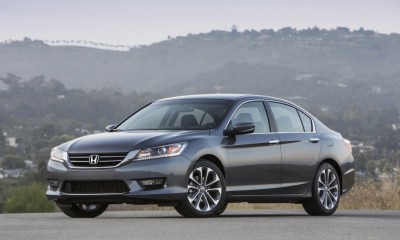
The Honda Accord has long been one of the safest used-car recommendations on the market. For decades it has earned a reputation for dependable engines, comfortable interiors, excellent resale value, and relatively low ownership costs. It's no coincidence that many Accords remain on the road well past 200,000 miles.
That doesn't mean every Accord is equally reliable. Some generations have known transmission problems, excessive oil consumption, premature starter failures, or turbocharged engine concerns that buyers should understand before purchasing. Choosing the right model year can mean the difference between inexpensive ownership and several thousand dollars in unexpected repairs.
This guide covers every Honda Accord sold from 2003 through 2022, highlighting the most reliable years, common problems, maintenance costs, expected lifespan, and what matters most when shopping for a used Accord.
What You'll Learn
- Which Honda Accord generations are the most reliable
- The best and worst model years to buy
- Common engine, transmission and electrical problems
- Expected maintenance and repair costs
- How long a Honda Accord can realistically last
- Which engines offer the best long-term ownership experience
- What to inspect before buying a used Accord
More On Reliability: Also, if you are interested in the reliability of other Honda models and years, be sure to read our Used Honda Reliability & Problems: Best Used Models & Years Guide. This comprehensive guide highlights the best years to buy or avoid, common problems, potential maintenance costs, and more, and will likely help you make the right choice for your needs.
Honda Accord Reliability Overview
Few midsize sedans have earned the reputation that the Honda Accord has built over the past several decades. While Toyota's Camry often receives slightly more attention for outright durability, the Accord has consistently remained one of the easiest vehicles to recommend to used-car buyers thanks to its excellent balance of reliability, driving enjoyment, safety, fuel economy, and relatively inexpensive maintenance.
Across these four generations, Honda continually refined the Accord rather than completely reinventing it. Most improvements focused on stronger crash protection, better fuel economy, improved interiors, quieter cabins, and more advanced technology while maintaining the mechanical durability buyers expected.
That said, there are several years that deserve additional scrutiny. Early automatic transmission concerns, V6 Variable Cylinder Management (VCM) issues, excessive oil consumption on some engines, and first-year turbocharged models are all worth understanding before making a purchase.
Overall, however, the Accord remains one of the safest recommendations in the used midsize sedan market.
Honda Accord Reliability at a Glance
- Overall Reliability: Excellent
- Best Used Years: 2006–2007, 2011–2012, 2015–2017, 2021–2022
- Years Worth Extra Inspection: 2003, 2008, 2013 V6, 2018 1.5T
- Most Reliable Engines: 2.4-liter inline-four (K24 series), naturally aspirated 2.0-liter hybrid, 2.0-liter turbocharged inline-four (K20C4)
- Typical Lifespan: 250,000–350,000 miles with proper maintenance
- Annual Routine Maintenance: Approximately $400–$800
Buyer Tip: Maintenance history matters far more than mileage. A documented 180,000-mile Accord is often a better purchase than a neglected 90,000-mile example.
Also, if you're serious about buying soon, I'd highly recommend reading my most effective negotiation method for used cars, which details a quick way to identify the dealerships most motivated to "deal", no matter how busy they may seem, and how to follow up once you've found them. This can be the difference between getting a good price and getting a great one. And a variation of it is my top method for new cars, if you are also exploring that market.
You can see them here at used cars and new cars.
Reliability by Generation
1. Seventh Generation (2003–2007)
Generation at a Glance
- Overall Reliability: Excellent
- Best Years: 2006–2007
- Engines: 2.4-liter inline-four (K24A4/K24A8), 3.0-liter V6 (J30A)
- Transmissions: Five-speed manual or five-speed automatic
- What to Watch For: Automatic transmission failures on early V6 models, power steering leaks, starter wear, suspension bushings
The seventh-generation Accord represented one of Honda's biggest improvements in refinement. It was quieter, roomier, safer, and more powerful than its predecessor while maintaining the dependable engineering that made the Accord one of America's best-selling family cars.
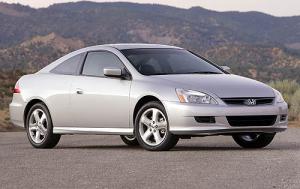
The 2.4-liter K24 four-cylinder quickly established itself as one of Honda's best modern engines. It routinely exceeds 250,000 miles with little more than regular oil changes, spark plugs, valve adjustments, and routine maintenance.
The optional 3.0-liter V6 delivered noticeably stronger acceleration while remaining mechanically durable. However, early five-speed automatic transmissions behind the V6 proved to be the weakest component of this generation. Heat-related wear could eventually lead to harsh shifting or complete transmission failure, particularly on poorly maintained vehicles.
Honda introduced several transmission updates during production, making the final 2006 and 2007 models significantly more dependable than the earliest examples.
Strengths
- Outstanding K24 four-cylinder engine durability
- Simple, proven mechanical design
- Inexpensive maintenance
- Comfortable ride and excellent visibility
- Parts remain widely available and reasonably priced
- Excellent long-term ownership costs
Common Problems
- Automatic transmission failures on some early V6 models
- Power steering hose leaks
- Starter motor replacement at higher mileage
- Front suspension bushings and ball joints
- Motor mount wear
- Air conditioning compressor failures on some vehicles
Buyer Tip: If shopping this generation, the 2006 or 2007 four-cylinder models remain some of the best used Accord values ever built. They combine Honda's legendary K24 engine with the improvements made during the final years of production.
2. Eighth Generation (2008–2012)
Generation at a Glance
- Overall Reliability: Very Good to Excellent
- Best Years: 2011–2012
- Engines: 2.4-liter inline-four (K24Z2/K24Z3), 3.5-liter V6 (J35Z2/J35Z3)
- Transmissions: Five-speed automatic, six-speed manual (coupe), five-speed manual
- What to Watch For: Oil consumption on some four-cylinder models, VCM-related issues on V6 models, brake wear
The eighth-generation Accord grew substantially in size, moving closer to a full-size sedan than many competitors. Buyers gained more passenger space, additional safety features, and a quieter cabin while retaining Honda's traditional reliability.
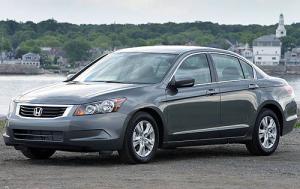
The updated K24 four-cylinder remained one of the strongest engines in the class, although some owners experienced higher-than-normal oil consumption, particularly on certain 2008–2010 vehicles. Most examples never develop serious issues, but checking oil consumption during ownership is worthwhile.
The larger 3.5-liter V6 provided effortless performance and remained mechanically durable. However, Honda's Variable Cylinder Management (VCM) system, designed to improve fuel economy by shutting down cylinders during light-load cruising, has been linked by some owners to increased oil consumption, worn engine mounts, and vibration complaints as mileage increases.
Fortunately, these issues are far from universal, and many V6 Accords accumulate well over 200,000 miles without major engine repairs.
Strengths
- Excellent crash-test performance
- Long-lasting K24 four-cylinder engine
- Comfortable highway ride
- Strong resale value
- Low routine maintenance costs
- Excellent parts availability
Common Problems
- Oil consumption on some four-cylinder engines
- Variable Cylinder Management (VCM) issues on some V6 models
- Engine mount wear
- Brake rotor warping
- Premature starter failures
- Power steering leaks on higher-mileage vehicles
Buyer Tip: The 2011 and 2012 models benefited from several years of refinement and are generally considered the best choices from this generation. If you're considering a V6, verify that oil changes were performed regularly and pay close attention to engine vibration during the test drive.
3. Ninth Generation (2013–2017)
Generation at a Glance
- Overall Reliability: Excellent
- Best Years: 2015–2017
- Engines: 2.4-liter inline-four (K24W1), 3.5-liter V6 (J35Y1), 2.0-liter hybrid inline-four (LFA1)
- Transmissions: Continuously Variable Transmission (CVT), six-speed manual, six-speed automatic (V6)
- What to Watch For: Starter failures, infotainment glitches, battery life, VCM operation on V6 models
The ninth-generation Accord is widely regarded as one of the best midsize sedans Honda has ever produced. It combined outstanding reliability with modern safety technology, impressive fuel economy, refined driving manners, and significantly improved interior quality.
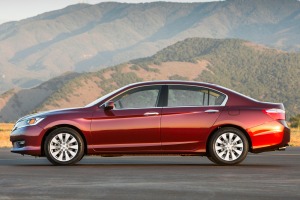
The new K24W1 four-cylinder retained the durability Honda buyers expected while introducing direct injection and pairing with a CVT for improved fuel economy. Although many buyers were initially skeptical of Honda's first Accord CVT, it has proven considerably more reliable than many competing continuously variable transmissions when serviced properly.
The 3.5-liter V6 remained quick, smooth, and enjoyable to drive while using a conventional six-speed automatic transmission instead of the problematic early five-speed units found years earlier.
Honda also introduced one of the industry's best hybrid systems during this generation. The Accord Hybrid has earned an excellent long-term reputation for both reliability and fuel economy.
Strengths
- Outstanding overall reliability
- Reliable CVT compared with many competitors
- Excellent fuel economy
- High-quality interior
- Excellent crash-test ratings
- Strong resale values
Common Problems
- Starter motor failures
- Touchscreen and infotainment software glitches
- Battery replacement on older vehicles
- Occasional VCM-related vibration on V6 models
- Minor suspension wear at higher mileage
Buyer Tip: Many Honda technicians consider the 2015–2017 Accord to be one of the company's finest modern vehicles. These years combine proven drivetrains with relatively few significant recurring problems.
4. Tenth Generation (2018–2022)
Generation at a Glance
- Overall Reliability: Very Good to Excellent
- Best Years: 2021–2022
- Engines: 1.5-liter turbocharged inline-four (L15BE), 2.0-liter turbocharged inline-four (K20C4), 2.0-liter hybrid inline-four (LFB)
- Transmissions: CVT, ten-speed automatic, six-speed manual (Sport models)
- What to Watch For: Oil dilution on some early 1.5T engines, fuel pump recalls, battery life, software updates
The tenth-generation Accord marked Honda's biggest engineering change in decades. Naturally aspirated engines largely disappeared, replaced by smaller turbocharged powerplants designed to improve fuel economy without sacrificing performance.
The 1.5-liter turbocharged engine delivers excellent fuel economy and has generally proven dependable, although early examples generated concern over fuel dilution, where gasoline could mix with engine oil during repeated short-trip driving in colder climates. Honda issued software updates and other improvements, and widespread catastrophic failures have not materialized in the way many buyers initially feared.
The optional 2.0-liter turbocharged engine, derived from Honda's performance-oriented K20 family, has developed an excellent reputation. Combined with the ten-speed automatic transmission, it offers both impressive acceleration and strong long-term durability.
The updated Accord Hybrid also continued Honda's reputation for building dependable hybrid systems while delivering outstanding fuel economy.
Strengths
- Excellent crash protection
- Outstanding fuel economy
- Powerful and reliable 2.0-liter turbo
- Comfortable ride with responsive handling
- Excellent interior quality
- Strong resale value
Common Problems
- Fuel dilution concerns on some early 1.5T models
- Fuel pump recalls
- Battery replacement after several years
- Occasional infotainment software glitches
- Minor HVAC and sensor issues
Buyer Tip: If your budget allows, the 2021 or 2022 Accord is arguably the best all-around used Accord ever built. Buyers wanting additional performance should strongly consider the 2.0-liter turbocharged engine, which has developed an excellent reputation for both reliability and driving enjoyment.
How the Honda Accord Improved Over Time
| Generation | Major Improvements |
|---|---|
| 2003–2007 | Excellent K24 engine, improved refinement, stronger safety, dependable long-term durability. |
| 2008–2012 | Larger cabin, improved crash protection, better ride quality, more powerful V6. |
| 2013–2017 | Excellent CVT, modern safety technology, improved fuel economy, outstanding overall reliability. |
| 2018–2022 | Turbocharged engines, ten-speed automatic, Honda Sensing, improved efficiency, more upscale interior. |
Reliability by Engine
- 2.4-liter inline-four (K24A4/K24A8) — 2003–2007: One of Honda's most durable engines. Routine maintenance commonly results in 250,000 to 300,000+ miles.
- 2.4-liter inline-four (K24Z2/K24Z3) — 2008–2012: Excellent overall reliability, although some early models may consume oil as mileage increases.
- 2.4-liter inline-four (K24W1) — 2013–2017: Outstanding reliability with an equally dependable CVT when maintained properly.
- 3.0-liter V6 (J30A) — 2003–2007: Durable engine. Transmission condition is usually a greater concern than the engine itself.
- 3.5-liter V6 (J35Z2/J35Z3/J35Y1) — 2008–2017: Strong long-term durability, but Variable Cylinder Management (VCM) can contribute to vibration, engine mount wear, and oil consumption on some vehicles.
- 1.5-liter turbocharged inline-four (L15BE) — 2018–2022: Good overall reliability. Verify that software updates and maintenance have been performed.
- 2.0-liter turbocharged inline-four (K20C4) — 2018–2022: Excellent reliability and arguably the best modern Accord engine for buyers wanting both performance and longevity.
- Hybrid powertrains — 2014–2022: Honda's hybrid systems have earned an excellent reputation for durability while providing outstanding fuel economy.
Common Problems to Watch For
Automatic Transmission Problems (2003–2005 V6)
The most significant issue affecting this entire twenty-year span involves early fifth-generation five-speed automatic transmissions paired with the 3.0-liter V6. Internal overheating and clutch wear could eventually lead to slipping, harsh shifting, delayed engagement, or complete transmission failure.
Most surviving vehicles have either already received replacement transmissions or have accumulated enough mileage to demonstrate they were not affected. Nevertheless, transmission operation should always be carefully evaluated before purchasing an early V6 Accord.
Variable Cylinder Management (VCM) Concerns
Beginning with many V6 Accord models, Honda introduced Variable Cylinder Management (VCM), a system that deactivates cylinders during light-load driving to improve fuel economy. While the technology generally works well, some owners have reported increased engine vibration, premature engine mount wear, spark plug fouling, and higher oil consumption as mileage accumulates.
Not every V6 develops these issues, and many owners experience trouble-free operation for well over 200,000 miles. During a test drive, pay close attention to vibration at steady highway speeds and verify that the engine runs smoothly during acceleration.
Typical Repair Costs
- Engine mounts: $500–$1,200
- Spark plugs: $250–$450
- VCM-related diagnosis: varies depending on symptoms
Oil Consumption
Some 2008–2012 four-cylinder Accords may consume more oil than expected, particularly as mileage exceeds 100,000 miles. Most cases remain manageable by monitoring oil levels between scheduled oil changes, although heavier consumption should be investigated before purchase.
Likewise, some V6 models equipped with VCM may also consume additional oil over time.
What to Check
- Review maintenance records for regular oil changes.
- Ask the seller whether oil needs to be added between services.
- Inspect underneath the engine for leaks that could be mistaken for oil consumption.
Fuel Dilution (2018–2019 1.5 Turbo)
Early tenth-generation Accords equipped with the 1.5-liter turbocharged engine received considerable attention because some owners reported gasoline mixing with engine oil during repeated short-trip driving, especially in colder climates.
Honda responded with software updates and other improvements. Most owners have experienced normal long-term reliability, but buyers should verify that recall and service campaigns have been completed.
What to Check
- Confirm software updates have been installed.
- Check for documented oil changes.
- Inspect the oil condition and level before purchase.
Fuel Pump Recalls
Several later-model Accords were included in fuel pump recalls involving low-pressure fuel pumps that could fail unexpectedly and prevent the engine from starting or cause it to stall.
This issue is generally resolved by confirming that recall work has already been completed.
What to Check
- Verify recall completion through Honda service records or a VIN lookup.
- Confirm smooth starting and normal engine operation during the test drive.
Starter Motor Failures
Starter replacement is relatively common on higher-mileage Accords across several generations. Fortunately, this is generally considered normal age-related maintenance rather than a design flaw.
Typical Repair Cost
- Starter replacement: $500–$900
Air Conditioning Compressor Failures
Earlier seventh-generation Accords occasionally experience air conditioning compressor failures as they age. Replacement compressors are widely available, and repairs are generally straightforward.
Typical Repair Cost
- Compressor replacement: $900–$1,600
Suspension Wear
After approximately 120,000 to 150,000 miles, suspension components such as struts, control arm bushings, sway bar links, and ball joints commonly begin showing wear. This is expected maintenance rather than a Honda-specific weakness.
Typical Repair Costs
- Front struts: $700–$1,300
- Control arm bushings: $400–$900
- Ball joints: $300–$700
Maintenance & Repair Cost Outlook
One reason the Accord has remained so popular is its relatively low ownership cost. Routine maintenance is inexpensive, major mechanical failures are uncommon, and replacement parts are readily available almost everywhere.
| Maintenance Item | Typical Cost |
|---|---|
| Routine annual maintenance | $400–$800 |
| Timing chain engines | No scheduled replacement |
| Timing belt service (V6) | $900–$1,500 |
| Brake pads and rotors | $350–$700 |
| CVT fluid service | $180–$350 |
| Automatic transmission service | $200–$400 |
| Spark plugs | $250–$500 |
| Starter replacement | $500–$900 |
| Complete suspension refresh | $1,500–$3,000 |
Buyer Tip: Spending a little more for an Accord with complete maintenance records often saves thousands of dollars over the next several years.
How Long Does a Honda Accord Last?
The Honda Accord has earned one of the strongest reputations in the automotive industry for long-term durability. Properly maintained examples commonly exceed 250,000 miles, and many owners have surpassed 300,000 miles while still using the original engine and transmission.
Maintenance history has a much greater influence on longevity than mileage alone. A well-maintained Accord with 180,000 miles is often a better purchase than one with half the mileage but little documented service.
| Component | Typical Life Expectancy |
|---|---|
| Engine | 250,000–350,000+ miles |
| Automatic transmission (properly maintained) | 200,000–300,000 miles |
| CVT | 200,000+ miles |
| Hybrid battery | 150,000–250,000 miles |
| Suspension components | 120,000–180,000 miles |
| Starter and alternator | 150,000–220,000 miles |
Expected Maintenance After 100,000 Miles
Once an Accord reaches six-figure mileage, owners should expect more age-related maintenance rather than major mechanical failures. This is often the stage where replacing wear items restores the vehicle to many more years of dependable service.
- Suspension bushings and struts
- Starter or alternator replacement
- Wheel bearings
- Brake components
- Engine mounts (especially V6 models)
- Battery replacement
- Timing belt service on V6 engines
- Transmission or CVT fluid changes if not previously completed
Bottom Line: None of these repairs should discourage buyers. They're normal maintenance items on virtually any vehicle that's been driven well beyond 100,000 miles.
Honda Accord Years to Avoid or Inspect Carefully
- 2003: First year of the seventh generation. Early V6 automatic transmission concerns make careful inspection important.
- 2008: First year of the eighth generation. Some four-cylinder models experienced higher oil consumption.
- 2013 V6: Generally reliable, but pay close attention to Variable Cylinder Management operation and engine vibration.
- 2018 1.5 Turbo: Verify software updates and maintenance records relating to fuel dilution concerns.
These years are not necessarily poor purchases. They simply require a more careful inspection than later, more refined model years.
Best Honda Accord Years to Buy
- 2006–2007: Mature seventh-generation models with the dependable K24 engine.
- 2011–2012: Refined eighth-generation cars with excellent long-term reliability.
- 2015–2017: Among the finest Accords Honda has ever produced, combining outstanding reliability with modern technology.
- 2021–2022: The best of the turbocharged generation, offering excellent safety, refinement, fuel economy, and long-term durability.
Best Honda Accord for Different Buyers
| If You Want... | Recommended Years |
|---|---|
| Lowest purchase price | 2006–2007 |
| Best overall value | 2015–2017 |
| Maximum long-term reliability | 2011–2012 or 2015–2017 four-cylinder |
| Best fuel economy | 2018–2022 Hybrid |
| Best performance | 2018–2022 2.0-liter Turbo |
| Newest technology | 2021–2022 |
Buying a Used Honda Accord: What Matters Most?
More than almost any other midsize sedan, a used Accord should be purchased based on its maintenance history rather than its odometer reading. These cars are engineered to accumulate very high mileage, but like any vehicle, neglect can quickly erase Honda's reputation for reliability.
Service records showing regular oil changes, transmission or CVT fluid changes, brake service, cooling system maintenance, and other scheduled maintenance are worth far more than finding the lowest-mileage example available.
Engine choice also matters. While nearly every Accord engine covered in this guide has proven capable of excellent longevity, buyers looking strictly for the lowest long-term ownership costs will usually be happiest with one of the naturally aspirated 2.4-liter four-cylinder models built from 2006 through 2017. They combine outstanding durability with relatively simple engineering and inexpensive maintenance.
Shoppers considering V6 models should pay close attention to timing belt replacement records and watch for signs of Variable Cylinder Management (VCM) vibration or excessive oil consumption. Buyers looking at 2018–2022 Accords equipped with the 1.5-liter turbocharged engine should verify that Honda's software updates and recall work have been completed.
Regardless of model year, a professional pre-purchase inspection remains one of the best investments you can make. Spending a few hundred dollars before buying can prevent thousands of dollars in unexpected repairs later.
Buyer Tip: Don't reject an Accord simply because it has 150,000 miles. A well-maintained, one-owner car with complete service records is often a far better purchase than a neglected vehicle with half the mileage.
Pre-Purchase Inspection Checklist
- Review maintenance records and oil change history.
- Verify transmission or CVT shifts smoothly.
- Confirm timing belt replacement on V6 models.
- Listen for suspension noises over rough roads.
- Check for excessive engine vibration at idle and highway speeds.
- Verify all recall work has been completed.
- Inspect tires for even wear.
- Test all electronics, including infotainment, backup camera, Bluetooth and climate controls.
- Inspect underneath for rust, leaks or accident repairs.
- Always obtain a professional pre-purchase inspection before finalizing the purchase.
Overall Pros and Cons
Pros
- Outstanding long-term reliability
- Many examples exceed 250,000 miles
- Excellent resale value
- Comfortable ride with responsive handling
- Fuel-efficient engines and hybrids
- Low routine maintenance costs
- Excellent safety ratings
- Large supply of inexpensive replacement parts
Cons
- Early V6 automatic transmission problems (2003–2005)
- Variable Cylinder Management can create vibration on some V6 models
- Some four-cylinder engines consume oil
- Fuel dilution concerns on early 1.5-liter turbo models
- Road noise is higher than some luxury competitors
And another con ... even a good price on the vehicle doesn't necessarily mean you're getting a good deal.
There are other numbers besides price that can significantly affect the final out-the-door cost. A well-negotiated selling price can quickly lose its advantage if the dealer makes up for the concession with a below-market trade-in offer. Also, dealer fees and add-ons can further increase the final cost, making it important to learn which fees you must pay, can negotiate, or should avoid.
To become better informed about these important but often-confusing parts of the deal, be sure to see my articles on trade-ins and dealer fees.
Honda Accord vs. Its Main Competitors
| If You Want... | Our Recommendation |
|---|---|
| Highest overall reliability | Honda Accord or Toyota Camry |
| Lowest ownership costs | Toyota Camry |
| Sportiest driving experience | Mazda6 |
| Best value for the money | Hyundai Sonata |
| Best overall balance | Honda Accord |
Buyer Tip: The Toyota Camry is usually the safest choice if maximum reliability is your only priority. However, the Honda Accord offers one of the best combinations of reliability, comfort, driving enjoyment, and long-term ownership costs, making it our overall recommendation for most buyers.
Should You Buy a Used Honda Accord?
Absolutely. Few vehicles have earned a stronger reputation for dependable, affordable transportation than the Honda Accord. When properly maintained, these cars routinely provide hundreds of thousands of miles of reliable service while remaining comfortable, safe, and inexpensive to own.
If your budget allows, the 2015–2017 Accord represents one of the strongest values in today's used-car market. Buyers wanting newer styling and technology should look closely at the refined 2021–2022 models, particularly those equipped with the excellent 2.0-liter turbocharged engine.
Even buyers shopping on a tighter budget can confidently consider well-maintained 2006–2007 or 2011–2012 examples, provided service records are available and the vehicle passes a professional inspection.
Like virtually every Honda, the Accord rewards owners who stay ahead of maintenance. Do that, and there's every reason to expect another decade—or several hundred thousand more miles—of dependable service.
Final Verdict
The Honda Accord remains one of the safest recommendations in the used midsize sedan market. Across nearly twenty years of production, Honda consistently produced vehicles that combine excellent reliability, strong resale value, low ownership costs, and impressive longevity.
Not every model year is identical, and buyers should understand the transmission concerns on early V6 models, Variable Cylinder Management on some later V6s, and the fuel dilution discussion surrounding early 1.5-liter turbocharged cars. Fortunately, these issues affect only a relatively small portion of an otherwise outstanding ownership record.
For most buyers, it's difficult to go wrong with a well-maintained Accord. Whether your priority is affordability, fuel economy, comfort, or simply finding a vehicle that will still be running many years from now, the Accord continues to rank among the very best choices available.
Buyer's Summary
- Best Overall Years: 2015–2017
- Best Budget Choice: 2006–2007
- Best Newer Models: 2021–2022
- Most Reliable Engine: 2.4-liter inline-four (K24 series)
- Best Performance: 2018–2022 2.0-liter turbocharged inline-four (K20C4)
- Typical Lifespan: 250,000–350,000+ miles
- Purchase Recommendation: One of the best used family cars ever built when maintenance history is well documented.