

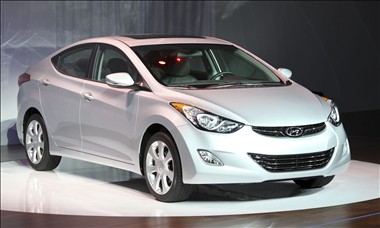
Which Hyundai Elantra years are the most reliable? Which years should you avoid? And if you're shopping for a used Elantra, which engines and transmissions offer the best chance of dependable long-term ownership?
The Hyundai Elantra has been one of the most popular affordable compact cars in the United States for decades. Used examples are plentiful, fuel economy is generally good, and purchase prices can be considerably lower than comparable Honda Civics and Toyota Corollas.
But Elantra reliability varies substantially by model year, engine, and transmission. Some generations use relatively simple naturally aspirated engines and conventional automatic transmissions, while later versions introduced turbocharged engines, dual-clutch transmissions, hybrids, and high-performance variants. Certain Elantra engines have also developed reputations for oil consumption, piston-related damage, knocking, and premature engine failure.
That makes it especially important not to judge every Elantra by the same reliability reputation.
This guide covers Hyundai Elantra model years from 2001 through 2023, including reliability by generation, engine and transmission differences, common problems, years requiring extra inspection, Elantra GT hatchbacks, Elantra Sport and N Line models, the Elantra Hybrid, high-performance Elantra N, repair costs, and expected lifespan.
Why does this guide begin with 2001? The Elantra was sold in the United States well before 2001, but earlier examples are now old enough that relatively few remain realistic used-car choices. Beginning with the redesigned 2001 Elantra lets us concentrate on the generations and powertrains most relevant to today's used-car shopper.
In This Guide You'll Learn
- How reliable the Hyundai Elantra is over the long term
- Which Hyundai Elantra years are the best choices
- Which Elantra years require extra inspection
- The most common Elantra problems by generation
- Which Hyundai Elantra engines are the most reliable
- What to know about Elantra engine knocking and failure
- Which Elantras can develop excessive oil consumption
- How reliable the 1.8-liter and 2.0-liter naturally aspirated engines are
- What to know about Elantra turbocharged engines
- Whether Hyundai's dual-clutch transmission is reliable
- How Elantra GT reliability differs from the sedan
- Whether the Elantra Sport and N Line are good used-car choices
- How reliable the Hyundai Elantra Hybrid is
- What to know before buying a used Elantra N
- How much common Elantra repairs can cost
- How long a Hyundai Elantra can realistically last
However, if you're also considering a brand-new Elantra or other new vehicle, you may want to come back to this and take a look at a handy technique that locates the dealer most ready to make concessions.
Is the Hyundai Elantra Reliable?
Overall, we'd rate Hyundai Elantra reliability as good, but that broad rating hides significant differences between generations and powertrains.
A carefully selected Elantra can be an excellent inexpensive used car. Many properly maintained examples travel well beyond 150,000 miles, and 200,000 miles is achievable.
However, we'd be considerably more selective when buying an Elantra than when buying a Toyota Corolla with a particularly strong reliability history.
Engine choice is one reason.
Some Elantra engines have accumulated impressive mileage with relatively few major problems. Others deserve additional scrutiny for piston slap or scuffing, abnormal knocking, oil consumption, bearing damage, or other internal engine problems.
Transmission choice matters too.
Many Elantras use conventional automatic transmissions that generally provide good service when properly maintained. Certain performance-oriented and efficiency-focused versions instead use dual-clutch transmissions that can exhibit hesitation, shuddering, clutch wear, overheating, or expensive control-system problems.
The Elantra's enormous range also matters. A basic naturally aspirated Elantra sedan, turbocharged Elantra Sport, Elantra GT hatchback, Elantra Hybrid, and 276-horsepower Elantra N may share the same model name while presenting very different long-term ownership considerations.
Bottom Line: The Hyundai Elantra can be a good used-car value, but we'd shop by exact model year, engine, and transmission rather than simply deciding that "Elantras are reliable." The right powertrain and maintenance history make an enormous difference.
Hyundai Elantra Reliability at a Glance
| Category | Our Assessment |
|---|---|
| Overall Reliability | Good |
| Strong Older Years | 2004-2006, 2009-2010 |
| Years Requiring Extra Inspection | 2011-2016, particularly for engine condition and oil consumption |
| Strong Later Used-Car Choices | Selected 2017-2020 2.0-liter models with good maintenance history |
| Conventional Automatic Reliability | Generally Good |
| Dual-Clutch Transmission Reliability | More Variable; Inspect Carefully |
| Elantra Hybrid Reliability | Promising to Very Good, but less long-term history |
| Typical Lifespan | 150,000-200,000+ miles with good maintenance |
Buyer Tip: Before buying an Elantra, determine the exact engine and transmission rather than relying solely on the year and trim name. Two Elantras from similar years can have substantially different reliability considerations.
Hyundai Elantra Reliability by Generation
2001-2006: Third-Generation Hyundai Elantra
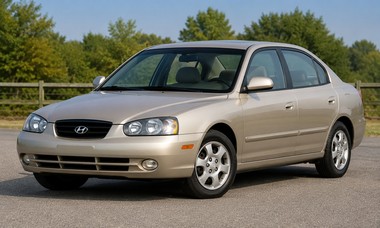
The redesigned 2001 Elantra is now an old car, but it established a relatively straightforward mechanical formula that can work in a budget buyer's favor.
U.S. models primarily used Hyundai's naturally aspirated 2.0-liter four-cylinder engine paired with either a manual or conventional automatic transmission.
There are no turbochargers, hybrid batteries, or dual-clutch transmissions to worry about. That relative simplicity is attractive today.
However, even the newest vehicle from this generation is approximately two decades old. Condition, corrosion, maintenance history, rubber deterioration, cooling-system condition, and previous repairs now matter at least as much as the model's original reliability record.
2001-2006 2.0-Liter Engine Reliability
The naturally aspirated 2.0-liter four-cylinder can provide good longevity with proper maintenance.
It isn't especially powerful or refined by modern standards, but mechanical simplicity works in its favor.
One important difference from many newer Elantra engines is timing-belt maintenance. Buyers need to determine whether the timing belt has been replaced at the appropriate intervals.
If the seller can't document timing-belt service, we'd assume it may be due and budget accordingly.
Cooling-system condition is also particularly important on a car this old. Inspect hoses, radiator condition, coolant level, water pump, thermostat operation, and any evidence that the engine has previously overheated.
2001-2003 vs. 2004-2006 Elantra Reliability
We'd give 2004-2006 a slight preference within this generation.
Those later cars benefited from several years of production maturity and are somewhat younger than the earliest 2001-2003 examples.
But the difference is small compared with condition today.
A garage-kept 2002 Elantra with extensive service records and little corrosion can easily be a better purchase than a neglected 2006.
Common 2001-2006 Hyundai Elantra Problems
- Timing-belt maintenance
- Oil leaks as seals and gaskets age
- Cooling-system deterioration
- Motor mount wear
- Alternator and starter replacement
- Strut and suspension bushing wear
- Wheel bearing problems
- Power steering leaks or component wear
- Air-conditioning problems
- Electrical accessory failures
- Corrosion in vehicles from salt-heavy climates
Buyer Tip: On a 2001-2006 Elantra, documentation showing recent timing-belt, cooling-system, brake, tire, and suspension work can be worth more than finding a car with unusually low mileage.
Bottom Line: A well-maintained 2001-2006 Elantra can still provide inexpensive transportation, but we'd favor 2004-2006 and buy primarily on present condition and maintenance history.
2007-2010: Fourth-Generation Hyundai Elantra
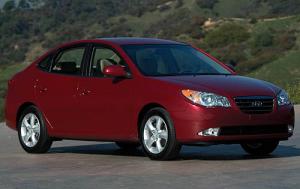
Hyundai redesigned the Elantra again for 2007. The fourth-generation sedan remained mechanically straightforward, continuing with a naturally aspirated 2.0-liter four-cylinder and conventional transmission choices.
For someone looking for a very inexpensive used Elantra, this generation can be interesting because it predates some of the more complicated engine and transmission choices found in later versions.
It also avoids the particular engine concerns that make us more cautious about portions of the 2011-2016 generation.
2007-2010 2.0-Liter Engine Reliability
The 2.0-liter four-cylinder generally has a solid reliability record when maintained properly.
As with the previous generation, timing-belt maintenance remains important. Buyers should verify service history rather than assume a previous owner completed the work.
At today's age, we'd also inspect carefully for oil leaks, cooling-system deterioration, motor mounts, suspension wear, and evidence of overheating.
The conventional automatic transmission is generally preferable for buyers prioritizing simplicity. A manual-transmission Elantra can also be durable, although clutch condition becomes an important consideration.
2009-2010: Our Preferred Older Elantra Years
For buyers specifically seeking an older inexpensive Elantra, 2009-2010 are among the years we'd look at first.
They're the final years of a relatively simple generation and avoid some of the reliability uncertainty associated with engines used in the following generation.
That doesn't make every 2009 or 2010 Elantra a good purchase. These cars are old enough that neglect can easily erase any model-year advantage.
But a clean, well-maintained example with documented timing-belt service can make a sensible budget car.
Common 2007-2010 Hyundai Elantra Problems
- Timing-belt maintenance
- Oil and fluid leaks with age
- Cooling-system repairs
- Motor mount deterioration
- Strut and suspension wear
- Wheel bearing problems
- Steering-system wear
- Brake and caliper problems
- Air-conditioning repairs
- Electrical accessory failures
- Automatic-transmission wear on neglected high-mileage cars
Bottom Line: The 2007-2010 Elantra is one of the more straightforward older Elantra generations. We'd give 2009-2010 particular consideration when looking for inexpensive transportation, provided maintenance and condition are strong.
2011-2016: Fifth-Generation Hyundai Elantra
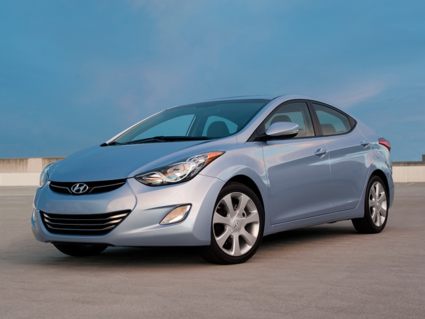
The 2011 redesign transformed the Elantra. Styling became dramatically more modern, fuel economy improved, and the car became substantially more competitive with the Civic and Corolla.
It's also one of the most important Elantra generations for reliability research because there are meaningful engine concerns that used buyers shouldn't ignore.
The naturally aspirated 1.8-liter four-cylinder became the primary engine in many U.S. Elantra sedans, while a 2.0-liter engine appeared in certain later versions and related Elantra models.
These engines shouldn't all be assumed to have the same reliability history.
2011-2016 Elantra 1.8-Liter Engine Reliability
The naturally aspirated 1.8-liter Nu four-cylinder provides good fuel economy and adequate performance, and many have accumulated high mileage without requiring an engine replacement.
However, this is an engine we'd inspect more carefully than the older 2.0-liter engines used in the previous Elantra generation.
Some owners have experienced abnormal engine ticking or knocking, piston slap or piston-to-cylinder-wall wear, oil consumption, and in more serious cases internal engine damage.
Cold-start behavior can be particularly informative.
We'd want to hear the engine before the seller has warmed it up. Listen for pronounced ticking, knocking, or other mechanical noise that doesn't quickly settle into normal operation.
Also check the engine oil level before the test drive.
An oil level substantially below full can indicate neglect, leakage, or oil consumption. Ask how frequently the owner checks and adds oil between changes.
Buyer Tip: Don't let the seller warm up a 2011-2016 Elantra before your inspection if you can avoid it. A true cold start may reveal engine noise that becomes less obvious once the engine reaches operating temperature.
Oil Consumption and Engine Damage
Oil consumption deserves special attention on a used Elantra because an engine that gradually burns oil can be damaged if an owner doesn't monitor the level.
That creates two separate questions:
Does the engine consume excessive oil, and if it does, did the previous owner keep the oil level properly maintained?
A vehicle that has consumed some oil but was consistently kept full may have a very different history from one repeatedly operated with the oil level dangerously low.
Look for exhaust smoke, fouled spark plugs, deposits around the tailpipe, low oil level, maintenance records showing unusually frequent oil additions, or evidence that an oil-consumption test was previously performed.
Engine Knocking, Piston Slap and Cylinder Damage
Abnormal knocking or piston-related noise is one of the more serious concerns when evaluating certain Elantras from this period.
Not every ticking sound indicates impending engine failure. Fuel injectors and other normal engine components can make audible noises.
But pronounced mechanical knocking, especially during a cold start or under load, deserves professional diagnosis before purchase.
If an engine has significant piston or cylinder-wall damage, repairing it can cost more than an older Elantra is worth.
This is one reason a pre-purchase inspection is particularly valuable on 2011-2016 models.
2011-2013 Elantra Reliability
The 2011, 2012, and 2013 Elantras remain common on the used market and can be attractively priced.
We wouldn't automatically reject them, but we'd be selective.
Engine condition and oil-maintenance history should be investigated carefully. Listen to the engine cold, check the oil level, review service records, and investigate any unusual knocking or ticking.
A properly maintained 2013 Elantra with a quiet, healthy engine can still provide good service. The model year itself isn't enough reason to reject the car.
But we'd be much less willing to take a chance on one with questionable engine noise or an uncertain oil-consumption history simply because the purchase price is low.
2014-2016 Elantra Reliability
The later 2014-2016 years received styling, equipment, and powertrain changes, depending on trim and body style.
These cars can be appealing because they're newer than the earliest fifth-generation models, but buyers still need to identify the exact engine.
Some versions use the 1.8-liter naturally aspirated engine, while certain higher-output versions use a 2.0-liter gasoline direct-injection engine.
Direct injection can improve performance and efficiency but may also introduce additional concerns such as intake-valve carbon buildup over high mileage because fuel no longer continuously washes the backs of the intake valves.
Again, we'd rather buy the best-maintained individual vehicle than choose solely according to displacement.
2013-2016 Elantra GT Reliability
The Elantra GT deserves separate attention because it isn't simply an Elantra sedan with a hatchback added.
The GT was based on Hyundai's European-market i30 and differs in chassis, body style, equipment, and powertrain details.
Early U.S. Elantra GT models used a naturally aspirated 1.8-liter four-cylinder, while later versions moved to a more powerful naturally aspirated 2.0-liter direct-injected engine.
The hatchback's practicality makes it attractive today, but we'd apply the same careful engine inspection used for contemporary Elantra sedans.
Check oil level, listen for abnormal cold-start noise, review maintenance history, and make sure the transmission operates smoothly.
Common 2011-2016 Hyundai Elantra Problems
- Engine ticking or knocking on some vehicles
- Piston slap or piston and cylinder-wall wear
- Oil consumption on some engines
- Potential engine damage if oil level is allowed to become too low
- Oil leaks as mileage increases
- Cooling-system and water-pump repairs
- Motor mount deterioration
- Steering-related noises or wear
- Strut and suspension problems
- Wheel bearing wear
- Brake and caliper repairs
- Air-conditioning problems
- Electrical and infotainment issues
- Carbon buildup on direct-injected engines at higher mileage
Buyer Tip: A 2011-2016 Elantra with documentation of an engine replacement shouldn't automatically be rejected. Determine why the engine was replaced, what engine was installed, who performed the work, and how many miles are on the replacement. A properly documented replacement can materially change the car's reliability outlook.
Bottom Line: We'd shop the 2011-2016 Elantra generation more cautiously than 2007-2010. Many are perfectly serviceable used cars, but engine noise, oil consumption, exact engine type, and maintenance history deserve much more attention.
2017-2020: Sixth-Generation Hyundai Elantra
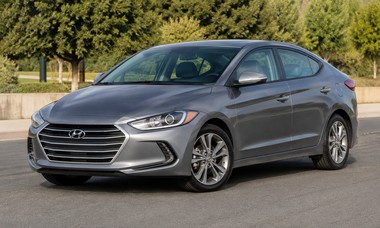
Hyundai redesigned the Elantra again for 2017, giving buyers several distinctly different powertrain choices during this generation.
This is where simply asking "Is a 2018 Elantra reliable?" becomes inadequate.
A basic 2018 Elantra SE with a naturally aspirated 2.0-liter engine and conventional automatic transmission presents a very different ownership proposition from a turbocharged Elantra Sport with a dual-clutch transmission.
2017-2020 2.0-Liter Naturally Aspirated Elantra
For a buyer prioritizing simplicity, the mainstream naturally aspirated 2.0-liter Elantra is generally the version we'd consider first.
Most use a conventional six-speed automatic transmission, although manual transmissions were available in certain versions.
The combination avoids both turbocharging and the dry dual-clutch transmission used in some specialized Elantra variants.
That doesn't mean the 2.0-liter should be purchased without inspection.
Oil consumption, abnormal engine noise, maintenance history, cooling-system condition, and evidence of previous engine repairs should still be investigated.
Check the oil level before driving and listen carefully during a cold start.
2017-2018 Elantra Reliability
The 2017 Elantra was the first year of a complete redesign, so we'd inspect it somewhat more carefully than later examples when all else is equal.
The 2018 model benefits from another year of production experience, although condition and powertrain choice remain much more important than a one-year difference.
For ordinary transportation, we'd generally prefer a well-maintained naturally aspirated 2.0-liter car with the conventional automatic over a more complicated turbo/DCT version if maximum long-term simplicity is the goal.
2019-2020 Elantra Reliability
The Elantra received a substantial styling refresh for 2019.
The naturally aspirated 2.0-liter remained an important engine, but transmission changes during the latter part of this generation mean buyers should again identify exactly what they're purchasing.
For 2020, mainstream Elantras moved from the previous conventional automatic to Hyundai's Intelligent Variable Transmission, or IVT, which is the company's continuously variable transmission design.
That makes the 2020 Elantra mechanically important despite looking similar underneath to the preceding model year.
Someone specifically seeking the established six-speed conventional automatic may therefore prefer an earlier 2017-2019 example, while a 2020 buyer should evaluate IVT operation carefully.
Elantra Eco Reliability: 1.4-Liter Turbo and DCT
The Elantra Eco was designed primarily around fuel efficiency and used a small turbocharged 1.4-liter four-cylinder paired with a seven-speed dual-clutch transmission.
This combination can deliver excellent fuel economy, but it isn't our first choice for someone whose only priority is long-term mechanical simplicity.
The turbocharger, direct-injection system, and dual-clutch transmission add complexity compared with the basic naturally aspirated Elantra.
During a test drive, pay particular attention to low-speed clutch engagement, hesitation, shuddering, warning messages, and transmission behavior after the vehicle becomes fully warmed up.
Elantra Sport Reliability: 1.6-Liter Turbo and DCT
The Elantra Sport is a very different car from the basic commuter-oriented Elantra.
Its turbocharged 1.6-liter four-cylinder provides substantially stronger performance, and buyers could get a manual transmission or seven-speed dual-clutch transmission depending on configuration.
The engine itself can provide good service with proper maintenance, but a turbocharged direct-injected engine places greater importance on consistent oil changes and correct oil specifications.
The dual-clutch transmission deserves careful evaluation.
Some low-speed hesitation or a different engagement feel compared with a torque-converter automatic can be characteristic of a dual-clutch design. Pronounced shuddering, repeated hesitation, overheating warnings, slipping, or inconsistent clutch engagement aren't things we'd ignore.
For an enthusiast planning long-term ownership, a properly maintained manual-transmission Elantra Sport can be particularly appealing because it eliminates the dual-clutch transmission from the equation.
2018-2020 Elantra GT Reliability
The Elantra GT returned in redesigned form and continued to deserve separate treatment from the sedan.
Depending on year and version, buyers could encounter a naturally aspirated 2.0-liter engine or a turbocharged 1.6-liter engine in the sportier GT Sport and later GT N Line.
The naturally aspirated version is generally the simpler choice.
The turbocharged GT is much quicker and more engaging to drive, but the engine and available dual-clutch transmission require the same additional scrutiny we'd apply to the Elantra Sport.
When considering an Elantra GT, identify the engine and transmission before deciding whether a broad statement about "Elantra reliability" actually applies to the car you're looking at.
Common 2017-2020 Hyundai Elantra Problems and Concerns
- Oil consumption or abnormal engine noise on some vehicles
- Engine condition concerns on certain higher-mileage examples
- Dual-clutch transmission hesitation or shuddering on equipped models
- Clutch wear on DCT-equipped vehicles
- Turbocharger and direct-injection complexity on Eco, Sport, and GT turbo models
- Carbon buildup on direct-injected engines
- IVT/CVT operation and durability considerations on 2020 mainstream models
- Ignition coil and sensor failures
- Motor mount deterioration
- Suspension and wheel bearing wear
- Air-conditioning problems
- Infotainment and electrical accessory issues
Buyer Tip: If you're searching specifically for a reliable 2017-2020 Elantra rather than a performance model, we'd generally begin with the naturally aspirated 2.0-liter version. Then verify whether the particular year uses the six-speed conventional automatic or IVT, because that distinction matters more than the trim badge alone.
Bottom Line: The 2017-2020 Elantra can be a good used-car value, but this generation demonstrates why powertrain-specific research matters. A naturally aspirated 2.0-liter sedan, turbocharged Sport, Eco, and Elantra GT can have very different reliability considerations.
2021-2023: Seventh-Generation Hyundai Elantra
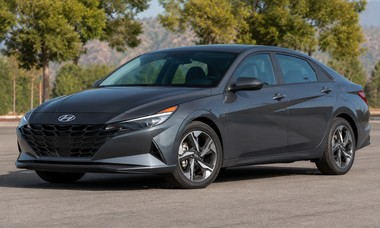
The completely redesigned 2021 Elantra expanded the lineup even further.
Buyers could choose a mainstream naturally aspirated 2.0-liter Elantra, an Elantra Hybrid, turbocharged N Line, or eventually the much more powerful Elantra N.
These vehicles share a name and basic platform, but we'd evaluate their long-term reliability separately.
2021-2023 2.0-Liter Elantra Reliability
The mainstream 2.0-liter naturally aspirated Elantra is again the logical starting point for buyers prioritizing simplicity and fuel economy.
The engine is paired with Hyundai's IVT rather than a traditional stepped automatic transmission.
The naturally aspirated engine avoids turbocharger complexity, but the IVT becomes an important part of the pre-purchase inspection.
Check for smooth acceleration from a stop, consistent response, unusual whining or vibration, warning lights, delayed engagement, or evidence of previous transmission repairs.
Because 2021-2023 cars are still relatively young compared with the older generations in this guide, we have less evidence about how the complete vehicle will behave at 150,000-200,000 miles.
We therefore wouldn't claim that these newer Elantras have already demonstrated the same high-mileage durability as the best older examples.
Is the 2021 Elantra Reliable?
The 2021 model is the first year of the seventh-generation redesign, so we'd give later 2022-2023 examples a modest preference when price, mileage, and condition are similar.
That doesn't make the 2021 Elantra a year we'd automatically avoid.
A well-maintained 2021 with a healthy engine and IVT can be a perfectly reasonable used-car choice. We'd simply inspect a first-year redesign carefully and check its service and repair history.
2022-2023 Elantra Reliability
The 2022-2023 Elantras benefit from additional production time following the 2021 redesign.
For someone wanting a conventional commuter version, the naturally aspirated 2.0-liter remains our starting point.
But buyers shouldn't assume the Hybrid, N Line, and N have identical reliability simply because they're newer Elantras.
Each uses a substantially different powertrain.
2021-2023 Elantra Hybrid Reliability
The Elantra Hybrid combines a naturally aspirated 1.6-liter gasoline engine with an electric motor and high-voltage battery.
Unlike some competing hybrids that use an electronically controlled power-split transaxle, the Elantra Hybrid uses a six-speed dual-clutch transmission.
That distinction is important for a reliability buyer.
The hybrid can deliver excellent fuel economy, and Hyundai has substantial experience with electrified powertrains. But the combination of gasoline engine, hybrid hardware, battery, electronics, and dual-clutch transmission creates different long-term considerations from the basic 2.0-liter Elantra.
On a used Elantra Hybrid, we'd evaluate both hybrid-system operation and transmission behavior.
Because the oldest examples are only from the 2021 model year, it's also too early to make strong claims about 15- or 20-year battery longevity specifically for this generation.
2021-2023 Elantra N Line Reliability
The N Line uses a turbocharged 1.6-liter four-cylinder and is intended for buyers who want considerably more performance than the standard Elantra provides.
Depending on year and configuration, transmission choices can include a manual or dual-clutch unit.
As with earlier turbocharged Elantras, we'd place extra importance on oil-change history, evidence of modifications, previous hard use, turbocharger condition, and transmission behavior.
A stock, carefully maintained N Line owned by someone who followed the service schedule is a very different used-car proposition from a modified example with an unknown tuning history.
2022-2023 Elantra N Reliability
The Elantra N shouldn't be evaluated as though it's merely a high-trim Elantra commuter car.
It's a genuine performance model using a turbocharged 2.0-liter engine and either a six-speed manual or eight-speed wet dual-clutch transmission.
The powertrain is substantially more powerful and mechanically stressed than the naturally aspirated 2.0-liter used in ordinary Elantras.
That doesn't mean the Elantra N is unreliable. But previous use matters enormously.
Some cars may have been driven gently as daily transportation. Others may have seen repeated hard acceleration, track use, aggressive launches, modifications, tuning, or substantially increased boost.
Before buying one, we'd inspect tires and brakes for evidence of hard use, review oil-change history, check for aftermarket engine-management equipment, investigate previous modifications, and evaluate the clutch or dual-clutch transmission carefully.
Buyer Tip: A modified Elantra N or N Line isn't automatically a bad car, but don't pay an unmodified-car price without understanding exactly what was changed and whether the vehicle has ever been returned to stock before sale.
Common 2021-2023 Hyundai Elantra Problems and Concerns
- IVT/CVT operation and long-term durability on standard 2.0-liter models
- Infotainment and electronic accessory issues
- Sensor and driver-assistance system problems
- Hybrid-system complexity on Elantra Hybrid models
- Dual-clutch transmission behavior on Hybrid and performance variants
- Turbocharger and direct-injection considerations on N Line and N models
- Potential effects of modifications or hard use on performance models
- Less long-term high-mileage evidence than earlier generations
Bottom Line: The 2021-2023 Elantra lineup is too mechanically diverse to receive a single reliability verdict. The naturally aspirated 2.0-liter is the simplest mainstream choice, the Hybrid offers excellent economy with additional drivetrain complexity, the N Line adds turbocharged performance, and the Elantra N should be evaluated as a performance car rather than an ordinary compact sedan.
What Are The Best Hyundai Elantra Years to Buy?
The best Hyundai Elantra years depend partly on your budget and the type of Elantra you're considering. For maximum mechanical simplicity, we'd generally favor naturally aspirated engines with conventional automatic transmissions where available.
For an inexpensive older Elantra, the later 2004-2006 and 2009-2010 models deserve consideration. Among newer used cars, carefully selected 2017-2019 models with the naturally aspirated 2.0-liter engine are particularly interesting.
| Model Years | Why We Recommend Them |
|---|---|
| 2004-2006 | Simple 2.0-liter powertrain and mature years of the generation. Age and timing-belt history are now critical. |
| 2009-2010 | Among our favorite older budget Elantras. Relatively straightforward engine and transmission combination, provided maintenance has been good. |
| 2017-2019 2.0L | Good combination of modern features, fuel economy, and relatively simple naturally aspirated power. The conventional six-speed automatic makes these especially interesting to buyers who prefer it over the later IVT. |
| 2022-2023 2.0L | Later examples of the seventh generation with newer safety and convenience technology. Long-term high-mileage evidence is still developing. |
Buyer Tip: The 2017-2019 naturally aspirated 2.0-liter Elantra deserves particular attention if you're looking for a relatively modern used Elantra without a turbocharger or dual-clutch transmission. It also predates the mainstream Elantra's move to the IVT for 2020.
Bottom Line: We'd put 2009-2010 near the top for a very inexpensive older Elantra and 2017-2019 2.0-liter models near the top for a newer used-car buyer. For seventh-generation cars, we'd lean toward 2022-2023 over the first-year 2021 when otherwise comparable.
Knowing which model years to concentrate on is step 1. Step 2 is knowing how to get a good used Elantra price.
What Hyundai Elantra Years Should You Avoid or Inspect Carefully?
We wouldn't label every Elantra from a particular year as bad. The more useful approach is identifying periods and powertrains that deserve additional inspection.
| Model Years | Why Extra Inspection Is Important |
|---|---|
| 2001-2003 | Not inherently poor cars, but age, timing-belt history, corrosion, cooling-system deterioration, and deferred maintenance are major considerations today. |
| 2011-2013 | Inspect the 1.8-liter engine particularly carefully for abnormal cold-start noise, oil consumption, piston-related problems, and evidence of previous engine repairs. |
| 2014-2016 | Engine condition remains important. Identify whether the vehicle has the 1.8-liter or 2.0-liter engine and investigate oil consumption, abnormal noise, and maintenance history. |
| 2017-2020 Turbo/DCT Models | Not necessarily years to avoid, but Eco, Sport, and certain GT versions add turbocharging, direct injection, and dual-clutch transmission considerations. |
| 2021 | First year of a complete redesign. We'd give 2022-2023 a modest preference when price, mileage, powertrain, and condition are otherwise similar. |
One of the most important lessons with the Elantra is that a model-year list alone doesn't tell the whole story.
A well-maintained 2013 Elantra with a quiet engine and excellent service records can be a much better purchase than a neglected 2018. Likewise, a 2019 Elantra Sport and a basic 2019 Elantra SE have sufficiently different powertrains that we'd evaluate them differently.
Buyer Tip: If an Elantra has already received an engine replacement, don't automatically reject it. Ask why it was replaced, when the work was performed, whether the replacement was new, remanufactured, or used, who performed the repair, and how many miles have accumulated since then.
Which Hyundai Elantra Engine Is Most Reliable?
If maximum simplicity is the goal, we'd generally favor one of the naturally aspirated four-cylinder engines paired with a conventional automatic or manual transmission.
But the answer changes according to generation.
Older 2.0-Liter Four-Cylinder
The naturally aspirated 2.0-liter engine used in the 2001-2010 generations is mechanically straightforward and can provide good longevity.
Its biggest disadvantage today is age. Timing-belt replacement must also be taken seriously.
With documented maintenance, proper cooling-system care, and regular oil changes, these older 2.0-liter Elantras can make inexpensive transportation.
1.8-Liter Nu Four-Cylinder
The naturally aspirated 1.8-liter Nu engine used extensively in the 2011-2016 generation requires more caution.
Many have provided long service, so we'd resist treating every 1.8-liter engine as defective. But reports of abnormal knocking, piston-related wear, cylinder damage, and oil consumption make a careful cold-start inspection particularly important.
Check the oil level, listen for mechanical noise, review oil-change history, and investigate any evidence of previous engine replacement.
2.0-Liter Naturally Aspirated Engine in Later Elantras
For mainstream later-model Elantras, the naturally aspirated 2.0-liter is generally our preferred starting point for a reliability-focused shopper.
It avoids the additional heat and complexity of turbocharging and doesn't require the specialized ownership considerations of the hybrid or high-performance powertrains.
However, transmission choice changes the equation.
The 2017-2019 mainstream Elantra typically combines the 2.0-liter with a conventional six-speed automatic, while the 2020 and newer mainstream models use Hyundai's IVT.
That's why we'd give 2017-2019 particular consideration when shopping for a relatively modern Elantra with a traditional automatic transmission.
1.4-Liter and 1.6-Liter Turbo Engines
The smaller turbocharged engines used in Eco, Sport, GT Sport, GT N Line, and N Line applications can provide good service, but they aren't our first recommendation for a buyer whose only goal is minimizing mechanical complexity.
Consistent oil changes become especially important with a turbocharger. Direct injection can also contribute to intake-valve deposits as mileage accumulates.
In many applications, the turbo engine is paired with a dual-clutch transmission, creating another important reliability consideration.
2.0-Liter Turbo Elantra N
The Elantra N's turbocharged 2.0-liter engine shouldn't be compared directly with the basic Elantra's naturally aspirated 2.0-liter simply because their displacements are identical.
The N engine produces dramatically more power and is designed for performance.
A stock Elantra N with careful maintenance can be a very different ownership proposition from a heavily modified or aggressively used example.
When buying used, maintenance, modifications, tuning history, previous track use, and the condition of the clutch or dual-clutch transmission deserve close attention.
Bottom Line: For a mainstream used Elantra, we'd generally favor a naturally aspirated engine over the more complicated turbocharged alternatives when maximum long-term simplicity is the priority. The 2017-2019 2.0-liter with the conventional automatic is an especially appealing combination.
Hyundai Elantra Transmission Reliability
The Elantra has used several fundamentally different transmission designs, so asking whether "the Elantra transmission is reliable" requires knowing which one is in the car.
Conventional Automatic Transmissions
The conventional automatics used in many older and middle-generation Elantras generally have a good reliability record when properly maintained.
On a high-mileage car, test for delayed engagement when shifting into Drive or Reverse, slipping, harsh shifts, flaring engine speed between gears, shuddering, or transmission warning lights.
Service history matters. A transmission that has spent 150,000 miles with little attention deserves more caution than one with documented maintenance.
Manual Transmissions
Manual-transmission Elantras can be mechanically durable, although clutch wear depends heavily on the previous driver's habits.
Check for clutch slipping under acceleration, difficulty engaging gears, grinding, abnormal bearing noise, and a clutch engagement point suggesting substantial wear.
On Sport, N Line, or N models, also consider the possibility of aggressive previous use.
Seven-Speed Dual-Clutch Transmission
Hyundai's seven-speed dual-clutch transmission appears in several turbocharged Elantra variants and deserves separate consideration.
A dual-clutch transmission operates differently from a conventional torque-converter automatic, so some difference in low-speed behavior doesn't necessarily indicate failure.
But pronounced shuddering, hesitation, clutch slipping, overheating warnings, repeated engagement problems, or inconsistent operation shouldn't be dismissed as "normal DCT behavior."
Drive the vehicle in stop-and-go traffic as well as at highway speeds. A brief test around the dealership may not reveal behavior that becomes apparent after the transmission is thoroughly warmed.
IVT / Continuously Variable Transmission
The mainstream Elantra moved to Hyundai's IVT beginning with the 2020 model year.
The IVT is designed to provide efficient operation without conventional fixed gear ratios.
When evaluating a used IVT-equipped Elantra, check for delayed engagement, abnormal vibration, excessive whining, inconsistent acceleration, warning lights, or evidence of previous transmission replacement.
We'd also review maintenance history carefully and make sure the correct transmission fluid and service procedures have been used.
Elantra Hybrid Dual-Clutch Transmission
The Elantra Hybrid is unusual among compact hybrids because it uses a six-speed dual-clutch transmission rather than the power-split continuously variable system found in some competing hybrids.
That can give the Elantra Hybrid a more conventional shifting feel, but it also means the transmission needs to be considered separately from the high-voltage hybrid system.
Test low-speed engagement, transitions between electric and gasoline propulsion, shifting under moderate acceleration, and operation after the vehicle is fully warmed.
Elantra N Eight-Speed Wet DCT
The eight-speed wet dual-clutch transmission available in the Elantra N is substantially different from the seven-speed dry DCT used in less powerful Hyundai models.
The wet-clutch design is intended to handle considerably greater power and heat.
Nevertheless, this is a performance transmission. On a used Elantra N, we'd investigate launch-control use, modifications, track history, fluid maintenance, warning messages, and any previous transmission repairs.
Buyer Tip: Never assume all Hyundai DCTs are the same. The seven-speed dry DCT, six-speed hybrid DCT, and eight-speed wet DCT used by the Elantra N are distinctly different transmissions with different applications and ownership considerations.
How Long Does a Hyundai Elantra Last?
A properly maintained Hyundai Elantra can realistically last 150,000-200,000 miles, and some examples exceed 200,000 miles substantially.
We wouldn't give every generation exactly the same lifespan expectation, however.
A mechanically healthy older Elantra with a proven engine and conventional transmission may remain viable well beyond 150,000 miles. Conversely, an Elantra suffering significant oil consumption or internal engine damage can become uneconomical to repair much sooner.
Is 100,000 Miles High for a Hyundai Elantra?
Not necessarily.
A 100,000-mile Elantra with good maintenance records can still have considerable useful life remaining.
At this mileage, however, we'd want to know whether fluids, spark plugs, belts where applicable, brakes, tires, cooling-system components, and other maintenance items have been addressed.
On 2011-2016 models in particular, we'd pay close attention to engine noise and oil consumption rather than assuming that 100,000 miles alone determines the car's remaining life.
Should You Buy an Elantra With 150,000 Miles?
A 150,000-mile Elantra can be worth buying if the price reflects the mileage and the vehicle has been maintained properly.
At that point, we'd place enormous weight on oil-change history, engine condition, transmission operation, cooling-system condition, suspension wear, and previous major repairs.
A 150,000-mile 2009 Elantra with extensive maintenance records may be a better inexpensive car than a lower-mileage example that has been neglected.
The same principle applies to a 2018 Elantra, but we'd additionally identify the exact engine and transmission before making a recommendation.
Can a Hyundai Elantra Last 200,000 Miles?
Yes. Many Elantras can reach 200,000 miles with proper maintenance.
But we wouldn't assume every Elantra engine will reach that mileage without significant repairs.
Regular oil changes, keeping the oil level full, cooling-system maintenance, transmission care, and responding quickly to abnormal engine noise can make an enormous difference.
- 100,000 miles: Routine for a properly maintained Elantra
- 150,000 miles: Still a reasonable used purchase if condition and maintenance are strong
- 200,000 miles: Achievable with a healthy drivetrain and consistent maintenance
- 250,000+ miles: Possible, but increasingly dependent on powertrain, maintenance history, and previous repairs
Bottom Line: We'd consider 150,000-200,000 miles a reasonable lifespan expectation for a properly maintained Elantra, with some examples going considerably farther. Engine choice, oil maintenance, and transmission condition become especially important when evaluating high-mileage cars.
Common Hyundai Elantra Problems
Problems vary substantially by generation, but several issues deserve particular attention when shopping across the 2001-2023 Elantra range.
1. Engine Knocking and Internal Engine Damage
Abnormal engine noise is among the most important concerns on certain Elantras, particularly some vehicles from the 2011-2016 era.
Listen to the engine from a true cold start whenever possible. Pronounced knocking, persistent piston-related noise, or mechanical sounds that change significantly as the engine warms deserve investigation.
Don't assume an engine is healthy simply because there is no warning light.
2. Excessive Oil Consumption
Some Elantra engines can consume increasing amounts of oil as mileage accumulates.
The immediate inconvenience of adding oil isn't necessarily the biggest concern. The greater danger is an owner allowing the oil level to become too low, potentially accelerating internal engine wear.
Check the dipstick before the test drive and ask directly whether oil needs to be added between changes.
3. Piston and Cylinder-Wall Wear
On an engine exhibiting piston slap, knocking, or substantial oil consumption, internal wear may be present.
Repairing serious cylinder or piston damage can require engine replacement, which can exceed the economic value of an older Elantra.
4. Dual-Clutch Transmission Problems
DCT-equipped Elantras can exhibit hesitation, shuddering, clutch wear, overheating, or inconsistent engagement.
Some low-speed characteristics are inherent to dual-clutch operation, but severe or worsening symptoms should be diagnosed rather than accepted as normal.
5. IVT Problems
Later mainstream Elantras use Hyundai's IVT. Check for abnormal vibration, unusual noises, delayed engagement, warning lights, or inconsistent acceleration.
Service history and correct fluid usage are particularly important.
6. Steering Problems and Noises
Some Elantras can develop steering noises, looseness, clunking, or wear in steering-related components.
During the test drive, turn the wheel at low speeds, drive over uneven pavement, and check for excessive play or unusual sounds.
7. Suspension and Wheel Bearing Wear
Struts, bushings, links, wheel bearings, and other suspension components eventually wear as mileage accumulates.
Listen for clunks over bumps, humming that changes with road speed, uneven tire wear, and instability during braking or highway driving.
8. Motor Mount Wear
Worn engine or transmission mounts can create excessive vibration at idle or clunking as the drivetrain moves under acceleration.
Mount deterioration is particularly relevant on older, higher-mileage Elantras.
9. Air-Conditioning Problems
Compressors, condensers, control components, and refrigerant leaks can become repair issues as an Elantra ages.
Test the system long enough to verify that it continues blowing cold air rather than checking it for only a few seconds.
10. Electrical and Infotainment Problems
Later Elantras contain increasingly sophisticated electronics, infotainment systems, cameras, sensors, and driver-assistance equipment.
Test everything before purchase, particularly on a vehicle no longer protected by its original warranty.
Hyundai Elantra Maintenance & Repair Costs
One of the Elantra's advantages is that routine maintenance and many common repairs are reasonably affordable compared with luxury vehicles and more complicated performance cars.
The financial picture changes dramatically, however, if an engine, dual-clutch transmission, IVT, turbocharger, or hybrid component requires major repair.
| Maintenance or Repair | Typical Cost |
|---|---|
| Oil change | $50-$100 |
| Brake pads and rotors | $350-$800+ |
| Spark plug replacement | $150-$350+ |
| Older Elantra timing-belt service | $600-$1,100+ |
| Wheel bearing replacement | $350-$700+ |
| Motor mount repair | $300-$900+ |
| Struts / significant suspension work | $700-$1,600+ |
| Air-conditioning repair | $300-$1,500+ depending on problem |
| Turbocharger replacement | $1,500-$3,000+ depending on model |
| Major transmission repair or replacement | $3,000-$6,000+ |
| Engine replacement | $4,000-$8,000+ depending on engine and replacement source |
These figures are broad budgeting ranges rather than repair quotes. Labor rates, location, model year, engine, parts choice, and whether the work is performed by a Hyundai dealer or independent repair shop can substantially change the final cost.
Buyer Tip: On an inexpensive older Elantra, recent repairs have real value. A seller who has already paid for tires, brakes, struts, motor mounts, timing-belt service, or cooling-system work may be offering a better car than someone selling a lower-mileage example that needs all of those items soon.
In addition, your trade-in allowance, if you are doing that, will also affect the overall potential cost analysis of moving into an Elantra (KBB versus Edmunds Appraisals - Which Is Better).
What Usually Needs Attention After 100,000 Miles?
An Elantra doesn't suddenly become unreliable at 100,000 miles, but this is where maintenance history and wear items become increasingly important.
- Check engine oil level and oil-consumption history
- Review oil-change records
- Listen carefully for engine knocking or abnormal ticking
- Check transmission service history
- Evaluate transmission operation when fully warmed
- Verify timing-belt replacement on older applicable engines
- Inspect coolant and cooling-system components
- Check spark-plug replacement history
- Inspect ignition coils if misfires are present
- Check engine and transmission mounts
- Inspect struts, bushings, links, and ball joints
- Listen for wheel bearing noise
- Inspect brakes and tires
- Test the air-conditioning system
- Test windows, locks, infotainment, cameras, and other electrical equipment
- On turbo models, inspect for oil leaks and signs of turbocharger problems
- On DCT models, evaluate clutch engagement and shuddering
- On IVT models, check for vibration, noise, or delayed engagement
- On hybrids, scan the hybrid system and investigate battery condition
Buyer Tip: High mileage by itself isn't a reason to reject an Elantra. A documented 130,000-mile car that has received consistent maintenance may represent considerably less risk than a 70,000-mile car with an unknown history and low engine oil.
What to Look for Before Buying a Used Hyundai Elantra
The Elantra's affordability can tempt buyers to skip a professional inspection, particularly when looking at an inexpensive older example.
That's precisely where an inspection can have the greatest value. Discovering serious engine noise or a failing transmission before buying a $6,000 car can prevent a repair bill approaching the value of the vehicle.
Used Hyundai Elantra Pre-Purchase Checklist
- Identify the exact engine and transmission
- Check the VIN for outstanding recalls and campaigns
- Review maintenance and repair records
- Ask whether the engine has ever been replaced
- Check engine oil level before starting the car
- Ask whether oil is added between changes
- Start the engine completely cold when possible
- Listen for knocking, piston slap, or abnormal ticking
- Check for exhaust smoke
- Inspect for oil and coolant leaks
- Check cooling-system condition
- Verify timing-belt history on applicable older engines
- Test the transmission from cold and fully warmed
- Check for slipping, shuddering, delayed engagement, or harsh operation
- On DCT models, test extensively in low-speed traffic
- On IVT models, listen for abnormal noise and check for vibration
- Inspect suspension and steering components
- Listen for wheel bearing noise
- Inspect tires for uneven wear
- Test the air conditioner
- Test all electrical accessories and infotainment features
- On turbo models, look for modifications and tuning equipment
- On Hybrid models, check hybrid-system operation
- On N Line and N models, investigate previous modifications and hard use
- Have an independent mechanic perform a pre-purchase inspection
Buyer Tip: If you're considering an Elantra with an engine known to deserve additional scrutiny, ask the mechanic performing the inspection to specifically evaluate cold-start noise, oil consumption evidence, and internal engine condition rather than simply requesting a generic inspection.
Pros & Cons of Buying a Used Hyundai Elantra
Pros
- Usually affordable on the used-car market
- Good fuel economy
- Large selection of used examples
- Simple powertrains available in many years
- Generally affordable routine maintenance
- Conventional automatic transmissions available in many older models
- 150,000-200,000 miles is realistic for a well-maintained example
- Elantra GT provides useful hatchback practicality
- Hybrid models offer excellent fuel economy
- Sport, N Line, and N models provide alternatives for performance buyers
- Later models offer substantial safety and technology equipment
- Can cost considerably less than comparable used Civics and Corollas
Cons
- Reliability varies substantially by year and engine
- Some engines deserve extra scrutiny for knocking and internal wear
- Oil consumption can become a serious issue on some vehicles
- Running an oil-consuming engine low on oil can cause major damage
- Seven-speed DCT reliability and drivability can be more variable
- IVT-equipped cars require different transmission considerations
- Turbocharged models add mechanical complexity
- Direct-injected engines can develop intake deposits
- Performance models may have been modified or driven hard
- Newest generations have less long-term high-mileage history
Final Buyer Summary
The 2001-2023 Hyundai Elantra can be an excellent used-car value, but this is one model where we'd resist making a blanket statement that every year is equally reliable.
For buyers seeking inexpensive older transportation, the 2004-2006 Elantras can still be viable when condition is excellent, although timing-belt maintenance, corrosion, cooling-system condition, and age-related repairs need careful attention.
We like 2009-2010 even more as older budget choices. These final years of the fourth generation combine a relatively straightforward naturally aspirated 2.0-liter engine with conventional transmission choices and avoid some of the engine concerns that become more important in the following generation.
The 2011-2016 Elantra requires more careful shopping.
Many 1.8-liter Elantras from these years have provided long service, and we'd certainly not reject every one. But abnormal engine noise, piston-related wear, oil consumption, and potential internal engine damage make cold-start behavior and oil-maintenance history especially important.
The 2013 Elantra, for example, can still be a perfectly reasonable used car if the engine is quiet, oil consumption isn't excessive, maintenance has been consistent, and an independent inspection finds no developing problems. We'd simply investigate it more carefully than a model with a stronger engine reliability history.
The 2017-2020 generation offers some particularly interesting choices.
For a buyer who primarily wants dependable transportation, we'd start with a naturally aspirated 2.0-liter Elantra. The 2017-2019 versions are especially attractive because they combine that engine with a conventional six-speed automatic rather than the IVT introduced on mainstream models for 2020.
But don't treat an Elantra Eco, Elantra Sport, or turbocharged Elantra GT as mechanically identical to the basic sedan. Turbochargers, direct injection, and dual-clutch transmissions change the long-term ownership equation.
The 2021-2023 generation expands those differences even further.
The standard naturally aspirated 2.0-liter is the logical starting point for a buyer prioritizing simplicity. The Elantra Hybrid offers outstanding fuel economy but adds hybrid hardware and a six-speed dual-clutch transmission. The N Line provides turbocharged performance, while the Elantra N is a genuine performance car that should be inspected for modifications and evidence of hard use.
For a 2021-2023 Elantra, we'd give 2022-2023 a modest preference over the first-year 2021 redesign when price, mileage, powertrain, and condition are otherwise comparable.
Across every generation, one habit matters enormously: keep the engine oil at the proper level.
Regular oil changes are important, but an engine that consumes oil can run dangerously low between scheduled changes if the owner never checks the dipstick. On an Elantra with a questionable engine history, we'd rather see evidence that the owner regularly monitored oil level than simply hear that the oil was changed every few thousand miles.
Finally, don't buy an Elantra based solely on year, mileage, or price. Identify the exact engine and transmission, listen to the engine cold, investigate oil consumption, evaluate transmission behavior after a thorough test drive, review maintenance records, and get an independent pre-purchase inspection.
Our overall recommendation: For an inexpensive older Elantra, we'd look particularly closely at 2009-2010. For a more modern used example, the naturally aspirated 2.0-liter 2017-2019 Elantra with the conventional six-speed automatic is one of our favorite combinations. We'd shop 2011-2016 models more selectively, while newer Hybrid, N Line, and N models should be evaluated according to their specific powertrains rather than the Elantra name alone.
A carefully chosen Hyundai Elantra can realistically provide 150,000-200,000 miles or more of service while delivering good fuel economy and relatively inexpensive ownership. The key is choosing the right Elantra rather than assuming they're all the same.
Also, Your Trade-In Value?
It's good to always know the value of your trade-in while you're evaluating your next possible purchase. Here's a good source for a quick and accurate appraisal: free trade-in appraisal.