

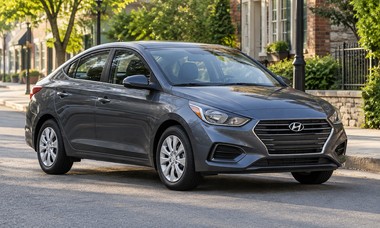
Which Hyundai Accent years are the most reliable? Which ones deserve a closer inspection? And does the transmission change in 2020 make the final Accent models better or riskier used-car purchases?
The Accent has long appealed to buyers who want inexpensive transportation, good fuel economy and manageable maintenance costs. But a 2009 Accent, a 2016 Accent and a 2021 Accent have meaningfully different engines and transmissions. Their age and repair risks are different, too.
This guide covers 2006–2022 U.S.-market Hyundai Accents. Earlier cars still exist, but most are now old enough that individual condition matters more than a broad model-year recommendation. The 2022 model year was the Accent’s last in the United States.
We’ll look at reliability by generation, the problems most relevant to each group, the switch from a conventional automatic to Hyundai’s Intelligent Variable Transmission, important recalls, the best used-car choices and how long a well-maintained Accent may last.
In This Guide You'll Learn
- How reliable the Hyundai Accent is as a used car
- Which Accent years and powertrains we would consider first
- Which years require extra attention to recalls or transmission condition
- What changed in the Accent’s engine and transmission for 2020
- What to check on a high-mileage Accent
- Whether common symptoms point to an engine, transmission or smaller repair
- How much ownership costs and vehicle condition should influence your decision
Is the Hyundai Accent Reliable?
The Hyundai Accent can be a dependable, economical used car, but its reliability depends heavily on the year, maintenance history and transmission. The mechanically simple older models can provide inexpensive transportation if their age-related needs have been addressed. Later Accents offer more modern safety equipment and better fuel economy, but they introduce different issues to investigate.
One important dividing line is 2020. Most automatic-equipped 2012–2019 Accents use a conventional six-speed automatic transmission. For 2020, Hyundai changed the engine and introduced its Intelligent Variable Transmission, or IVT, a type of continuously variable automatic transmission. A buyer seeking a traditional automatic should therefore distinguish a 2019 Accent from an otherwise similar-looking 2020.
The Accent also should not inherit every problem associated with other Hyundai models. In particular, a buyer should not assume that an Accent has the same engine as a Sonata or Elantra simply because all three wear a Hyundai badge. The useful questions are which engine and transmission the particular Accent has, whether it has been maintained and whether applicable recalls or service campaigns have been completed.
Bottom Line: A well-maintained Accent can be a good low-cost commuter. We would judge an older car by its condition and documented maintenance, and a 2020–2022 automatic by the condition and history of its IVT.
Hyundai Accent Reliability at a Glance
| Category | Our Assessment |
|---|---|
| Overall Reliability | Generally good for a carefully selected, well-maintained car |
| Older Budget Choices | Clean later 2006–2011 cars with documented timing-belt service and little rust |
| Preferred Newer Powertrain | 2016–2019 1.6-liter engine with a conventional six-speed automatic, subject to condition |
| 2020–2022 Automatic | Uses Hyundai’s IVT; inspect its operation and service or campaign history carefully |
| Important Recall Check | 2012–2015 anti-lock brake system fire-risk recall on affected cars |
| Additional Safety Checks | 2020–2022 seat-belt pretensioner recall on affected cars; other recalls vary by VIN |
| Potential Lifespan | About 150,000–200,000 miles is reasonable to consider for a maintained vehicle; more is possible |
Buyer Tip: Do not let a favorable model year substitute for an inspection. On an inexpensive used Accent, an engine, transmission or structural-rust problem can overwhelm the advantage of a low purchase price.
How Many Miles Can a Hyundai Accent Last?
A well-maintained Hyundai Accent can reach 150,000–200,000 miles, and some go farther. That is a potential lifespan for the complete vehicle, not a promise that its original engine or transmission will reach a particular mileage without repair.
At 100,000 miles, an Accent with regular maintenance and no developing symptoms may still have substantial useful life. On a 2006–2011 car, confirm timing-belt history. On a 2020–2022 automatic, pay particular attention to how the IVT behaves on a long test drive.
At 150,000 miles, previous upkeep becomes more valuable than a claim that the Accent is generally reliable. Ask what has already been repaired. Evaluate engine oil level, transmission behavior, cooling-system condition, suspension wear, rust and any warning lights.
At 200,000 miles, a healthy Accent may remain useful, but its purchase price should leave room for repairs. Even routine items can add up on a low-value car. A 200,000-mile Accent with records and recent major maintenance could be preferable to a neglected lower-mileage one, but neither should be bought on mileage alone.
Reaching 250,000 miles is possible for an individual car, but we would treat that as a favorable outcome rather than the mileage every Accent buyer should expect. An original IVT’s lifespan should not be inferred from examples of complete Accents reaching that number.
Bottom Line: For a high-mileage Accent, the question is whether its current condition and likely repair costs make it sensible at the asking price. Part 2 will cover that decision in more detail.
Hyundai Accent Reliability by Generation
Third Generation: 2006–2011 Hyundai Accent

The 2006–2011 Accent is the oldest group covered here. It offers a straightforward 1.6-liter four-cylinder engine and a choice of manual or conventional automatic transmission. Buyers may encounter either a sedan or a hatchback, depending on the year.
That mechanical simplicity is attractive in an inexpensive car. These Accents avoid the direct-injection engine and IVT found in later versions. Their challenge today is age: even a low-mileage example can need work on its cooling system, rubber parts, brakes, suspension, air conditioning or electrical accessories.
The engine uses a timing belt, a scheduled-maintenance item that must be replaced at the interval specified for the vehicle. A seller’s statement that the engine “runs fine” does not establish that the belt was serviced. Ask for a dated invoice showing the work. If there is no proof, budget for the service before treating a low asking price as a bargain.
Inspect underneath an older Accent, especially if it spent years where roads are salted. Rust affecting structural areas, brake lines or suspension attachment points is a different concern from minor surface corrosion. A professional inspection can help distinguish them.
Common Problems and Concerns on 2006–2011 Hyundai Accents
- Overdue timing-belt service: Missing documentation creates an immediate maintenance question, even if the engine currently runs well.
- Cooling-system deterioration: Check the radiator, hoses, water pump, coolant level and signs of previous overheating.
- Oil leaks and aging seals: Look for fresh leaks and evidence that the engine has been driven with a low oil level.
- Suspension and steering wear: Listen for clunks over bumps and check for loose steering or uneven tire wear.
- Rust: Inspect the underside and suspension mounting areas carefully on cars from snowy regions.
- Age-related electrical and accessory repairs: Test the air conditioner, windows, locks, lights and other equipment rather than assuming minor failures will be cheap to fix.
- Stop-lamp-switch recall on certain 2007–2009 Accents: Check the VIN to see whether the recall applies and was completed.
Does a 2006–2011 Hyundai Accent Have a Timing Belt or Chain?
The 1.6-liter engine in the 2006–2011 Accent uses a timing belt. Its replacement history is one of the first things we would ask about when considering one of these cars.
A timing belt can look like an abstract maintenance issue until the cost is compared with the price of an older Accent. If the work is due or undocumented, obtain a local estimate and factor it into the offer. Ask whether related work, such as a water-pump replacement, was performed at the same time; an invoice is more useful than a verbal assurance.
Why Won't an Older Hyundai Accent Shift Out of Park, or Why Are Its Brake Lights Not Working?
A faulty brake-light switch is one possible cause on an affected older Accent. Hyundai recalled certain 2007–2009 Accents because a malfunctioning stop-lamp switch could prevent the brake lights from operating properly. Depending on the vehicle, it could also affect the brake-transmission shift interlock, which lets the automatic shifter move out of Park.
Those symptoms can have other causes, so they still require diagnosis. For a used car, check the VIN for recall completion and confirm that the brake lights illuminate consistently during an inspection. Do not assume that every 2006–2011 Accent was included in this particular recall.
Buyer Tip: On a 2006–2011 Accent, ask for timing-belt documentation before making an offer. Then inspect for rust and evaluate the cooling system. At this age, those findings can matter more than a modest difference in model year or mileage.
Bottom Line: A clean, maintained older Accent can still serve as basic transportation. We would pass on a badly rusted or overheated example, and we would price undocumented timing-belt work into any purchase.
Fourth Generation: 2012–2017 Hyundai Accent
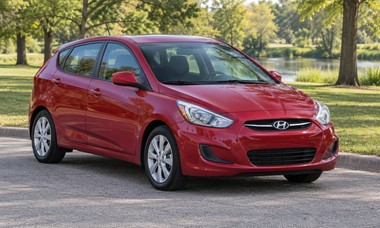
The 2012 redesign made the Accent more modern and more efficient. U.S. models use a 1.6-liter gasoline direct-injection four-cylinder engine. With direct injection, fuel is sprayed into the combustion chamber rather than through the intake ports. Buyers could choose a manual transmission or a conventional six-speed automatic.
Both sedan and hatchback versions were offered. A hatchback can be particularly useful for someone who wants inexpensive transportation with more flexible cargo space, but body style does not eliminate the need to check engine and transmission condition.
Compared with the preceding generation, the 2012–2017 Accent eliminates the older car’s timing-belt purchase question. It also brings different considerations: engine oil use, misfires or rough running on an individual vehicle, and a major safety recall affecting certain 2012–2015 cars.
We would not assume that every direct-injected Accent suffers from heavy carbon buildup or engine failure. A rough idle, hesitation or check-engine light can arise from several causes. The useful step is to identify the fault before paying for a particular repair—or buying a car whose seller has not investigated it.
Common Problems and Concerns on 2012–2017 Hyundai Accents
- Oil consumption or a low oil level on an individual car: Check the dipstick before the test drive and ask whether oil must be added between changes.
- Rough idle, hesitation or misfires: Possible causes vary. Read stored diagnostic codes and investigate the actual fault rather than assuming the engine needs a particular cleaning procedure.
- Check-engine lights: An emissions-related code should be diagnosed before purchase; clearing the light does not repair the underlying issue.
- Conventional-automatic wear on neglected cars: Check for delayed engagement, slipping, harsh shifts or inconsistent behavior after the car warms up.
- Clutch wear on manual cars: A manual transmission may be appealing, but clutch condition depends heavily on previous driving.
- Suspension, steering and brake wear: Inspect these as mileage rises, particularly on inexpensive examples with incomplete service records.
- Anti-lock brake system recall on certain 2012–2015 cars: Confirm the repair status by VIN before purchase.
Do 2012–2017 Hyundai Accents Have a Timing Belt?
No. The 1.6-liter engine used in this generation has a timing chain rather than the scheduled-replacement timing belt found in the older Accent. That removes one predictable belt-service expense from the buying decision.
A timing chain does not make engine maintenance optional. Oil level and oil-change history remain important, and unusual startup noise or persistent mechanical noise should be diagnosed rather than dismissed because the engine has a chain.
Why Does a Hyundai Accent Idle Rough or Hesitate?
There is no single Accent-specific cause for rough idle or hesitation. Depending on the symptoms and diagnostic codes, possibilities include ignition or fuel-system faults, air-intake issues, sensor problems and, on a higher-mileage direct-injected engine, intake-valve deposits.
The direct-injection design used in 2012–2019 Accents makes valve deposits a plausible issue to investigate. It does not prove that deposits are the cause whenever an Accent idles roughly. Ask for the actual trouble codes, find out what testing has been done and avoid buying a car on the assumption that a simple cleaning will certainly cure it.
A cold start and a substantial test drive are more informative than a few minutes of idling in a parking lot. Notice whether the engine starts promptly, idles consistently, accelerates cleanly and behaves the same way after it is fully warm.
Which Hyundai Accents Have the Anti-Lock Brake System Fire Recall?
The recall includes certain 2012–2015 Hyundai Accents. An electrical short in the anti-lock brake system, or ABS, module can increase the risk of an engine-compartment fire while the vehicle is parked or being driven.
This is a VIN-specific safety check, not a reason to assume that every Accent from those years has an unresolved defect. Before purchasing a 2012–2015 car, check its recall status and obtain documentation that an applicable repair was completed. If a recall remains open, follow the current manufacturer and safety-agency instructions until the repair is performed.
Buyer Tip: For a 2012–2017 Accent, check the oil level before starting the engine, investigate any rough-running or warning-light symptoms, and verify ABS recall status on applicable 2012–2015 cars. A clean service history is more useful than a seller’s general assurance that these engines are reliable.
Bottom Line: This generation offers a useful balance of modern features, fuel economy and a conventional automatic transmission. We would favor a well-maintained example with a healthy engine and completed recalls over one chosen solely because it is a later model year.
Fifth Generation: 2018–2022 Hyundai Accent
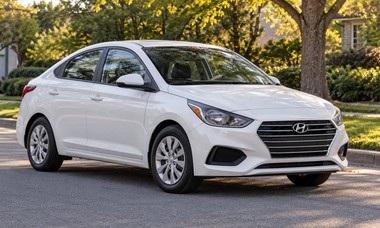
The 2018–2022 Accent is the final U.S. generation. It was sold as a sedan, so buyers specifically seeking an Accent hatchback will need to look at the preceding generation.
There is an important mechanical split within these five years. The 2018–2019 Accent retained a 1.6-liter gasoline direct-injection engine and offered a manual or conventional six-speed automatic transmission. For 2020, Hyundai introduced a revised 1.6-liter engine with fuel injected through the intake ports and paired automatic-equipped cars with its IVT. Certain configurations also offered a manual transmission.
That change means “fifth-generation Accent reliability” cannot be reduced to one engine-and-transmission verdict. A 2019 automatic may particularly appeal to a shopper who wants a newer Accent with conventional automatic shifting. A 2021 automatic may deliver better fuel economy but calls for a different transmission inspection.
The newer generation also has several distinct safety and service items. Certain 2018–2019 cars have an extended warranty for an airbag control-unit condition. Certain 2018–2020 cars were recalled for an interior trunk-release problem. Affected 2020–2022 cars have a seat-belt pretensioner recall. Certain 2020–2021 IVT-equipped cars were covered by a separate transmission service campaign. Applicability should be checked using the vehicle’s VIN rather than assumed from its model year alone.
Common Problems and Concerns on 2018–2022 Hyundai Accents
- IVT drivability or warning lights on certain 2020–2021 cars: Check whether Hyundai’s applicable transmission service campaign was completed.
- IVT symptoms on any equipped car: Investigate repeated hesitation, shudder, delayed engagement, unusual noise or transmission-related warning lights.
- Engine oil level and running quality: Check for low oil, persistent rough idle, misfires or warning lights on the specific car being considered.
- Airbag warning lights on certain 2018–2019 cars: Hyundai issued extended coverage for a qualifying airbag control-unit condition.
- Trunk-release recall on certain 2018–2020 cars: Verify that an applicable recall was completed.
- Seat-belt pretensioner recall on certain 2020–2022 cars: Confirm the current recall remedy by VIN.
- Wear and deferred maintenance: Newer model years do not rule out worn tires, brakes, suspension parts or damage from previous use.
Are 2018–2019 Hyundai Accents More Reliable Than 2020–2022 Accents?
The key difference is the powertrain, not a proven rule that every car from one group is more reliable. Automatic-equipped 2018–2019 Accents use a conventional six-speed transmission. Automatic-equipped 2020–2022 cars use Hyundai’s IVT, a continuously variable design that operates differently and has its own inspection considerations.
We would give a clean 2018–2019 conventional-automatic car serious consideration, particularly for a buyer who wants to avoid the IVT. But a neglected 2019 should not outrank a well-maintained 2021 merely because of its transmission type. Conversely, a low-mileage 2021 with repeated shudder or an unresolved transmission warning deserves investigation before purchase.
The engines differ, too. The earlier cars have the direct-injected 1.6-liter engine, while Hyundai changed to a 1.6-liter engine using intake-port fuel injection for 2020. That difference matters when evaluating claims that all 2012–2022 Accents share the same direct-injection concerns.
Do 2020–2022 Hyundai Accents Have Transmission Problems?
Some IVT-equipped Accents warrant particular attention, but a transmission complaint does not establish that every 2020–2022 car has a defective unit. Hyundai issued a service campaign covering certain 2020–2021 Accents with the IVT. The procedure calls for a transmission-control software update and, when necessary, replacement of the IVT.
For a used car, ask whether the campaign applied and what work was performed. A software update and a complete transmission replacement are different histories. If the seller reports a replacement, request the invoice and find out when it was installed and how the car has behaved since.
Drive an IVT-equipped Accent from a cold start through stop-and-go traffic and at road speed. Pay attention to repeated shudder, delayed response, unusual whining, warning lights or inconsistent acceleration. A vehicle that exhibits those symptoms needs a written diagnosis; do not assume every hesitation is harmless IVT behavior or that the entire transmission necessarily needs replacement.
What Is the Seat-Belt Pretensioner Recall on the Hyundai Accent?
Certain 2020–2022 Accents were recalled because a front seat-belt pretensioner could deploy abnormally during a crash and send metal fragments into the cabin. The pretensioner is the device that tightens a seat belt when a crash occurs. Hyundai’s remedy secures the affected component with a protective cap.
Some early recall information listed the 2019 Accent, but Hyundai subsequently removed that model year after reviewing which pretensioners had actually been installed. The applicable Accent range in the amended filing is 2020–2022. Check the individual VIN for open recalls and documented completion.
Why Is the Airbag Warning Light On in a 2018 or 2019 Hyundai Accent?
On certain 2018–2019 Accents, an airbag control-unit problem is one possible cause. Hyundai extended warranty coverage for a qualifying control-unit condition to 15 years with unlimited mileage, measured from the vehicle’s original retail delivery or first use. The extended coverage also applies to subsequent owners when the vehicle and condition qualify.
An illuminated airbag light can have other causes, so the light still needs a diagnosis. Ask a Hyundai dealer to check the VIN and applicable warranty terms before paying for a control-unit replacement. Do not assume the extension covers every airbag-system repair.
Buyer Tip: On a 2018–2019 Accent, identify the engine and conventional automatic or manual transmission, and investigate any airbag warning light. On a 2020–2022 automatic, evaluate the IVT carefully and check both campaign and recall status by VIN.
Bottom Line: The final Accent generation contains two meaningfully different powertrain groups. The 2018–2019 conventional-automatic cars are attractive starting points for reliability-focused buyers. The 2020–2022 IVT cars can also be worth considering, provided transmission operation, service history and applicable campaign work check out.
What Are the Best Hyundai Accent Years to Buy?
For a relatively modern used Accent, we would begin with a well-maintained 2016–2019 model equipped with the conventional six-speed automatic transmission. These years provide a useful combination of age, fuel economy and a familiar automatic-transmission design. The exact car’s maintenance and condition still matter more than a preferred year range.
The 2018–2019 cars deserve particular attention from buyers who want the final Accent sedan design but prefer a conventional automatic over the IVT introduced for 2020. A clean 2016–2017 Accent can also be a good value, especially if its price reflects its greater age.
For a smaller budget, a later 2006–2011 Accent can still work if it has documented timing-belt service, little structural rust and a healthy cooling system. We would be less concerned with selecting one magic year than with finding an older car whose owner has already dealt with its age-related maintenance.
A 2020–2022 Accent should not automatically be ruled out. It has a different engine and, on automatic-equipped cars, an IVT rather than the earlier six-speed automatic. We would consider one with smooth transmission operation, good records and any applicable campaign work documented.
| Years and Version | Why We Would Consider It | What to Check First |
|---|---|---|
| Later 2006–2011 cars | Simple engine and conventional transmission choices; potentially inexpensive to buy | Timing-belt records, rust, cooling system and accumulated age-related repairs |
| 2016–2017 | Useful balance of price, efficiency and conventional automatic availability | Oil level, engine operation, transmission behavior and maintenance records |
| 2018–2019 | Newer sedan design with an available conventional six-speed automatic | Airbag warning light, recall status, oil level and transmission operation |
| 2020–2022 | Newest U.S. Accents and improved fuel economy | IVT operation on automatic cars, campaign history and applicable recalls |
Buyer Tip: When comparing a 2019 and a 2020 automatic Accent, check the transmission type before treating them as interchangeable. The 2019 has a conventional six-speed automatic; the 2020 uses Hyundai’s Intelligent Variable Transmission, or IVT.
Which Hyundai Accent Years Should You Avoid or Inspect Carefully?
We would avoid a poorly maintained or symptomatic Accent rather than condemn every car from a particular model year. The problems that can turn an inexpensive car into a costly mistake depend on its generation.
| Cars Requiring Extra Care | Reason |
|---|---|
| Any 2006–2011 Accent without timing-belt records | Required maintenance may be overdue, and the cost matters on an older, low-value car |
| Any older Accent with serious underside rust | Structural corrosion or damaged brake lines can outweigh an attractive purchase price |
| 2012–2015 Accent with an open ABS recall | An applicable fire-risk recall should be resolved according to Hyundai’s current instructions |
| Any 2012–2019 car with low oil, persistent rough running or unexplained warning lights | The cause and any resulting engine damage need to be established before purchase |
| Any 2020–2022 automatic with repeated shudder, delayed engagement or transmission warnings | Its IVT needs a written diagnosis and a review of campaign and repair history |
| Any affected car with unresolved safety recalls | Check its VIN and confirm that the current remedy has been completed |
A 2014 Accent with documented maintenance, a healthy engine and a completed recall can be a better buy than a neglected 2019. Likewise, a smooth-running 2021 with documented IVT work may be more appealing than a 2018 with an unexplained airbag light and poor service history.
Bottom Line: Avoid unresolved mechanical symptoms, serious rust and sellers who cannot account for major repairs. A model-year recommendation cannot make those risks disappear.
Which Hyundai Accent Engine Is Most Reliable?
For a newer used Accent, we would prioritize a healthy, well-maintained 1.6-liter engine over choosing solely by its fuel-injection design. Each of the three groups in this guide has a different buying consideration.
2006–2011: Older 1.6-Liter Engine
The older 1.6-liter four-cylinder is relatively straightforward. Its advantage is mechanical simplicity; its disadvantage today is the age of the surrounding car and its scheduled timing-belt service.
If the belt work is documented, the cooling system is sound and the underside is solid, one of these Accents can still provide inexpensive transportation. If those items are unknown, a low asking price may simply shift the expense to the next owner.
2012–2019: 1.6-Liter Direct-Injection Engine
The 2012–2019 Accent uses a 1.6-liter engine with gasoline direct injection, meaning fuel is sprayed into the combustion chambers. It offers good fuel economy and does not have the older engine’s scheduled timing-belt replacement.
Check the oil level and ask whether the owner adds oil between changes. If the engine idles roughly, misfires or has a check-engine light, obtain a diagnosis. Direct injection makes intake-valve deposits one possible consideration at higher mileage, but it does not establish the cause of every rough-running Accent.
2020–2022: Revised 1.6-Liter Engine
Hyundai changed to a revised 1.6-liter engine using intake-port fuel injection for 2020. Fuel passes the intake valves on its way into the engine, so it should not be described as the same direct-injection setup used in the 2012–2019 Accent.
The engine change does not, by itself, prove that every 2020–2022 Accent will outlast an earlier car. On an automatic-equipped example, the IVT’s condition is an equally important part of the reliability decision.
Our Choice: We would take a well-maintained engine from any of these groups over a neglected example from a supposedly better year. For an Accent that is still relatively modern without the IVT, the 2016–2019 engine paired with a healthy conventional automatic is our preferred starting point.
Which Hyundai Accent Transmission Is the Best Used-Car Choice?
We would generally favor the conventional six-speed automatic available through 2019 for a buyer prioritizing predictable long-term ownership. That is a preference between transmission designs, not a guarantee that an individual six-speed automatic will be trouble-free.
Conventional Automatics
Older Accents use conventional automatics, and the 2012–2019 automatic models use a six-speed design. On a used car, shift from Park into Drive and Reverse and watch for an excessive delay. Test acceleration at different speeds and repeat the assessment after the transmission has fully warmed up.
Harsh shifts, slipping, a rising engine speed without matching acceleration or an unexplained warning light deserve diagnosis. Ask whether transmission fluid has been serviced according to the applicable maintenance schedule and whether any repairs have been performed.
Manual Transmissions
A manual Accent avoids the automatic or IVT, but it introduces a wear item: the clutch. Check for slipping during acceleration, difficulty selecting gears, grinding and an unusually high clutch engagement point. A manual car driven gently and maintained well can be appealing; one with a worn clutch can require an immediate expense.
2020–2022 Intelligent Variable Transmission
Hyundai’s IVT is a continuously variable automatic transmission. It does not shift through fixed gears in the same way as the earlier six-speed automatic, so some difference in driving feel is expected.
Repeated shudder, substantial delay when selecting Drive, unusual whining, inconsistent acceleration or transmission warnings should not be excused as normal operation. On a 2020–2021 car, ask whether the Hyundai service campaign described in Part 1 applied and whether the repair involved software, IVT replacement or neither.
Bottom Line: A documented, smooth-operating conventional automatic is the combination we would shop for first. We would buy an IVT-equipped Accent based on its own condition, road-test results and repair history rather than assume all IVTs are bad—or that all will last a particular number of miles.
How Much Does a Hyundai Accent Cost to Maintain and Repair?
Routine Accent maintenance is generally affordable, but a major repair can be expensive relative to the car’s value. RepairPal estimates average annual Hyundai Accent repair and maintenance costs at approximately $444. That is an average across vehicles and years, not a prediction of what a particular older Accent will cost next year.
An oil change, tires, brakes or a worn suspension component may be manageable individually. Several overdue items arriving together can change the economics. A neglected older Accent that immediately needs timing-belt service, tires, brakes and cooling-system work may cost more overall than a better-maintained car with a higher asking price.
| Maintenance or Repair | Typical Cost |
|---|---|
| Oil change | $50–$100+ |
| Brake pad replacement | $300–$400 per axle; rotors cost extra |
| Spark plug replacement | About $100–$275, depending on year |
| 2006–2011 Accent timing-belt replacement | $500–$900; related work may cost extra |
| Wheel bearing replacement | $300–$600 per wheel |
| Engine mount replacement | About $500–$650 for one mount |
| Shock or strut replacement | About $550–$1,000+, depending on year and work required |
| Air-conditioning compressor replacement | About $750–$1,500, depending on year |
| Clutch replacement on a manual Accent | About $1,500–$2,100 |
| Major automatic or IVT repair or replacement | Potentially several thousand dollars; obtain a diagnosis and vehicle-specific quote |
| Major engine repair or replacement | Potentially several thousand dollars; cost depends heavily on the engine and repair |
These are broad budgeting figures, not quotes for a particular Accent. Labor rates, location, model year, parts choice and the precise repair can change the cost substantially. The timing-belt line applies to the 2006–2011 engine; later Accents use a timing chain. Brake pad pricing does not include rotors.
For a transmission warning, get a written diagnosis before assuming the entire unit needs replacement. On certain 2020–2021 IVT-equipped Accents, check whether Hyundai’s transmission service campaign applies and what work, if any, was already performed.
Buyer Tip: Recent repairs have real value on an inexpensive Accent. A seller who has already paid for tires, brakes, suspension work or the older car’s timing-belt service may be offering a better value than someone selling a lower-mileage car that needs all of those items soon. Add the cost of immediate repairs to the asking price before comparing cars.
Is a Hyundai Accent With 100,000 Miles a Good Buy?
Yes, a 100,000-mile Accent can be a good buy if its engine and transmission operate properly and maintenance is documented. The odometer reading alone does not establish how much useful life remains.
On a 2006–2011 car, find out when the timing belt was last replaced and inspect for rust and cooling-system deterioration. On a 2012–2019 car, check the oil level, cold-start behavior and conventional automatic or clutch. On a 2020–2022 automatic, give the IVT a substantial road test and check its campaign and repair history.
A car reaching 100,000 miles without obvious problems is encouraging, but it is not evidence that the owner kept up with every service item. Look for invoices rather than relying solely on the fact that the car starts and drives.
Should You Buy a Hyundai Accent With 150,000 Miles?
A 150,000-mile Accent can be worth buying when its price reflects the mileage, major maintenance is documented and an inspection finds no developing expensive problems. This is the point where the quality of the individual car becomes far more useful than a general reliability rating.
Ask about oil additions between changes, previous overheating, transmission service and major repairs. Check whether the suspension, brakes and tires are approaching another round of work. On an older model, inspect the underside closely. On an IVT-equipped car, an uninterrupted test drive in several driving conditions is especially important.
We would be comfortable considering a documented 150,000-mile Accent that drives properly. We would be much less comfortable with one showing low engine oil, unexplained warning lights or transmission symptoms, even if its advertised price looks attractive.
Can a Hyundai Accent Last 200,000 Miles?
Yes, an Accent can reach 200,000 miles, but that figure should be viewed as a possible vehicle lifespan rather than a guaranteed lifespan for every original component. Some cars will need substantial repairs along the way; others will become uneconomical to keep before reaching that mileage.
At 200,000 miles, compare the cost of repairs with the car’s actual condition and value. An Accent with a sound engine, a properly operating transmission, little rust and evidence of recent maintenance may still be useful. A car needing several major repairs at once may not make financial sense, even if the owner believes Accents should last much longer.
What Should You Check Before Buying a Used Hyundai Accent?
Have an independent mechanic inspect any Accent you are seriously considering. These checks are particularly important to the model:
- 2006–2011: Verify timing-belt service with an invoice and inspect the cooling system and underside for rust.
- 2012–2019: Check the engine oil level before the test drive and investigate rough running, misfires or a check-engine light.
- Any automatic: Test engagement, acceleration and transmission behavior both cold and fully warmed.
- 2020–2022 IVT: Ask about transmission campaign eligibility, software updates and any previous IVT repair or replacement.
- All years: Check the VIN for open recalls and confirm that applicable repairs have been completed; pay particular attention to the year-specific items described in Part 1.
- 2018–2019: Investigate an illuminated airbag light and check whether the specific vehicle qualifies for Hyundai’s airbag control-unit warranty extension.
If an Accent has already received a major repair, that fact alone is not a reason to reject it. Find out what was replaced, whether new or used parts were installed, who performed the work and how the car has operated since. Documentation changes the value of that information.
Hyundai Accent Pros and Cons
| Pros | Cons |
|---|---|
| Often inexpensive to buy | Major repairs can be difficult to justify on a low-value example |
| Good fuel economy, particularly on later models | Older cars may need several age-related repairs at once |
| Conventional automatic available through 2019 | 2020–2022 automatic models require an IVT-specific evaluation |
| Generally affordable routine maintenance | 2006–2011 timing-belt history must be verified |
| 2012–2017 hatchback offers useful cargo flexibility | Final 2018–2022 U.S. generation was sedan-only |
| 150,000–200,000 miles is possible with good care | Maintenance history and individual condition vary greatly |
How Does the Hyundai Accent Compare With Other Small Used Cars?
The Honda Fit is worth considering if cargo flexibility is important. Its tall hatchback and adaptable interior offer a different kind of practicality from the Accent sedan. Compare the price and condition of individual cars rather than paying more for a Fit solely because of its reputation.
The Toyota Yaris is another small, fuel-efficient alternative with a strong appeal to shoppers focused on straightforward transportation. An Accent may offer more equipment or a more attractive purchase price, depending on the cars available locally.
The Kia Rio is the closest comparison in size and purpose. As with the Accent, identify the exact model year, engine and transmission before assuming two used cars have identical reliability considerations.
For more models from the brand, see our guide to used Hyundai vehicles.
Final Buyer Summary
The Hyundai Accent can be a smart used-car purchase, particularly for someone who wants affordable, fuel-efficient transportation and is willing to judge each car on its condition. Its relatively simple lineup makes the main decisions easier to identify than on a model with numerous turbocharged, hybrid and performance versions.
For an inexpensive older car, the 2006–2011 Accent remains a possibility if timing-belt service is documented and rust, cooling-system condition and other age-related needs check out. We would not buy one merely because it has low mileage or a low asking price.
The 2012–2017 generation offers a more modern car with a 1.6-liter direct-injection engine and an available conventional six-speed automatic. Check oil level and running quality, and verify the anti-lock brake system recall on an affected 2012–2015 car. A well-maintained later example can represent good value.
Within the final generation, we would look closely at a 2018–2019 Accent with the conventional automatic if dependable basic transportation is the priority. These cars offer the newer sedan design without the IVT introduced in 2020. Check applicable recalls and investigate any airbag warning light.
A 2020–2022 Accent can also be a reasonable choice. Its revised engine and strong fuel economy are appealing, but an automatic-equipped car needs careful evaluation of the IVT. On a qualifying 2020–2021 vehicle, establish whether Hyundai’s transmission campaign was completed and exactly what work was done. Check the VIN for the seat-belt pretensioner recall on affected 2020–2022 cars.
Our overall recommendation: For a relatively modern used Accent, start with a documented, well-maintained 2016–2019 conventional-automatic car. Consider a 2020–2022 IVT car when its transmission operates consistently and its history is clear. At any age, a healthy engine, properly working transmission, completed recalls and a price that leaves room for future maintenance matter more than a model-year label.
Your Trade-In
It's good to always know the value of your trade-in while you're evaluating your next possible purchase. Here's a good source for a quick and accurate appraisal: free trade-in appraisal.
What's Next?
If You're Buying Used
If you may be buying a used car soon, see how to identify the dealerships most motivated to get your sale, and therefore most ready to lower their price more than the rest. This is often the difference between getting a good price and getting a great one.