

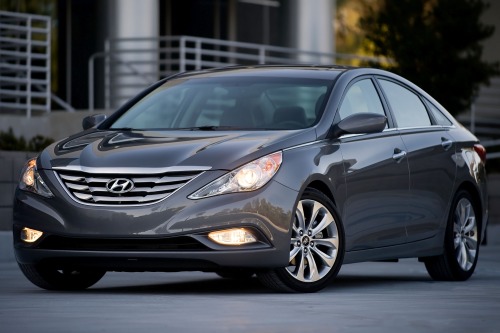
Which Hyundai Sonata years are the most reliable? Which years should you avoid? And if you're shopping for a used Sonata, which engines and transmissions offer the best chance of dependable long-term ownership?
The Hyundai Sonata can be an appealing used-car value. It's comfortable, roomy, fuel-efficient, and used examples often cost considerably less than comparable Toyota Camrys and Honda Accords.
But Sonata reliability varies dramatically by model year and powertrain. Some older Sonatas use relatively simple naturally aspirated four-cylinder or V6 engines that can provide excellent service. Other years introduced engines associated with bearing damage, knocking, oil consumption, and potentially catastrophic engine failure.
Later Sonatas added turbocharged engines, gasoline direct injection, dual-clutch transmissions, conventional automatics, hybrids, plug-in hybrids, and the high-performance Sonata N Line. Those differences make it especially important to identify the exact engine and transmission before buying.
This guide covers Hyundai Sonata model years from 2002 through 2023, including reliability by generation, engine and transmission differences, common problems, the best Sonata years to buy, years requiring extra inspection, Theta II engine problems, Sonata Hybrid reliability and battery lifespan, repair costs, and expected longevity.
Why does this guide begin with 2002? Hyundai sold the Sonata in the United States before 2002, but earlier examples are now uncommon enough that they have limited relevance for most used-car shoppers. Starting with 2002 lets us concentrate on the generations and powertrains buyers are still reasonably likely to encounter.
In This Guide You'll Learn
- How reliable the Hyundai Sonata is over the long term
- Which Hyundai Sonata years are the best to buy
- Which Sonata years require extra inspection
- The most common Sonata problems by generation
- Which Hyundai Sonata engines are the most reliable
- What to know about Hyundai Theta II engine problems
- Which Sonatas can develop engine knocking or bearing damage
- What to know about Sonata oil consumption
- Whether a Sonata with a replacement engine can be a good buy
- How the 2.4L, 2.0T, 1.6T, 2.5L and 2.5T engines differ
- How reliable older Sonata V6 engines are
- What to know about Sonata dual-clutch transmissions
- How reliable the Hyundai Sonata Hybrid is
- How long a Sonata Hybrid battery can last
- What to know about Sonata Plug-in Hybrid models
- Whether the Sonata N Line is a good used-car choice
- How much common Sonata repairs can cost
- How long a Hyundai Sonata can realistically last
However, if you're also considering a brand-new Sonata or other new vehicle, you may want to come back to this and take a look at a handy technique that locates the dealer most ready to make concessions.
Is the Hyundai Sonata Reliable?
Overall, we'd rate Hyundai Sonata reliability as good, but that rating needs an important qualification: the difference between the strongest and weakest Sonata years is substantial.
A well-chosen Sonata can be an excellent used car. Many have traveled beyond 150,000 miles, and properly maintained examples can reach 200,000 miles or more.
But we'd shop for a used Sonata much more carefully than the broad reliability rating might suggest.
Engine choice is the biggest reason.
Some Sonata engines have relatively straightforward reliability histories. Others, particularly certain four-cylinder engines from the 2011-2019 period, require substantially more research because of concerns involving connecting-rod bearings, engine knocking, oil consumption, internal engine damage, and complete engine failure.
This doesn't mean every Sonata from those years is unreliable. Many have accumulated substantial mileage without catastrophic engine problems, while others have received replacement engines and continued providing good service.
It does mean that we'd want considerably more information before buying one.
Transmission choice also matters. Depending on the year and version, a Sonata may use a conventional automatic, manual transmission, seven-speed dry dual-clutch transmission, eight-speed conventional automatic, six-speed hybrid automatic, or eight-speed wet dual-clutch transmission.
A basic Sonata and a Sonata N Line can therefore have very different long-term ownership considerations even when their model years are identical.
Bottom Line: The Hyundai Sonata can be a good used-car value, but we'd never buy one based solely on model year, mileage, or price. Identify the exact engine and transmission, investigate its maintenance and repair history, check for recalls and service campaigns applicable to the VIN, and pay particular attention to engine condition on affected generations.
Hyundai Sonata Reliability at a Glance
| Category | Our Assessment |
|---|---|
| Overall Reliability | Good, but highly dependent on year and engine |
| Strong Older Years | 2009-2010 |
| Years Requiring Extra Inspection | 2011-2019, particularly certain four-cylinder engines |
| Major Reliability Concern | Engine bearing damage, knocking, oil consumption and engine failure on certain engines/years |
| Older V6 Reliability | Generally Very Good with proper maintenance |
| Conventional Automatic Reliability | Generally Good to Very Good |
| Seven-Speed DCT Reliability | More Variable; Inspect Carefully |
| Sonata Hybrid Reliability | Good to Very Good, depending on year and condition |
| Typical Lifespan | 150,000-200,000+ miles with a healthy drivetrain and good maintenance |
Buyer Tip: If you're considering a 2011-2019 Sonata, don't stop at asking whether that particular year is reliable. Determine the engine, investigate its repair and replacement history, check the oil level, listen carefully during a cold start, and verify whether applicable recall or campaign work has been completed.
Also, Know Your Potential Trade-In Value
While you're narrowing down your next vehicle choice, it's also highly recommended that you know the value of your trade-in. Having a realistic appraisal in hand can help you establish your budget and negotiate a better overall deal. Here's a good source for a quick and accurate appraisal: free trade-in appraisal.
Hyundai Sonata Reliability by Generation
2002-2005: Fourth-Generation Hyundai Sonata
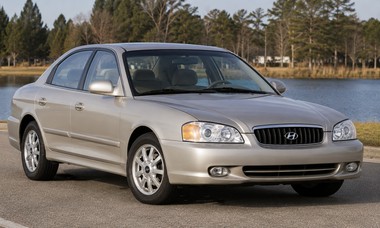
The 2002-2005 Sonata represents a very different kind of used car from the later direct-injected and turbocharged models.
These older Sonatas are mechanically straightforward by modern standards. U.S. buyers could find a naturally aspirated 2.4-liter four-cylinder or a 2.7-liter V6, paired primarily with conventional automatic or manual transmissions depending on configuration.
There are no turbochargers, dual-clutch transmissions, or complicated hybrid systems to consider.
Today, however, age is the dominant reliability issue.
Even the newest 2005 Sonata is more than two decades old. Rubber components, seals, cooling-system parts, suspension components, electrical accessories, and other age-related items can require attention regardless of mileage.
2002-2005 Sonata 2.4-Liter Four-Cylinder Reliability
The naturally aspirated 2.4-liter four-cylinder used in these older Sonatas is mechanically much simpler than later direct-injected Sonata engines.
With proper maintenance, it can provide good longevity.
Timing-belt maintenance is important on these older engines. A buyer should determine when the belt and related components were last replaced rather than assuming the previous owner handled the service.
Cooling-system condition also deserves close inspection. At this age, radiator deterioration, hoses, water pumps, thermostats, seals, and previous overheating can matter more than the engine's original reliability reputation.
2002-2005 Sonata 2.7-Liter V6 Reliability
The naturally aspirated 2.7-liter V6 provides smoother performance and can be a durable engine when maintained properly.
Like the four-cylinder, however, it requires attention to scheduled timing-belt service.
Fuel economy isn't as good as the four-cylinder, and the V6 installation can make some repairs more labor-intensive. But for someone evaluating an unusually well-preserved older Sonata, the 2.7-liter V6 isn't an engine we'd automatically avoid.
At today's age, maintenance records and present mechanical condition matter far more than choosing between two otherwise healthy engines.
Common 2002-2005 Hyundai Sonata Problems
- Timing-belt maintenance
- Oil leaks from aging seals and gaskets
- Cooling-system deterioration
- Motor mount wear
- Alternator and starter replacement
- Power steering leaks and component wear
- Strut and suspension bushing deterioration
- Wheel bearing problems
- Air-conditioning repairs
- Electrical accessory failures
- Corrosion in vehicles exposed to road salt
Buyer Tip: On a 2002-2005 Sonata, documentation showing recent timing-belt and cooling-system work can be more valuable than unusually low mileage. A low-mileage 20-year-old car can still need substantial age-related repairs.
Bottom Line: The 2002-2005 Sonata can still provide inexpensive transportation when exceptionally well maintained, but we'd buy almost entirely on condition today rather than model-year reputation.
2006-2010: Fifth-Generation Hyundai Sonata
The redesigned 2006 Sonata is one of the more interesting generations for today's budget used-car shopper.
It offered a naturally aspirated 2.4-liter four-cylinder and a substantially more powerful 3.3-liter V6, generally paired with conventional automatic transmissions.
This generation predates the gasoline direct-injected Theta II powertrains that would become such an important reliability issue in the following Sonata.
That distinction makes a well-maintained 2006-2010 Sonata worth considering, particularly if you're looking for an inexpensive midsize sedan with relatively straightforward mechanical systems.
2006-2010 Sonata 2.4-Liter Four-Cylinder Reliability
The 2.4-liter four-cylinder used during this generation belongs to Hyundai's Theta engine family, but buyers shouldn't assume its reliability situation is identical to that of the later direct-injected 2.4-liter engines.
The earlier port-injected version is mechanically different from the later gasoline direct-injected engines that became associated with widely publicized bearing and engine-failure concerns.
That distinction is important.
With regular oil changes and proper maintenance, the naturally aspirated 2.4-liter can provide good service. At higher mileage, we'd inspect for oil leaks, oil consumption, abnormal engine noise, cooling-system condition, and evidence of previous overheating.
2006-2010 Sonata 3.3-Liter V6 Reliability
The 3.3-liter Lambda V6 is one of the more appealing engines available in an older Sonata.
It provides substantially stronger acceleration than the four-cylinder and generally has a good durability reputation when properly maintained.
Fuel economy is the obvious tradeoff.
The V6 also fills the engine compartment more completely, which can increase labor costs for certain repairs. But from a long-term reliability perspective, a well-maintained 3.3-liter Sonata can be an attractive alternative to some of the four-cylinder Sonatas that followed.
For someone shopping specifically for a high-mileage older Sonata, we'd be comfortable considering a healthy 3.3-liter V6 with strong maintenance records.
2006-2008 vs. 2009-2010 Sonata Reliability
Within this generation, we'd give 2009-2010 particular consideration.
Hyundai substantially refreshed the Sonata for 2009, and these final two years benefit from several years of production maturity while remaining mechanically straightforward compared with the generation that followed.
A good 2009 or 2010 Sonata isn't automatically better than every earlier example, but these are among the older Sonata years we'd search for first.
Condition still matters enormously. A neglected 2010 isn't preferable to a carefully maintained 2007 simply because it's newer.
Common 2006-2010 Hyundai Sonata Problems
- Oil leaks as mileage and age increase
- Motor mount deterioration
- Cooling-system repairs
- Alternator and starter problems
- Suspension bushing and strut wear
- Wheel bearing problems
- Steering-system wear
- Brake and caliper repairs
- Air-conditioning problems
- Electrical accessory failures
- Automatic-transmission wear on neglected high-mileage cars
Buyer Tip: If you're looking for a very inexpensive Sonata and don't mind an older vehicle, a well-maintained 2009-2010 model deserves serious consideration. We'd rather buy one with extensive service records and 130,000 miles than a poorly maintained lower-mileage example.
Bottom Line: The 2006-2010 Sonata is one of the more appealing older generations. We'd give 2009-2010 particular consideration, and the 3.3-liter V6 can be an especially interesting choice for buyers willing to accept higher fuel consumption.
2011-2014: Sixth-Generation Hyundai Sonata
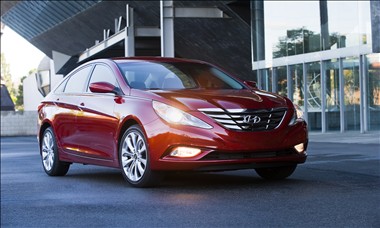
The completely redesigned 2011 Sonata was enormously important for Hyundai. It brought dramatic styling, improved fuel economy, direct-injected engines, and available turbocharged performance.
It is also the Sonata generation that requires the most careful reliability discussion.
The previous V6 disappeared. U.S. buyers instead received a naturally aspirated 2.4-liter gasoline direct-injected four-cylinder or a turbocharged 2.0-liter direct-injected four-cylinder.
These Theta II GDI engines became associated with some of Hyundai's most significant engine reliability problems.
That doesn't mean every 2011-2014 Sonata will suffer engine failure. Many have accumulated substantial mileage, and some affected vehicles have received replacement engines.
But we'd investigate these cars far more carefully than the preceding generation.
2011-2014 Sonata 2.4-Liter Theta II GDI Reliability
The naturally aspirated 2.4-liter Theta II GDI engine delivers good fuel economy and adequate performance, but it is one of the most important engines for a used Sonata buyer to research.
Potential concerns include connecting-rod bearing wear, abnormal knocking, internal engine damage, oil consumption, and in severe cases complete engine failure.
Bearing damage is particularly serious because continued operation can eventually cause catastrophic internal damage.
That's why abnormal knocking should never be dismissed on one of these cars.
Before buying, we'd want to hear the engine from a genuine cold start. Check the oil level before starting it, listen for knocking or other abnormal mechanical noise, and review the maintenance and repair history carefully.
We'd also check the VIN for applicable recalls, campaigns, warranty extensions, or previous engine-related work.
2011-2014 Sonata 2.0T Turbo Reliability
The turbocharged 2.0-liter Theta II GDI gave the Sonata surprisingly strong performance and effectively replaced the previous generation's V6 as the high-output engine.
But we'd approach a high-mileage 2.0T with at least as much care as the 2.4-liter.
The engine shares important architecture and reliability concerns with other Theta II applications while adding the heat and mechanical complexity of turbocharging.
Oil quality, oil-change frequency, oil level, turbocharger condition, and previous engine repairs are especially important.
Also investigate whether the vehicle has been modified or tuned. Increased boost or aftermarket engine-management changes can materially alter the risk of buying an older turbocharged Sonata.
2011 Sonata Reliability
The 2011 Sonata deserves particularly careful inspection because it was both the first year of a major redesign and part of the period associated with serious engine concerns.
We wouldn't automatically reject every 2011 Sonata. At this age, some have already received replacement engines, and a documented replacement can significantly change the purchase decision.
But an original-engine 2011 with uncertain maintenance history, low oil level, or suspicious knocking isn't a car we'd gamble on merely because the price is attractive.
2012-2014 Sonata Reliability
The 2012, 2013, and 2014 Sonatas remain common inexpensive used cars.
They can offer a lot of space and equipment for the money, but the same engine-related inspection priorities apply.
Don't assume a later year within this generation automatically eliminates the risk.
Determine whether the engine is original or has been replaced. Review maintenance records, check the oil level, ask about oil consumption, listen carefully for knocking, and investigate the VIN-specific recall and campaign history.
Should You Buy a Sonata With a Replacement Engine?
A replacement engine isn't automatically a reason to avoid a used Sonata.
In fact, on a Sonata from an engine-problem period, a properly documented replacement may be preferable to an original engine with an uncertain history.
But the words "new engine" aren't enough.
Ask when it was replaced, why it was replaced, who performed the work, whether the replacement was new, remanufactured, or used, and how many miles have accumulated since installation.
Documentation matters.
A dealer-installed replacement supported by repair records is very different from a used salvage-yard engine installed with little paperwork.
Buyer Tip: When a seller advertises a Sonata as having a "new engine," ask to see the invoice. Determine the mileage when the replacement occurred and exactly what was installed. Don't assume the replacement engine has the same mileage as the car.
Sonata Oil Consumption
Oil consumption deserves separate attention because it can contribute to much larger problems if the owner doesn't monitor the oil level.
An engine can consume oil without leaving an obvious puddle underneath the vehicle.
If enough oil is burned between changes and the owner never checks the dipstick, the engine can operate with an dangerously low oil level, increasing the possibility of internal damage.
Before buying, check the oil yourself.
If the level is low, ask why. Ask whether the owner adds oil between changes and, if so, how frequently.
Evidence that an engine consumes oil doesn't automatically prove that failure is imminent, but substantial consumption should materially affect your purchase decision.
Engine Knocking and Bearing Damage
A knocking Sonata engine requires diagnosis before purchase.
Not every engine sound indicates connecting-rod bearing failure, but a pronounced knock from the lower portion of the engine is not something we'd accept without investigation.
Warning lights and diagnostic codes can provide additional information, but their absence doesn't guarantee that an engine is healthy.
A professional pre-purchase inspection is particularly valuable for a Sonata from this period.
Common 2011-2014 Hyundai Sonata Problems
- Connecting-rod bearing wear on certain engines
- Engine knocking
- Potential internal engine damage or seizure
- Complete engine failure on some vehicles
- Oil consumption
- Oil leaks as mileage increases
- Turbocharger-related repairs on 2.0T models
- Direct-injection intake deposit buildup
- Starter and charging-system problems
- Motor mount deterioration
- Steering-related noises or wear
- Suspension and wheel bearing problems
- Air-conditioning repairs
- Electrical and infotainment issues
Buyer Tip: On a 2011-2014 Sonata, engine history can matter more than odometer mileage. A 140,000-mile car with a documented replacement engine installed at 110,000 miles may deserve more consideration than an 80,000-mile original-engine car with questionable maintenance and abnormal noise.
Bottom Line: We'd shop 2011-2014 Sonatas selectively. Their low used prices can be tempting, but the 2.4L and 2.0T Theta II engine histories make maintenance records, oil consumption, cold-start behavior, VIN-specific campaign history, and previous engine replacement particularly important.
2015-2019: Seventh-Generation Hyundai Sonata
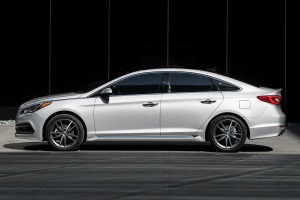
Hyundai redesigned the Sonata again for 2015 with more conservative styling, a more refined interior, and an unusually broad selection of powertrains.
Unfortunately, the redesign didn't create a clean break from the engine concerns of the previous generation.
Depending on year and trim, buyers may encounter a naturally aspirated 2.4-liter engine, turbocharged 2.0-liter, turbocharged 1.6-liter Eco, Sonata Hybrid, or Sonata Plug-in Hybrid.
These powertrains should not be treated as interchangeable from a reliability perspective.
2015-2019 Sonata 2.4-Liter Reliability
The naturally aspirated 2.4-liter remained the mainstream engine for much of this generation.
It provides adequate power and good fuel economy, but buyers still need to investigate the engine carefully for oil consumption, abnormal noise, previous internal damage, and replacement history.
We wouldn't assume that buying a 2015 or later Sonata automatically avoids the engine concerns associated with earlier Theta II applications.
Again, check the oil level before the test drive and listen to the engine from cold whenever possible.
2015-2019 Sonata 2.0T Reliability
The turbocharged 2.0-liter remained the performance-oriented engine.
It provides strong acceleration but adds turbocharger complexity to an engine family that already warrants careful inspection.
Oil-change history is especially important.
Look for evidence of oil consumption, abnormal knocking, turbocharger noise, smoke, oil leakage, modifications, or previous engine work.
A well-maintained 2.0T can provide enjoyable performance, but it wouldn't be our first choice for someone whose sole objective is minimizing long-term repair risk.
2015-2017 Sonata Eco: 1.6-Liter Turbo and Seven-Speed DCT
The Sonata Eco presents a different reliability equation.
It uses a smaller turbocharged 1.6-liter four-cylinder paired with Hyundai's seven-speed dry dual-clutch transmission.
The combination was designed to improve fuel economy while retaining acceptable performance.
For a used-car buyer, however, the dual-clutch transmission deserves careful evaluation.
Some difference in low-speed feel compared with a conventional automatic is inherent to a dual-clutch design. But pronounced shuddering, hesitation, repeated clutch engagement problems, overheating, or slipping shouldn't simply be dismissed as normal.
Drive the car in stop-and-go traffic and after it is fully warmed rather than limiting the test drive to a few minutes at highway speed.
Buyer Tip: Don't assume a Sonata Eco is simply a more fuel-efficient version of the 2.4-liter Sonata. Its 1.6-liter turbo engine and seven-speed dry DCT make it a mechanically distinct car with different long-term considerations.
2015-2019 Sonata Hybrid Reliability
The Sonata Hybrid deserves separate consideration because its drivetrain is substantially different from the conventional gasoline Sonata.
It combines a gasoline engine with an electric motor, high-voltage lithium-ion battery, power electronics, and a conventional-style six-speed automatic transmission adapted for hybrid operation.
That last point is worth noting: the Sonata Hybrid doesn't use the same type of power-split continuously variable transmission found in some competing hybrids.
Overall, a properly maintained Sonata Hybrid can be a good used-car choice, particularly for someone who values fuel economy and highway comfort.
But on an older hybrid, battery condition and hybrid-system operation become increasingly important.
How Long Does a Sonata Hybrid Battery Last?
There is no mileage at which every Sonata Hybrid battery suddenly fails.
High-voltage battery life depends on age, mileage, climate, usage, charging behavior where applicable, and individual battery condition.
Many hybrid batteries can remain functional well beyond 100,000 miles, and considerably higher mileage is possible.
But as a Sonata Hybrid ages, we'd want a knowledgeable technician to scan the hybrid system for stored faults and evaluate battery operation before purchase.
A cheap older hybrid can stop being inexpensive transportation if it immediately requires major high-voltage battery or power-electronics work.
2016-2019 Sonata Plug-in Hybrid Reliability
The Sonata Plug-in Hybrid adds a larger high-voltage battery and the ability to drive a limited distance using externally supplied electricity.
That can make it attractive to buyers with short daily trips and convenient charging.
But a used Plug-in Hybrid should be evaluated differently from both the standard gasoline Sonata and conventional Sonata Hybrid.
Verify that the charging system works correctly, inspect the charging equipment, check for hybrid-system warnings, and evaluate the high-voltage battery's condition and usable electric range.
Battery degradation doesn't necessarily mean the car is unusable, but it can reduce the value of the plug-in capability that distinguishes the model.
2015-2017 vs. 2018-2019 Sonata Reliability
The Sonata received a substantial refresh for 2018, including styling, interior, and powertrain changes.
We'd generally give later 2018-2019 examples some preference when comparing otherwise similar cars, but engine choice and maintenance history remain much more important than the facelift itself.
A carefully maintained 2016 with documented repairs can be a better purchase than a neglected 2019.
For any 2015-2019 2.4-liter or 2.0T Sonata, we'd still investigate engine history carefully rather than assuming a later model year eliminates the major concerns.
Common 2015-2019 Hyundai Sonata Problems and Concerns
- Engine bearing and internal engine concerns on certain four-cylinder applications
- Engine knocking
- Oil consumption
- Potential engine failure
- Turbocharger-related repairs on 2.0T models
- Direct-injection carbon buildup
- Seven-speed DCT hesitation, shuddering, or clutch wear on Eco models
- Hybrid battery aging on higher-mileage Hybrid models
- Hybrid-system and power-electronics problems
- Plug-in charging-system concerns on PHEV models
- Motor mount deterioration
- Suspension and wheel bearing wear
- Air-conditioning problems
- Electrical and infotainment issues
Buyer Tip: Don't treat all 2015-2019 Sonatas as having the same reliability profile. A 2.4-liter Sonata, 2.0T, 1.6T Eco/DCT, Hybrid, and Plug-in Hybrid are mechanically different enough that the powertrain should be part of your buying decision.
Bottom Line: The 2015-2019 Sonata can offer tremendous value for the money, but we'd remain selective. Gasoline 2.4L and 2.0T models deserve careful engine-history research, the Eco adds DCT considerations, and Hybrid and Plug-in Hybrid models require evaluation of their electrified components.
2020-2023: Eighth-Generation Hyundai Sonata
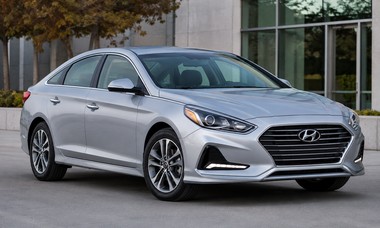
The completely redesigned 2020 Sonata marked another major mechanical transition.
The previous 2.4-liter and 2.0T mainstream powertrains gave way to newer engine families, including a naturally aspirated 2.5-liter four-cylinder and turbocharged 1.6-liter four-cylinder.
The lineup also includes the Sonata Hybrid and, beginning with the performance-oriented N Line, a much more powerful turbocharged 2.5-liter engine.
This generation is important because shoppers shouldn't automatically transfer the reliability reputation of the older Theta II-powered Sonata to every newer model.
The engines and powertrain combinations changed substantially.
2020-2023 Sonata 2.5-Liter Naturally Aspirated Reliability
The naturally aspirated 2.5-liter four-cylinder is the powertrain we'd generally consider first for someone prioritizing straightforward everyday transportation.
It avoids turbocharger complexity and is paired with a conventional eight-speed automatic transmission rather than a dual-clutch unit.
That's an appealing combination in principle.
However, these cars are still relatively young compared with the older Sonatas in this guide, so there is less evidence about how the complete powertrain will behave at 150,000-200,000 miles.
We'd therefore describe the long-term outlook as promising rather than proven.
2020-2023 Sonata 1.6T Reliability
The turbocharged 1.6-liter four-cylinder provides stronger low-rpm torque while maintaining good fuel economy.
Unlike some earlier Hyundai turbo applications, this Sonata powertrain is paired with a conventional eight-speed automatic rather than the seven-speed dry DCT.
That's an important distinction for used buyers.
The turbocharger still adds heat and complexity compared with the naturally aspirated 2.5-liter, so consistent oil changes remain particularly important.
If maximum simplicity is the priority, we'd generally start with the naturally aspirated 2.5-liter. But the 1.6T shouldn't automatically be avoided simply because it's turbocharged.
2020 Sonata Reliability
The 2020 Sonata was the first year of a complete redesign, so we'd inspect it somewhat more carefully than a comparable later example.
That doesn't make 2020 an automatic year to avoid.
Instead, we'd verify maintenance history, check for completed recalls and campaigns, evaluate the engine and eight-speed automatic carefully, and test the extensive electronic equipment fitted to this generation.
2021-2023 Sonata Reliability
When price, mileage, powertrain, and condition are otherwise similar, we'd give 2021-2023 some preference over the first-year 2020 redesign.
But these models still don't have the decades of high-mileage history available for older Sonata generations.
For a reliability-focused buyer, the naturally aspirated 2.5-liter with the conventional eight-speed automatic is the version we'd investigate first.
2020-2023 Sonata Hybrid Reliability
The newer Sonata Hybrid combines a 2.0-liter gasoline engine with electric assistance and a high-voltage battery.
Fuel economy can be excellent, and the hybrid avoids some of the characteristics associated with the older turbocharged gasoline powertrains.
As with any used hybrid, however, we'd evaluate the complete system rather than judging only the gasoline engine.
Check for hybrid-system warning messages, review maintenance records, verify smooth transitions between gasoline and electric propulsion, and consider battery condition as the vehicle ages.
Because 2020-2023 models remain relatively young, it's too early to make definitive claims about 15- or 20-year battery durability for this specific generation.
2021-2023 Sonata N Line Reliability
The Sonata N Line is mechanically different enough from the ordinary Sonata that it deserves its own reliability assessment.
It uses a turbocharged 2.5-liter four-cylinder producing substantially more power than the mainstream engines and pairs it with an eight-speed wet dual-clutch transmission.
The wet DCT is fundamentally different from the seven-speed dry dual-clutch transmission used in the earlier Sonata Eco.
That distinction matters.
The N Line's transmission is designed for substantially greater power and performance, but we'd still evaluate a used example for smooth engagement, warning messages, fluid leaks, and evidence of previous transmission work.
Previous use also matters more with a performance model.
Inspect tires and brakes, investigate modifications or aftermarket tuning, and review oil-change history carefully.
A stock, carefully maintained N Line can be a very different purchase from one that has been modified and repeatedly driven hard.
Common 2020-2023 Hyundai Sonata Problems and Concerns
- First-year redesign considerations on 2020 models
- Less long-term high-mileage evidence than older generations
- Turbocharger complexity on 1.6T and N Line models
- Direct-injection and fuel-system considerations
- Eight-speed wet DCT considerations on N Line models
- Hybrid battery and electrified-system considerations on Hybrid models
- Sensor and driver-assistance system problems
- Infotainment and electronic accessory issues
- Potential effects of modifications or hard use on N Line models
Buyer Tip: Don't assume the 2020-2023 Sonata carries exactly the same engine-failure risk as the 2011-2019 cars simply because they're all Sonatas. The newer generation introduced substantially different engines. Evaluate the actual powertrain rather than applying the reputation of an older engine family to every Sonata.
Bottom Line: The 2020-2023 Sonata appears to be a more encouraging reliability proposition than some of the preceding four-cylinder years, although long-term high-mileage evidence is still developing. We'd begin with the naturally aspirated 2.5-liter for maximum simplicity, consider the 1.6T for its balance of torque and economy, evaluate the Hybrid separately, and treat the N Line as the performance car it is.
What Are The Best Hyundai Sonata Years to Buy?
The best Hyundai Sonata years depend heavily on your budget and the powertrain you're considering. This is not a model where we'd simply recommend the newest car you can afford.
For buyers seeking an inexpensive older Sonata, the 2009-2010 models stand out. They represent the mature end of the fifth generation and offer relatively straightforward naturally aspirated engines and conventional automatic transmissions.
For a considerably newer Sonata, we'd look closely at 2021-2023 models, particularly those with the naturally aspirated 2.5-liter engine and conventional eight-speed automatic. These newer cars use substantially different engines from the Theta II powertrains that created many of the reliability concerns associated with earlier Sonatas.
| Model Years | Why We Recommend Them |
|---|---|
| 2009-2010 | Among our favorite older Sonatas. Mature generation, relatively straightforward powertrains, and available 3.3L V6 with a generally good durability record. |
| 2021-2023 2.5L | Newer engine family, naturally aspirated power, conventional eight-speed automatic, and additional production time after the 2020 redesign. |
| 2021-2023 1.6T | Good combination of fuel economy and torque with a conventional eight-speed automatic rather than the older seven-speed dry DCT. |
| 2021-2023 Hybrid | Excellent fuel economy and promising reliability, although long-term high-mileage evidence is still developing. |
Buyer Tip: If you're choosing between an older 2009-2010 Sonata and an inexpensive 2011-2014 example simply because the newer car looks more modern, don't automatically assume newer means more reliable. The powertrain change between these generations is important.
Bottom Line: We'd put 2009-2010 near the top for buyers seeking an inexpensive older Sonata. For a newer used car, 2021-2023 models are more appealing to us than many 2011-2019 four-cylinder Sonatas, with the naturally aspirated 2.5-liter being our first powertrain to investigate for simplicity.
Knowing which Sonata years to concentrate on is step 1. Step 2 is knowing how to get a excellent used Sonata price.
What Are The Hyundai Sonata Years to Avoid or Inspect Carefully?
We prefer describing these as years requiring extra inspection rather than declaring that every Sonata from a particular year should be avoided.
That distinction is especially important because some cars from the most troublesome periods have already received replacement engines or other significant repairs.
| Model Years | Why Extra Inspection Is Important |
|---|---|
| 2002-2005 | Age is now the primary concern. Timing-belt history, corrosion, cooling-system condition, leaks, and deferred maintenance are critical. |
| 2011-2014 | Major engine-reliability concerns involving certain Theta II 2.4L and 2.0T engines. Investigate bearing damage, knocking, oil consumption, recalls, campaigns, and engine replacement history. |
| 2015-2019 2.4L / 2.0T | Engine history still deserves careful investigation. Don't assume the newer generation completely eliminated concerns associated with certain four-cylinder applications. |
| 2015-2017 Eco | Turbocharged 1.6L plus seven-speed dry DCT introduces a different set of engine and transmission considerations. |
| 2020 | First year of the eighth-generation redesign. Not an automatic avoid, but we'd modestly prefer a comparable 2021-2023 example. |
If we had to identify the Sonata period we'd approach most cautiously, it would be the 2011-2019 era equipped with certain 2.4-liter and 2.0-liter turbo engines.
But even within those years, the individual car matters enormously.
A Sonata with a properly documented replacement engine, excellent subsequent maintenance, and no current symptoms may be a better purchase than another car from a supposedly stronger year that has been neglected.
Buyer Tip: For a 2011-2019 Sonata, run the VIN through Hyundai's recall information and review the vehicle's repair documentation before agreeing to purchase. The engine's individual history can be more useful than a generic model-year rating.
Which Hyundai Sonata Engine Is Most Reliable?
There isn't one Sonata engine we'd call the most reliable across the entire 2002-2023 period because Hyundai used several unrelated engine families.
For maximum mechanical simplicity, however, some choices stand out.
3.3-Liter Lambda V6: A Strong Older Choice
Among older Sonatas, the naturally aspirated 3.3-liter V6 used in the 2006-2010 generation is one of our preferred engines.
It offers strong performance without turbocharging or gasoline direct injection and generally has a good durability record with proper maintenance.
Its disadvantages are primarily fuel economy, age, and potentially greater labor expense for some repairs.
For someone shopping for a 2009 or 2010 Sonata and willing to accept the additional fuel consumption, a healthy 3.3-liter V6 is worth serious consideration.
2006-2010 2.4-Liter Four-Cylinder
The naturally aspirated 2.4-liter four-cylinder from the fifth-generation Sonata can also be a good older choice.
It's important not to confuse this earlier port-injected application with the later direct-injected 2.4-liter Theta II engines associated with more serious reliability concerns.
At today's mileage and age, oil-change history, oil consumption, leaks, cooling-system condition, and overall maintenance are more important than expecting perfection from any older engine.
2011-2019 2.4-Liter Theta II GDI
This is the Sonata engine we'd research especially carefully before buying.
The naturally aspirated 2.4-liter Theta II GDI has been associated in certain applications with connecting-rod bearing damage, knocking, oil consumption, and engine failure.
Many engines have nevertheless accumulated substantial mileage, and some cars have received replacement engines.
That makes the history of the individual vehicle particularly important.
Check oil level, listen to the engine cold, ask about oil consumption, determine whether the engine is original, review repair records, and investigate applicable recalls, campaigns, and warranty extensions by VIN.
2011-2019 2.0-Liter Turbo
The 2.0T delivers considerably stronger performance, but it wouldn't be our first recommendation for a reliability-focused used-car shopper.
In addition to concerns associated with certain Theta II applications, turbocharging adds heat and mechanical complexity.
Oil-change history, correct oil level, turbocharger condition, modifications, and engine replacement history deserve careful investigation.
2015-2017 1.6-Liter Turbo
The Sonata Eco's 1.6-liter turbo shouldn't simply be grouped with the 2.4L and 2.0T engines.
It's a different engine and presents a different reliability proposition.
The larger concern for many used-car shoppers may be the seven-speed dry dual-clutch transmission paired with it.
If considering an Eco, evaluate the engine and transmission as a complete powertrain rather than rejecting or recommending the vehicle based solely on engine displacement.
2020-2023 2.5-Liter Naturally Aspirated Engine
For a newer Sonata buyer prioritizing simplicity, this is the engine we'd investigate first.
It is naturally aspirated and paired with a conventional eight-speed automatic.
It also belongs to a newer engine family rather than simply continuing the older 2.4-liter Theta II GDI powertrain.
The limitation is time. These engines don't yet have the enormous population of 15- and 20-year-old high-mileage examples that would allow us to call their ultimate longevity proven.
So far, we'd describe the long-term outlook as encouraging rather than guarantee that every one will reach 200,000 miles without significant repairs.
2020-2023 1.6-Liter Turbo
The newer 1.6T offers a good balance of torque and fuel economy and uses a conventional eight-speed automatic.
That's an important difference from the older Sonata Eco's seven-speed dry DCT combination.
For buyers who want stronger low-speed response, we'd consider it. For someone who places simplicity above everything else, we'd still begin with the naturally aspirated 2.5-liter.
2021-2023 Sonata N Line 2.5-Liter Turbo
The N Line's turbocharged 2.5-liter engine is designed for substantially greater performance and should be judged accordingly.
It isn't simply a turbocharged version of an economy-car powertrain that we'd recommend to everyone.
Maintenance history, previous modifications, tuning, oil-change intervals, and evidence of aggressive use become particularly important.
Bottom Line: For an older Sonata, the 2006-2010 naturally aspirated engines—particularly the 3.3L V6—are appealing choices. For a newer Sonata, we'd start our search with the 2021-2023 naturally aspirated 2.5L. We'd investigate 2011-2019 Theta II-powered cars much more carefully before purchase.
Hyundai Sonata Transmission Reliability
Transmission reliability varies because the Sonata has used several completely different transmission designs.
Conventional Automatic Transmissions
Most Sonatas have used conventional torque-converter automatic transmissions, and these are generally our preferred choice when simplicity is the priority.
On a used Sonata, check for delayed engagement into Drive or Reverse, harsh shifting, slipping, engine-speed flare between shifts, shuddering, fluid leakage, and warning lights.
Test the transmission both cold and after an extended drive.
Seven-Speed Dry Dual-Clutch Transmission
The seven-speed DCT used with the Sonata Eco deserves more careful evaluation.
Because a dual-clutch transmission engages physical clutches, it can feel different from a conventional automatic at very low speeds.
Some difference in engagement feel isn't necessarily a defect.
Pronounced shuddering, excessive hesitation, slipping, overheating warnings, or inconsistent clutch engagement are different matters and deserve diagnosis.
Sonata Hybrid Transmission
The Sonata Hybrid uses a transmission arrangement different from the continuously variable or power-split systems found in some other hybrids.
During a test drive, evaluate shifting as well as transitions between gasoline and electric operation.
Any warning messages, harsh engagement, unusual noises, or inconsistent hybrid operation should be investigated before purchase.
Eight-Speed Conventional Automatic
Mainstream eighth-generation Sonatas use an eight-speed conventional automatic with the naturally aspirated 2.5L and 1.6T engines.
This is different from the performance-oriented dual-clutch transmission used by the N Line.
Check for smooth engagement and shifting throughout the test drive and review any available transmission service history.
Eight-Speed Wet Dual-Clutch Transmission
The Sonata N Line's eight-speed wet DCT is fundamentally different from the seven-speed dry DCT used by the older Sonata Eco.
It is designed to handle considerably greater power and heat.
On a used N Line, we'd still check carefully for warning messages, abnormal engagement, fluid leaks, previous repairs, modifications, and evidence of repeated hard use.
Buyer Tip: Don't assume a complaint about a "Sonata DCT" applies equally to every dual-clutch Sonata. The older seven-speed dry DCT and newer eight-speed wet performance DCT are different transmissions used in very different applications.
How Reliable Is the Hyundai Sonata Hybrid?
The Sonata Hybrid can be a good used-car choice, but we'd evaluate it separately from a conventional gasoline Sonata.
Hybrid ownership introduces a high-voltage battery, electric motor, inverter and other power electronics in addition to the gasoline engine and transmission.
The additional components don't automatically make the car unreliable. Hybrid systems can provide excellent long-term service.
But the cost of a major hybrid-system repair means condition becomes increasingly important as the vehicle ages.
How Long Does a Hyundai Sonata Hybrid Battery Last?
There is no fixed replacement mileage for a Sonata Hybrid battery.
A battery can remain usable well beyond 100,000 miles, and substantially greater mileage is possible. Age can be just as important as mileage because battery chemistry gradually deteriorates over time.
Climate and operating conditions can also influence battery life.
If you're considering an older Sonata Hybrid with high mileage, we'd have the hybrid system scanned by a technician familiar with Hyundai hybrids rather than assuming the absence of a dashboard warning light proves the battery is healthy.
Should You Buy a Sonata Hybrid With 100,000 Miles?
Potentially, yes.
We wouldn't reject a Sonata Hybrid simply because it has crossed 100,000 miles.
At that point, however, we'd want strong maintenance records, smooth hybrid-system operation, no unexplained warning lights, a healthy gasoline engine and transmission, and some assessment of the high-voltage battery.
A well-maintained 100,000-mile hybrid can be preferable to a lower-mileage example with poor maintenance or unresolved hybrid-system faults.
Sonata Plug-in Hybrid Considerations
A used Sonata Plug-in Hybrid adds another important question: does the plug-in portion of the vehicle still perform as expected?
Test the charging system rather than merely driving the car as a conventional hybrid.
Verify that it accepts a charge normally, check the charging equipment, look for fault messages, and compare available electric operation with what would reasonably be expected from an aging battery.
Bottom Line: We'd consider a properly maintained Sonata Hybrid, but on an older or high-mileage example we'd want the hybrid system evaluated before purchase. Battery age and condition matter more than simply asking whether Hyundai hybrid batteries have a particular average lifespan.
How Long Does a Hyundai Sonata Last?
A properly maintained Hyundai Sonata can realistically last 150,000-200,000 miles, and some examples travel substantially farther.
But the Sonata is a particularly good example of why mileage alone doesn't predict remaining life.
A 160,000-mile 2009 V6 Sonata with an excellent maintenance history may have a very different risk profile from a lower-mileage Sonata experiencing engine knocking or severe oil consumption.
Is 100,000 Miles High for a Hyundai Sonata?
No. A healthy Sonata with 100,000 miles can still have substantial useful life remaining.
But this is where we'd start placing increasing emphasis on maintenance records, oil consumption, transmission condition, cooling-system maintenance, suspension wear, and previous major repairs.
On a 2011-2019 four-cylinder Sonata, we'd pay particular attention to engine history rather than assuming that 100,000 miles itself is the problem.
Should You Buy a Sonata With 150,000 Miles?
A 150,000-mile Sonata can be worth buying if the price and condition make sense.
At this mileage, we'd want to know whether the engine is original, whether it consumes oil, whether any engine replacement was performed, how the transmission behaves, and what significant maintenance has already been completed.
On an older 2006-2010 Sonata, we'd also inspect age-related components such as cooling-system parts, mounts, suspension, air conditioning, seals, and electrical equipment.
Can a Hyundai Sonata Last 200,000 Miles?
Yes. A Sonata can reach 200,000 miles and beyond.
However, we'd be reluctant to promise a 200,000-mile lifespan for every engine and generation because Sonata powertrains vary too much.
Regular oil changes are important, but checking the oil level between changes can be equally important on an engine that consumes oil.
- 100,000 miles: Not unusually high for a properly maintained Sonata
- 150,000 miles: Still viable if engine, transmission and maintenance history are strong
- 200,000 miles: Realistic for a healthy, well-maintained powertrain
- 250,000+ miles: Possible, but increasingly dependent on engine choice, maintenance history and previous repairs
Buyer Tip: When shopping for a high-mileage Sonata, don't automatically choose the car with the lowest odometer reading. Maintenance history, engine condition and major repairs already completed can matter much more.
Common Hyundai Sonata Problems
Specific problems differ by generation, but several issues deserve particular attention across the 2002-2023 Sonata range.
1. Engine Bearing Damage and Engine Failure
This is one of the most serious reliability concerns associated with certain Sonata engines.
Connecting-rod bearing deterioration can produce abnormal knocking and eventually cause severe internal engine damage or failure.
Because repair can require engine replacement, any suspicious knocking on an affected Sonata deserves professional diagnosis before purchase.
2. Excessive Oil Consumption
Some Sonata engines can consume significant quantities of oil as mileage accumulates.
The problem becomes particularly dangerous when an owner doesn't check the oil level between changes.
Before buying, check the dipstick and ask whether oil is routinely added between services.
3. Engine Knocking
Not every ticking or tapping noise means an engine is failing, but pronounced knocking shouldn't be ignored.
Try to hear a prospective purchase from a true cold start rather than arriving after the seller has already warmed the engine.
4. Turbocharger Problems
Turbocharged Sonata models add components that naturally aspirated cars don't have.
Watch for smoke, unusual turbo noise, oil leakage, reduced power, warning lights, and evidence of modifications.
Consistent oil maintenance is particularly important for turbocharger longevity.
5. Dual-Clutch Transmission Problems
Certain DCT-equipped Sonatas can exhibit shuddering, hesitation, clutch wear, overheating, or inconsistent engagement.
Evaluate the transmission in low-speed traffic and after it has reached full operating temperature.
6. Direct-Injection Carbon Buildup
Gasoline direct injection can allow deposits to accumulate on intake valves because fuel isn't continuously sprayed across the back of those valves.
Severe buildup can contribute to rough running, hesitation, misfires, or reduced performance.
7. Motor Mount Wear
Worn engine and transmission mounts can cause excessive vibration at idle or clunking when accelerating or shifting between Drive and Reverse.
This becomes increasingly common as mileage and age increase.
8. Steering and Suspension Wear
Struts, bushings, links, wheel bearings, and steering components can require replacement on older Sonatas.
Listen for clunks, humming, looseness, uneven tire wear, and instability over rough pavement.
9. Air-Conditioning Problems
Compressors, condensers, refrigerant leaks, blend-door components, and electronic controls can become repair issues as a Sonata ages.
Run the system long enough during the inspection to verify that it continues producing cold air.
10. Electrical, Infotainment and Driver-Assistance Problems
Newer Sonatas contain increasingly sophisticated electronics.
Test the infotainment system, cameras, power accessories, sensors, driver-assistance features, seat functions, and climate controls before buying.
Hyundai Sonata Maintenance & Repair Costs
Routine Sonata maintenance is generally affordable for a midsize sedan. Major engine, transmission, turbocharger, or hybrid repairs are where ownership costs can rise dramatically.
| Maintenance or Repair | Typical Cost |
|---|---|
| Oil change | $50-$110 |
| Brake pads and rotors | $400-$850+ |
| Spark plug replacement | $150-$400+ |
| Timing-belt service on applicable older engines | $650-$1,200+ |
| Wheel bearing replacement | $350-$750+ |
| Motor mount repair | $350-$1,000+ |
| Struts / significant suspension work | $750-$1,700+ |
| Air-conditioning repair | $300-$1,600+ depending on problem |
| Turbocharger replacement | $1,500-$3,500+ depending on engine |
| Major transmission repair or replacement | $3,000-$6,500+ |
| Engine replacement | $4,500-$9,000+ depending on engine and replacement source |
| Hybrid battery / major hybrid-system repair | Potentially several thousand dollars depending on component and parts source |
These are broad budgeting ranges rather than repair quotes. Labor rates, location, model year, engine, parts source, and whether work is performed by a Hyundai dealer or independent shop can substantially change the final cost.
Buyer Tip: Before assuming a very inexpensive Sonata is a bargain, compare the purchase price with the potential cost of the problem you're accepting. A car needing tires and brakes is very different from one showing symptoms of internal engine or transmission damage.
In addition, your trade-in allowance, if you are doing that, will also affect the overall potential cost analysis of moving into a Sonata (KBB versus Edmunds Appraisals - Which Is Better).
What Usually Needs Attention After 100,000 Miles?
A Sonata reaching 100,000 miles doesn't automatically become unreliable, but maintenance history becomes increasingly important.
- Check engine oil level and oil-consumption history
- Review oil-change records
- Listen for knocking or abnormal engine noise
- Determine whether the engine has ever been replaced
- Check VIN-specific recall and campaign history
- Review transmission service history
- Evaluate transmission operation both cold and fully warmed
- Verify timing-belt service on applicable older engines
- Inspect coolant and cooling-system components
- Check spark-plug replacement history
- Inspect engine and transmission mounts
- Check struts, bushings, ball joints, links and wheel bearings
- Inspect brakes and tires
- Test the air-conditioning system
- Test electrical accessories, infotainment and driver-assistance equipment
- On turbo models, inspect for oil leaks, modifications and turbocharger problems
- On DCT models, check carefully for hesitation, shuddering and clutch problems
- On Hybrid and Plug-in Hybrid models, evaluate the high-voltage system and battery condition
What to Look for Before Buying a Used Hyundai Sonata
A pre-purchase inspection is valuable on any used car, but we'd consider it particularly important for a Sonata from one of the engine-problem periods.
Simply connecting a scan tool and finding no warning lights isn't enough. The mechanic should know which engine is installed and what problems deserve specific attention.
Used Hyundai Sonata Pre-Purchase Checklist
- Identify the exact engine and transmission
- Check the VIN for outstanding recalls and campaigns
- Review maintenance and repair records
- Determine whether the engine is original
- If replaced, obtain documentation showing when and why
- Check the engine oil level before starting the car
- Ask whether oil is added between changes
- Start the engine completely cold whenever possible
- Listen for knocking, tapping, or abnormal mechanical noise
- Check for exhaust smoke
- Inspect for oil and coolant leaks
- Check cooling-system condition
- Verify timing-belt service on applicable older engines
- Test the transmission cold and fully warmed
- Check for slipping, shuddering, delayed engagement, or harsh shifting
- On DCT models, include low-speed stop-and-go driving
- On turbo models, check for modifications and tuning
- On Hybrid models, scan the hybrid system and evaluate battery condition
- On Plug-in Hybrid models, verify that charging works properly
- On N Line models, investigate modifications and evidence of hard use
- Inspect steering, suspension, brakes and tires
- Test air conditioning and all electrical equipment
- Have an independent mechanic perform a pre-purchase inspection
Buyer Tip: If you're considering a 2011-2019 Sonata with a 2.4L or 2.0T engine, tell the mechanic specifically that you want the engine evaluated for abnormal noise, oil-consumption evidence, and signs of internal engine problems. A generic safety inspection isn't enough.
Pros & Cons of Buying a Used Hyundai Sonata
Pros
- Often costs less than a comparable used Camry or Accord
- Comfortable and spacious interior
- Good highway ride
- Good fuel economy from many four-cylinder models
- Strong older powertrain choices are available
- 2009-2010 models can make good inexpensive used cars
- Newer 2.5L models avoid the older Theta II powertrain
- Conventional automatic transmissions available in many versions
- Hybrid versions offer excellent fuel economy
- Turbocharged models provide strong performance
- N Line offers genuine performance without moving to a luxury brand
- 150,000-200,000+ miles is possible with the right powertrain and maintenance
Cons
- Reliability varies substantially by model year and engine
- Certain Theta II engines have significant failure concerns
- Oil consumption can become serious on some engines
- Engine replacement can exceed the value of an older Sonata
- Seven-speed dry DCT adds additional risk on Eco models
- Turbocharged engines require more careful maintenance
- Direct-injected engines can develop intake deposits
- Older hybrids introduce battery and power-electronics considerations
- Newer generations don't yet have decades of high-mileage evidence
- Performance models may have been modified or driven aggressively
Final Buyer Summary
The 2002-2023 Hyundai Sonata is a difficult car to summarize with a single reliability rating because its mechanical history changed so dramatically over those years.
For an inexpensive older Sonata, we'd give the 2006-2010 generation serious consideration and particularly like 2009-2010. These cars use relatively straightforward naturally aspirated engines and conventional transmissions, and the available 3.3-liter V6 can be a durable choice for buyers willing to accept higher fuel consumption.
The 2011 redesign changed our recommendation considerably.
The 2011-2014 Sonata's 2.4L and 2.0T Theta II engines deserve careful research because of concerns involving connecting-rod bearings, knocking, oil consumption, internal engine damage, and engine failure. We'd never buy one simply because the price and mileage look attractive.
That doesn't mean every 2011, 2012, 2013, or 2014 Sonata should be avoided. Some have provided long service, and others have received replacement engines. The individual vehicle's engine history can completely change the buying decision.
The 2015-2019 generation requires similar care.
Buyers should distinguish the mainstream 2.4L, performance-oriented 2.0T, 1.6T Eco with its seven-speed dry DCT, Sonata Hybrid, and Sonata Plug-in Hybrid. They're different enough mechanically that a blanket statement about the reliability of a 2017 Sonata, for example, isn't particularly useful until you know which version you're considering.
The 2020 redesign is encouraging because Hyundai moved the mainstream Sonata to substantially different powertrains.
For someone seeking a newer used Sonata with reliability as the primary concern, we'd start with a 2021-2023 model using the naturally aspirated 2.5-liter engine and conventional eight-speed automatic. The newer 1.6T is also worth considering, while the Hybrid should be evaluated as an electrified vehicle and the N Line as a performance car.
Across the more problematic Sonata years, one piece of paperwork can be enormously important: the engine-replacement invoice.
If a seller says the car received a replacement engine, find out exactly what was installed, who installed it, why it was replaced, at what mileage the work occurred, and how many miles the replacement has accumulated. A documented replacement can materially change the outlook of an otherwise questionable Sonata.
Oil level deserves the same attention.
Regular oil changes are essential, but an engine that consumes oil can become dangerously low between changes if nobody checks it. On a used Sonata, we'd check the dipstick before the test drive and ask directly whether oil has to be added between services.
Our overall recommendation: For an inexpensive older Sonata, 2009-2010 are among our preferred years, with the 3.3L V6 being an especially interesting engine. We'd approach 2011-2019 2.4L and 2.0T cars much more selectively and investigate their engine histories carefully. For a newer used Sonata, we'd look particularly closely at 2021-2023 models, beginning with the naturally aspirated 2.5L if simplicity is the priority.
A carefully selected Hyundai Sonata can provide 150,000-200,000 miles or more of useful service. But perhaps more than with most midsize sedans, the key isn't simply buying a Sonata with a "good year." It's buying the right year, engine, transmission, and individual car.