

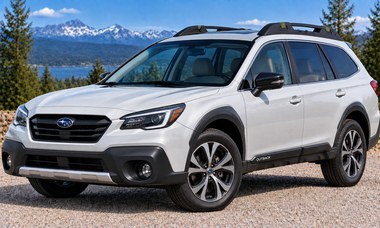
The Subaru Outback can be an exceptionally long-lasting vehicle, but reliability varies significantly by model year, engine and transmission. Well-maintained Outbacks routinely reach high mileage, while poorly maintained examples can become expensive because of head-gasket problems, oil consumption, CVT issues, cooling-system failures or neglected AWD maintenance.
The Outback has also changed substantially over the years. Older models used Subaru's EJ-series boxer engines and conventional automatic or manual transmissions. Later Outbacks transitioned to FB-series engines and continuously variable transmissions, while six-cylinder and turbocharged versions provide their own distinct reliability considerations.
This guide covers U.S.-market Subaru Outbacks from 2000 through 2024, including four-cylinder, six-cylinder and turbocharged engines, conventional automatics, manual transmissions and Subaru's Lineartronic CVT.
In This Guide You'll Learn
- Which Subaru Outback years are generally the most reliable
- Which Outback years deserve extra caution
- How many miles a Subaru Outback can realistically last
- Which Outback engines are the most reliable
- How Subaru Outback CVTs hold up at higher mileage
- Whether the six-cylinder 3.0R and 3.6R are good used choices
- What to inspect before buying a high-mileage Outback
Or, Looking For "New"?
If you're also considering a new Outback, you may want to come back to this and take a look at a handy technique that locates the dealer in your area most ready to make price concessions.
Subaru Outback Reliability Overview
Overall, the Outback has a good long-term reliability record when the correct years and powertrains are chosen. Its ability to accumulate 200,000 miles is well established, and properly maintained examples can travel considerably farther.
However, the Outback's reliability story cannot be reduced to a single rating. Older four-cylinder models are known for EJ25 head-gasket leakage. Some later FB-series four-cylinder engines developed excessive oil consumption. Beginning in the 2010s, CVT condition became another important consideration.
The Outback's six-cylinder engines deserve separate attention. The 3.0-liter H6 and later 3.6-liter six-cylinder generally avoided the classic four-cylinder head-gasket reputation and can be excellent high-mileage engines. Some six-cylinder Outbacks also retained conventional automatic transmissions after four-cylinder models had moved to CVTs, creating particularly interesting used-car combinations.
Subaru's standard all-wheel drive is another reason the Outback has such a loyal following, but it makes tire maintenance important. Four closely matched tires should be used because substantial differences in tire circumference can place unnecessary stress on the AWD system.
Subaru Outback Reliability at a Glance
| Category | Assessment |
|---|---|
| Overall Reliability | Good, but strongly dependent on year, engine and transmission |
| Better Used Years | 2006-2009, 2013-2014 with good history, 2016-2019, 2021-2024 |
| Years Requiring Extra Caution | 2000-2005 for head-gasket/age concerns; 2010-2014 for oil-consumption and early-CVT considerations |
| Most Interesting High-Mileage Powertrain | Well-maintained 3.6R with conventional 5-speed automatic |
| Major Older-Model Concern | EJ25 head-gasket leakage and overheating |
| Major Later-Model Concerns | Oil consumption on some FB25 engines and CVT condition |
| Expected Lifespan | About 200,000-250,000 miles; exceptional examples can go farther |
How Many Miles Can a Subaru Outback Last?
A well-maintained Subaru Outback can realistically last 200,000 to 250,000 miles, and exceptional examples can exceed 300,000 miles. The Outback is one of those vehicles where very high mileage is entirely plausible, but reaching it depends heavily on oil-level maintenance, cooling-system health and transmission condition.
At 100,000 miles, a properly maintained Outback can still have a large portion of its useful life remaining. This is not unusually high mileage for the model. What matters is whether scheduled maintenance and any generation-specific repairs have been addressed.
At 150,000 miles, maintenance history becomes more important than the odometer itself. On older EJ-powered Outbacks, head-gasket and timing-belt history are particularly important. On later vehicles, oil consumption and CVT condition deserve more attention.
At 200,000 miles, a healthy Outback has already demonstrated considerable durability. A well-maintained example can still provide useful service, but suspension components, wheel bearings, CV joints, cooling-system components and oil leaks may require increasing attention.
At 250,000 miles and beyond, individual history dominates the buying decision. An Outback that has received regular oil changes, maintained proper fluid levels and never been seriously overheated can continue well beyond this point.
Six-cylinder Outbacks are particularly interesting for high-mileage buyers. A properly maintained H6 can be extremely durable, and certain 3.6R models combine that engine with a conventional automatic transmission rather than a CVT.
What Are The Best Subaru Outback Years to Buy?
The best Outback years depend partly on whether you want an inexpensive older wagon or a newer crossover with modern safety equipment. Engine and transmission choice matter enough that two Outbacks only a few years apart can present very different long-term ownership risks.
2006-2009 Subaru Outback
For buyers comfortable with an older vehicle, 2006-2009 Outbacks can still be excellent choices when their maintenance history is unusually good. These vehicles are mechanically simpler than later CVT-equipped models, and both the four-cylinder and six-cylinder versions can accumulate substantial mileage.
The naturally aspirated 2.5-liter still requires careful attention to head-gasket condition and timing-belt service. The 3.0R six-cylinder is particularly interesting because of its timing chain and generally strong durability record.
At this age, however, condition overwhelms model-year reputation. Rust, cooling-system deterioration, suspension wear, oil leaks and neglected maintenance can turn even one of the better years into a poor purchase.
2013-2014 Subaru Outback 3.6R
The 2013-2014 3.6R is one of the Outback combinations I'd specifically seek out for a high-mileage used vehicle. It combines Subaru's durable 3.6-liter six-cylinder engine with a conventional five-speed automatic rather than the CVT used with the four-cylinder.
Fuel economy isn't its strength, and these vehicles are now old enough that maintenance history matters considerably. But for a buyer who values proven mechanical durability more than maximum gas mileage, this is an unusually appealing Outback powertrain.
2016-2019 Subaru Outback
Later fifth-generation Outbacks offer an attractive balance of age, features and reliability. The four-cylinder FB25 had moved beyond its earliest years, while the overall vehicle was several years into development.
The 2016-2019 2.5-liter models are sensible choices for buyers who want good fuel economy and don't need additional power. The 3.6R is also attractive, although these six-cylinder models use a CVT rather than the conventional automatic found in the previous generation.
2021-2024 Subaru Outback
For buyers wanting a newer vehicle, 2021-2024 Outbacks are among the strongest places to concentrate a search. The naturally aspirated 2.5-liter is the simpler powertrain, while XT models offer considerably more performance from the turbocharged 2.4-liter.
The 2020 Outback isn't automatically a poor choice, but it was the first year of a major redesign. When condition and price are similar, I'd generally favor a 2021 or later example.
Which Subaru Outback Years Should You Avoid or Approach With Extra Caution?
No Outback year should be rejected solely because of its model year. Individual maintenance history can completely change the equation. The following groups simply deserve additional scrutiny because of known mechanical concerns or first-year changes.
2000-2005 Subaru Outback
The oldest Outbacks combine EJ25 head-gasket concerns with more than two decades of age. A carefully maintained example can still be remarkably durable, but neglected vehicles can require repairs that quickly exceed their market value.
I'd want strong evidence of timing-belt maintenance, a healthy cooling system and either properly completed head-gasket work or convincing evidence that the engine currently has no leakage or overheating problem.
2010-2012 Four-Cylinder Outback
These years deserve careful evaluation because the four-cylinder Outback combined the older EJ25 engine with Subaru's relatively early Lineartronic CVT. That means buyers need to consider both traditional EJ engine concerns and transmission condition.
A well-maintained example can still be a good vehicle, but this isn't a year group where I'd buy primarily on Subaru's reputation or a low odometer reading.
2013-2014 Four-Cylinder Outback
The introduction of the FB25 changed the reliability picture. The timing chain and reduced emphasis on traditional EJ head-gasket problems were advantages, but excessive oil consumption affected some vehicles.
Ask specifically how much oil the engine uses between changes and whether oil-consumption testing or engine repairs were performed. An engine that received appropriate corrective work may be a substantially better prospect than one with an unknown history.
2020 Subaru Outback
The 2020 Outback was the first year of the sixth-generation redesign. It introduced a new platform, substantial electronics changes and the turbocharged 2.4-liter XT powertrain.
This isn't a blanket "avoid" year. However, when a comparable 2021 or 2022 costs little more, the later vehicle is generally my preference.
Pricing
Knowing which Outback model years to concentrate on is step 1. Step 2 is knowing how to actually get an excellent used Outback price.
Also, getting a strong trade-in allowance often has the biggest impact on your final price. See KBB versus Edmunds Appraisals - Which Is Better to learn about getting accurate and fair trade-in values before negotiating with a dealer.
Subaru Outback Reliability by Generation
2000-2004 Subaru Outback: Durable but Head-Gasket History Is Critical
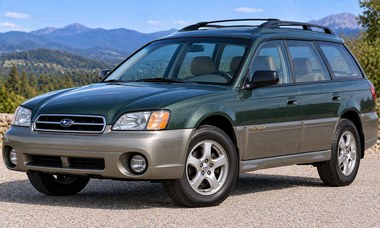
The 2000-2004 Outback established much of the formula that made the model popular: wagon practicality, substantial ground clearance, standard all-wheel drive and a relatively compact exterior.
Most Outbacks used Subaru's 2.5-liter EJ25 four-cylinder engine. These engines can travel substantial mileage, but head-gasket leakage is their defining reliability concern.
External coolant or oil leakage may develop gradually. More serious cooling-system problems can lead to overheating, and continued operation while overheated can cause major engine damage. On an Outback this old, evidence that the head gaskets were replaced properly can actually make the vehicle more desirable.
The EJ25 also uses a timing belt, so documented timing-belt service is important. Given the age of these vehicles, radiators, hoses, wheel bearings, suspension components, CV boots and rust deserve attention as well.
The 3.0-liter six-cylinder H6 available in certain models provides an interesting alternative. It uses a timing chain and does not share the naturally aspirated EJ25's classic external head-gasket reputation to the same degree. Fuel economy is lower, but a well-maintained H6 can be an appealing high-mileage choice.
Buyer Tip: Don't buy an early Outback based simply on low mileage. Documentation showing head-gasket, timing-belt and cooling-system maintenance can be worth far more than 30,000 or 40,000 fewer miles on the odometer.
Bottom Line: Capable of impressive longevity, particularly when major engine maintenance has already been performed, but age and cooling-system history now dominate the buying decision.
2005-2009 Subaru Outback: Strong Used Potential With Several Powertrain Choices
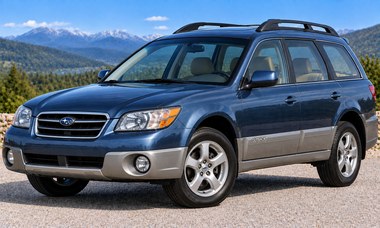
The 2005-2009 Outback became more refined while retaining much of the mechanical character of earlier Subarus. Buyers could choose naturally aspirated four-cylinder, turbocharged XT and six-cylinder 3.0R versions.
The ordinary 2.5-liter EJ25 remains capable of high mileage, but head-gasket leakage and timing-belt maintenance still need to be considered. By now, many surviving examples have already received significant engine work, making documentation especially valuable.
The Outback XT uses a turbocharged 2.5-liter engine and offers substantially stronger performance. It also introduces more heat and mechanical stress, and modified or poorly maintained examples can be considerably riskier than an ordinary naturally aspirated Outback.
The 3.0R six-cylinder is one of the generation's most interesting choices. Its H6 engine uses a timing chain, delivers smooth power and avoids some of the concerns that dominate discussion of older four-cylinder Outbacks.
Fuel economy and maintenance costs can be somewhat higher with the six-cylinder, but buyers planning to keep an older Outback for a long time should not automatically dismiss it.
Buyer Tip: For basic transportation, a well-maintained naturally aspirated model can still be excellent. If maintenance records are equally strong, however, the 3.0R deserves serious consideration from buyers willing to accept its additional fuel consumption.
Bottom Line: One of the more appealing older Outback generations, especially when maintenance history is excellent and the exact powertrain is chosen carefully.
2010-2014 Subaru Outback: Major Engine and Transmission Transition
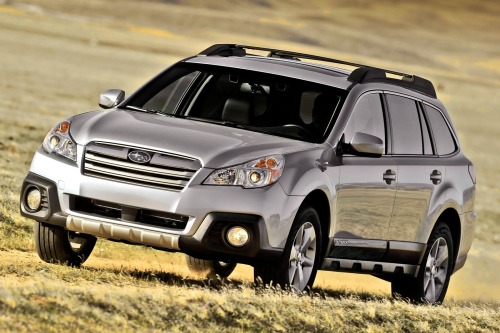
The 2010 redesign began one of the most important mechanical transitions in Outback history. Four-cylinder models adopted Subaru's Lineartronic CVT, while the six-cylinder 3.6R retained a conventional five-speed automatic transmission.
Early four-cylinder models initially continued with the EJ25, but the 2013 Outback received Subaru's newer FB25 engine. The FB25 uses a timing chain rather than a timing belt and moved the Outback away from the classic EJ-series head-gasket concern.
The tradeoff was that some early FB25 engines developed excessive oil consumption. Subaru later extended warranty coverage for excessive oil consumption on applicable vehicles, making oil-use history particularly important when evaluating these years.
The CVT also became a major part of the Outback reliability discussion. Many have accumulated substantial mileage without major trouble, but internal CVT problems can be expensive enough that transmission behavior and maintenance history should never be ignored.
The 3.6R is particularly noteworthy in this generation. Its 3.6-liter six-cylinder engine is paired with a conventional five-speed automatic, giving buyers who prefer to avoid an early CVT an attractive alternative.
Buyer Tip: Don't treat every 2010-2014 Outback as mechanically identical. A 2012 four-cylinder, 2013 four-cylinder and 2013 3.6R have meaningfully different engine and transmission considerations.
Bottom Line: This generation contains some excellent used Outbacks, but understanding the exact powertrain is essential. A well-maintained 3.6R is one of the more compelling high-mileage combinations in the Outback's history.
2015-2019 Subaru Outback: Mature Design, but CVT Condition Still Matters
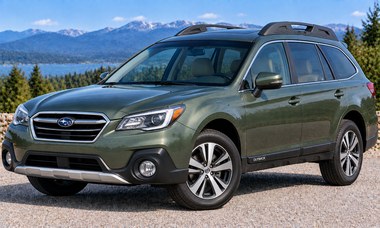
The 2015 redesign made the Outback quieter, roomier and more refined. Most models use the 2.5-liter FB25 four-cylinder with a Lineartronic CVT, while the 3.6R continued as the more powerful six-cylinder alternative.
By this point, Subaru had moved beyond some of the uncertainty associated with the earliest FB25 applications. Oil level should still be checked regularly, but later examples are generally more appealing than the earliest oil-consumption years.
The 2015-2019 3.6R differs from the previous generation because the six-cylinder is now paired with a CVT rather than the older five-speed conventional automatic. The engine itself remains one of Subaru's more appealing powerplants, but buyers specifically seeking a six-cylinder Outback without a CVT should look at the 2010-2014 3.6R instead.
For the four-cylinder Outback, CVT condition is one of the most important things to evaluate. Watch for abnormal noises, hesitation, warning lights or inconsistent operation after the drivetrain has fully warmed.
Buyer Tip: The later years of this generation, particularly 2016-2019, deserve strong consideration if the engine maintains its oil level and the CVT operates properly.
Bottom Line: A strong overall generation with good high-mileage potential, especially when maintenance history is documented and the CVT has been treated well.
2020-2024 Subaru Outback: New Platform, New Turbo Engine Option
The sixth-generation Outback arrived for 2020 with a substantially updated platform and two engine choices. Most models use a 2.5-liter naturally aspirated boxer engine, while XT versions brought turbocharged power back to the Outback through Subaru's 2.4-liter turbocharged FA24 engine.
Both engines are paired with CVTs. The naturally aspirated 2.5-liter remains the simpler choice for buyers whose priority is long-term ownership rather than performance, while the turbocharged XT provides substantially stronger acceleration and towing capability.
The 2.4-liter turbo should not automatically be considered unreliable simply because it is turbocharged. It does, however, add components and thermal stress compared with the naturally aspirated engine. Buyers planning to keep an Outback to very high mileage may reasonably prefer the simpler powertrain.
The 2020 model was the first year of the redesign, so all else being equal, I'd generally favor a 2021 or later example. The newest years are promising, but they have not yet accumulated enough 200,000-mile vehicles to judge ultimate longevity as confidently as older generations.
Buyer Tip: For buyers primarily interested in durability, a naturally aspirated 2021-2024 Outback is the straightforward choice. Choose the XT when its additional performance is genuinely useful rather than assuming the more powerful engine is necessarily the better buy.
Bottom Line: A promising generation with fewer historical engine concerns than older Outbacks, although CVT condition remains important and ultimate very-high-mileage durability is still developing.
Subaru Outback Engine Reliability
The Outback has used several substantially different boxer engines, and their reliability records should be considered separately. An EJ25 four-cylinder, FB25 four-cylinder, H6 six-cylinder and FA24 turbo do not share the same weaknesses.
EJ25 2.5-Liter Naturally Aspirated Engine
The EJ25 powered millions of Subarus and is capable of substantial mileage. Its defining weakness in older naturally aspirated Outbacks is head-gasket leakage.
A previous head-gasket repair isn't necessarily a reason to reject the vehicle. If the job was performed correctly before severe overheating occurred, the engine can continue for many years.
The EJ25 also uses a timing belt. On a high-mileage used Outback, documentation of belt service and related components such as the water pump can materially affect the vehicle's value.
FB25 2.5-Liter Naturally Aspirated Engine
The FB25 replaced the EJ25 in four-cylinder Outbacks beginning with the 2013 model year. It uses a timing chain and largely moved the Outback beyond the head-gasket reputation associated with older naturally aspirated EJ engines.
The main concern on early versions is excessive oil consumption. When considering a 2013-2014 Outback, ask how much oil the engine uses between changes and whether any oil-consumption testing or engine repair was performed.
Later versions are generally more attractive for used buyers. Regardless of year, periodically checking the dipstick remains inexpensive insurance on any aging engine.
3.0-Liter and 3.6-Liter H6 Engines
Subaru's six-cylinder Outbacks are worth special consideration. The 3.0-liter H6 and later 3.6-liter H6 use timing chains and generally avoid the classic naturally aspirated EJ25 head-gasket issue that dominates discussion of older four-cylinder Subarus.
They aren't maintenance-free. Cooling-system condition, oil leaks and age-related repairs still matter, and fuel economy is lower than with the four-cylinder. Nevertheless, a well-maintained H6 can be an excellent high-mileage engine.
The transmission paired with the engine is equally important. The 2010-2014 3.6R combines the six-cylinder with a conventional five-speed automatic, while the 2015-2019 3.6R uses a CVT.
2.4-Liter Turbo FA24 Engine
The 2.4-liter turbocharged engine powers newer Outback XT models. It provides considerably stronger performance than the naturally aspirated 2.5-liter and is useful for drivers who tow or frequently travel with heavy loads.
Long-term reliability evidence is still developing compared with Subaru engines that have been on the road for 15 or 20 years. For buyers primarily interested in minimizing mechanical complexity over 200,000 miles, the naturally aspirated engine remains the more conservative choice.
Which Subaru Outback Engine Is Most Reliable?
There isn't one universally best Outback engine because vehicle age now plays such a large role, but the six-cylinder H6 engines deserve particular recognition for durability. A well-maintained 3.0R or 3.6R can be an excellent long-term vehicle.
Among them, the 2010-2014 3.6R is especially interesting because it combines the 3.6-liter six-cylinder with a conventional five-speed automatic. For buyers concerned about early Subaru CVTs, that powertrain eliminates one major variable.
For a newer Outback, a later naturally aspirated 2.5-liter is the simpler long-term strategy. It sacrifices some performance compared with the XT but avoids turbocharger-related complexity.
An older EJ25 can also last an extraordinarily long time if its head gaskets, timing belt and cooling system have been properly maintained. At today's vehicle ages, however, finding a genuinely well-documented example becomes increasingly important.
Subaru Outback vs. Subaru Forester Reliability
The Outback and Forester share Subaru's boxer-engine and all-wheel-drive philosophy, but they haven't always used identical powertrains. The Outback has offered six-cylinder and turbocharged engines unavailable in many Foresters, while its transmission history also differs in important years. If you're considering both, see our Subaru Forester reliability, best years and common problems guide for a comparison before deciding which Subaru better fits your needs.
What Is the Most Reliable Subaru Outback Generation?
There isn't one generation that wins in every category. For many used buyers, however, the later 2015-2019 Outbacks and 2021-2024 Outbacks provide the best overall balance of reliability, age, safety and practicality.
Older 2005-2009 models can be mechanically durable, but age and EJ25 maintenance increasingly dominate the equation. Their greatest advantage is relative mechanical simplicity.
The 2010-2014 generation is more complicated because powertrain choice changes the answer dramatically. The four-cylinder moved through the EJ-to-FB transition and used a CVT, while the 3.6R retained a conventional five-speed automatic. For that reason, a well-maintained 2010-2014 3.6R deserves special consideration even though the generation as a whole isn't my first blanket recommendation.
For someone who simply wants a relatively recent Outback to keep for many years, I'd concentrate on a well-maintained 2016-2019 2.5-liter or 2021-2024 2.5-liter, while considering a 3.6R if its additional fuel consumption isn't a concern.
Subaru Outback CVT Reliability
The Lineartronic CVT is one of the most important components to evaluate on a later used Outback. Subaru introduced the CVT on four-cylinder Outbacks for 2010, and it eventually became standard across the lineup.
Many Subaru CVTs have accumulated substantial mileage without requiring replacement, so it would be misleading to describe them as universally unreliable. The problem for a used buyer is that a major CVT failure can be expensive enough to erase the financial advantage of buying an older vehicle.
Subaru extended CVT warranty coverage to 10 years or 100,000 miles on many 2010-2015 vehicles, including applicable Outbacks. That warranty history is one reason earlier CVT-equipped cars deserve additional scrutiny.
During a test drive, check operation both cold and fully warmed. Watch for delayed engagement into Drive or Reverse, pronounced shuddering, abnormal whining, warning lights or inconsistent behavior under acceleration.
Don't judge a CVT by whether it shifts like a conventional automatic. It doesn't. The concern is abnormal behavior, noise or diagnostic evidence of trouble rather than the absence of traditional gear changes.
Subaru Outback Maintenance and Repair Costs
Routine Outback maintenance is generally reasonable, but major engine or transmission work can be expensive. This is why paying somewhat more for a well-maintained vehicle can make considerably more sense than buying the cheapest Outback available.
| Typical Service or Repair | Approximate Cost |
|---|---|
| Oil and Filter Service | $60-$120+ |
| Brake Pads and Rotors | $400-$900+ per axle |
| Battery | $180-$350+ |
| Wheel Bearing / Hub | $400-$800+ each |
| CV Axle | $400-$900+ |
| Cooling-System Repair | $400-$1,200+ |
| Suspension Repairs | $700-$1,500+ |
| EJ25 Timing-Belt Service | $800-$1,500+ |
| Head-Gasket Repair | $2,000-$4,000+ |
| CVT Replacement | $5,000-$8,000+ |
| Engine Replacement | $5,000-$10,000+ |
These figures are broad estimates rather than repair quotes. Labor rates, location, parts choices and additional work performed during the repair can substantially change the final bill.
Subaru Outback Maintenance After 100,000 Miles
An Outback with 100,000 miles can still have another 100,000 miles or more ahead of it. The key is preventing relatively manageable maintenance issues from developing into expensive engine, transmission or AWD problems.
- Check the engine oil regularly between changes.
- Watch carefully for coolant loss or overheating.
- Verify timing-belt service on EJ-powered four-cylinder models.
- Evaluate CVT operation and investigate warning lights promptly.
- Inspect wheel bearings, CV boots, axles and suspension components.
- Keep four closely matched tires on the vehicle.
- Inspect older engines for developing oil or coolant leaks.
- Maintain differential and drivetrain fluids as appropriate for the specific model year.
Once mileage moves beyond 150,000, I'd generally prefer a vehicle with complete maintenance records over one with substantially fewer miles but an unknown history.
What to Check Before Buying a Used Subaru Outback
Beyond a normal pre-purchase inspection, these five checks are particularly useful when evaluating an Outback.
1. Identify the Exact Engine and Transmission
Determine whether the vehicle has an EJ25, FB25, H6 or turbocharged engine and whether it uses a conventional automatic, manual transmission or CVT. Those details fundamentally change what problems you should investigate.
2. Check the Oil and Coolant Before Startup
Check the dipstick and coolant level before the seller warms the vehicle. Low oil can provide an early clue to consumption or poor maintenance, while coolant loss on an older EJ-powered Outback deserves careful investigation.
3. Investigate Head-Gasket or Oil-Consumption History
On older EJ25 models, ask whether the head gaskets have been replaced and request receipts if possible. On early FB25 models, ask directly about oil consumption, oil-consumption testing and any engine or short-block replacement.
4. Test the CVT Thoroughly
On a CVT-equipped Outback, don't limit the test drive to a few minutes. Drive long enough for the transmission to warm, and evaluate low-speed operation, acceleration, highway cruising and engagement from both Drive and Reverse.
Subaru Outback Pros and Cons
Pros
- 200,000-250,000 miles is realistic with good maintenance
- Exceptional examples can exceed 300,000 miles
- Standard all-wheel drive
- Excellent passenger and cargo versatility
- Strong resale value
- Several durable naturally aspirated engine choices
- H6 engines provide an appealing high-mileage alternative
- 2010-2014 3.6R offers a six-cylinder with conventional automatic
- Large used-vehicle supply and extensive owner knowledge
Cons
- Older EJ25 engines have significant head-gasket history
- Some early FB25 engines can consume excessive oil
- CVT replacement can be expensive
- AWD makes matched tire condition particularly important
- Turbocharged versions add complexity
- Strong resale values can make good used Outbacks expensive
- Older vehicles may require substantial age-related maintenance
Final Buyer Summary: Is the Subaru Outback Reliable?
Yes. A carefully chosen Subaru Outback can be a reliable, exceptionally long-lasting vehicle, and 200,000 to 250,000 miles is a realistic lifespan for a well-maintained example. The important qualification is that Outback reliability varies considerably by engine, transmission and model year.
Older 2000-2009 four-cylinder Outbacks can travel tremendous distances, but head-gasket condition, timing-belt service and cooling-system history are critical. The six-cylinder 3.0R provides an interesting alternative for buyers willing to accept higher fuel consumption.
The 2010-2014 generation requires particularly careful powertrain identification. Four-cylinder models introduced the CVT and later transitioned to the FB25, while the 3.6R retained a conventional five-speed automatic. A well-maintained 2010-2014 3.6R is one of the most interesting older Outbacks for long-term ownership.
The 2016-2019 Outbacks are among the better choices for buyers wanting a modern vehicle without paying late-model prices. The naturally aspirated 2.5-liter is economical and widely available, while the 3.6R offers additional power.
For a newer vehicle, 2021-2024 Outbacks deserve strong consideration. The naturally aspirated 2.5-liter is the simpler long-term choice, while the 2.4-liter turbo XT is better suited to buyers who genuinely value its additional acceleration and towing ability.
The best Outback isn't necessarily the one with the fewest miles. A 150,000-mile vehicle with excellent records, proper oil levels, four matched tires and a healthy transmission can be a considerably better purchase than a neglected 90,000-mile example.
Best overall strategy: choose one of the stronger year and powertrain combinations, verify the engine and transmission before buying, investigate its generation-specific weaknesses, and place exceptional maintenance history ahead of unusually low mileage. With that approach, the Outback remains one of the better choices for buyers who intend to keep a vehicle well beyond 100,000 miles.
Your Trade-In
It's good to always know the value of your trade-in while you're evaluating your next possible purchase. Here's a good source for a quick and accurate appraisal: free trade-in appraisal.
What's Next?
Understand Questionable Dealer Fees
Beware of "dealer fees". Before agreeing to a dealer's numbers, see which dealer fees are legitimate, which can be negotiated, and which can be avoided.