

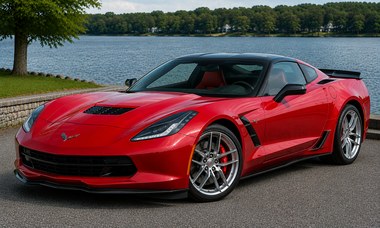
Is the Chevy Corvette reliable? Which Corvette generations and years are the best to buy, and can an older Corvette still be a dependable car at 100,000 miles or more?
Corvette reliability is better than its exotic-car performance might suggest. Chevrolet's small-block V8 engines have produced some remarkably durable Corvettes, and well-maintained examples can accumulate substantial mileage. But there are major differences between generations, engines and performance versions.
A basic LS1-powered C5, an LS3 C6, a supercharged C7 Z06 and a mid-engine C8 are very different machines. Problems can range from aging electronics and harmonic balancers to expensive engine, transmission and cooling-system concerns on particular versions.
Previous ownership matters enormously, too. A carefully maintained 100,000-mile Corvette can be a better purchase than a 30,000-mile example that was heavily modified, repeatedly tracked or allowed to sit unused for years.
This guide covers the 1997-2024 U.S. Chevrolet Corvette, including the C5, C6, C7 and early C8 generations. It also distinguishes important performance models such as the Z06, Grand Sport and ZR1 where their reliability differs from the standard Corvette.
In This Guide You'll Learn
- Which Chevy Corvette years are generally the best used buys
- Which Corvette years and versions deserve extra caution
- How C5, C6, C7 and C8 Corvette reliability compares
- Which Corvette generation is most reliable
- Which Corvette engine is most reliable
- How reliable the LS1, LS2, LS3 and later LT engines are
- What to know before buying a C6 Z06 with the LS7 engine
- How reliable C7 Z06 and ZR1 models are
- What problems have appeared on early C8 Corvettes
- How Corvette manual and automatic transmissions compare
- Whether a Corvette with 100,000 miles is still worth buying
- Whether a Corvette can last 150,000 or 200,000 miles
- Why low mileage isn't always an advantage on an older Corvette
Or, Looking For "New"?
If you're also considering a new Corvette, you may want to come back to this and take a look at a handy technique that locates the dealer in your area most ready to make price concessions.
Chevy Corvette Reliability Overview
The modern Corvette has a surprisingly strong reliability foundation. Much of that comes from Chevrolet's long-running small-block V8 architecture, which has produced several engines capable of extremely high mileage when properly maintained.
The 1997-2004 C5 Corvette introduced the LS-series V8 and remains one of the simplest modern Corvettes. Its LS1 and LS6 engines are durable, but age-related electrical, ABS, suspension and driveline problems have become increasingly important.
The 2005-2013 C6 improved performance while remaining relatively straightforward mechanically. The later LS3-powered cars are particularly appealing. The C6 Z06 is more complicated from a reliability standpoint because its LS7 engine has a known cylinder-head/valve-guide concern that deserves specialized inspection.
The 2014-2019 C7 added direct injection, cylinder deactivation and considerably more electronic sophistication. The LT1 V8 can be durable, but some automatic cars deserve attention for eight-speed transmission shudder. Supercharged Z06 models introduce additional cooling and performance-related concerns.
The 2020-2024 C8 changed the Corvette more dramatically than any previous generation by moving the engine behind the passenger compartment and replacing the traditional automatic/manual choices with an eight-speed dual-clutch transmission. Early reliability information is useful, but these cars are still too young to make confident claims about 150,000- or 200,000-mile durability.
Bottom Line: Corvette engine reliability is generally strong. When buying a well-negotiated Corvette, the bigger challenge is matching the right generation and version to your budget while avoiding neglected, poorly modified or heavily abused examples.
Chevy Corvette Reliability at a Glance
| Corvette | Reliability Outlook |
|---|---|
| 1997-2004 C5 | Durable LS1/LS6 engines; age, electronics, ABS and driveline condition increasingly important |
| 2005-2007 C6 | Generally good, but early-production issues and age make inspection important |
| 2008-2013 C6 | Among the strongest overall used Corvette choices, especially LS3-powered models |
| 2006-2013 C6 Z06 | Outstanding performance but LS7 cylinder-head/valve-guide concerns require specialized attention |
| 2014-2019 C7 | Strong overall; more technology and some eight-speed automatic concerns |
| 2015-2019 C7 Z06 | Powerful LT4 engine; cooling, track use and expensive performance components deserve scrutiny |
| 2020-2024 C8 | Promising but still too new for a proven long-term high-mileage verdict; DCT and electronics important |
Chevy Corvette Reliability by Generation
1997-2004 Corvette C5 Reliability
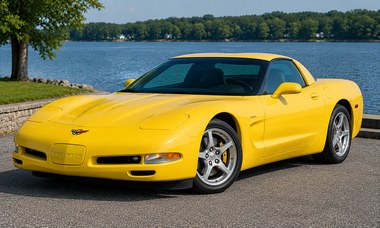
The C5 Corvette arrived for 1997 and represented a major engineering change. It introduced the LS1 V8, rear-mounted transaxle layout and a substantially more modern chassis while retaining a relatively straightforward mechanical design by today's standards.
Nearly three decades later, the C5 remains one of the most interesting Corvettes for buyers seeking performance without excessive complexity.
The 5.7L LS1 V8 is the heart of most C5s and has developed an excellent durability reputation. The higher-performance Z06 uses the LS6, another strong engine when maintained properly.
The biggest challenge today is no longer determining whether the LS engine is capable of high mileage. It clearly is. Instead, buyers need to determine how well the entire 20-plus-year-old car has aged.
1997-1999 Corvette Reliability
The 1997 Corvette was the first C5 model year and deserves more scrutiny than later examples. Early-production cars can have electrical, electronic and other first-year peculiarities that make a later C5 preferable when prices are similar.
The 1998 and 1999 models benefited from additional production experience, but these are now old cars regardless of mileage.
Check ABS and traction-control operation, climate controls, displays, power accessories, steering-column functions and warning lights carefully.
2000-2001 Corvette Reliability
The 2000 and 2001 Corvette represent increasingly mature C5 production. Chevrolet continued refining the car, and 2001 also brought the higher-performance Z06.
These can be good buys, but age-related issues now matter more than relatively small model-year differences.
A documented 2000 with regular use and maintenance can easily be a better purchase than an ultra-low-mileage example that spent years sitting in storage.
2002-2004 Corvette Reliability
The 2002-2004 Corvette represents the mature end of C5 production and is generally where I'd start when shopping for the generation.
The basic LS1 drivetrain was well established, and Chevrolet had several years to refine the C5 platform.
These cars still need careful inspection for electronics, ABS-related issues, suspension wear, leaks and aging rubber components. But a well-kept late C5 remains one of the better performance values available.
Buyer Tip: For an ordinary C5, I'd generally favor 2002-2004, then choose the best-maintained, least-modified example rather than obsessing over a small mileage difference.
C5 Corvette LS1 Reliability
The 5.7L LS1 V8 is one of the strongest reasons to consider a C5 Corvette.
Its aluminum small-block architecture proved durable across a wide variety of GM performance applications, and a properly maintained LS1 can exceed 150,000 miles without requiring internal engine reconstruction.
Potential high-mileage concerns include:
- Oil leaks
- Water pump wear or leakage
- Harmonic balancer deterioration
- Oil-pressure sending-unit problems
- Ignition components
- Sensors and engine-management components
- Cooling-system deterioration
- Accessory-drive components
These concerns don't make the LS1 unreliable. Most are exactly the kinds of repairs expected as a performance car passes 20 years of age.
Bottom Line: The LS1 is one of the more proven high-mileage Corvette engines and remains an excellent choice for someone seeking a relatively simple modern Corvette.
2001-2004 Corvette Z06 and LS6 Reliability
The C5 Corvette Z06 uses the higher-output LS6 V8 and adds performance-oriented chassis and braking upgrades.
The LS6 itself has a strong durability reputation. The larger concern when shopping for a Z06 is determining how the car has been used.
Track use isn't automatically a reason to reject a Corvette. A properly maintained car driven by an experienced owner can remain excellent. But repeated hard use accelerates wear on brakes, tires, wheel bearings, suspension, clutch and driveline components.
Inspect a Z06 for modifications carefully. Camshaft changes, engine tuning and other performance upgrades are common.
Buyer Tip: A stock or professionally modified C5 Z06 with extensive maintenance records can be an excellent performance-car purchase. I'd pay more for documented history rather than chase the cheapest Z06 available.
Common 1997-2004 C5 Corvette Problems
- ABS and traction-control system faults
- Electronic Brake Control Module problems
- Electrical and grounding issues
- Steering-column lock concerns on affected cars
- Harmonic balancer deterioration
- Oil leaks and aging seals
- Water pump and cooling-system repairs
- Headlight motor or mechanism problems
- Climate-control and display issues
- Wheel-bearing and suspension wear
- Clutch wear on manual cars
- Torque-tube and driveline noise or wear
- Aging weatherstripping and interior components
Buyer Tip: On a C5, don't let a healthy LS1 distract you from the rest of the car. The engine may be capable of another 100,000 miles while aging electronics, suspension and driveline components require substantial work.
2005-2013 Corvette C6 Reliability
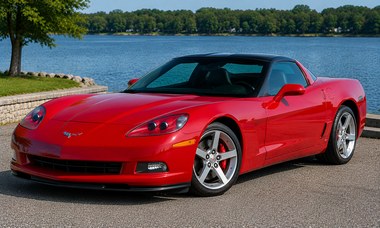
The C6 Corvette arrived for 2005 and retained the basic front-engine/rear-transaxle architecture of the C5 while improving performance, refinement and interior usability.
From a used-car reliability standpoint, the C6 is particularly attractive because later cars combine proven LS-series engines with less age than a C5 while avoiding some of the additional complexity introduced with the C7.
Engine choice matters. Early standard C6s use the 6.0L LS2, while 2008 and later standard cars receive the highly regarded 6.2L LS3. The Z06 uses the 7.0L LS7, and the ZR1 uses the supercharged 6.2L LS9.
2005 Corvette Reliability
The 2005 Corvette was the first C6 model year, and I'd generally choose a later C6 if condition and price were similar.
The LS2 V8 itself is fundamentally strong, but first-year cars can present additional electronic and refinement issues.
At this age, inspect suspension, cooling, drivetrain and electrical systems thoroughly regardless of mileage.
2006-2007 Corvette Reliability
The 2006 and 2007 Corvette benefited from additional C6 production experience and can be very good used cars.
The 6.0L LS2 remains a durable engine, and these years offer excellent performance without the complexity of later direct-injected engines.
For buyers interested in the Z06, however, 2006 introduced the LS7-powered version, which requires a separate reliability discussion.
2008-2013 Corvette Reliability
The 2008-2013 Corvette is one of my favorite periods in the modern Corvette lineup from a reliability standpoint.
The standard car received the 6.2L LS3 V8 for 2008. The LS3 combines excellent performance with a relatively straightforward naturally aspirated design and has developed an excellent durability reputation.
Late C6 cars also benefit from years of platform refinement. They aren't immune to harmonic-balancer, electrical, suspension or age-related problems, but the basic drivetrain can be exceptionally strong.
Buyer Tip: If your priority is finding a Corvette that combines modern performance, proven mechanicals and manageable complexity, a well-maintained 2008-2013 LS3 C6 belongs near the top of the list.
C6 Corvette LS2 Reliability
The 6.0L LS2 used in early standard C6 Corvettes is a durable small-block V8 capable of substantial mileage.
Its relative simplicity is an advantage for long-term ownership. There is no turbocharger or supercharger, and it predates the direct-injection systems used on later Corvettes.
At today's age, I'd focus on oil leaks, cooling-system condition, harmonic-balancer condition, ignition components and evidence of previous modifications.
A well-maintained LS2 shouldn't be dismissed simply because the later LS3 receives more attention.
C6 Corvette LS3 Reliability
The 6.2L LS3 is arguably one of the sweet spots in modern Corvette reliability.
It provides substantially more performance than the original C5 LS1 while retaining a naturally aspirated, port-injected design without the cylinder-deactivation and direct-injection systems found on later LT-series engines.
The LS3 can accumulate well over 100,000 miles when properly maintained. Harmonic-balancer condition is worth inspecting, as are oil leaks, cooling components and the usual age-related accessories.
For buyers asking which Corvette engine offers the best combination of performance, simplicity and durability, the LS3 deserves to be near the top of the list.
2006-2013 C6 Corvette Z06 and LS7 Reliability
The C6 Z06 requires special treatment because its 7.0L LS7 V8 is one of the most exciting naturally aspirated engines Chevrolet ever installed in a production car, but it also has a reliability concern that buyers shouldn't ignore.
The issue involves cylinder-head valve guides and related valvetrain geometry on some LS7 engines. Excessive wear can potentially lead to serious valve and engine damage.
Not every LS7 fails, and many C6 Z06 Corvettes have accumulated substantial mileage without catastrophic engine problems. But the potential consequences are expensive enough that I'd want an LS7 evaluated by a shop familiar with these engines before purchase.
Some owners have had cylinder heads inspected, repaired or replaced proactively. Documentation of properly performed work can be a major advantage.
Don't assume aftermarket cylinder-head work automatically solves the problem. Who performed the work and exactly what was done matter.
Other Z06 buying considerations include:
- Track-use history
- Oil consumption
- Clutch condition
- Transmission and differential condition
- Brake and tire wear
- Cooling-system condition
- Aftermarket camshafts or tuning
- Accident or off-track damage
Buyer Tip: I wouldn't automatically avoid a C6 Z06, but I would not buy one without specifically addressing the LS7 cylinder-head question. This isn't a generic pre-purchase inspection item; use someone who understands LS7 engines.
2009-2013 C6 Corvette ZR1 Reliability
The C6 ZR1 introduced the supercharged 6.2L LS9 V8 and performance far beyond that of the standard Corvette.
The LS9 is a very strong engine, but a ZR1 is inherently more complex and considerably more expensive to repair than an ordinary LS3 Corvette.
Supercharger operation, cooling, clutch, transmission, differential, brakes and suspension all deserve careful evaluation. Originality and modification history are particularly important because adding even more power to these cars is common.
The carbon-fiber body components and ZR1-specific hardware can also make accident damage and cosmetic repairs much more expensive.
Buyer Tip: A ZR1 isn't the Corvette I'd choose if low ownership cost were the priority. Buy primarily on condition, originality and documentation rather than mileage alone.
Common 2005-2013 C6 Corvette Problems
- Harmonic balancer deterioration or wobble
- Electrical and electronic problems
- Oil leaks as cars age
- Cooling-system repairs
- Wheel-bearing and suspension wear
- Clutch wear on manual-transmission cars
- Driveline and differential noise
- Interior and convenience-feature problems
- Weatherstrip deterioration and water leaks
- LS7 cylinder-head/valve-guide concerns on Z06 models
- Expensive performance-component wear on Z06 and ZR1 models
- Problems caused by aftermarket modifications or track use
Buyer Tip: For most buyers seeking a C6, I'd put a clean 2008-2013 LS3 car ahead of an earlier example when prices and condition are reasonably close. The Z06 and ZR1 can be extraordinary cars, but they require a different level of inspection and financial preparation.
2014-2019 Corvette C7 Reliability
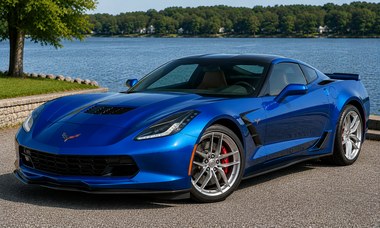
The C7 Corvette arrived for 2014 and brought a major increase in technology and performance while retaining the traditional front-engine Corvette layout.
The standard Stingray uses the 6.2L LT1 V8. The Z06 adds the supercharged 6.2L LT4, while the final C7 ZR1 uses the supercharged 6.2L LT5.
The C7 can be a very reliable high-performance car, but it is more complicated than a C5 or LS3-powered C6. Direct injection, cylinder-deactivation hardware, additional electronics and more sophisticated transmissions create more potential repair areas.
2014 Corvette Reliability
The 2014 Corvette was the first year of the completely redesigned C7.
The LT1 engine itself can be durable, but I'd generally give a 2014 more scrutiny than a later C7 because of its first-year status.
Early-production electronics, infotainment, drivetrain calibration and miscellaneous quality concerns should all be considered when comparing one with a later car.
2015-2016 Corvette Reliability
The 2015 and 2016 Corvette benefited from additional C7 production experience, but these years also brought Chevrolet's eight-speed automatic into the picture.
Some GM eight-speed automatics developed a characteristic torque-converter shudder. Affected cars may feel as though they're traveling over a rumble strip during light-throttle driving.
These years also include the C7 Z06, which deserves additional attention for cooling and high-performance use.
2017-2019 Corvette Reliability
The 2017-2019 Corvette represents the mature end of C7 production and is generally where I'd begin when shopping for this generation.
These cars benefit from several years of production refinement while retaining the traditional front-engine Corvette architecture.
An automatic still needs to be checked for shudder and service history. A manual car should be evaluated for clutch and synchronizer condition.
Buyer Tip: For a standard C7 Stingray or Grand Sport, I'd generally favor 2017-2019 while still making condition, transmission behavior and previous use the deciding factors.
C7 Corvette LT1 Reliability
The 6.2L LT1 V8 is capable of substantial mileage, but it is technologically more complex than the LS3.
Direct injection improves performance and efficiency, while cylinder-deactivation technology allows the engine to operate on fewer cylinders under light load. Both add systems that aren't present on the simpler LS3.
Potential concerns include oil leaks, fuel-system problems, sensors, cooling-system components and valvetrain-related issues on individual engines.
That doesn't make the LT1 unreliable. A properly maintained LT1 can be an excellent long-term engine. It simply isn't as mechanically straightforward as the LS3.
2015-2019 C7 Corvette Z06 Reliability
The C7 Corvette Z06 uses the supercharged 6.2L LT4 V8 and produces substantially more power than the standard Stingray.
One of the best-known concerns involves heat management during sustained high-performance driving, particularly on some earlier cars used heavily on a track.
A street-driven Z06 may never encounter the same conditions. But anyone specifically buying a Z06 for track use should investigate cooling-system configuration, service history and any modifications made to address heat.
The supercharger, performance brakes, tires, differential and other Z06-specific components also increase potential ownership costs.
As with the C6 Z06, previous use is critical. A low-mileage Z06 that spent its life at track events may have experienced far greater mechanical stress than a higher-mileage car used for weekend road trips.
Buyer Tip: Don't evaluate a C7 Z06 as though it's simply a Stingray with more horsepower. Its performance capability, cooling demands and replacement-part costs justify a specialist inspection.
2019 Corvette ZR1 Reliability
The final-year C7 ZR1 uses the supercharged 6.2L LT5 and is an extremely specialized Corvette.
Its rarity means there is less high-mileage reliability evidence than for ordinary Stingrays. The engine and drivetrain were engineered for tremendous performance, but repair costs can be correspondingly high.
For most ZR1 buyers, preservation, originality and documented service are likely to matter more than minimizing routine ownership costs.
Common 2014-2019 C7 Corvette Problems
- Eight-speed automatic torque-converter shudder on affected cars
- Electrical and infotainment problems
- Battery-related problems on infrequently driven cars
- Oil leaks or oil-consumption concerns on individual cars
- Fuel-system and direct-injection-related problems
- Cooling-system concerns
- Clutch wear on manual-transmission cars
- Suspension and wheel-bearing wear
- Expensive tires and brakes
- Z06 heat-management concerns during demanding use
- Supercharger-related expense on Z06 and ZR1 models
- Problems associated with aftermarket tuning and track use
Buyer Tip: The C7 can be very dependable, but I'd rather own a documented later Stingray than a questionable higher-performance example purchased simply because the price looked attractive.
2020-2024 Corvette C8 Reliability

The C8 Corvette introduced the biggest mechanical change in Corvette history. Beginning with 2020, the engine moved behind the passenger compartment and the Corvette became a true mid-engine sports car.
The standard Stingray uses a naturally aspirated 6.2L LT2 V8. Unlike previous generations, there is no conventional manual transmission. Power goes through an eight-speed dual-clutch transmission.
The C8 is tremendously capable, but its reliability story must be treated differently from the C5, C6 and C7. Even a 2020 car is still relatively young compared with the decades of high-mileage evidence available for LS1- and LS3-powered Corvettes.
2020 Corvette Reliability
The 2020 Corvette was the first year of an entirely new mid-engine architecture and deserves the most caution within the early C8 group.
Early cars have generated reports involving electronics, sensors, transmission behavior and other first-production-year issues.
This doesn't make the 2020 C8 a bad car, but if reliability were my overriding priority and prices were similar, I'd generally choose a later example.
2021-2022 Corvette Reliability
The 2021 and 2022 Corvette benefited from additional production experience and remain attractive used C8 choices.
Transmission operation is one of the most important areas to evaluate. The dual-clutch unit is fundamentally different from the conventional automatics used in earlier Corvettes and can be expensive if major repairs become necessary.
Electrical and electronic systems also deserve a complete functional check.
2023-2024 Corvette Reliability
The 2023 and 2024 Corvette represent increasingly mature early C8 production, and I'd generally favor them over a comparable 2020 if long-term ownership were the goal.
However, these cars are still too new to make the same high-mileage statements we can make about a C5 or C6.
It is reasonable to say the LT2 is based on a strong V8 architecture. It is not yet reasonable to claim that the entire C8 platform has demonstrated routine 200,000-mile durability.
Buyer Tip: With the C8, distinguish between early reliability and proven long-term reliability. The 2023-2024 cars benefit from production maturity, but time and mileage are still needed before we know how the complete car ages over 15 or 20 years.
C8 Corvette LT2 Reliability
The naturally aspirated 6.2L LT2 V8 is an evolution of Chevrolet's small-block architecture and is one of the more reassuring aspects of the C8.
It avoids turbochargers and superchargers in the standard Stingray while delivering substantially more performance than earlier base Corvettes.
As with the LT1, direct injection and cylinder-management technology add complexity compared with older LS-series engines.
So far, the engine itself doesn't give me a reason to avoid a C8 Stingray. For long-term ownership, I'd pay at least as much attention to the dual-clutch transmission and electronic systems.
C8 Eight-Speed Dual-Clutch Transmission Reliability
The C8's eight-speed dual-clutch transmission is central to the car's performance and also one of the most important components for a used buyer to evaluate.
A DCT operates differently from a traditional torque-converter automatic. Some low-speed behavior may therefore feel different without necessarily indicating a failure.
But warning messages, abnormal noises, persistent harsh operation, delayed engagement or documented transmission repairs deserve careful investigation.
Service history matters because the transmission has specific fluid and maintenance requirements. On a used C8, I'd want evidence that required transmission service was performed correctly and on schedule.
Buyer Tip: Don't diagnose a C8 transmission solely from a five-minute drive. If anything seems questionable, have the car inspected by a technician familiar with the Corvette DCT.
Common 2020-2024 C8 Corvette Problems
- Dual-clutch transmission complaints on individual cars
- Transmission warning messages or electronic control issues
- Electrical and software glitches
- Sensor-related problems
- Infotainment and camera issues
- Battery problems on cars driven infrequently
- Cooling-system concerns on individual vehicles
- Interior and convenience-feature faults
- Expensive tire and brake replacement
- Potentially high repair costs for C8-specific components
Buyer Tip: I'd generally prefer a later 2021-2024 C8 to a comparable 2020, but I wouldn't yet label any C8 year a proven high-mileage reliability champion. The generation simply hasn't been on the road long enough.
Later-model Vettes also tend to retain their value well. A lightly used example can sometimes cost surprisingly close to a properly negotiated new Corvette purchase, so it's often a good idea to compare both alternatives rather than assume the used vehicle automatically represents the better value.
Which Corvette Generations Have the Biggest Reliability Differences?
- C5 1997-2004: Durable LS1/LS6 engines and relatively simple mechanicals, but age-related problems now dominate the buying decision.
- C6 2005-2007: Strong LS2 drivetrain, although later C6 cars benefit from further refinement.
- C6 2008-2013: LS3-powered cars are among the strongest combinations of performance, simplicity and proven reliability.
- C6 Z06: LS7 performance is exceptional, but the cylinder-head/valve-guide concern must be taken seriously.
- C7 2014-2019: Strong performance and good basic durability with greater mechanical and electronic complexity.
- C7 eight-speed automatic: Check specifically for torque-converter shudder and service history.
- C7 Z06: LT4 power is tremendous, but cooling, track history and expensive performance hardware require additional scrutiny.
- C8 2020-2024: Promising early reliability, but the DCT and electronics are important and true long-term durability remains unproven.
Bottom Line: If reliability and manageable complexity were my priorities, I'd look particularly hard at a well-maintained 2002-2004 C5 or 2008-2013 LS3-powered C6. A later C7 can also be an excellent choice if you want a newer and more sophisticated Corvette. The C8 offers extraordinary performance, but its long-term high-mileage reliability story is still being written.
What Are The Best Chevy Corvette Years to Buy?
The best Corvette year depends heavily on which generation and performance level you want. A standard Stingray, Z06 and ZR1 can share a model year while presenting very different reliability risks and ownership costs.
For most buyers, I'd favor mature years within each generation, proven naturally aspirated engines, good maintenance records and minimal modifications.
| Corvette Years | Why They Stand Out |
|---|---|
| 2002-2004 C5 | Mature C5 production with durable LS1/LS6 engines and relatively simple mechanicals |
| 2008-2013 C6 | Excellent LS3 V8, mature platform and one of the strongest overall reliability combinations |
| 2010-2013 C6 | Particularly appealing late-production C6 years if condition and history are excellent |
| 2017-2019 C7 | Mature C7 production; strong LT1 drivetrain, although automatic-transmission history still matters |
| 2021-2024 C8 | Generally preferable to first-year 2020 cars, but long-term high-mileage durability is still developing |
Best C5 Years: I'd generally start with 2002-2004. The C5 was mature by this point, and the LS1 remains an exceptionally durable engine.
Best C6 Years: The 2008-2013 LS3 cars are arguably the sweet spot of the entire 1997-2024 period for buyers prioritizing reliability, performance and manageable mechanical complexity.
Best C7 Years: I'd generally favor 2017-2019, particularly a well-maintained Stingray. An automatic still needs to be checked for transmission shudder and service history.
Best C8 Years So Far: I'd generally choose a 2021-2024 example over a comparable 2020. However, these cars haven't accumulated enough age and mileage for the same long-term conclusions we can make about a C5 or C6.
Which Chevy Corvette Years Should You Avoid Or Require Extra Caution?
There aren't many Corvette years I'd reject solely because of the model year. Specific engines, transmissions and performance versions frequently matter more.
| Corvette | Why Use More Caution |
|---|---|
| 1997 C5 | First year of the C5 plus substantial age today |
| 2005 C6 | First year of the redesigned C6; later examples generally preferable |
| 2006-2013 C6 Z06 | LS7 cylinder-head/valve-guide concern can potentially lead to extremely expensive engine damage |
| 2014 C7 | First year of a substantially redesigned and more technologically complex Corvette |
| C7 with 8-speed automatic | Check carefully for torque-converter shudder and verify corrective service |
| Early C7 Z06 | Heat-management concerns during sustained high-performance use deserve attention |
| 2020 C8 | First year of the completely new mid-engine architecture and dual-clutch transmission |
| Any heavily modified Corvette | Modification quality and previous use can outweigh the model year's normal reliability record |
Most Important Distinction: A C6 Z06 isn't simply another 2008 or 2010 Corvette. Likewise, a C7 Z06 isn't mechanically equivalent to a Stingray. Always evaluate the specific engine and version rather than relying only on model-year reputation.
Also, Know Your Potential Trade-In Value
While you're narrowing down your next vehicle choice, it's also highly recommended that you know the value of your trade-in. Having a realistic appraisal is necessary to establish your budget as well as negotiate a better overall deal. Here's a good source for a quick and accurate appraisal: free trade-in appraisal.
Which Corvette Generation Is Most Reliable?
If the question is which generation offers the best overall combination of proven reliability, performance, age and manageable complexity, I'd give the advantage to the C6, particularly the 2008-2013 LS3-powered cars.
The C5 is mechanically appealing and its LS1 is extremely durable, but even the newest C5 is now more than two decades old. Rubber components, electronics, seals, suspension and other age-related items increasingly influence reliability.
The C6 is newer while retaining relatively straightforward naturally aspirated LS-series engines. An ordinary LS3 C6 doesn't have direct injection, turbochargers, superchargers or the C7's additional cylinder-management complexity.
The C7 can also be reliable, but it adds more technology and additional potential trouble areas. The C8 is too new to compete fairly in a long-term durability comparison.
Most Reliable Corvette Generation: For a buyer shopping today, the 2008-2013 C6 with the LS3 is arguably the strongest reliability sweet spot.
C5 vs. C6 Corvette Reliability
Buyers frequently cross-shop the C5 and C6 because both offer tremendous performance for the money and use proven LS-series engines.
The C5's biggest advantage is simplicity and price. The LS1 and LS6 are durable, and the basic drivetrain has an extensive high-mileage history.
The disadvantage is age. A low-mileage C5 can still need expensive work because seals, weatherstripping, electronics, suspension components and other parts deteriorate with time as well as mileage.
The C6 is generally the better choice if the budget allows. It retains much of the C5's mechanical simplicity while providing newer components, improved performance and a more refined car.
Within the C6 range, I'd particularly favor the LS3-powered 2008-2013 standard Corvette.
Buyer Takeaway: I'd buy the best individual car rather than automatically choosing a C6 over an exceptional C5. But when condition is comparable, a later LS3 C6 is usually the more compelling long-term purchase.
Which Chevy Corvette Engine Is Most Reliable?
Chevrolet has installed numerous V8s in the Corvette since 1997, and most have fundamentally strong engine architecture. Reliability differences become more important as performance and complexity increase.
LS1 5.7L V8
The C5's LS1 has one of the longest and strongest reliability records of any modern Corvette engine.
Properly maintained examples can exceed 150,000 miles, and considerably higher mileage is possible. Most problems today are increasingly related to the age of the engine's accessories and surrounding vehicle rather than a fundamental weakness in the LS1 itself.
LS6 5.7L V8
The C5 Z06's LS6 is another durable engine. Its higher performance doesn't inherently make it fragile.
The greater concern is that Z06 cars are more likely to have experienced track use, aggressive driving or performance modifications.
LS2 6.0L V8
The early C6 LS2 is a strong engine that sometimes gets overshadowed by the later LS3.
A well-maintained LS2 can easily make a good used Corvette. I'd simply prefer an otherwise comparable LS3 car because of the later production years and excellent reputation of that drivetrain.
LS3 6.2L V8
The LS3 is my choice for the best overall Corvette engine if reliability, simplicity and performance all receive substantial weight.
It produces excellent power without direct injection, cylinder deactivation or forced induction. Its widespread use also means the engine is well understood by performance specialists and independent repair shops.
Most Reliable Corvette Engine: I'd give the LS3 6.2L V8 the overall advantage. The LS1 is similarly impressive for durability, but the LS3 provides much more performance in a newer vehicle without dramatically increasing mechanical complexity.
LS7 7.0L V8
The C6 Z06's LS7 is a special case. It is a spectacular engine and many have been reliable, but its cylinder-head/valve-guide concern prevents me from putting it in the same low-risk category as the LS3.
A properly evaluated LS7 with documented cylinder-head work may be a very desirable purchase. An unknown car should be treated differently.
LS9 6.2L Supercharged V8
The C6 ZR1's LS9 is an extremely strong performance engine, but supercharging and ZR1-specific hardware inevitably increase complexity and repair expense.
It isn't an unreliable engine; it simply isn't the economical reliability choice in the Corvette lineup.
LT1 6.2L V8
The C7 Stingray's LT1 can provide substantial mileage and excellent reliability when properly maintained.
Direct injection and cylinder-management technology make it more sophisticated than the LS3. For most buyers this isn't a reason to avoid it, but there are more systems that can eventually require attention.
LT4 and LT5 Supercharged V8s
The C7 Z06's LT4 and ZR1's LT5 produce extraordinary power and are engineered accordingly.
Both can be durable, but these engines operate in cars where cooling, supercharger systems, drivetrain stress, track use and expensive consumables become significant ownership considerations.
LT2 6.2L V8
The C8 Stingray's LT2 is based on proven small-block architecture and early experience is encouraging.
But there's simply not enough long-term evidence yet to rank it against an LS1 or LS3 that has already demonstrated its ability to survive decades and very high mileage.
Corvette Manual vs. Automatic Transmission Reliability
C5, C6 and C7 Corvettes were available with manual and automatic transmissions. The C8 uses a dual-clutch transmission exclusively.
A well-maintained traditional manual can be an excellent long-term choice, but clutch condition depends heavily on previous-owner behavior.
Check manual cars for:
- Clutch slipping
- Grinding during shifts
- Difficult gear engagement
- Synchronizer wear
- Clutch chatter
- Driveline vibration or unusual noise
- Evidence of repeated hard launches
Conventional automatics can also last well, but C7 eight-speed cars deserve specific attention for torque-converter shudder.
The C8 DCT is an entirely different design. Its long-term repair costs and durability need to be evaluated separately from earlier Corvette transmissions.
Bottom Line: For maximum mechanical simplicity, a well-maintained manual LS-series Corvette is particularly attractive. But I'd buy a good automatic before a manual car showing evidence of abuse.
Most Common Chevy Corvette Problems
These are among the problems I'd pay the most attention to when shopping for a 1997-2024 Corvette.
1. C5 ABS and Electronic Brake Control Problems
ABS, traction-control and Electronic Brake Control Module problems are among the better-known C5 trouble areas.
Warning lights shouldn't simply be dismissed because the car still drives normally. Determine exactly which component has failed and whether replacement or repair is available.
2. Harmonic Balancer Problems
Harmonic balancer deterioration can affect several LS-powered Corvettes, particularly as the cars age.
Visible wobbling shouldn't be ignored. Replacement can involve considerably more labor than the apparent simplicity of the component suggests.
3. C6 Z06 LS7 Cylinder-Head Problems
This is one of the most important version-specific Corvette reliability concerns.
Excessive valve-guide wear or related valvetrain geometry problems can potentially result in catastrophic engine damage.
A C6 Z06 should therefore receive an LS7-specific evaluation, ideally from a Corvette or LS specialist familiar with the issue.
4. C7 Eight-Speed Automatic Shudder
Some C7 Corvettes with the eight-speed automatic develop torque-converter shudder that may feel like driving over rumble strips.
Revised transmission-fluid procedures have corrected the problem on many vehicles. Verify service documentation and confirm during the test drive that the transmission currently operates smoothly.
5. C7 Z06 Cooling and Heat Concerns
Some C7 Z06 cars used under sustained high-performance conditions experienced heat-management problems.
This matters most to buyers planning track use, but previous overheating history should be investigated on any used Z06.
6. Oil Leaks
Oil leaks become increasingly common as older Corvettes accumulate years and mileage.
A minor seep isn't necessarily alarming on an old C5 or C6, but determine where the oil is coming from and what will be required to repair it.
7. Cooling-System Repairs
Water pumps, hoses, radiators, thermostats and other cooling components eventually become maintenance or repair items.
Cooling-system condition is especially important on performance versions that may have seen track use.
8. Clutch Wear
A Corvette clutch can last a long time when driven responsibly, but repeated launches and aggressive shifting can shorten its life substantially.
Don't assume a 40,000-mile Corvette must have a good clutch simply because the mileage is low.
9. Wheel Bearings and Suspension Wear
Wheel bearings, shocks, bushings and other suspension components eventually wear, particularly on cars running aggressive tires or frequently driven hard.
Unusual tire wear can provide an early clue that something needs attention.
10. Electrical and Electronic Problems
Electrical complexity increases considerably from C5 through C8, although even the C5 has electronic systems that can become troublesome with age.
Operate every switch, display, camera, seat, climate-control function and convenience feature before buying.
11. C8 Dual-Clutch Transmission Concerns
The C8 DCT deserves attention because of its complexity and potential repair cost.
Warning messages, abnormal noises, engagement problems or unusual transmission behavior should be professionally diagnosed.
Proper transmission-fluid service is particularly important.
12. Battery and Storage-Related Problems
Corvettes often accumulate unusually low annual mileage and can spend months parked.
That sounds desirable, but extended storage can contribute to discharged batteries, tire flat-spotting, dried seals, deteriorated fluids and other age-related problems.
A Corvette that has been regularly driven and properly maintained may actually be healthier than one that has spent most of its life sitting.
13. Aftermarket Modifications
Modified Corvettes require additional scrutiny because extracting more power from Chevrolet V8s is relatively easy.
Look carefully for:
- Aftermarket camshafts
- Engine tuning
- Supercharger pulley changes
- Added superchargers or turbochargers
- Modified fuel systems
- Headers and altered emissions equipment
- Suspension modifications
- Drag-racing equipment
- Non-stock wheels and unusually sticky tires
- Poorly documented engine or transmission work
Professional modifications aren't automatically bad. But I'd want to know who performed the work, what parts were used and how the car was subsequently driven.
How Long Does a Chevy Corvette Last?
A properly maintained Corvette can realistically last 150,000 miles or more. Proven LS-powered C5 and C6 Corvettes can reach 200,000 miles, and some go considerably farther.
That doesn't mean every Corvette will reach 200,000 miles without expensive repairs. The engine may remain healthy while the transmission, clutch, differential, suspension, electronics, cooling system and other components require substantial work.
How the car accumulated its mileage matters enormously. Highway miles in a carefully maintained Corvette are very different from thousands of hard track or drag-strip miles.
Is 100,000 Miles Too Much for a Corvette?
No. 100,000 miles isn't automatically high mileage for a well-maintained Corvette.
An LS1 or LS3 engine with good maintenance can have substantial life remaining at 100,000 miles.
In fact, I'd often prefer a documented 100,000-mile C5 or C6 that has been driven regularly to an extremely low-mileage example that sat unused for years with little maintenance.
At 100,000 miles, however, you're buying the entire car rather than merely evaluating engine life. Suspension, clutch, wheel bearings, cooling components, seals and electronics all deserve close attention.
Should You Buy a Corvette With 150,000 Miles?
A 150,000-mile Corvette can still be worth buying if its price, condition and maintenance history make sense.
I'd be most comfortable with a largely stock C5 or standard C6 with extensive service records and evidence of normal road use.
A 150,000-mile Z06, ZR1 or heavily modified Corvette requires a more careful financial calculation because performance-specific repairs can quickly exceed the savings in purchase price.
Can a Corvette Last 200,000 Miles?
Yes. 200,000 miles is achievable, particularly with proven LS1, LS2 and LS3 engines.
But 200,000 miles should be viewed as a whole-vehicle achievement rather than an engine guarantee. Expect repairs and component replacements along the way.
I'd be much more willing to predict 200,000-mile potential for a well-maintained LS-powered C5 or C6 than for a C8 simply because we have decades of real-world evidence for the older cars.
Chevy Corvette Maintenance and Repair Costs
A standard Corvette can be surprisingly reasonable to maintain compared with many European sports cars offering similar performance. But higher-performance versions and Corvette-specific components can still produce expensive repairs.
| Repair or Service | Typical Cost Range |
|---|---|
| Oil and filter change | $80-$180+ |
| Spark plugs | $250-$600+ |
| Standard brake service | $600-$1,200+ |
| Performance brake service | $1,000-$3,000+ |
| Set of performance tires | $1,000-$2,500+ |
| Wheel bearing/hub | $400-$900+ |
| Water pump | $600-$1,300+ |
| Harmonic balancer replacement | $800-$1,800+ |
| Clutch replacement | $1,800-$3,500+ |
| Differential/driveline repair | $1,500-$4,000+ |
| Conventional transmission major repair | $3,500-$7,000+ |
| C8 DCT major repair | Potentially substantially higher |
| Major engine repair/replacement | $6,000-$12,000+ |
| Z06/ZR1 major powertrain repair | Potentially substantially higher |
These are broad estimates rather than repair quotes. Labor rates, generation, engine, parts selection and the specific repair can change costs substantially.
The financial risk increases considerably with specialized versions. Buying a Z06 or ZR1 at an attractive price doesn't make its engine, brakes, tires or other performance-specific components inexpensive.
Maintenance to Expect After 100,000 Miles
When considering a Corvette with more than 100,000 miles, I'd want to see evidence that maintenance extended beyond routine oil changes.
- Engine oil and filter changes
- Transmission-fluid service where applicable
- Differential-fluid service
- C8 DCT fluid and filter service as specified
- Coolant service
- Brake-fluid replacement
- Spark plugs and ignition inspection
- Serpentine belt and tensioner inspection
- Harmonic balancer inspection on applicable engines
- Clutch inspection on manual cars
- Wheel-bearing inspection
- Shock and suspension-bushing inspection
- Cooling-system inspection
- Oil-leak inspection
- Engine and drivetrain mount inspection
- Tire age as well as tread-depth inspection
Tire age deserves particular attention on low-mileage Corvettes. A tire can have excellent tread and still be too old to trust on a high-performance car.
Pricing
Knowing which Corvette model years to concentrate on is step 1. Step 2 is knowing how to actually get an excellent used Corvette price.
Also, getting a strong trade-in allowance will have the biggest impact on your final price. See KBB versus Edmunds Appraisals - Which Is Better to learn about getting accurate and fair trade-in values before negotiating with a dealer.
What to Check Before Buying a Used Chevy Corvette
A Corvette deserves a thorough pre-purchase inspection, and specialized versions such as the Z06 and ZR1 deserve someone familiar with that particular drivetrain.
- Start the engine completely cold: Listen for abnormal valvetrain, bearing or accessory-drive noises.
- Check the oil: Verify level and condition before the test drive.
- Scan all modules for codes: Don't limit the scan to the engine computer.
- Inspect the harmonic balancer: Look for visible wobble or deterioration on applicable engines.
- Check C5 electronics carefully: ABS, traction control and other aging modules can be troublesome.
- Give a C6 Z06 an LS7-specific inspection: A generic inspection isn't enough to address the cylinder-head concern.
- Test C7 eight-speed automatics at light throttle: Check specifically for torque-converter shudder.
- Evaluate the C8 DCT carefully: Investigate warnings, abnormal noises or unusual engagement.
- Check the clutch on manual cars: Look for slipping, chatter and difficult shifts.
- Listen to the differential and driveline: Investigate pronounced whining, grinding or clunking.
- Inspect tires for age: Low-mileage cars can have dangerously old tires with plenty of tread remaining.
- Inspect brakes: Performance brake components can be expensive.
- Look for track-use evidence: Inspect tires, brakes, underbody, tow-hook areas and bodywork carefully.
- Identify modifications: Determine what was changed, who performed the work and whether the engine computer was tuned.
- Check accident repairs: Body and structural repairs on a Corvette require particular expertise.
- Test every electronic feature: Cameras, displays, climate control, seats and other equipment should work correctly.
- Get a professional inspection: Especially important for Z06, ZR1, modified and high-mileage cars.
Chevy Corvette Pros and Cons
Pros
- Many Corvette V8 engines have excellent durability records
- 150,000 miles is realistic with proper maintenance
- 200,000 miles is achievable with several proven LS engines
- LS1 and LS3 engines combine strong performance with excellent longevity
- 2008-2013 C6 offers an exceptional reliability/performance combination
- Standard models can be less expensive to maintain than many competing European sports cars
- Strong parts and specialist support
- Manual-transmission options available through the C7 generation
- Excellent performance at nearly every price level
- Wide choice ranging from relatively simple C5s to modern mid-engine C8s
Cons
- Older C5 and C6 cars increasingly suffer age-related problems
- C5 electronics and ABS-related components can be troublesome
- C6 Z06 LS7 cylinder-head concerns can potentially become extremely expensive
- Some C7 eight-speed automatics develop torque-converter shudder
- C7 Z06 models can have heat-management concerns under demanding use
- Z06 and ZR1 components can be very expensive
- Performance tires and brakes aren't cheap
- Low-mileage cars can suffer storage-related deterioration
- Modified cars require much more careful evaluation
- C8 DCT repairs can potentially be costly
- C8 long-term high-mileage durability isn't yet proven
Final Buyer Summary: Is the Chevy Corvette Reliable?
The 1997-2024 Chevy Corvette can be a remarkably reliable sports car, particularly considering the level of performance it provides. Several Corvette engines have demonstrated that high horsepower and long engine life don't have to be mutually exclusive.
The 1997-2004 C5 remains attractive because of its durable LS1 and LS6 engines and relatively straightforward mechanical design. I'd generally favor a 2002-2004 example, but age now matters enough that condition can easily outweigh model year.
The 2005-2013 C6 may be the reliability sweet spot. In particular, the 2008-2013 LS3 Corvette combines a highly regarded naturally aspirated V8, mature chassis and less electronic and engine complexity than later generations.
The C6 Z06 is a major exception to simple year-based recommendations. Its LS7 is an extraordinary engine, but the cylinder-head and valve-guide concern needs to be specifically evaluated before purchase.
The 2014-2019 C7 adds considerable refinement, technology and performance. I'd generally favor 2017-2019, while checking automatic cars carefully for eight-speed transmission shudder. Z06 buyers should additionally consider cooling, track history and the cost of high-performance components.
The 2020-2024 C8 is fundamentally different from every Corvette before it. Early reliability is encouraging enough that I wouldn't hesitate to consider a properly maintained one, but the generation hasn't accumulated enough years and mileage to declare it a proven 200,000-mile car. The DCT and extensive electronics also create different long-term questions than an LS3 C6.
For someone whose top priority is reliability without giving up serious performance, a clean 2008-2013 LS3 C6 would be one of my first choices. A late C5 can provide tremendous value for less money, while a later C7 makes sense for someone willing to accept more complexity in exchange for a newer, more sophisticated car.
Most importantly, don't assume that the Corvette with the lowest mileage is automatically the best one. These cars often spend long periods sitting, and some low-mileage examples have also lived surprisingly hard lives.
Buyer Takeaway: Buy on generation, engine, maintenance and condition rather than mileage alone. Favor well-documented, minimally modified cars; investigate the LS7 cylinder-head issue on C6 Z06 models and eight-speed shudder on applicable C7s; treat C8 reliability as promising but not yet proven over very high mileage; and have any expensive performance version inspected by someone who genuinely knows Corvettes.
For more Chevrolet model reliability information, see our Chevrolet Reliability and Problems Guide. This comprehensive guide details the best used Chevy models and years, common problems to watch for, the best years to buy or those to avoid, and more.
What's Next?
Understand Dealer Fees
Before agreeing to a dealer's numbers, see which dealer fees are legitimate, which can be negotiated, and which can be avoided.