

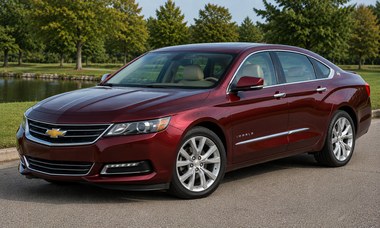
Which Chevy Impala years are the most reliable? Which years should you avoid or inspect more carefully, and can a well-maintained Impala realistically last 200,000 miles?
The Chevrolet Impala has an unusually complicated modern history. From 2000 through 2020, Chevrolet sold three distinct generations with engines ranging from the durable 3.8-liter V6 to a 5.3-liter V8 and, later, the 3.6-liter V6. Chevrolet even sold two different Impalas at the same time during the middle of the 2010s.
That makes model year alone a poor way to judge an Impala. Engine, transmission, generation and maintenance history can make a substantial difference in how reliable one is likely to be.
This guide covers 2000 through 2020 Chevrolet Impala models, including the fleet-oriented Impala Limited that continued using the previous-generation design after the redesigned Impala arrived for 2014.
In This Guide You'll Learn
- Which Chevy Impala years are generally the best used buys
- Which Impala years deserve extra caution
- How reliability differs between the major generations
- Why the 3.8L V6 has such a strong durability reputation
- How the 3.5L, 3.9L and 3.6L V6 engines compare
- What to know about the Impala SS and its 5.3L V8
- Which transmission problems matter most
- How the Impala Limited differs from the redesigned Impala
- Whether an Impala can last 150,000, 200,000 or more miles
- What to inspect before buying a high-mileage used Impala
Chevy Impala Reliability Overview
Overall, the modern Chevrolet Impala can be a durable and relatively inexpensive used sedan, but reliability varies considerably between generations and powertrains.
The 2000-2005 Impala is particularly interesting because of GM's 3.8-liter 3800 V6. The engine earned a strong reputation for longevity and can run well beyond 200,000 miles when properly maintained. At this age, however, the engine may be the least of your concerns. Transmission wear, cooling-system problems, rust, suspension deterioration and electrical failures can determine whether an old Impala remains worth owning.
The 2006-2013 Impala became one of Chevrolet's most common large sedans and was widely used by families, rental companies, fleets and law-enforcement agencies. Most used the 3.5-liter or 3.9-liter V6, while the Impala SS briefly offered a 5.3-liter V8. For 2012, Chevrolet replaced the older V6 choices with a considerably more powerful 3.6-liter V6 and six-speed automatic.
The 2014-2020 redesigned Impala is a very different car. It is larger, quieter, more sophisticated and generally more desirable as an everyday sedan. The available 3.6-liter V6 provides strong performance, while a 2.5-liter four-cylinder was also offered. These cars avoid some of the age-related problems now affecting earlier Impalas but introduce more electronics and considerably greater system complexity.
One potential source of confusion is the Impala Limited. Chevrolet continued producing the previous-generation Impala for fleet customers after the redesigned 2014 Impala arrived. Therefore, a 2014-2016 Impala Limited should not be evaluated as though it were the same vehicle as a redesigned 2014-2016 Impala.
Bottom Line: The Impala can absolutely be a reliable used car, and 200,000 miles is realistic for a good example. The strongest choices tend to combine a proven engine with a well-maintained transmission and documented service history. On older Impalas, overall condition matters more than simply finding the model year with the best reputation.
More On Chevy Model Reliability?
See our Chevrolet Reliability Guide for the best used Chevy models and years, common problems to watch for, best years to buy or those to avoid, and more.
Chevy Impala Reliability at a Glance
| Impala Years | Reliability Outlook |
|---|---|
| 2000-2005 | Strong 3.8L engine available; age, transmission condition, cooling system and rust now matter greatly |
| 2006-2011 | Generally durable and inexpensive, but transmission and age-related problems deserve attention |
| 2012-2013 | Strong late-generation choices with 3.6L V6 and six-speed automatic |
| 2014-2016 Impala Limited | Continuation of older design; simple and familiar but often fleet-used |
| 2014-2016 Redesigned Impala | Much more refined, but earlier years of the new generation deserve somewhat more scrutiny |
| 2017-2020 | Among the most attractive modern used Impalas when maintenance history is good |
Chevy Impala Reliability by Generation
2000-2005 Chevy Impala: Eighth Generation
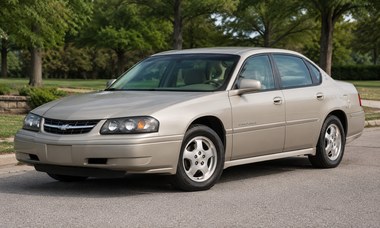
Chevrolet revived the Impala name for the 2000 model year as a front-wheel-drive sedan. These cars shared much of their engineering with other GM vehicles of the period, which means replacement parts remain relatively familiar and the mechanical systems are well understood by independent repair shops.
The two principal engines were a 3.4-liter V6 and the better-known 3.8-liter 3800 V6. Performance-oriented Impala SS models used a supercharged version of the 3.8-liter engine.
3.4L V6 Reliability
The 3.4-liter V6 can accumulate high mileage, but it does not have quite the same reputation as the 3.8-liter engine.
One of the most important concerns is intake-manifold gasket leakage. Coolant leaks can become serious if ignored, particularly if coolant contaminates the engine oil or the engine is allowed to overheat.
When looking at an old 3.4-liter Impala, check coolant level and condition, look for signs of previous leakage and inspect the oil for anything suggesting coolant contamination.
The engine can still be a reasonable choice when properly maintained, but if two similarly preserved early Impalas were available, I'd generally prefer the 3.8-liter.
3.8L 3800 V6 Reliability
The 3.8-liter 3800 Series II V6 is one of the strongest reasons older Impalas remain interesting to budget-minded used-car buyers.
The basic engine is well known for longevity. Properly maintained examples can exceed 200,000 miles, and considerably higher mileage is possible.
That does not mean the 3800 is trouble-free. Intake components and coolant leaks deserve attention, and age can bring oil leaks, ignition problems, sensors and other accessory failures. Some 3800 applications have also experienced problems involving the plastic upper intake manifold and related coolant passages.
Those issues are different from having a fundamentally short-lived engine. Many repairs are well understood, and the basic rotating assembly of the 3800 has a strong durability record.
Supercharged 3.8L Impala SS Reliability
The 2004-2005 Impala SS used a supercharged 3.8-liter V6. The underlying 3800 architecture remains durable, and the supercharged engine can last a long time when properly maintained.
However, an SS deserves a little more scrutiny because performance models are more likely to have been driven aggressively or modified. Supercharger maintenance, transmission condition and evidence of aftermarket tuning should all be considered.
A stock, well-maintained SS is a much safer bet than a heavily modified example with little documentation.
2000-2005 Impala Transmission Reliability
These Impalas use versions of GM's 4T65E four-speed automatic transmission. This transmission is probably a greater long-term concern than the 3.8-liter engine.
As mileage rises, problems can include harsh shifts, slipping, delayed engagement, pressure-control issues and eventual internal wear. Cars equipped with the supercharged engine place additional demands on the transmission.
During a road test, make sure the transmission shifts smoothly both when cold and after the car reaches operating temperature.
Common 2000-2005 Impala Problems
- Intake-manifold and coolant leaks
- 3.4L intake-manifold gasket problems
- 4T65E automatic transmission wear
- Harsh or delayed shifting
- Ignition and sensor problems
- Power-window and door-lock failures
- Instrument and electrical problems
- Wheel-bearing and hub wear
- Suspension-component wear
- Oil leaks as mileage increases
- Rust in corrosion-prone regions
Buyer Tip: A 2000-2005 Impala with the 3.8L can still be an inexpensive and durable car, but don't buy one based on the engine's reputation alone. At this age, transmission condition, rust and previous maintenance can matter more than the engine itself.
2006-2013 Chevy Impala: Ninth Generation
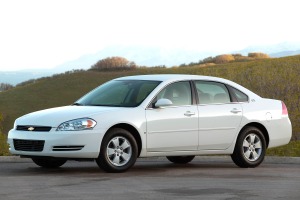
The Impala was redesigned for 2006 but remained a front-wheel-drive sedan with relatively conventional mechanical components. Millions of these cars entered private, rental and fleet service, making parts availability and repair knowledge generally excellent.
The generation is more complicated than it first appears because Chevrolet changed engines during the production run. Earlier cars primarily used 3.5-liter and 3.9-liter V6 engines, while the Impala SS received a 5.3-liter V8. For 2012, Chevrolet introduced the 3.6-liter V6 and a six-speed automatic transmission.
3.5L V6 Reliability
The 3.5-liter V6 was the workhorse engine for many 2006-2011 Impalas. It isn't particularly exotic, and that can be an advantage today.
With regular oil changes and cooling-system maintenance, these engines can reach high mileage. Common age-related concerns include coolant leaks, oil leaks, ignition problems, sensors and worn engine mounts.
Because so many 3.5-liter Impalas were sold into rental and fleet service, vehicle history matters. A privately owned car with maintenance records can be a substantially different proposition from an inexpensive former fleet car with an uncertain past.
3.9L V6 Reliability
The 3.9-liter V6 provides additional power while sharing much of the basic character of GM's contemporary pushrod V6 engines.
It can be durable, but there isn't enough of a reliability advantage to justify choosing a poorly maintained 3.9-liter car over a cleaner 3.5-liter example.
As with the 3.5, inspect for oil and coolant leaks, rough running, worn mounts and evidence that routine maintenance was postponed.
5.3L V8 Impala SS Reliability
The 2006-2009 Impala SS is one of the more unusual modern Impalas because Chevrolet installed a 5.3-liter V8 in a front-wheel-drive sedan.
The engine produces strong performance and comes from GM's broader small-block V8 family, but the Impala version uses Active Fuel Management cylinder deactivation. That introduces additional hardware compared with simpler earlier GM V8s.
AFM-related lifter trouble and oil consumption deserve attention, especially on a high-mileage example. The front-wheel-drive transmission also has to cope with considerably more torque than in an ordinary V6 Impala.
The V8 SS can be an enjoyable and distinctive used car, but I wouldn't select one specifically because I wanted the cheapest or simplest Impala to own.
2012-2013 3.6L V6 Reliability
The 2012 and 2013 Impala are particularly interesting because Chevrolet substantially updated the powertrain late in the generation.
The 3.6-liter V6 brought a major increase in horsepower and was paired with a six-speed automatic rather than the older four-speed. The result is a noticeably quicker and more modern-feeling car.
The 3.6-liter uses dual overhead camshafts, variable valve timing and timing chains, making oil-change history especially important. Extended oil-change intervals or chronically low oil can accelerate timing-chain and valvetrain wear.
When maintained properly, however, the 3.6 can provide strong performance and high-mileage durability. The 2012-2013 cars deserve serious consideration for someone who wants the older Impala's relatively simple chassis with a more modern powertrain.
2006-2011 Impala Transmission Reliability
Most earlier ninth-generation Impalas continued with a four-speed automatic. Transmission wear remains one of the more expensive potential problems as these cars accumulate mileage.
Watch for slipping, delayed engagement, hard shifts and erratic behavior once the transmission is fully warmed up.
A transmission that behaves normally during the first few minutes of a cold test drive can begin shifting poorly after 20 minutes, so don't make the road test too short.
2012-2013 Six-Speed Automatic
The six-speed automatic paired with the 3.6-liter engine gives the 2012-2013 Impala better acceleration and more relaxed highway operation than the earlier four-speed cars.
As with any high-mileage automatic, service history matters. Harsh shifting, slipping or delayed engagement should not be dismissed simply because the car otherwise drives well.
Common 2006-2013 Impala Problems
- Automatic transmission wear and shifting problems
- Door-lock actuator failures
- HVAC blend-door actuator clicking or failure
- Wheel-bearing and hub problems
- Front suspension and steering wear
- Oil and coolant leaks
- Engine-mount deterioration
- Electrical and instrument-panel problems
- Timing-chain concerns when 3.6L oil maintenance has been neglected
- AFM-related concerns on 5.3L V8 models
Buyer Tip: Don't overlook the 2012-2013 Impala simply because its body looks much like the older 2006-2011 car. The 3.6L V6 and six-speed automatic make these final two retail years mechanically significant and potentially attractive used buys.
2014-2016 Chevy Impala Limited
The arrival of an all-new Impala for 2014 did not immediately end production of the previous car. Chevrolet continued building the older design primarily for fleet customers under the Impala Limited name.
That distinction matters when shopping used. A 2015 Impala Limited is fundamentally an extension of the 2006-2013 generation, not a lower-trim version of the redesigned 2015 Impala.
The Limited uses the 3.6-liter V6 and six-speed automatic introduced for 2012. Mechanically, that means much of the same buyer advice applies: check oil-change history, transmission operation, suspension condition and electrical accessories.
The biggest additional concern is previous fleet use. Many Impala Limiteds served as rental cars, company vehicles, government cars or other fleet transportation. Fleet ownership is not automatically bad—some fleets maintain vehicles very carefully—but it makes history particularly important.
Buyer Tip: If an advertisement simply says "2015 Chevy Impala," determine whether you're looking at an Impala Limited or the redesigned Impala. They are entirely different cars despite sharing the Chevrolet Impala name and model year.
2014-2020 Chevy Impala: Tenth Generation
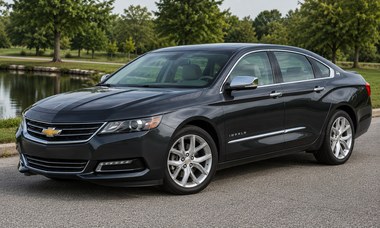
The redesigned Impala introduced for 2014 represented a dramatic improvement in refinement. It has a more spacious and upscale interior, quieter highway ride, more sophisticated electronics and much more contemporary styling.
For someone who wants an Impala as a comfortable everyday sedan rather than simply inexpensive transportation, this is generally the generation I'd concentrate on.
Most shoppers will encounter either the 2.5-liter four-cylinder or the much more powerful 3.6-liter V6.
2.5L Four-Cylinder Reliability
The naturally aspirated 2.5-liter four-cylinder provides adequate performance and can be a reasonable choice for someone prioritizing fuel economy over acceleration.
It does not have a turbocharger, which eliminates one potential source of long-term repair expense. However, the full-size Impala is a fairly large car, and the four-cylinder has to work harder than the V6 during acceleration or when heavily loaded.
Maintenance history remains important, particularly regular oil changes and cooling-system care.
3.6L V6 Reliability
The 3.6-liter V6 is the engine I'd generally favor in the tenth-generation Impala. It suits the car's size better and provides strong acceleration without a dramatic fuel-economy penalty for many drivers.
The engine can last well beyond 150,000 miles when properly maintained, but oil service is particularly important. Timing-chain and valvetrain systems depend on clean oil and proper oil level.
Listen for abnormal rattling during a cold start, check for stored engine codes and look for evidence that previous owners followed reasonable oil-change intervals.
2014-2016 Impala Reliability
The first few years of the redesigned Impala are generally appealing cars, but as with most new generations, they accumulated some early-production issues.
Electrical glitches, infotainment problems, HVAC concerns and assorted sensors or electronic components deserve attention. A 2014 should generally receive a little more scrutiny simply because it was the first year of the redesign.
That doesn't make 2014 a year that automatically needs to be avoided. Condition and maintenance can easily outweigh the difference between a well-kept 2014 and a neglected later car.
2017-2020 Impala Reliability
The later years are among the most attractive modern Impalas. By this point the basic platform had been in production for several years, while the cars were still new enough to avoid many of the age-related problems affecting older generations.
A 2017-2020 Impala with the 3.6-liter V6 can be a particularly appealing used sedan for someone who wants strong highway performance, substantial passenger room and a conventional naturally aspirated engine.
These cars still require careful inspection. Electronic systems, A/C operation, suspension wear and transmission behavior should all be checked, especially as mileage moves beyond 100,000.
The Impala ended production after the 2020 model year, so later examples also represent the newest used Impalas available.
Common 2014-2020 Impala Problems
- Infotainment and touchscreen problems
- Electrical glitches and warning messages
- HVAC and air-conditioning problems
- Battery and charging-system issues
- Suspension and wheel-bearing wear
- Engine mounts and vibration as mileage increases
- Oil leaks on higher-mileage engines
- Timing-chain concerns when 3.6L oil service has been neglected
- Automatic transmission shift-quality problems on some cars
Buyer Tip: If your budget allows, a well-maintained 2017-2020 Impala—particularly with the 3.6L V6—is one of the first versions I'd investigate. It combines the mature years of the final generation with enough ownership history to make a meaningful reliability assessment.
Also, Know Your Trade-In Value
While you're narrowing down your next vehicle choice, it's also highly recommended that you know the value of your trade-in. Having a realistic appraisal is necessary to establish your budget as well as negotiate a better overall deal. Here's a good source for a quick and accurate appraisal: free trade-in appraisal.
What Are the Biggest Chevy Impala Reliability Differences?
Across the 2000-2020 model years, several distinctions matter much more than the Impala nameplate itself.
- 3.4L vs. 3.8L: Both can last, but the 3.8L 3800 V6 has the stronger overall durability reputation.
- Engine vs. transmission: On older 3.8L cars, the automatic transmission may become a major concern before the engine does.
- 3.5L and 3.9L: Generally straightforward engines capable of high mileage, but overall vehicle condition now matters greatly.
- 2012-2013: The switch to the 3.6L V6 and six-speed automatic makes these substantially different from earlier ninth-generation Impalas.
- Impala Limited: A 2014-2016 Limited is the old-generation car and should not be confused with the redesigned Impala sold during the same years.
- 5.3L SS: Powerful and interesting, but AFM, transmission stress and previous hard use make it less attractive for someone seeking minimum ownership costs.
- 2014-2020 redesign: Much more refined and modern, with the 3.6L V6 generally the powertrain I'd favor.
- Maintenance history: Regular oil changes are particularly important on 3.6L engines because neglected oil can contribute to expensive timing-chain and valvetrain problems.
Bottom Line: For an inexpensive older Impala, the 3.8L-powered 2000-2005 cars remain interesting if the body and transmission are healthy. The 2012-2013 models are attractive late examples of the older design, while a well-maintained 2017-2020 3.6L Impala is one of the strongest choices for someone who wants a newer, more refined used sedan.
What Are The Best Chevy Impala Years to Buy?
The best Impala years depend on whether you want inexpensive transportation or a newer, more refined sedan. There are good choices in all three modern generations, but a few year groups stand out.
| Impala Years | Why They Stand Out |
|---|---|
| 2003-2005 with 3.8L V6 | Durable 3800 V6 and simple mechanical design; condition and transmission health are now critical |
| 2010-2011 | Late examples of the older 3.5L/3.9L design with years of production refinement |
| 2012-2013 | Strong 3.6L V6, six-speed automatic and mature ninth-generation platform |
| 2017-2020 | Later years of the much-improved final generation; 3.6L V6 models are especially appealing |
Best Budget Choice: A clean 2003-2005 Impala with the 3.8L V6 can still provide inexpensive transportation, but only if rust and transmission condition are acceptable. At this age, buying the individual car matters much more than buying a particular year.
Best Older Modern Choice: The 2012-2013 Impala deserves particular consideration. Chevrolet combined the mature older chassis with the much more powerful 3.6L V6 and six-speed automatic, creating a significantly different car from the 2006-2011 versions.
Best Overall Choice: If your budget allows, I'd put a well-maintained 2017-2020 Impala with the 3.6L V6 near the top of the list. These cars provide the refinement of the final generation while avoiding the first few years of the redesign.
Which Chevy Impala Years Should You Avoid Or Require Extra Caution?
There aren't many Impala years that should automatically be rejected, but several groups deserve more scrutiny.
| Impala Years | Why Use More Caution |
|---|---|
| 2000-2002 | Earliest eighth-generation cars; age, cooling-system problems, transmission wear and rust are now major considerations |
| 2006 | First year of the ninth-generation redesign |
| 2006-2009 SS | 5.3L V8 performance models can have AFM concerns, transmission stress and a greater chance of previous hard use |
| 2014 Redesigned Impala | First year of the completely new tenth-generation car; inspect electronics and accessories carefully |
| 2014-2016 Impala Limited | Not necessarily unreliable, but many were fleet vehicles and their previous usage can vary dramatically |
Buyer Takeaway: With an older Impala, "avoid" is often too absolute. A documented 2006 with 90,000 well-maintained miles may be a better purchase than a neglected 2012 with 140,000 miles. Use the model year to identify what deserves inspection, then judge the actual car.
Pricing
Knowing which Impala model years to concentrate on is step 1. Step 2 is knowing how to actually get an excellent Impala price.
Which Chevy Impala Generation Is Most Reliable?
If we're judging strictly by engine simplicity and demonstrated high-mileage durability, the 2000-2005 Impala equipped with the 3.8L 3800 V6 has a strong argument.
The problem is that these cars are now old. Even a durable engine cannot prevent deterioration of transmissions, cooling systems, suspension components, wiring, rubber seals and body structure.
For a used buyer today, the 2014-2020 tenth generation is arguably the better overall reliability proposition because the cars are substantially newer and the basic 3.6L powertrain has accumulated enough history to evaluate reasonably well.
Within that generation, I'd generally favor 2017-2020 over the earliest 2014 cars.
The 2012-2013 cars occupy an interesting middle ground. They retain the simpler and less expensive older Impala platform while benefiting from the 3.6L V6 and six-speed transmission.
Which Chevy Impala Engine Is Most Reliable?
The Impala has used several durable engines, but they aren't equally attractive for every buyer.
3.8L 3800 V6
If the question is which modern Impala engine has the strongest reputation for sheer longevity, the 3.8-liter 3800 V6 is difficult to overlook.
The basic engine is capable of well over 200,000 miles. Intake and cooling-system problems can occur, but they are well understood and do not erase the engine's fundamentally strong durability record.
Today, the challenge is finding a 3.8L Impala whose transmission, body and other systems are in condition worthy of the engine.
3.5L and 3.9L V6
The 3.5L and 3.9L engines don't have quite the enthusiast reputation of the 3800, but both can provide long service when properly maintained.
They are relatively conventional engines, and parts and repair expertise are widely available. For someone looking at a 2006-2011 Impala, I would put more emphasis on the car's maintenance history and transmission condition than on choosing between the 3.5 and 3.9.
3.6L V6
The 3.6L V6 is probably the best engine choice for someone shopping the newer Impalas. It produces substantially more power than the older V6 engines and suits the size and character of the final-generation car very well.
Its main reliability requirement is disciplined oil maintenance. The engine's timing chains, variable valve timing and internal components depend on proper oil level and reasonably frequent oil changes.
A 3.6L Impala with detailed oil-change records is much more attractive than one whose owner routinely stretched oil intervals or allowed the engine to run low.
5.3L V8
The 5.3L V8 in the 2006-2009 Impala SS is powerful and unusual, but it wouldn't be my first choice if reliability and low repair costs were the primary goals.
AFM hardware adds complexity, and the additional torque places greater stress on the front-wheel-drive transmission. Many surviving SS models have also been driven harder than ordinary Impalas.
Bottom Line: The 3.8L 3800 wins for old-fashioned durability and simplicity. For someone buying a substantially newer Impala, the 3.6L V6 is the engine I'd generally choose, provided there is evidence of consistent oil maintenance.
Chevy Impala Transmission Reliability
The transmission is one of the most important components to evaluate on any high-mileage Impala.
Four-Speed Automatic
Older Impalas used four-speed automatic transmissions from GM's 4T65E family. These transmissions can last a long time, but they don't have the nearly indestructible reputation sometimes associated with the 3800 engine they're paired with.
As mileage increases, watch for:
- Harsh shifts
- Delayed engagement into Drive or Reverse
- Slipping under acceleration
- Engine-speed flare between shifts
- Erratic shifting after the transmission warms up
- Transmission-fluid leaks
On a 200,000-mile 3.8L Impala, the original engine may still be perfectly healthy while the transmission has already been rebuilt or is approaching that point.
Six-Speed Automatic
The six-speed automatic introduced with the 3.6L engine for 2012 gives the Impala much better performance and highway gearing.
These transmissions can provide high-mileage service, but fluid condition and previous maintenance remain important. Harsh shifts, slipping or delayed engagement should be investigated rather than assumed to be normal.
Buyer Tip: Always test-drive an older Impala long enough for the transmission to reach operating temperature. Some transmission problems become much more noticeable after 15 or 20 minutes of driving.
Most Common Chevy Impala Problems
Specific trouble areas vary by generation, but the following problems are among the most important to investigate when buying a used Impala.
1. Automatic Transmission Problems
Transmission wear is one of the most expensive concerns on older Impalas. Slipping, hard shifts and delayed engagement deserve immediate attention.
A transmission problem does not necessarily make an otherwise excellent car worthless, but the purchase price needs to reflect the potential repair cost.
2. Intake-Manifold and Coolant Leaks
Older 3.4L and 3.8L engines can develop intake-related coolant leaks. The exact failure differs between engines, but coolant loss should never be ignored.
Look for low coolant, dried coolant residue, unexplained overheating and evidence that coolant has contaminated the engine oil.
3. HVAC Blend-Door Actuators
One of the more familiar annoyances on some Impalas is a failed HVAC actuator. A repeated clicking or knocking noise from behind the dashboard after starting the car or changing climate-control settings is a common symptom.
This usually isn't catastrophic, but it can be irritating and labor-intensive depending on which actuator has failed.
4. Wheel Bearings and Hubs
Wheel-bearing and hub assemblies can wear as mileage accumulates. Symptoms include humming or growling that changes with road speed and, in some cases, ABS or traction-control warning lights.
5. Suspension and Steering Wear
Struts, control-arm bushings, tie-rod ends and other suspension components eventually wear, particularly on cars that spent years driving over rough roads.
Clunks, loose steering, poor alignment and uneven tire wear are clues that the front end needs attention.
6. Oil Leaks
Oil leaks become increasingly common as Impalas age. Valve-cover gaskets and other seals can deteriorate after years of heat cycles.
A small seep is very different from an engine that regularly loses enough oil to require topping off between changes. Low oil is particularly undesirable on the 3.6L V6.
7. Timing-Chain Problems on Neglected 3.6L Engines
The 3.6L V6 can develop timing-chain-related problems when oil changes have been neglected or the engine has repeatedly operated with insufficient oil.
Warning signs can include check-engine lights, timing-related trouble codes, rough running and abnormal rattling.
This is one reason service records are unusually valuable when buying a high-mileage 3.6L Impala.
8. Electrical and Infotainment Problems
The final-generation Impala has substantially more electronic equipment than its predecessors. Touchscreen, infotainment, battery, camera and other electronic problems can occur.
Before buying, operate everything. Don't assume a malfunctioning screen, camera or climate-control feature will be inexpensive to repair.
9. Air-Conditioning Problems
Air-conditioning problems become increasingly likely as any Impala ages. Test the system at idle as well as while driving and make sure airflow changes correctly between vents.
10. Rust
Rust can be a more serious threat than engine failure on the oldest Impalas, particularly cars from regions where road salt is heavily used.
Inspect the rocker panels, subframe, suspension mounting areas, brake and fuel lines and the underside of the body. Cosmetic surface rust is different from structural corrosion.
How Long Does a Chevy Impala Last?
A well-maintained Chevy Impala can realistically last 150,000 to 200,000 miles, and many examples exceed 200,000 miles.
The 3.8L 3800 engine is particularly capable of very high mileage, but an Impala's ultimate lifespan depends on much more than the engine. Transmission repairs, rust, suspension wear, electrical failures and accumulated smaller repairs eventually determine whether keeping the car makes economic sense.
Is 100,000 Miles Too Much for a Used Impala?
No. A properly maintained Impala with 100,000 miles can still have a substantial amount of useful life remaining.
At this mileage, however, you should begin looking beyond the odometer. Ask whether transmission service has been performed, whether cooling-system maintenance is current and whether suspension, brakes, wheel bearings and other wear items have already been replaced.
Should You Buy an Impala With 150,000 Miles?
A 150,000-mile Impala can still be a good inexpensive car if it has been maintained and the price reflects the mileage.
I'd rather own a 150,000-mile Impala with service records, a smooth transmission and a dry engine than a 90,000-mile example with no maintenance history and obvious signs of neglect.
Can a Chevy Impala Last 200,000 Miles?
Yes. Two hundred thousand miles is a realistic lifespan for a well-maintained Impala.
Cars equipped with the 3.8L V6 have demonstrated particularly strong high-mileage potential, but 3.5L, 3.9L and 3.6L Impalas can also reach this mileage with proper care.
Chevy Impala Maintenance and Repair Costs
One advantage of the Impala is that most versions use familiar GM components and do not normally require luxury-car repair prices. Independent shops are generally familiar with them, and parts availability is good.
| Repair or Service | Typical Cost Range |
|---|---|
| Oil and filter change | $60-$120 |
| Brake pads and rotors | $450-$950+ |
| Spark plugs | $200-$500+ |
| Wheel bearing/hub | $350-$750+ each |
| HVAC actuator | $200-$700+ |
| Water pump | $500-$1,200+ |
| Struts and suspension work | $700-$1,800+ |
| Intake-manifold repair | $700-$1,500+ |
| Timing-chain repair on 3.6L | $1,800-$3,500+ |
| Transmission rebuild/replacement | $3,500-$6,500+ |
| Engine replacement | $4,500-$8,500+ |
These are broad repair ranges rather than quotes. Labor rates, engine choice, location and whether new, remanufactured or aftermarket parts are used can change the actual cost substantially.
On an inexpensive older Impala, repair economics matter. A $1,000 suspension repair may make sense on an otherwise excellent car. A $5,000 transmission replacement may not make sense on a severely rusted car with several other problems waiting.
How Can You Offset Future Repair Costs?
A strong trade-in allowance can help offset at least some of these future expenses. See KBB versus Edmunds Appraisals - Which Is Better for more on getting accurate and fair trade-in values.
Maintenance to Expect After 100,000 Miles
If you're buying an Impala with more than 100,000 miles, budget for maintenance even if the car currently runs perfectly.
- Engine oil and filter changes
- Transmission-fluid condition and service-history review
- Coolant replacement if overdue
- Spark plugs
- Serpentine belt and tensioner inspection
- Brake-fluid condition
- Brake pads and rotors
- Wheel-bearing inspection
- Struts, control arms and steering components
- Engine and transmission mounts
- Battery and charging-system test
- Cooling hoses and water-pump inspection
- Oil-leak inspection
- Intake and cooling-system inspection on older 3.4L and 3.8L engines
For a 3.6L Impala, I'd also pay particularly close attention to oil-change history. Saving money by stretching oil intervals is a poor trade when the potential consequence is expensive timing-chain work.
What to Check Before Buying a Used Chevy Impala
A good pre-purchase inspection can be worth far more than the cost of having the car examined.
- Start the engine cold: Listen for rattles, knocks and unusual startup noises.
- Check the coolant: Look for low level, contamination or evidence of previous leaks.
- Inspect the engine oil: Make sure it isn't extremely low or showing signs of coolant contamination.
- Scan for trouble codes: Look for active, pending and recently cleared codes.
- Road-test the transmission: Drive long enough for it to reach full operating temperature.
- Listen to the HVAC system: Repeated clicking behind the dashboard can indicate actuator problems.
- Test the A/C: Make sure it cools properly at idle and while driving.
- Listen for wheel-bearing noise: A humming or growling sound that changes with speed deserves investigation.
- Inspect the suspension: Look for clunks, uneven tire wear and poor steering response.
- Check underneath for rust: Particularly important on 2000-2013 cars from snow-belt states.
- Verify which Impala you're buying: A 2014-2016 Impala Limited is not the same car as the redesigned Impala.
- Check fleet history: Particularly important with Impala Limited models.
- Review oil-change records: Especially important on the 3.6L V6.
- Test every electronic feature: Particularly on the 2014-2020 generation.
Chevy Impala Pros and Cons
Pros
- Several engines capable of high mileage
- 3.8L 3800 V6 has an excellent durability reputation
- Generally affordable replacement parts
- Widely understood by independent repair shops
- Comfortable highway ride
- Large passenger compartment and trunk
- 2012-2013 models offer strong performance at relatively low used prices
- 2014-2020 generation is substantially more refined
- 3.6L V6 provides excellent power in later models
- 200,000-mile lifespan is realistic with proper maintenance
Cons
- Automatic transmissions can become expensive trouble spots on older cars
- Intake and coolant leaks affect some earlier engines
- Older examples can have substantial rust
- HVAC actuators and electrical accessories can fail
- 3.6L engines are less tolerant of neglected oil maintenance
- Some Impala Limited models have extensive fleet histories
- Final-generation cars have more electronic systems that can malfunction
- 5.3L SS models add AFM and greater drivetrain stress
Final Buyer Summary: Is the Chevy Impala Reliable?
Yes. A carefully selected Chevy Impala can be a reliable and relatively inexpensive used car, and 200,000 miles is a realistic target for a properly maintained example.
If you're shopping at the inexpensive end of the market, a 2003-2005 Impala with the 3.8L 3800 V6 remains interesting because the engine itself is exceptionally durable. The challenge is finding a car whose transmission, cooling system, suspension and body have survived equally well.
Among the 2006-2013 cars, the 2012-2013 Impala deserves special attention. Its 3.6L V6 and six-speed automatic provide substantially better performance than earlier versions while retaining the mature older-generation chassis.
Don't confuse the 2014-2016 Impala Limited with Chevrolet's redesigned Impala. The Limited is essentially a continuation of the previous generation and was sold primarily to fleets, making previous usage and maintenance history particularly important.
If you want the best combination of modern comfort, available reliability history and remaining useful life, I'd concentrate heavily on a 2017-2020 Impala with the 3.6L V6. These later cars are powerful, spacious and refined while avoiding the first model years of the redesign.
Regardless of generation, don't allow a reputation for a durable engine to distract you from the rest of the vehicle. Transmission condition, rust, oil-change history, cooling-system maintenance and previous ownership can make two identical-year Impalas completely different used-car purchases.
Buyer Takeaway: The Impala's strongest used-car advantage is that you don't need to find a perfect low-mileage example to get a dependable car. A well-maintained Impala with 100,000 to 150,000 miles can still have substantial life remaining. Choose the right powertrain, verify its maintenance history and have questionable cars inspected before buying.
What's Next?
Understand Dealer Fees
Before agreeing to a dealer's numbers, see which dealer fees are legitimate, which can be negotiated, and which can be avoided.