

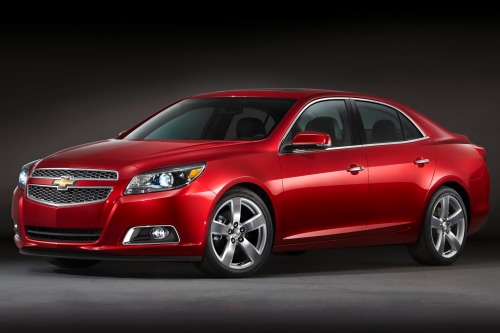
The 2013 Chevrolet Malibu is a comfortable midsize sedan with good highway manners, a quiet interior, and generally reasonable ownership costs. Reliability, however, is more mixed than you'll find with the best Toyota Camry and Honda Accord models from the same period. The Malibu can provide well over 200,000 miles of service, but choosing the right engine and finding a car that has been consistently maintained are especially important.
The most common engine is the naturally aspirated 2.5-liter four-cylinder, which provides adequate performance and good fuel economy. This engine is generally durable when properly maintained, although higher-mileage examples can develop oil leaks, timing-related noises, and other age-related problems. It is the engine I would generally favor for buyers looking for the simplest 2013 Malibu to own long term.
Chevrolet also offered the eAssist mild-hybrid system with a 2.4-liter four-cylinder engine and a more powerful turbocharged 2.0-liter four-cylinder. The 2.0-liter turbo provides considerably stronger acceleration but adds mechanical complexity that can increase repair costs as the vehicle ages. The eAssist model delivers better fuel economy but incorporates additional electrical and hybrid components that should be inspected carefully on an older vehicle.
The six-speed automatic transmission is generally dependable, although some higher-mileage Malibus develop harsh shifting, hesitation, or delayed engagement. Regular transmission fluid changes can help extend its life, and a vehicle with documented transmission maintenance is preferable to one that has gone 100,000 miles or more without service.
Most of the Malibu's other trouble areas involve electrical components, sensors, suspension wear, and normal age-related repairs rather than catastrophic mechanical failures. This is encouraging for used-car shoppers because many of these problems are relatively straightforward to identify during a pre-purchase inspection.
Overall, the 2013 Malibu is best viewed as an average-to-above-average used midsize sedan rather than a class leader for reliability. Its biggest advantage today is value: clean Malibus often sell for considerably less than comparable Camrys and Accords. That price difference can make one an attractive purchase if the vehicle has been properly maintained.
- Overall reliability: Average to Above Average
- Expected lifespan: 200,000 to 250,000+ miles with proper maintenance
- Best choice: 2.5-liter four-cylinder with documented maintenance history
- Watch for: Transmission operation, oil leaks, electrical problems, suspension wear, and complete service records
Bottom line: The 2013 Chevrolet Malibu can be a dependable and affordable used sedan, particularly with the naturally aspirated 2.5-liter four-cylinder. It doesn't have quite the long-term reliability reputation of a Camry or Accord, but a well-maintained example can still provide many years of economical transportation.
- Why it's a good choice: Comfortable ride, quiet cabin, reasonable fuel economy, affordable parts, and attractive used-car pricing
- Biggest concern: Maintenance history and age-related engine, transmission, and electrical problems
- Best version: 2.5-liter four-cylinder with a conventional six-speed automatic and complete service records
- Buy only if: The engine runs quietly, the transmission shifts properly, all electrical equipment works, and the vehicle passes a pre-purchase inspection
More On The Malibu's Reliability
To learn about the Malibu's reliability over different model years, be sure to see our Used Chevrolet Malibu Reliability Guide. This comprehensive guide will help you identify its best years as well as those to be avoided, and much more.
Is the 2013 Chevrolet Malibu a Good Year or One to Avoid?
The 2013 Chevrolet Malibu is not a model year I would automatically avoid, but it deserves a more careful inspection than some of the most reliable Japanese midsize sedans from the same period. It was also an important transition year for the Malibu, with Chevrolet introducing a substantially redesigned car and new powertrains.
The 2.5-liter four-cylinder is generally the version I would favor for a buyer interested primarily in reliability. It provides enough power for everyday driving without the added complexity of the turbocharger or eAssist system. A well-maintained example with a smooth transmission can be a very reasonable used-car purchase.
Price matters, however. If a comparable Camry or Accord costs only slightly more, their stronger long-term reliability records may justify paying the difference. If the Malibu is substantially less expensive and has an excellent maintenance history, the value proposition becomes much more attractive.
Buyer Takeaway: The 2013 Malibu is a "buy selectively" year rather than a clear buy or avoid. Favor the 2.5-liter four-cylinder, insist on maintenance records, and don't let a low asking price persuade you to overlook engine noises, transmission problems, warning lights, or neglected maintenance.
2013 Chevrolet Malibu Common Mechanical Problems
The 2013 Chevrolet Malibu does not suffer from one single problem that makes every example undesirable, but there are several mechanical and electrical trouble spots worth checking. Most become more common as mileage increases, making a thorough test drive particularly important on cars approaching or exceeding 100,000 miles.
- Automatic transmission shifting problems: Some Malibus develop harsh shifts, hesitation, delayed engagement, or inconsistent gear changes as mileage increases. Problems can range from software or fluid-related concerns to internal transmission wear. During the test drive, check operation when the transmission is both cold and fully warmed up, and be cautious of any noticeable slipping or banging between gears.
- Oil leaks: Higher-mileage engines may develop leaks from the valve cover, timing cover, crankshaft seals, or other gaskets. Minor seepage isn't unusual on an older vehicle, but significant oil loss can become expensive if multiple seals need replacement. Look underneath the engine and check for burnt-oil smells after the test drive.
- Timing chain and valvetrain noise: Poor oil-change history can contribute to timing chain, tensioner, or valvetrain wear. Rattling during startup or persistent ticking should be investigated rather than dismissed as normal engine noise. Regular oil changes with the correct oil are particularly important for long-term engine durability.
- Water pump and cooling system problems: Water pumps, thermostats, hoses, and other cooling system components can require replacement as the Malibu ages. Check the coolant level and inspect for dried coolant residue around the engine compartment. Any history of overheating deserves additional investigation.
- Electronic throttle body and sensor problems: Faulty throttle-body components or engine sensors can cause reduced power, hesitation, rough running, or warning lights. Some problems are relatively inexpensive to repair, but a vehicle displaying reduced-power warnings should be professionally diagnosed before purchase.
- Auto stop/start and eAssist issues: Cars equipped with the eAssist system have additional batteries, electronics, and related components that can become expensive as the vehicle ages. Confirm that the system operates correctly and that no hybrid-system or charging warnings appear on the dashboard.
- Turbocharger and boost-system problems (2.0-liter turbo): Turbocharged models can develop boost leaks, wastegate issues, oil leaks, or turbocharger wear at higher mileage. Watch for reduced acceleration, unusual whining noises, exhaust smoke, or check-engine lights during hard acceleration.
- Front suspension wear: Struts, control arm bushings, sway bar links, and other front suspension components may wear beyond 100,000 miles. Clunking over bumps, loose steering, excessive bouncing, or uneven tire wear can indicate that suspension work is needed.
- Wheel bearing wear: Worn wheel bearings can produce a humming or growling sound that increases with vehicle speed. The noise may change when turning slightly from side to side. Replacement isn't normally a reason to reject an otherwise good Malibu, but the cost should be considered when negotiating the price.
- Electrical and infotainment problems: Aging Malibus may experience problems with the MyLink infotainment system, power accessories, switches, sensors, or other electronics. Test every button, window, lock, display, camera, and climate-control function before purchasing.
- HVAC and blend-door actuator problems: Clicking behind the dashboard, incorrect air temperature, or airflow coming from the wrong vents can indicate a failing actuator. These aren't catastrophic problems, but labor costs can make seemingly minor HVAC repairs surprisingly expensive.
- Brake and ABS-related issues: Wheel-speed sensors and other ABS components can eventually trigger warning lights. Normal brake wear is also important on an older Malibu, so inspect rotor condition and check for pulsation or pulling while braking.
None of these problems automatically makes the 2013 Malibu a bad used car. What matters is whether several of them have accumulated on the same neglected vehicle. A Malibu needing tires, suspension work, an oil-leak repair, and transmission attention can quickly turn a bargain purchase price into an expensive mistake.
Buyer Tip: Test-drive the Malibu long enough for the engine and transmission to reach full operating temperature. Listen to the engine during a cold start, check carefully for fluid leaks, test every electrical accessory, and pay particular attention to transmission shift quality. Maintenance records showing regular oil and transmission service add considerable value.
Also, if you're serious about buying soon, I'd highly recommend reading my most effective negotiation method for used cars, which details a quick way to identify the dealerships most motivated to "deal", no matter how busy they may seem, and how to follow up once you've found them. This can be the difference between getting a good price and getting a great one. And a variation of it is my top method for new cars, if you are also exploring that market.
You can see them here at used cars and new cars.
2013 Chevrolet Malibu Pros and Cons
The 2013 Malibu's strongest argument as a used car is value. It provides a comfortable, quiet midsize sedan at prices that are often considerably lower than the most popular Japanese alternatives. Its disadvantages primarily involve less consistent long-term reliability and the possibility of more age-related repairs.
Pros
- Comfortable highway ride: The Malibu is well suited to commuting and longer trips, with a suspension tuned more for comfort than aggressive handling.
- Quiet interior: Road and wind noise are well controlled for an affordable midsize sedan, giving the Malibu a more substantial highway feel than some compact cars in the same price range.
- Good 2.5-liter engine: The naturally aspirated four-cylinder provides a reasonable combination of fuel economy, performance, and mechanical simplicity.
- Affordable used-car prices: Depreciation works in the used buyer's favor. A clean Malibu can cost considerably less than a similar-year Camry or Accord.
- Widely available replacement parts: Parts availability is excellent, and many independent repair shops are familiar with Chevrolet's powertrains and chassis components.
- Reasonable repair costs: Many routine repairs are less expensive than comparable work on European sedans and some more complicated modern vehicles.
- Good safety and everyday practicality: The Malibu provides a substantial midsize-sedan feel with enough passenger and trunk space for everyday family use.
- Strong performance available: Buyers who prioritize acceleration can find considerably more power in the 2.0-liter turbo model, although it comes with additional maintenance considerations.
Cons
- Reliability isn't class-leading: The Malibu generally doesn't match the long-term reputation of the best Toyota Camry and Honda Accord years.
- Transmission condition varies: Higher-mileage examples with poor maintenance histories can develop shifting problems that significantly change the economics of buying the car.
- First-year redesign: As a substantially redesigned model, the 2013 Malibu introduced new components and powertrains that didn't have the benefit of several years of production refinement.
- Turbo models add complexity: The 2.0-liter turbo is enjoyable to drive but adds components that can increase repair costs on an older vehicle.
- eAssist can complicate an inexpensive used car: The mild-hybrid system improves efficiency but adds aging electrical components that a budget-minded buyer may prefer to avoid.
- Age-related electrical issues: Infotainment, sensors, switches, and HVAC actuators can create annoying and sometimes surprisingly costly repairs.
- Resale value is relatively weak: This helps when you're buying but means the Malibu generally won't retain its value as strongly as a comparable Camry or Accord.
- Condition varies considerably: Because these cars have become inexpensive, some examples have gone through periods of deferred maintenance. A low price should never substitute for a good inspection.
And another con ...
There are other numbers besides price that can significantly affect the final out-the-door cost. A well-negotiated selling price can quickly lose its advantage if the dealer makes up for the concession with a below-market trade-in offer. Also, dealer fees and add-ons can further increase the final cost, making it important to learn which fees you must pay, can negotiate, or should avoid.
To become better informed about these important but often-confusing parts of the deal, be sure to see my articles on trade-ins and dealer fees.
Buyer Takeaway: The 2013 Chevrolet Malibu is best suited to a value-conscious buyer who finds a clean, well-maintained 2.5-liter model at a meaningful discount compared with a similar Camry or Accord. It isn't the car I'd choose solely for maximum long-term reliability, but the right example can deliver a lot of comfortable transportation for the money. Avoid neglected cars and don't hesitate to pay more for documented maintenance and excellent mechanical condition.
Rivals
Other contenders from that year worthy of consideration would include the Ford Fusion, the Honda Accord, the Kia Optima, the Hyundai Sonata, the Mazda 6 and the Volkswagen Passat.
Also, More On Chevrolet Reliability: If you'd like to compare different Chevy models, or years, be sure to read our Chevrolet Reliability & Problems: Best Used Chevys & Years Guide. It highlights the models, best years to buy, common problems, and helps you choose the right Chevrolet for your needs.
Some Insider Insights: