

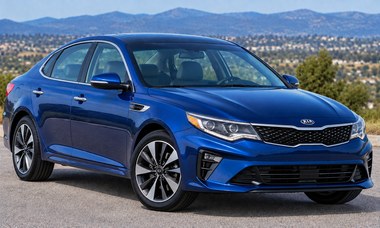
The Kia Optima can be an appealing used midsize sedan because prices are often low, equipment levels are generous, and later models still look relatively modern. But reliability varies dramatically by model year and engine, making the Optima a vehicle where knowing exactly what you're buying matters.
The biggest concern is well documented: certain 2011-2014 Optimas with the 2.4-liter GDI and turbocharged 2.0-liter GDI engines were included in Kia's Theta II engine recall because connecting-rod bearing wear could lead to knocking, engine damage, stalling, or complete engine failure. Later Optimas also received additional engine-monitoring campaigns, making recall and service history especially important when shopping used.
This guide covers U.S.-market Kia Optimas from 2001 through 2020. The Optima name was replaced by the K5 for 2021, so the K5 is not included here.
In This Guide You'll Learn
- Which Kia Optima model years are the most reliable
- Which Kia Optima years deserve extra caution
- What causes Theta II engine failure and which cars were recalled
- What a P1326 code can mean on a Kia Optima
- Which Optima engines are the better used-car choices
- Why some Optimas burn excessive amounts of oil
- What causes steering clunks, fuel smells, and other common problems
- How many miles a Kia Optima can realistically last
- What to inspect before buying a high-mileage Optima
Kia Optima Reliability Overview
Overall reliability is mixed. The Optima isn't a car I would judge by the nameplate alone. Some older examples have accumulated very high mileage without catastrophic problems, while certain 2011-2015 cars developed some of the most serious engine problems in the Optima's history.
The third-generation 2011-2015 Optima deserves the most scrutiny. Kia's 2017 Theta II recall covered specified 2011-2014 Optimas with the 2.4-liter GDI and 2.0-liter turbo GDI engines. Kia reported that manufacturing debris and crankshaft machining conditions could restrict oil flow to the connecting-rod bearings, potentially causing premature bearing wear and engine failure.
The redesigned 2016-2020 Optima improved in several areas and added more powertrain choices, but that does not mean every late Optima is automatically trouble-free. Engine history, oil consumption, completed campaigns, maintenance records, and the exact powertrain remain important.
Kia Optima Reliability at a Glance
| Category | What Used Buyers Should Know |
|---|---|
| Overall Reliability | Mixed; highly dependent on year, engine, maintenance, and recall history |
| Expected Mileage | About 150,000-200,000 miles is realistic for a well-maintained example; some exceed 200,000 |
| Biggest Concern | Connecting-rod bearing wear and engine failure on affected Theta II engines |
| Other Engine Concern | Oil consumption on some 2.4L GDI engines |
| Other Problems | Steering coupler wear, fuel-system recalls, electrical issues, suspension wear, and aging accessories |
| Years Requiring Closest Inspection | Especially 2011-2015, with engine and recall history being critical |
| Used-Buyer Priority | VIN recall check, engine history, oil level/consumption history, and maintenance records |
How Many Miles Can a Kia Optima Last?
A well-maintained Kia Optima can realistically last 150,000 to 200,000 miles, and some examples go beyond 200,000 miles. But the Optima is one of those vehicles where mileage alone can be misleading. A 140,000-mile car with a documented engine history and consistent maintenance may be a much safer purchase than an 80,000-mile Optima with unknown oil consumption and incomplete recall records.
At 100,000 miles, I would want evidence of regular oil changes, cooling-system maintenance, transmission servicing where appropriate, and prompt attention to warning lights or abnormal engine noises.
By 150,000 miles, normal age-related repairs become more likely, including suspension components, engine mounts, sensors, seals, cooling-system parts, and accessories. On GDI-powered cars, oil level and engine condition become especially important.
An Optima approaching 200,000 miles can still be usable, but I would buy primarily on condition and documented history rather than price. On affected Theta II cars, verify the vehicle's recall and campaign history by VIN rather than assuming that a particular model year was or wasn't covered.
Buyer comparison: Given the choice between a carefully maintained 130,000-mile Optima with extensive records and an 80,000-mile example with no meaningful service history, I would investigate the higher-mileage car first. Maintenance history matters that much on this model.
Kia Optima Reliability by Generation
2001-2005: First-Generation Kia Optima
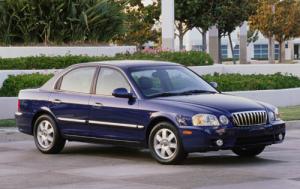
The first-generation Optima arrived as a relatively inexpensive alternative to established midsize sedans such as the Camry and Accord. U.S. models were offered with both four-cylinder and V6 engines, and these cars are mechanically simpler than the direct-injected and turbocharged Optimas that came later.
That simplicity is an advantage today, but age has become the dominant reliability issue. Even the newest first-generation Optima is now about two decades old, so the condition of the cooling system, seals, hoses, suspension, steering, transmission, electrical equipment, and body can matter more than the difference between individual model years.
The V6 provides noticeably stronger performance, but it also adds complexity and leaves less room to work in the engine compartment. The four-cylinder is generally the simpler choice for someone primarily interested in inexpensive transportation. With either engine, evidence of consistent maintenance is more valuable than unusually low mileage.
Timing-belt maintenance is particularly important on applicable engines. A seller who cannot document when the belt and related components were last serviced is effectively handing the next owner an immediate maintenance expense. Cooling-system condition also deserves attention because deteriorated hoses, radiators, thermostats, and other aging components can turn an otherwise usable older car into a poor purchase.
Common Problems on 2001-2005 Kia Optimas
- Oil and fluid leaks: Aging valve-cover gaskets, seals, and other rubber components can begin leaking as mileage and age accumulate.
- Cooling-system deterioration: Inspect for coolant leaks, deteriorated hoses, radiator problems, and any evidence that the engine has previously overheated.
- Suspension and steering wear: Worn bushings, ball joints, tie rods, struts, and other components can produce clunks, looseness, uneven tire wear, or poor alignment.
- Automatic-transmission problems: Harsh shifts, delayed engagement, slipping, or poorly maintained fluid are warning signs on a high-mileage example.
- Electrical and power accessories: Window regulators, switches, locks, sensors, and other electrical components become increasingly relevant simply because of the cars' age.
- Timing-belt maintenance: On engines requiring periodic belt replacement, missing service records should be treated as unfinished maintenance rather than assuming the previous owner completed it.
- Rust and deterioration: Cars from rust-prone climates deserve an underbody inspection, particularly around structural and suspension mounting areas.
Buyer Tip: Don't buy an early Optima simply because it has unusually low mileage. A 20-plus-year-old car that has spent years sitting can have deteriorated seals, hoses, brakes, tires, fluids, and other age-related problems. I would rather have a regularly driven 120,000-mile example with years of service records than a neglected 65,000-mile car whose maintenance history disappeared with its previous owners.
Bottom Line: The first-generation Optima can still work as inexpensive transportation, and it avoids the Theta II GDI bearing problems that complicate shopping for many later cars. But there are no longer enough pristine examples for model-year reputation to be the deciding factor. At this age, condition, maintenance history, rust, and evidence of major scheduled maintenance should determine whether the individual car is worth buying.
2006-2010: Second-Generation Kia Optima
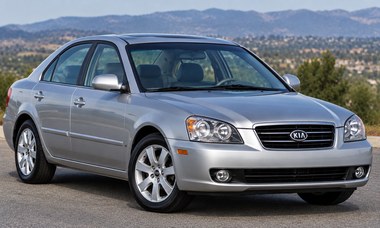
The second-generation Optima was a substantial improvement in refinement while remaining relatively conventional mechanically. U.S. buyers could choose four-cylinder or V6 power, and one of this generation's biggest advantages as a used car is what it doesn't have: it predates the direct-injected Theta II engines and the connecting-rod-bearing concerns that became such an important issue on the next-generation Optima.
There were meaningful changes within this generation. Earlier cars used a 2.4-liter four-cylinder or 2.7-liter V6, while the updated 2009-2010 Optima offered a more powerful 2.4-liter four-cylinder and a 2.7-liter V6. For today's used-car buyer, however, I wouldn't choose between these cars based on horsepower. Maintenance history and condition are far more important.
The four-cylinder is generally the version I'd investigate first if the goal is simple, inexpensive transportation. The V6 provides stronger acceleration but adds complexity and fuel consumption without transforming the Optima into a performance sedan. Either can be a reasonable choice when properly maintained, but a neglected example can quickly erase the savings from its low purchase price.
Age is now a major part of the reliability equation. Rubber engine and transmission mounts can deteriorate and contribute to vibration, suspension and steering components wear, seals and gaskets can begin leaking, and cooling-system components deserve close inspection. A car that drives quietly and tightly is considerably more attractive than one with multiple small problems simply because each inexpensive repair can add up.
Common Problems on 2006-2010 Kia Optimas
- Engine and transmission mounts: Worn mounts can produce excessive vibration at idle, clunks when shifting between Drive and Reverse, or noticeable engine movement under acceleration.
- Suspension and steering wear: Struts, bushings, ball joints, tie rods, and other components can cause clunks, looseness, uneven tire wear, or poor handling as mileage accumulates.
- Oil and fluid leaks: Inspect the engine and transmission for seepage or more significant leaks rather than assuming an oily engine is normal because of the car's age.
- Cooling-system deterioration: Aging hoses, radiators, thermostats, and other cooling components can eventually cause leaks or overheating if they've been neglected.
- Automatic-transmission behavior: The transmission should engage promptly and shift smoothly. Delayed engagement, slipping, harsh shifts, or obvious flaring between gears deserves further investigation.
- Electrical accessories and sensors: Check windows, locks, climate controls, warning lights, and other electrical equipment because small age-related failures become increasingly common on cars this old.
- Wheel bearings, brakes, and other wear items: These aren't unusual Optima-specific failures, but on a 15- to 20-year-old car several overdue wear items at once can make an apparently cheap purchase expensive.
The 2009-2010 Optimas are particularly worth investigating because they received the later updates while still retaining the relatively straightforward mechanical character of this generation. That doesn't automatically make a 2009 or 2010 better than a meticulously maintained earlier car, but they can represent an appealing middle ground between the aging first generation and the more complicated 2011-2015 cars.
Buyer Tip: Don't judge a second-generation Optima only by whether the engine and transmission seem healthy during a short test drive. Listen for suspension clunks, check for excessive vibration at idle, test every electrical accessory, inspect underneath for leaks and corrosion, and look for evidence that cooling-system and other age-related repairs have actually been performed. A $4,000 car needing $2,000 worth of deferred maintenance isn't really a $4,000 car.
Bottom Line: A well-maintained 2006-2010 Optima can be one of the more straightforward choices in the model's history, with 2009-2010 examples particularly worth considering. These cars are old enough that condition matters more than reputation, but they have the important advantage of predating the GDI-era engine concerns that make shopping for some later Optimas considerably more complicated.
2011-2015: Third-Generation Kia Optima

The 2011 redesign transformed the Optima into a much more stylish and competitive midsize sedan, but this is also the generation that requires the most careful mechanical research before buying.
The major gasoline engines were a 2.4-liter GDI four-cylinder and a considerably more powerful 2.0-liter turbocharged GDI four-cylinder. These are members of Kia and Hyundai's Theta II engine family, and connecting-rod bearing failures became the defining reliability issue for this generation.
Common Problems on 2011-2015 Kia Optimas
- Connecting-rod bearing wear and possible engine failure on affected Theta II engines
- Knocking noises, warning lights, and reduced-power operation related to engine-bearing detection
- Oil consumption on some 2.4L GDI engines
- MDPS steering flexible-coupler wear causing clicking or clunking
- Fuel-feed tube concerns on certain 2013-2014 cars
- HECU/ABS electrical-short fire recall affecting certain 2011-2015 Optimas
- Suspension, electrical, and accessory problems as the cars age
Which Kia Optima Years Are Affected by Theta II Engine Failure?
The best-documented original Optima engine recall covered certain 2011-2014 cars equipped with the 2.4-liter GDI or 2.0-liter turbo GDI engine. Kia's recall documentation says machining debris and crankshaft surface conditions could restrict oil flow to the connecting-rod bearings, accelerating bearing wear.
Warning signs can include a repetitive knocking sound from the engine, an engine warning light, an oil-pressure warning, loss of power, or ultimately an engine stall. A severely worn bearing can damage the engine enough to require long-block replacement.
This is why I would not buy a 2011-2015 Optima based only on a quiet five-minute test drive. Obtain the VIN and verify recall and campaign history, ask whether the engine has ever been replaced, and review maintenance documentation. If an engine was replaced, find out when, why, and what replacement was installed.
What Does the P1326 Code Mean on a Kia Optima?
P1326 is closely associated with Kia's Knock Sensor Detection System, or KSDS, on affected vehicles. The system was designed to recognize vibrations that may indicate excessive connecting-rod bearing wear before severe engine damage occurs.
When KSDS detects the relevant vibration pattern, the check-engine light may flash and the vehicle can enter a reduced-power or "limp" mode. Kia documentation describes engine speed being limited to roughly 1,800-2,000 rpm in the applicable campaign.
A used Optima displaying P1326 should therefore not be treated as having an ordinary nuisance check-engine light. The vehicle needs proper diagnosis, and the VIN's campaign and warranty history should be checked with Kia. Coverage depends on the specific vehicle and completed campaigns, so don't assume that every Optima displaying P1326 automatically qualifies for a free engine.
Why Does the Steering Wheel Clunk or Feel Loose on Some Kia Optimas?
A clicking or clunking sensation while turning the steering wheel on some 2011-2014 Optimas can come from wear in the flexible coupling inside the motor-driven power steering system. Kia issued a technical service bulletin describing premature wear of this coupling and replacement of the component.
This can feel alarming during a test drive because the driver may notice play, clicking, or a knock through the steering wheel. The important point is not to assume every steering noise means the steering rack itself has failed. The flexible coupler is a known source of the symptom, although any car with steering looseness should still be inspected to rule out other worn steering or suspension components.
Why Does a 2013-2014 Kia Optima Smell Like Gas?
A raw-fuel smell on certain 2013-2014 Optimas can be related to the low-pressure fuel-feed tube. Kia recalled certain U.S.-built 2013-2014 Optimas with the 2.4-liter GDI and 2.0-liter turbo GDI engines because heat exposure could deteriorate the fuel-tube material and eventually allow it to crack and leak.
That distinction matters because this was not simply a blanket "bad high-pressure fuel pump" problem across all 2013-2015 Optimas. If you smell gasoline around one of these cars, don't dismiss it as normal GDI behavior. Check the VIN for completed recall work and have the source of the odor identified before buying.
Why Do Some Kia Optima 2.4L Engines Burn So Much Oil?
Some 2.4-liter GDI Optima owners report substantial oil consumption as mileage accumulates. Causes can vary and may include piston-ring deposits or wear, PCV-system problems, internal engine wear, or external leakage, so an oil-burning Optima should be diagnosed rather than assigned one universal cause.
For a used buyer, the practical concern is simple: an engine that runs chronically low on oil is a much greater risk, particularly on a powertrain already known for bearing-related concerns. Check the dipstick before the test drive, look for service records showing regular oil changes, ask directly whether oil is added between changes, and watch for exhaust smoke or evidence that the owner carries spare oil in the trunk.
Do 2011-2015 Kia Optimas Have an ABS Fire Recall?
Yes. Certain 2011-2015 Optimas were recalled because the Hydraulic Electronic Control Unit (HECU) could develop an electrical short that could cause an engine-compartment fire while the vehicle was parked or being driven.
Kia's remedy involves installing new fuse protection in the HECU circuit. Because this is a safety recall and the affected cars are now common on the inexpensive used-car market, checking the VIN for completion should be part of evaluating any 2011-2015 Optima.
Buyer Tip: On this generation, I would want the VIN before spending money on a pre-purchase inspection. Check outstanding recalls and campaigns first, then investigate engine replacement history, KSDS-related work, oil consumption, steering condition, and maintenance records.
Bottom Line: A well-documented third-generation Optima can still provide useful transportation, particularly if important engine and recall work has already been addressed. But the combination of Theta II bearing failures, oil-consumption concerns, and multiple safety campaigns means 2011-2015 is the Optima generation I would inspect most cautiously.
2016-2020: Fourth-Generation Kia Optima
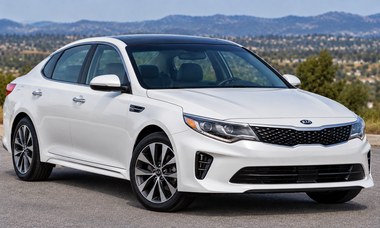
The final Optima generation brought improved refinement, safety technology, and a broader engine lineup. Depending on year and trim, buyers could find a naturally aspirated 2.4-liter four-cylinder, a fuel-efficient 1.6-liter turbo, or the stronger 2.0-liter turbo.
The 1.6-liter turbo was paired with a seven-speed dual-clutch transmission, while the 2.4-liter and 2.0-liter turbo models generally used conventional automatic transmissions. That distinction matters when shopping because the dual-clutch transmission can feel different at low speeds from a traditional torque-converter automatic.
These later Optimas generally deserve consideration ahead of the troublesome middle years, but engine history still matters. Don't assume that moving to a 2016-2020 model eliminates the need to check oil consumption, campaign history, unusual engine noise, or warning lights.
Common Problems on 2016-2020 Kia Optimas
- Oil consumption on some higher-mileage engines
- Engine-related concerns on certain vehicles and powertrains
- Low-speed hesitation or awkward engagement from the 1.6T dual-clutch transmission
- Window regulator and power-accessory failures
- Ignition coils, sensors, and other age-related engine-management issues
- Suspension and steering wear at higher mileage
- Normal direct-injection deposits and maintenance concerns
Buyer Tip: Identify the engine and transmission before comparing two fourth-generation Optimas. A 1.6T/DCT car, 2.4-liter car, and 2.0T performance-oriented version do not present exactly the same ownership considerations.
Bottom Line: The 2016-2020 generation is generally where I would begin if I wanted a relatively modern used Optima, but I would still favor a car with extensive maintenance records and a clean engine history over one chosen simply because it has fewer miles.
Which Kia Optima Generation Is the Most Reliable?
For buyers who want a modern Optima, the 2016-2020 fourth generation is generally the most attractive place to start. It combines newer safety and convenience features with fewer of the concentrated complaints associated with the 2011-2015 generation. However, individual engine and transmission choice still matters.
The 2006-2010 generation can also make sense for someone seeking an inexpensive, mechanically simpler sedan, provided age-related deterioration has been carefully checked.
Which would I investigate first? Given similar price, condition, and documentation, I would generally investigate a well-maintained later fourth-generation Optima before a 2011-2015 example. But I would take an exceptionally well-documented older car over a neglected newer one every time.
Which Kia Optima Engine Is the Most Reliable?
There isn't one Optima engine that deserves a blanket "bulletproof" label across the entire 2001-2020 run. The most important distinction for today's used buyer is between the simpler pre-GDI cars, the Theta II GDI engines with their well-documented bearing history, and the different powertrains offered during the final generation.
If long-term risk is the priority, I would not pay extra for the 2.0-liter turbo merely for performance. Its additional power is enjoyable, but a used-car buyer should weigh that against greater mechanical complexity and the importance of careful maintenance.
The 2.4-liter GDI is common and inexpensive to find, but its engine history and oil consumption deserve scrutiny. The later 1.6-liter turbo can be economical, but it comes with the dual-clutch transmission, creating a different set of considerations.
Buyer comparison: Rather than asking only "Which Optima engine is best?" I would ask which specific car has the strongest evidence of regular oil changes, stable oil consumption, completed campaigns, and a healthy engine. On a used Optima, those answers can matter more than the badge on the engine cover.
What Are the Best Kia Optima Model Years to Buy?
If I were shopping for a used Kia Optima today, I would generally begin with the 2016-2020 fourth-generation cars, then narrow the search according to engine, transmission, maintenance history, and documented campaign work.
Within that generation, the later years are attractive because they combine the final Optima design with newer safety and convenience features. But I would not call any particular Optima year an automatic safe choice. The history of the individual engine matters too much on these cars.
- 2018-2020: Good years to investigate first if you want a later Optima, but still check engine history, oil consumption, recalls, and maintenance records.
- 2016-2017: Can also be worthwhile, although 1.6T models with the seven-speed dual-clutch transmission deserve a careful low-speed test for judder or hesitation.
- 2009-2010: Worth considering if your priority is an inexpensive, simpler Optima that predates the GDI-era Theta II bearing concerns.
Buyer Tip: I would rather buy a 120,000-mile Optima with extensive maintenance records, stable oil consumption, completed campaigns, and a healthy engine than a 70,000-mile example with little documentation.
Which Kia Optima Model Years Should You Avoid?
The 2011-2015 Optimas deserve the most caution, particularly because this generation includes the cars most closely associated with the Theta II connecting-rod bearing problem, P1326/KSDS concerns, and several other recalls and service campaigns.
That doesn't mean every 2011-2015 Optima should automatically be rejected. Some have received replacement engines, completed campaign work, and years of careful maintenance. But I would require substantially more documentation before buying one.
- 2011-2014: The years I would scrutinize most closely for Theta II engine history. Kia's original engine recall included specified Optimas from these model years with the 2.4L GDI and 2.0L turbo GDI engines.
- 2015: Not part of that original recall simply by virtue of being a 2015, but still part of the same generation and a year I would research carefully by VIN and powertrain rather than assuming it is clear of all engine-related concerns.
- Any Optima with unknown oil consumption: A low oil level, repeated topping-off, engine knock, flashing check-engine light, or unexplained P1326 history is more important than the model year printed on the title.
Bottom Line: With an Optima, "years to avoid" should really mean years requiring substantially more investigation. A documented replacement engine and completed campaigns can materially change the assessment of an individual car.
What Are the Most Expensive Kia Optima Problems?
The Optima has plenty of ordinary used-car problems, but a few potential failures stand far above the rest financially. Engine condition should therefore receive much more attention than relatively minor complaints about switches, trim, or infotainment.
How Serious Is Kia Optima Connecting-Rod Bearing Failure?
Potentially catastrophic. Excessive connecting-rod bearing wear can progress from abnormal knocking to severe internal engine damage, seizure, or stalling. On affected cars, this is the failure that makes recall history, the Knock Sensor Detection System (KSDS), and any previous engine replacement especially important.
Kia's P1326 code service procedures for applicable 2011-2014 Optimas instruct dealers to investigate the code and, depending on the results, perform either a knock-sensor wiring repair or an engine long-block replacement. A seized or severely knocking engine can require long-block replacement.
If a seller says, "Kia already replaced the engine," don't stop there. Ask for documentation showing the replacement date and mileage, why it was replaced, and what work was performed.
What Does a P1326 Code Mean on a Kia Optima?
P1326 is a diagnostic trouble code associated with Kia's Knock Sensor Detection System (KSDS) on affected Optimas equipped with the 2.4-liter GDI four-cylinder or 2.0-liter turbocharged GDI four-cylinder engine. The system monitors engine vibrations that can indicate excessive connecting-rod bearing wear.
A P1326 code does not by itself prove that the engine needs replacement. Kia's diagnostic procedure includes checking for other possible causes before determining whether bearing damage is present and an engine replacement is necessary.
However, this is not a code I would casually clear before buying the car. Because P1326 can be associated with connecting-rod bearing wear, a used Optima displaying the code needs proper diagnosis along with a review of its engine, recall, and campaign history.
How Expensive Are Kia Optima Transmission Problems?
Major Kia Optima transmission problems can become expensive, with significant repairs commonly running about $1,500-$3,000 or more and complete transmission replacement potentially reaching roughly $3,000-$5,500 or more. The actual risk and repair cost depend heavily on which Optima powertrain you're considering.
Most Optimas use a conventional automatic transmission, while 2016-2020 1.6T models use a seven-speed dual-clutch transmission. On the 1.6T, clutch-related problems can potentially lead to a four-figure repair even when the entire transmission does not need replacement.
Kia issued service information for clutch judder on some 2016-2020 Kia vehicles equipped with the seven-speed DCT, including Optima 1.6T applications. Symptoms can include vibration or shuddering while accelerating from a stop, and repairs can involve software updates or, when necessary, replacement of the dual-clutch assembly.
That doesn't make the 1.6T/DCT combination an automatic reject, but drive it in stop-and-go conditions. Pay attention to pronounced shuddering, delayed engagement, repeated hesitation, or behavior that feels substantially worse than the normal low-speed characteristics of a dual-clutch transmission.
Typical Kia Optima Maintenance and Repair Costs
Routine Optima maintenance is generally reasonable for a midsize sedan. The financial risk comes from buying a neglected example or one facing a major engine or transmission repair.
| Service or Repair | Typical Approximate Cost |
|---|---|
| Oil and filter change | $60-$120 |
| Spark plugs | $150-$350 |
| Ignition coil replacement | $150-$400+ |
| Brake pads and rotors | $400-$900 per axle |
| Steering flexible coupler repair | $200-$600 |
| Cooling-system repair | $300-$1,000+ |
| Suspension/control-arm work | $500-$1,500+ |
| DCT clutch-related repair | $1,500-$3,000+ depending on diagnosis |
| Major transmission replacement | $3,000-$5,500+ |
| Engine replacement without applicable coverage | $4,000-$8,000+ depending on engine and replacement source |
These are broad repair-shop estimates rather than fixed prices. Labor rates, parts choices, location, and the exact engine or transmission can change the final bill substantially.
What Maintenance Does a Kia Optima Need After 100,000 Miles?
Once an Optima passes 100,000 miles, regular oil changes remain particularly important, but I would broaden the inspection to the entire cooling, ignition, suspension, steering, and transmission systems.
- Check engine oil frequently: Don't rely solely on the oil-change interval, particularly with a GDI engine that has begun consuming oil.
- Review spark-plug and ignition maintenance: Misfires under load can indicate worn plugs, failing coils, or other engine-management problems.
- Inspect the cooling system: Look for deteriorated hoses, leaks, coolant loss, and evidence of overheating.
- Check transmission operation: Conventional automatics should shift smoothly, while 1.6T DCT cars deserve particular attention during low-speed acceleration.
- Inspect suspension and steering: Control arms, bushings, wheel bearings, tie rods, struts, and mounts may all be approaching replacement age.
- Verify recalls and campaigns: Don't assume previous owners completed them merely because the car has been serviced at a dealership.
What Should You Check Before Buying a Used Kia Optima?
A pre-purchase inspection is especially worthwhile on an Optima, but I would do several model-specific checks before paying a mechanic to inspect the car.
- Check the VIN: Verify outstanding safety recalls and ask a Kia dealer about relevant campaigns and engine history. NHTSA notes that a VIN lookup shows unrepaired recalls, but it does not necessarily display recalls already repaired or non-safety manufacturer campaigns
- Start the engine cold: Listen for persistent knocking or other abnormal mechanical noises before the seller has had an opportunity to warm the engine.
- Check the oil: Look at the dipstick yourself. An unusually low level should immediately lead to questions about oil consumption and maintenance.
- Ask about P1326: Find out whether the car has ever entered reduced-power mode, displayed a flashing check-engine light, or undergone KSDS-related diagnosis.
- Document any engine replacement: Don't accept "new engine" as enough information. Obtain the paperwork.
- Test the transmission thoroughly: On a 1.6T/DCT model, include creeping in traffic, pulling away from a stop, reversing, and repeated low-speed acceleration.
Is a Kia Optima With 100,000 Miles a Good Buy?
It can be. One hundred thousand miles isn't inherently high for an Optima that has received regular maintenance. At this mileage, however, I care much more about engine history, oil consumption, recall completion, and maintenance documentation than I do about whether the odometer says 95,000 or 105,000.
A 100,000-mile 2011-2015 Optima deserves particularly careful investigation because of the engine history discussed above. A later Optima with strong records may be a more comfortable starting point, but it should still be inspected rather than assumed reliable because of its newer model year.
Is 150,000 Miles Too High for a Kia Optima?
Not necessarily, but the purchase becomes much more condition-dependent. By 150,000 miles, I'd expect some combination of suspension work, mounts, sensors, cooling-system components, ignition parts, and other normal wear items.
Engine condition is the deciding factor. An Optima that has reached 150,000 miles while maintaining stable oil consumption, good oil pressure, quiet operation, and consistent service history may have substantial life remaining. An inexpensive 150,000-mile Optima with unexplained knocking or rapidly disappearing oil can become expensive very quickly.
Can a Kia Optima Last 200,000 Miles?
Yes, a Kia Optima can reach 200,000 miles, but getting there depends heavily on maintenance and the health of the engine. The existence of high-mileage Optimas doesn't erase the documented engine problems affecting certain vehicles, just as those engine problems don't mean every Optima fails prematurely.
If your goal is 200,000 miles, regular oil-level checks are particularly important. Allowing an oil-consuming engine to repeatedly run low can turn a manageable condition into serious internal damage.
Kia Optima Pros and Cons
Pros
- Often inexpensive compared with similarly equipped midsize sedans
- Generous features for the money
- Attractive styling, particularly from 2011 onward
- Comfortable cabin and useful passenger space
- Later models offer modern safety and convenience technology
- Turbocharged versions provide strong performance
- Well-maintained examples can reach high mileage
Cons
- Serious Theta II engine history affects the appeal of many used examples
- Oil consumption can complicate ownership of some GDI engines
- Recall and campaign history makes VIN research unusually important
- Seven-speed DCT behavior can be a concern on 1.6T models
- Older cars may have passed through multiple owners with inconsistent maintenance
- Low used prices can attract buyers who postpone necessary repairs
How Does the Kia Optima Compare With Other Used Midsize Sedans?
The Optima's greatest advantage is usually value. You can often buy a newer or better-equipped Optima for the same money as an older example of a more sought-after competitor. The tradeoff is that powertrain history deserves more scrutiny than it does with some rivals.
A Toyota Camry generally commands a higher used price, but buyers often seek it specifically for long-term durability.
The Honda Accord combines a strong reputation with enjoyable driving characteristics, although individual generations have their own problems.
The Hyundai Sonata is the Optima's closest mechanical relative, so some powertrain concerns overlap.
A Mazda6 is worth considering if handling and driving feel matter more than having the longest equipment list.
Is the Kia Optima a Reliable Used Car?
The Kia Optima can be a reliable used car, but I wouldn't describe the entire 2001-2020 model line as consistently reliable. The answer changes substantially according to generation, engine, maintenance history, and whether applicable recalls and campaigns have been completed.
The 2006-2010 cars are appealing for their relative mechanical simplicity, while the 2016-2020 generation is where I would generally start if I wanted a newer Optima. The 2011-2015 generation requires the greatest caution because of its engine history and related campaigns.
One more reason to check the VIN rather than rely solely on a model-year list: recall coverage can overlap in ways that aren't obvious. For example, NHTSA's ABS-module fire-risk recall includes 2010-2015 Optimas, and NHTSA says safety recalls do not expire. :contentReference[oaicite:4]{index=4}
Final Kia Optima Buyer Summary
The Kia Optima offers a lot of used car for the money, but this is not a model I would buy without researching the individual vehicle's history first. The Theta II engine issue is serious enough that engine condition, KSDS/campaign history, oil consumption, and previous engine replacement deserve more attention than cosmetic condition or a tempting asking price.
If I wanted a relatively modern Optima, I would generally begin with a well-documented 2016-2020 model and compare powertrains carefully. If shopping on a very limited budget, a clean 2009-2010 car can also be worth investigating. I would approach 2011-2015 examples much more cautiously and buy one only after its engine and campaign history made sense.
The Optima can reach 150,000-200,000 miles or more, but the safest used-car strategy is not simply choosing the year with the best reputation. Choose the individual Optima with the strongest evidence that its engine has been maintained, its oil level has been monitored, applicable recalls and campaigns have been addressed, and warning signs haven't been ignored.
Your Trade-In
Also, it's good to always know the value of your trade-in while you're evaluating your next possible purchase. Here's a good source for a quick and accurate appraisal: free trade-in appraisal.
What's Next?
If you may be buying soon, I'd recommend reading my most effective negotiation method for used cars. It explains a quick way to identify the dealerships most motivated to deal, no matter how busy they may seem, and how to follow up once you've found them. That can be the difference between getting a good price and getting a great one.
Or, if you'd consider buying a brand-new vehicle if you could get a lower-than-expected price, learn how to shop the dealer, not just the car.
And beware of "Dealer Fees": Before agreeing to a dealer's numbers, see which dealer fees are legitimate, which can be negotiated, and which can be avoided.