
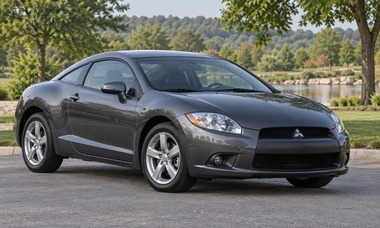
The Mitsubishi Eclipse can still be an appealing used coupe or convertible, but buying one successfully requires more than choosing a favorite body style. Timing-belt maintenance, previous modifications, transmission condition and age-related repairs can make two similar-looking cars very different purchases.
The Eclipse also changed considerably over its life. The earlier turbocharged cars attracted enthusiasts seeking performance and, on the GSX, all-wheel drive. The later generations used naturally aspirated four-cylinder and V6 engines with front-wheel drive, offering a different balance of performance, comfort and maintenance.
This guide covers the 1995–2012 U.S.-market Mitsubishi Eclipse, including the Spyder convertible. It gives the older enthusiast models focused coverage while placing more emphasis on the 2000–2012 cars that buyers may still consider for regular transportation. The Eclipse Cross SUV is a separate vehicle and is not covered here.
The main used-car concerns include documented timing-belt service, engine noises, clutch and transmission operation, cooling-system condition, corrosion and functioning roof equipment. A maintained Eclipse can be enjoyable and practical enough for the right buyer; a neglected or poorly modified example can become an expensive project.
In This Guide
- Overall Eclipse reliability and expected lifespan
- Reliability and common problems by generation
- Four-cylinder, turbocharged and V6 differences
- Timing-belt maintenance and engine ticking
- Manual shifting, stalling and diagnostic codes
- Coupe sunroof and Spyder convertible-top concerns
- Best years, caution years, repair costs and high-mileage buying advice
Mitsubishi Eclipse Reliability Overview
The Eclipse's reliability depends heavily on its powertrain and previous ownership. A stock later four-cylinder coupe with consistent maintenance presents a different buying proposition from an older turbocharged GSX with engine modifications and an uncertain repair history.
The later non-turbocharged engines can provide substantial useful life when properly maintained. However, their timing belts require scheduled attention, and a healthy-sounding engine does not establish that the belt, tensioner and related components are current.
Manual transmissions add clutch and shifting checks, while automatics need a thorough assessment of engagement and operation. The Spyder introduces separate roof, seal and drainage concerns. These are now old vehicles, so suspension, cooling-system and electrical repairs increasingly reflect age as well as mileage.
The best purchase is usually the car with the clearest maintenance history and soundest present condition. A desirable badge, low odometer reading or fresh paint should not outweigh unresolved mechanical problems.
Mitsubishi Eclipse Reliability at a Glance
| Model Years and Version | Reliability and Buying Considerations |
|---|---|
| 1995–1999 non-turbocharged coupe | Now an older enthusiast or budget-car purchase. Inspect timing-belt history, corrosion, cooling system, transmission and previous repairs. Do not apply turbo-engine problems indiscriminately. |
| 1995–1999 GS-T and GSX | Turbocharged performance versions requiring careful review of modifications, engine health, boost operation and drivetrain condition. GSX adds all-wheel-drive components. |
| 1996–1999 Spyder | Different engine choices from some coupes, plus convertible-top, seal and water-intrusion checks. |
| 2000–2005 coupe; 2001–2005 Spyder | Front-wheel-drive four-cylinder and V6 choices. Prioritize timing-belt records, clutch or automatic operation, engine noises, cooling-system condition and applicable recalls. |
| 2006–2012 coupe; 2007–2012 Spyder | Later 2.4-liter four-cylinder or 3.8-liter V6 package. Inspect timing-belt service, transmission behavior, roof equipment and applicable ABS recall completion. |
How Many Miles Can a Mitsubishi Eclipse Last?
A maintained, unmodified Eclipse can reach 150,000–200,000 miles, and some continue beyond 200,000. However, engine choice, previous use, corrosion and the cost of keeping an aging car roadworthy determine whether that mileage is achieved economically.
I would not budget around every Eclipse reaching 250,000 miles without major repairs. That outcome is possible for individual cars, but it is especially difficult to predict on modified turbocharged examples or cars with incomplete histories.
- At 100,000 miles: Timing-belt documentation is particularly important. Inspect the cooling system, engine mounts, suspension and transmission rather than assuming that modest mileage offsets age.
- At 150,000 miles: Oil use, leaks, clutch condition, automatic-transmission behavior and repairs already completed deserve more weight.
- At 200,000 miles: A sound engine and body can still provide useful transportation, but several approaching repairs may make a cheap car uneconomical.
- At 250,000 miles: Treat continued operation as an individual car's achievement, rather than a result every buyer can expect from the original engine and transmission.
A high-mileage success story may include a replacement clutch, transmission, engine or convertible top. The vehicle's total mileage does not necessarily describe the lifespan of every original component.
Mitsubishi Eclipse Reliability by Generation
Second Generation: 1995–1999 Mitsubishi Eclipse
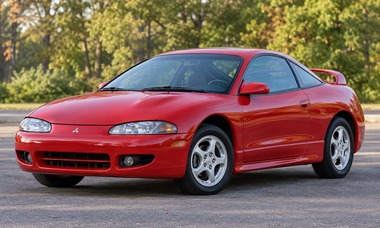
The second-generation Eclipse remains particularly recognizable to enthusiasts. Its rounded styling, available turbocharged engine and GSX all-wheel-drive configuration give it a different appeal from the later front-wheel-drive cars.
Engine identification is essential. The non-turbocharged RS and GS coupes generally used the 420A 2.0-liter four-cylinder gasoline engine, while the GS-T and GSX used the 4G63 2.0-liter turbocharged four-cylinder engine. The Spyder GS used a different 2.4-liter four-cylinder, while the Spyder GS-T used the turbocharged 2.0-liter.
Those differences matter because complaints about the turbocharged engine should not be carried over automatically to the non-turbocharged coupe. Likewise, the GSX's all-wheel-drive equipment adds components absent from a front-wheel-drive GS-T.
At this age, originality and repair quality are central concerns. Some cars have received careful restoration or knowledgeable upgrades; others have accumulated improvised wiring, engine swaps, poorly matched modifications and years of hard use.
Common Problems and Checks on 1995–1999 Eclipses
- Overdue timing-belt and related-component service: Confirm the requirements for the actual engine and obtain records showing what was replaced.
- Modified turbocharged engines: Review tuning, fuel-system changes, boost control and engine condition rather than relying on a list of aftermarket parts.
- Crankshaft end-play concerns on certain turbo-engine configurations: The enthusiast term “crankwalk” refers to excessive crankshaft movement, not a defect that should be assumed on every Eclipse.
- Clutch, shifting and drivetrain wear: Hard use and modifications can change the condition of the transmission and related components considerably.
- Corrosion and suspension condition: Inspect structural areas, mounting points, ball joints and applicable recall history.
- Door handles, seals and interior deterioration: Broken exterior handles are a familiar owner complaint, while age can also affect weather sealing and trim.
What Is Crankwalk, and Does Every Older Eclipse Have It?
Crankwalk means excessive end-to-end movement of the crankshaft, and it should not be assumed to affect every older Eclipse. It is most often discussed in connection with particular versions of the turbocharged 2.0-liter engine.
The underlying concern involves crankshaft thrust control. If wear becomes excessive, it can affect engine operation and damage components. The appropriate assessment is a mechanical measurement and engine-specific inspection, not a diagnosis based solely on the model year.
Non-turbocharged coupes and later V6 cars should not inherit the same warning simply because they carry the Eclipse name. On a modified car, an engine swap can also make the original model-year specifications less useful.
For an older turbocharged Eclipse, a specialist familiar with the engine should evaluate its health and repair history. An owner saying “it has never crankwalked” does not replace that assessment.
Why Do the Outside Door Handles Break on Older Eclipses?
Age, material deterioration and stress at the handle's mounting or pivot points can cause an exterior handle to fail. The 1995–1999 cars have a particularly established history of owner discussions about this problem.
A door that will not open from outside does not always need the complete handle, however. Linkage, clips, adjustment or the latch itself can also be involved.
Test both doors from inside and outside, along with the locks and windows. A replacement handle should fit and operate correctly; an aftermarket part is not automatically a permanent improvement.
Buyer Tip: On a second-generation Eclipse, establish exactly which engine and drivetrain are installed. A stock-looking car can still have extensive mechanical changes, and those changes should be documented.
Bottom Line: These cars remain appealing enthusiast purchases, but they increasingly need to be assessed as individual projects or carefully maintained survivors. They are less predictable choices for someone needing transportation with minimal repair involvement.
Third Generation: 2000–2005 Mitsubishi Eclipse
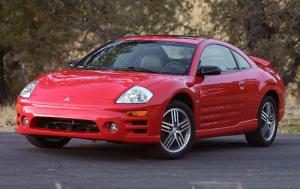
The third-generation Eclipse moved away from the earlier turbocharged, available-all-wheel-drive formula. It used front-wheel drive with either a naturally aspirated four-cylinder or V6 engine.
The four-cylinder was the 4G64 2.4-liter gasoline engine. V6 versions used the 6G72 3.0-liter six-cylinder engine, with output and equipment varying by trim and year. Manual and conventional automatic transmissions were available on appropriate versions.
The Spyder convertible returned for the 2001 model year. It adds roof-related ownership considerations to the underlying coupe's engine and transmission checks.
A maintained example can still make sense as an inexpensive coupe, but these cars are now old enough that rubber components, cooling-system parts, suspension and previous repair quality deserve close attention. Timing-belt service remains a central buying issue.
Common Problems on 2000–2005 Mitsubishi Eclipses
- Timing-belt maintenance: Missing records create uncertainty even when the engine runs smoothly.
- Clutch-release and shifting problems: Hydraulic faults, linkage issues, clutch wear and internal transmission wear can produce different symptoms.
- V6 valvetrain noise: Hydraulic lash adjusters can contribute to ticking, but oil pressure and other possible causes should be assessed.
- Sunroof judder or binding on equipped coupes: Mitsubishi issued service information for certain 2000–2004 cars involving improved drive-cable assemblies.
- Stalling or crankshaft/camshaft sensor codes: The cause may involve sensors, wiring, timing or previous repair work rather than one universal grounding problem.
- Age-related leaks, mounts and suspension wear: Inspect the actual car rather than assuming that every vibration is an engine fault.
Why Is It Hard to Shift Gears on a Manual Mitsubishi Eclipse?
Incomplete clutch release is one possible cause, but hard shifting can also involve linkage, fluid condition or internal transmission wear. It does not automatically mean the synchronizers need replacement.
The hydraulic system that operates the clutch can develop leaks or lose effectiveness. If the clutch does not release fully, selecting a gear can become difficult even when the transmission itself is otherwise serviceable.
Grinding in a particular gear, difficulty across several gears and a problem that changes with temperature provide different diagnostic clues. The clutch pedal's feel and engagement point are also relevant.
A buyer should obtain a diagnosis before accepting an explanation that the car “just needs an adjustment.” Aggressive pedal adjustment or forcing the shifter can disguise symptoms without resolving the cause.
What Causes a Ticking Noise in an Eclipse V6?
Hydraulic valve lash adjusters are one possible source, but a ticking noise should not be declared harmless without identifying it. These components help maintain the correct clearance in the valvetrain and can become noisy when their operation is affected.
Oil level, oil condition, air in the adjusters, lubrication problems and mechanical wear can matter. Injector noise, an exhaust leak or another component can also sound similar.
The pattern is useful: a brief startup noise, a persistent warm-engine tick and a deeper noise that changes under load deserve different assessments. A seller's reassurance that “all Mitsubishi engines tick” is not a diagnosis.
Check the oil level and obtain an engine-specific inspection. Adding a treatment to quiet the sound does not establish that the underlying engine is healthy.
Why Does the Eclipse Sunroof Judder or Get Stuck?
On certain 2000–2004 coupes, Mitsubishi documented sunroof judder involving the drive-cable assemblies and their sliders. Other binding problems can involve tracks, alignment, lubrication or damaged components.
A sunroof should open, close and seal properly without repeated assistance. Forcing a struggling panel can damage parts or leave the roof stuck open.
Leaks need a separate assessment. Drainage, seals, connections and the roof assembly can all require inspection. Water on the headliner or beneath the carpet should not be dismissed as a minor cosmetic issue.
The Spyder has a convertible top, not the coupe's sunroof. Its roof problems require different checks and repair procedures.
What Causes an Eclipse to Stall or Show P0335 and P0340?
These codes concern the crankshaft and camshaft position-sensor circuits, but they do not prove that a sensor—or an electrical ground—is the only problem. Wiring, signal faults, mechanical timing and previous repairs can also be involved.
On applicable 2.4-liter cars, Mitsubishi service information addressed these codes in particular circumstances involving engine repair or operating conditions. That makes the repair history important, especially when the symptoms started after timing or cylinder-head work.
Corroded connections and charging-system faults are worth checking on an aging car, but they should be tested rather than assumed. Replacing sensors repeatedly without identifying the fault can leave the original problem unresolved.
Buyer Tip: On a third-generation car, prioritize timing-belt documentation, cold and warm engine operation, and a thorough transmission test. On a coupe with a sunroof or a Spyder, operate the roof equipment and inspect for water intrusion.
Bottom Line: A maintained four-cylinder or V6 example can be a worthwhile inexpensive coupe. Unknown timing service, difficult shifting or persistent engine noise can materially change that value.
Fourth Generation: 2006–2012 Mitsubishi Eclipse
The fourth and final Eclipse generation offered a more substantial body and a different driving character from the earlier turbocharged cars. All versions remained front-wheel drive.
The four-cylinder was the 4G69 2.4-liter gasoline engine, while the GT used the 6G75 3.8-liter V6. Both use timing belts. Depending on version, buyers will encounter a five-speed manual or four-speed automatic with the four-cylinder, and a six-speed manual or five-speed automatic with the V6.
The Spyder returned for 2007 and continued through 2012. Its convertible roof adds components and inspection requirements beyond those of the coupe.
For many ordinary used-car buyers, this generation is the most relevant place to begin. It offers less age than the earlier cars and avoids the uncertainty of many modified turbocharged examples. However, even the newest cars now need a careful maintenance and condition review.
Common Problems and Checks on 2006–2012 Eclipses
- Overdue timing-belt service: Verify both mileage and age requirements for the exact engine and maintenance schedule.
- ABS hydraulic-unit recall on certain earlier cars: Applicable 2006–2009 coupes and 2007–2009 Spyders require VIN-specific completion checks.
- Engine ticking on certain early 2006 V6 cars: Mitsubishi documented a narrow production-related rocker-arm interference condition that could damage the camshaft.
- Crankshaft/camshaft sensor codes on certain 2006–2007 cars: Mitsubishi issued software-related service guidance for applicable vehicles.
- Clutch, transmission and mount wear: Inspect shifting, engagement, vibration and previous repairs.
- Roof equipment, handles and electrical aging: Test operation directly, including Spyder top movement and signs of water intrusion.
When Does a Mitsubishi Eclipse Need Its Timing Belt Replaced?
Follow the schedule for the specific model year and engine, including its time limit as well as mileage. The gasoline engines covered in this article use timing belts, so this is a planned maintenance expense rather than something to postpone until the engine sounds different.
An older low-mileage car can still be overdue by age. The condition of the belt cannot be established reliably from a seller saying that it looks fine or that the car has barely been driven.
Obtain an invoice showing the date, mileage and parts replaced. The tensioner, idlers and applicable related belts should also be considered, along with the water pump where appropriate.
A timing-belt failure can cause serious engine damage on applicable engines. A cheap Eclipse with no reliable belt history therefore needs a repair budget established before it is treated as ready for daily use.
Why Does the Brake Pedal Travel Too Far on Some Eclipses?
On certain 2006–2009 coupes and 2007–2009 Spyders, corrosion inside the ABS hydraulic unit can cause an internal valve to stick. This can increase brake-pedal travel and affect braking performance.
The condition was addressed by recall 15V-337. Mitsubishi's procedure includes specified brake-fluid work and testing of the hydraulic unit, with further repair as required by the findings.
This is not a recall covering every Eclipse through 2012. Verify the particular VIN and completion record.
Excessive pedal travel can also have other causes. A brake concern should be diagnosed promptly rather than attributed automatically to this recall or explained away as normal pedal feel.
Is Ticking on a 2006 Eclipse GT Always Just Lifter Noise?
No. Mitsubishi documented a specific rocker-arm interference problem on a narrow group of early 2006 3.8-liter V6 cars. The sound could resemble a loud valve lifter, but the condition could also damage the camshaft.
The bulletin applies to vehicles produced within a short June 2005 manufacturing period, not every 2006 GT and certainly not every V6 Eclipse through 2012.
Other ticking noises require their own diagnosis. A used buyer should distinguish a documented repair of the specified condition from an unsupported claim that the engine only needs an oil additive.
Can Software Cause P0335 or P0340 on a Later Eclipse?
On certain 2006–2007 cars, Mitsubishi documented incorrect engine-control software parameters that could set these codes. The applicable bulletin provides a different explanation from the assumption that every case involves a failed crankshaft or camshaft sensor.
That does not mean all cars with those codes need only a software update. Sensor circuits, wiring, mechanical timing and other causes still require testing.
If a car has repeatedly received replacement sensors, ask whether the applicable service information and software history were checked. A code that returns after repairs deserves a clear diagnosis before purchase.
Buyer Tip: On a fourth-generation Eclipse, start with timing-belt records, then verify applicable brake and other campaigns. Test both cold and warm transmission operation and investigate persistent engine noise.
Bottom Line: This generation can be the most approachable Eclipse for regular use, especially in maintained, unmodified form. The best example is the one with current service and sound mechanical condition, not necessarily the lowest mileage.
Mitsubishi Eclipse Spyder: Convertible-Specific Reliability

The Spyder adds open-top appeal to the Eclipse, but it also adds maintenance and repair considerations. U.S. buyers will encounter 1996–1999, 2001–2005 and 2007–2012 versions, with engine and roof differences between generations.
A good top should operate correctly, latch securely and keep the cabin dry. Fabric condition alone does not establish that the roof mechanism, seals and drainage are healthy.
Important Eclipse Spyder Checks
- Complete roof operation: Test opening and closing through the entire cycle rather than accepting a demonstration that stops halfway.
- Fabric, rear-window attachment and seals: Look for deterioration, poor repairs and gaps.
- Water intrusion: Inspect carpets, storage areas and the trunk for dampness, staining or musty odors.
- Windows and roof alignment: Confirm that the glass meets the seals properly and that the roof latches without improvised assistance.
- Roof-control faults: Warning sounds, intermittent operation or a need for repeated manual intervention requires diagnosis.
Is an Eclipse Spyder More Expensive to Maintain Than the Coupe?
It can be, because the convertible roof adds components and potential repairs that the coupe does not have. The engine and transmission still need the same careful assessment appropriate to their version.
Roof fabric replacement, mechanism repairs and leak diagnosis are different jobs. A seller's statement that the top “just needs a small adjustment” should be supported by an inspection and estimate.
Buyer Tip: Buy a Spyder with a functioning, dry roof rather than pricing an uncertain top problem as a minor annoyance. Compare the cost of proper repair with the premium for a better example.
Bottom Line: A maintained Spyder can be an enjoyable used convertible. Its strongest value comes when both the mechanical package and roof are sound.
What Are the Best Mitsubishi Eclipse Years to Buy?
For regular transportation, I would begin with a maintained, unmodified 2009–2012 coupe, particularly a four-cylinder example when lower ownership costs are the priority. A sound V6 can also be worthwhile for someone who wants stronger performance and accepts its additional fuel and maintenance costs.
These are practical starting points based on age, configuration and ownership demands—not a statistical guarantee that every later Eclipse is more reliable than every earlier one.
A clean 2003–2005 car with recent timing-belt service and documented repairs can be a better purchase than a newer example with neglected maintenance. The 1995–1999 cars increasingly make sense as enthusiast purchases rather than the simplest route to dependable daily transportation.
| Years or Version | Why I Would Consider It |
|---|---|
| 2009–2012 four-cylinder coupe | A useful starting point for an everyday Eclipse. Favor stock cars with current timing-belt service, sound transmission operation and a clean body. |
| 2009–2012 GT V6 coupe | Stronger performance, provided engine condition and maintenance support the purchase. Budget for higher fuel use and potentially more expensive service. |
| 2006–2008 coupe | Can offer good value, but check applicable brake campaigns, early production concerns and accumulated wear. |
| 2003–2005 coupe | Potentially worthwhile at a lower budget when timing service, cooling-system condition and transmission history are documented. |
| Maintained Spyder with a functioning, dry roof | Appealing for convertible buyers, but roof condition should carry substantial weight alongside the engine and transmission. |
| 1995–1999 enthusiast models | Best approached through condition, originality and documented mechanical work rather than a simple best-year ranking. |
Buyer Tip: Give recent maintenance real value. Timing-belt work, tires, brakes, suspension repairs and a properly maintained roof can justify paying more for a particular car.
Knowing which model years to concentrate on is step 1. Step 2 is knowing how to get a good Eclipse price.
Which Mitsubishi Eclipse Years Should You Avoid?
I would be more concerned about neglected or poorly modified cars than about declaring an entire model year unsuitable. The Eclipse includes too many different engines, transmissions and ownership histories for a universal avoid-years list to be dependable.
Some situations nevertheless deserve considerably more caution.
| Car or Condition | Reason for Caution |
|---|---|
| Any Eclipse with unknown or overdue timing-belt service | A healthy-sounding engine does not establish that the belt and related components are current. Establish the service needs before regular use. |
| Modified 1995–1999 turbocharged cars with incomplete records | Engine condition, tuning, fuel-system changes and drivetrain stress can be difficult to assess without knowledgeable inspection. |
| Cars with persistent ticking, knocking or low oil pressure | The noise needs a diagnosis. Do not accept an unsupported explanation that it is harmless lifter noise. |
| Manual cars with grinding, clutch drag or gear engagement problems | The repair may involve hydraulics, the clutch or internal transmission components. The costs are not interchangeable. |
| Automatics with slipping or delayed engagement | A major repair can consume a substantial portion of the value of an older Eclipse. |
| Applicable cars with unresolved brake concerns | Verify recall completion and diagnose the actual braking problem before purchase. |
| Spyders with intermittent roof operation or water intrusion | A low price may conceal roof, seal, drainage or electrical repairs. |
| Cars with structural corrosion or poor collision repairs | A good engine cannot compensate for an unsafe body or compromised suspension mounting points. |
The limited early-2006 V6 ticking bulletin is not a reason to reject every 2006 GT. Similarly, a completed ABS recall does not make an otherwise sound car undesirable. The important distinction is between a documented repair and an unresolved problem.
Buyer Tip: Be cautious when a seller describes several problems as cheap fixes but has not repaired them. Obtain estimates before deciding that the asking price compensates for the work.
Is a Four-Cylinder Eclipse More Reliable Than the V6?
A maintained four-cylinder is usually my first choice when simpler, less expensive everyday ownership matters most. That does not mean the V6 is inherently a bad engine or that every four-cylinder is reliable regardless of maintenance.
The later naturally aspirated four-cylinder cars avoid the turbocharger and tuning concerns of earlier performance versions. They can also use less fuel than the V6 and may be easier to justify as inexpensive transportation.
The V6 offers noticeably stronger performance, but some service operations require more labor because of component access. Its timing belt, cooling system and oil history still need careful attention.
| Engine or Version | Main Buying Considerations |
|---|---|
| 1995–1999 non-turbocharged 2.0-liter coupe | Different engine from the turbocharged models. Inspect timing-belt history, leaks, cooling system and age-related condition. |
| 1995–1999 turbocharged 2.0-liter GS-T or GSX | Assess modifications, engine health, boost operation and drivetrain condition. GSX adds all-wheel-drive equipment. |
| Earlier Spyder GS 2.4-liter | Do not assume it has the same engine as the non-turbocharged coupe. Check its own service requirements and roof condition. |
| 2000–2005 2.4-liter four-cylinder | Potentially sensible budget transportation with documented timing service and sound mechanical condition. |
| 2000–2005 3.0-liter V6 | More performance, with timing-belt, valvetrain-noise and access-related service considerations. |
| 2006–2012 2.4-liter four-cylinder | My usual starting point for a later everyday Eclipse when performance is secondary to ownership cost. |
| 2006–2012 3.8-liter V6 | Stronger performance. Inspect engine noise, timing service, transmission and applicable early-production repair history. |
The engine cannot be judged separately from the car. A maintained V6 with recent repairs can be a better purchase than a four-cylinder with a worn transmission and no timing-belt records.
Are the Eclipse GT and GTS the Same as the Older GS-T?
No. The names identify different powertrain combinations across generations. The older GS-T is a turbocharged four-cylinder model, while the later GT and third-generation GTS use V6 engines.
Likewise, GS does not identify one identical engine throughout Eclipse production. Confirm the model year, body style and installed engine before applying repair advice or ordering parts.
A badge or seller's description is not sufficient on a car that may have received an engine swap or other modifications.
Is a Manual or Automatic Eclipse the Better Used-Car Choice?
The better choice is the transmission that suits your driving and is in demonstrably good condition. A manual is not automatically a cheaper purchase once clutch wear, previous abuse and shifting problems are considered.
On a manual, check clutch engagement, slipping under load, grinding and difficulty selecting gears. A problem affecting several gears can have different causes from grinding isolated to one gear.
On an automatic, test engagement into Drive and Reverse, ordinary acceleration, shifts and operation after warming up. Slipping, repeated engine-speed flare or a pronounced delay requires investigation.
The later Eclipse automatics are conventional units rather than continuously variable transmissions, or CVTs. Advice about an Eclipse Cross SUV's CVT does not describe these coupe and Spyder transmissions.
Does Difficult Shifting Mean the Eclipse Needs a New Transmission?
Not necessarily. A clutch hydraulic problem, incomplete clutch release or linkage fault can make shifting difficult without requiring a complete transmission replacement. Internal wear remains a possibility, so the distinction needs to be established through diagnosis.
Ask whether previous work involved the clutch master cylinder, slave cylinder, clutch assembly, linkage or internal transmission components. Those are different repairs.
A seller's claim that “it only needs bleeding” should be supported by testing. Persistent grinding or an inability to select gears should not be accepted as normal behavior for an older manual car.
Buyer Tip: A smooth test drive is useful, but review the repair history too. A recently replaced clutch does not establish that the transmission itself is healthy.
Mitsubishi Eclipse Maintenance and Repair Costs
Routine maintenance on a later non-turbocharged Eclipse can be manageable, but major repairs can still outweigh the savings from a low purchase price. Timing-belt work, clutch replacement and convertible-roof repairs are particularly important budgeting items.
The following are broad U.S. ranges for parts and labor. They are not repair quotes, and the engine, generation, parts source and extent of the work can substantially change the cost.
| Maintenance or Repair | Typical Budget Range |
|---|---|
| Oil and filter change | $50–$110+ |
| Brake pads and rotors, one axle | $350–$750+ |
| Spark plug replacement, four-cylinder | $120–$300+ |
| Spark plug replacement, V6 | $250–$550+ depending on access and related work |
| Timing-belt service with appropriate related components | $800–$1,600+ depending on engine and scope |
| Water-pump replacement performed separately | $500–$1,000+; labor may overlap with timing-belt work |
| Valve-cover gasket repair | $200–$600+ depending on engine and number of covers |
| Engine or transmission mount replacement | $250–$650+ per mount |
| Wheel-bearing replacement | $300–$650+ per wheel |
| Struts / substantial suspension work | $700–$1,600+ |
| Clutch hydraulic repair | $200–$600+ per component, depending on diagnosis |
| Manual-transmission clutch replacement | $1,000–$2,000+ depending on engine and related parts |
| Automatic-transmission fluid service | $150–$350+ depending on procedure |
| Exterior door-handle replacement | $150–$400+ per door; paint work may add cost |
| Sunroof repair | $250–$1,500+ depending on the failed component |
| Spyder roof-fabric replacement | $1,200–$2,500+ depending on materials and scope |
| Spyder roof-mechanism or control repair | $300–$2,000+ depending on diagnosis and parts availability |
| Air-conditioning repair | $300–$1,500+ depending on problem |
| Turbocharger replacement on an applicable older car | $1,200–$2,500+; modifications or related damage can add cost |
| Major transmission repair or replacement | $2,500–$5,000+ depending on transmission and replacement source |
| Engine replacement or substantial internal repair | $3,500–$7,000+; performance builds can cost considerably more |
| Applicable safety-recall remedy | No charge through the manufacturer on eligible vehicles |
Labor rates, location, engine, parts choice and whether the work is performed by a dealer or independent shop can substantially change the final bill. Some older trim, roof and drivetrain parts may require additional sourcing. Combined jobs should account for overlapping labor rather than simply adding every standalone estimate.
Buyer Tip: On an inexpensive Eclipse, recent repairs have real value. A seller who has already paid for documented timing-belt work, tires, brakes, struts, mounts or proper roof repairs may be offering a better car than someone selling a lower-mileage example that needs those items soon.
In addition, your trade-in allowance, if you are doing that, also affects the overall potential cost analysis of moving into an Eclipse (KBB vs. Edmunds Appraisals - Which Is Better).
What Maintenance Does an Eclipse Need Around 100,000 Miles?
Review the schedule for the exact engine and completed work, with particular attention to timing-belt age and mileage. An older Eclipse may need time-based maintenance even if its odometer is below 100,000 miles.
- Timing belt and related components: Verify the date, mileage and scope of the last service. A receipt for an accessory belt does not establish timing-belt replacement.
- Cooling system: Check pump history, coolant condition, hoses, radiator and evidence of overheating.
- Engine maintenance: Review oil changes, oil use, leaks, spark plugs and persistent noises.
- Transmission and clutch: Follow the correct fluid requirements and investigate engagement or shifting problems.
- Brakes and suspension: Inspect wear directly and confirm applicable brake campaigns.
- Roof and sealing equipment: On equipped cars, check the sunroof or convertible mechanism, seals and drainage.
A timing-belt invoice should identify the actual work rather than simply state “major service.” It is also useful to know whether leaks or worn components found during the job were repaired.
Buyer Tip: When reliable records are missing, establish a maintenance baseline and include that cost in the purchase decision. Do not assume a low-mileage car has fresh fluids, belts and rubber components.
Is a Mitsubishi Eclipse With More Than 150,000 Miles Worth Buying?
It can be, provided the engine, transmission and body are sound and the price reflects the remaining needs. A maintained later four-cylinder or V6 can still provide useful transportation at this mileage.
Recent repairs matter more as mileage rises. A car with documented timing service, a healthy cooling system and renewed suspension can be preferable to a lower-mileage example with several deferred jobs.
Inspect oil use, coolant loss, abnormal engine noise, transmission operation and structural corrosion. On a Spyder, roof condition should be part of the same assessment.
An older modified turbo car requires a different level of scrutiny. Its odometer may say little about the installed engine, transmission or the stress those components have experienced.
Buyer Tip: Compare the asking price plus likely near-term work with the price of a better-maintained car. The lowest purchase price is not necessarily the lowest ownership cost.
Is Low Mileage Especially Valuable on an Older Eclipse?
It is useful, but it does not erase age or prove good maintenance. A car that has spent years sitting can still need timing-belt service, tires, seals, fluids and attention to the fuel or cooling system.
Check whether the mileage is supported by records and whether the car was driven and serviced consistently. Fresh paint or a clean cabin does not establish the condition of components beneath the surface.
For an older Eclipse, a slightly higher odometer with a clear history can be more reassuring than unusually low mileage with little documentation.
Is a Mitsubishi Eclipse a Good First Car?
A maintained, unmodified later four-cylinder coupe can be a reasonable first car, but it is not automatically the cheapest or most practical choice. The buyer needs room in the budget for maintenance and should be comfortable with the limitations of a two-door car.
Rear-seat access, visibility, cargo needs and available safety equipment deserve consideration. A V6 or modified turbocharged example also introduces a different performance and ownership profile.
The earliest cars increasingly resemble enthusiast purchases. They may require more mechanical involvement and parts sourcing than someone needing dependable transportation for school or work wants to take on.
Buyer Tip: For a first car, favor documented maintenance and a stock mechanical configuration over appearance upgrades or a long list of performance parts.
Are Mitsubishi Eclipse Parts Still Available?
Many routine maintenance and wear parts can still be sourced, but availability is not uniform across generations and components. Body trim, roof parts, certain drivetrain pieces and discontinued original equipment can require more searching.
Older turbocharged models benefit from an enthusiast aftermarket, but a performance replacement is not always the most appropriate choice for a stock daily driver.
Before buying a car with a known problem, confirm that the required parts and a suitable repair shop are available. A low parts price is not useful if the part does not fit properly or the complete repair requires additional unavailable components.
What Should You Check Before Buying a Used Eclipse?
The most useful checks focus on the installed engine, previous use and the repairs that could materially change the car's value.
- Verify timing-belt history: Confirm the engine, service date, mileage and related components replaced.
- Investigate engine noise and fluid use: Check cold and warm operation, oil level, coolant condition and evidence of overheating.
- Test the transmission thoroughly: Assess clutch release and grinding on a manual, or engagement and slipping on an automatic.
- Review modifications and drivetrain condition: On older turbocharged and GSX cars, establish what was changed and how the engine and drivetrain were maintained.
- Check brakes, corrosion and campaign history: Verify the VIN and inspect structural areas and suspension mounting points.
- Operate roof and door equipment: Test sunroof or Spyder operation, windows, handles and locks, and inspect for water intrusion.
Mitsubishi Eclipse Pros and Cons
| Pros | Cons |
|---|---|
| Distinctive coupe styling and available convertible body | All examples now carry substantial age |
| Later four-cylinder models can offer manageable running costs | Timing-belt service is an important scheduled expense |
| V6 versions provide stronger performance | Higher fuel use and potentially more labor-intensive service |
| Earlier turbocharged models retain enthusiast appeal | Modifications and hard use can complicate reliability assessment |
| Hatchback coupe layout provides useful cargo access | Rear-seat access and visibility can be limiting |
| A maintained example can still provide useful transportation | Major repairs can exceed the savings from a low asking price |
Buyer Takeaway: The Eclipse makes the most sense for someone who wants its style or driving character and accepts the maintenance of an aging coupe. Buyers prioritizing maximum practicality and minimum repair involvement have other options.
Mitsubishi Eclipse vs. Other Used Coupes
Hyundai Genesis Coupe
The Hyundai Genesis Coupe offers rear-wheel drive and a different performance package. It can suit someone who wants more of a sports-coupe experience, but engine choice, modifications and previous use remain important.
Ford Mustang
A Mustang provides another rear-wheel-drive alternative with a broad range of engines and equipment. Compare particular years and configurations rather than treating every Mustang as one ownership proposition.
Nissan 350Z
The 350Z is more focused on sports-car performance and has only two seats. Its appeal is different from that of an inexpensive four-cylinder Eclipse, and tires, brakes and previous hard use deserve careful budgeting.
Honda Civic Coupe
A Civic coupe may be a better fit when everyday practicality and running costs carry more weight. Performance versions and modified cars still need their own assessment, so the badge alone should not decide the comparison.
Toyota Celica
The Celica offers another older compact-coupe alternative. Its particular engine and maintenance history matter, and it shares the Eclipse's need for an age-based inspection rather than a purchase based solely on reputation.
Final Buyer Summary: Is the Mitsubishi Eclipse a Good Used Car?
Yes, a maintained Eclipse can still be a good used coupe or convertible for the right buyer. Its value depends on buying a sound example with documented maintenance, rather than assuming an attractive price compensates for uncertain repairs.
For regular transportation, I would usually begin with an unmodified later four-cylinder coupe. A maintained V6 can be worthwhile when stronger performance justifies its additional operating costs.
The 1995–1999 turbocharged cars deserve an enthusiast-level assessment of their engines, modifications and drivetrains. A Spyder needs a complete roof inspection alongside the usual mechanical checks.
Across the range, timing-belt records, engine health, transmission operation and body condition should carry the most weight. The best Eclipse is the one whose condition and price leave room for enjoyable ownership rather than an immediate list of expensive repairs.
Your Trade-In
It's good to always know the value of your trade-in while you're evaluating your next possible purchase. Here's a good source for a quick and accurate appraisal: free trade-in appraisal.