

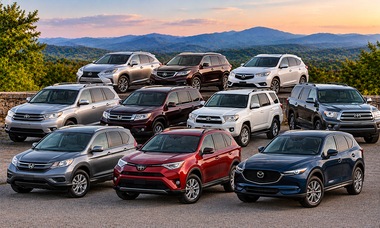
Buying an older SUV can be one of the smartest ways to save money on your next vehicle. But there's a big difference between buying an inexpensive SUV and buying one that will actually save you money over the next several years.
Fortunately, some SUVs built 10 to 20 years ago have established excellent long-term reliability records. Many are capable of reaching 200,000 miles or more with proper maintenance, and some have the potential to go considerably farther.
I've selected 10 older SUVs worth considering for reliability and value, concentrating primarily on the 2006–2016 model years. These include affordable compact crossovers, comfortable family SUVs, dependable luxury models, and rugged vehicles designed for heavy-duty use.
Not every model year is equally desirable, and even the most reliable SUV can become an expensive mistake if it hasn't been maintained. That's why we'll look at the years I'd favor, the potential problems I'd investigate, and which vehicles offer the best combination of durability and affordability.
In This Guide
- The 10 older SUVs I'd put on a used-car shopping list
- Which model years offer the strongest combination of reliability and value
- Potential mechanical problems worth investigating
- Which SUVs are best for families, commuting, luxury, and towing
- How to evaluate an older SUV before buying
Best Older SUVs at a Glance
| Older SUV | Years to Consider | Best For |
|---|---|---|
| Honda CR-V | 2009–2011, 2013–2014 | Overall reliability and economy |
| Toyota RAV4 | 2009–2012, 2014–2016 | Low ownership costs |
| Mazda CX-5 | 2014–2016 | Value and driving enjoyment |
| Toyota Highlander | 2009, 2012–2016 | Family transportation |
| Honda Pilot | 2007–2008, selected 2012–2015 | Affordable three-row space |
| Toyota 4Runner | 2006–2009, 2012–2016 | Durability and off-road use |
| Toyota Sequoia | 2009–2016 | Large families and towing |
| Lexus RX 350 | 2010–2015 | Dependable luxury |
| Acura MDX | 2010–2013 | Luxury and three-row versatility |
| Acura RDX | 2013–2016 | Compact luxury value |
Buyer Tip: These are recommended shopping ranges, not guarantees. Maintenance records, mileage, accident history, corrosion, and a professional inspection should determine whether a particular SUV is worth buying.
Pricing
Knowing which older SUV model to concentrate on is step 1. Step 2 is knowing how to actually get an excellent older SUV price.
Also, getting a strong trade-in allowance often has the biggest impact on your final price. See KBB versus Edmunds Appraisals - Which Is Better to learn about getting accurate and fair trade-in values before negotiating with a dealer.
10 Reliable Older SUVs Worth Buying
1. Honda CR-V: Best Overall Older Compact SUV
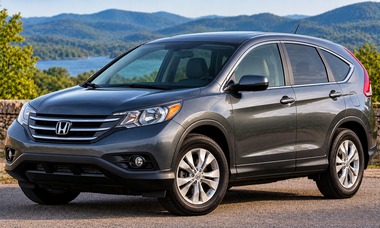
The Honda CR-V is one of the easiest older SUVs to recommend. It offers excellent practicality, reasonable fuel economy, relatively affordable maintenance, and a long history of dependable four-cylinder engines.
I'd particularly favor the 2009–2011 and 2013–2014 CR-Vs. These use Honda's naturally aspirated 2.4-liter four-cylinder engine and a conventional five-speed automatic transmission. Both have extensive high-mileage experience behind them.
The 2013–2014 models are especially attractive because they provide a somewhat newer vehicle without the continuously variable transmission introduced for 2015.
Potential Problems to Check: Cold-start rattles from the variable valve timing actuator, air-conditioning repairs, worn suspension components, and neglected rear differential fluid on AWD versions.
Bottom Line: For someone who wants dependable everyday transportation without unnecessary complexity, a well-maintained 2013–2014 CR-V would be near the top of my list.
2. Toyota RAV4: Best for Low Long-Term Ownership Costs
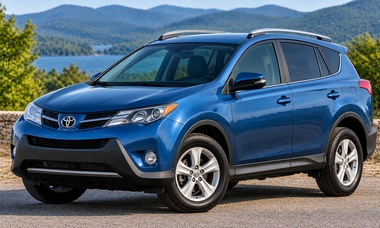
The Toyota RAV4 is another outstanding choice for someone planning to keep an older SUV for several years. Its reputation comes from durable engines, straightforward maintenance, and generally dependable automatic transmissions.
My favorite choices are the 2009–2012 models with the 2.5-liter four-cylinder and the 2014–2016 models. The later vehicles offer improved refinement and safety equipment while retaining Toyota's familiar naturally aspirated engine design.
One interesting alternative is the 2009–2012 RAV4 with the 3.5-liter V6. It's surprisingly quick and has a strong durability record, although fuel economy won't match the four-cylinder.
Potential Problems to Check: Oil consumption on some earlier 2006–2008 2.4-liter engines, water-pump leaks, suspension wear, and AWD drivetrain maintenance.
Bottom Line: The RAV4 is an excellent long-term ownership choice, although its popularity and strong resale value can make it more expensive than similarly aged competitors.
3. Mazda CX-5: Best Older SUV for Value and Driving Enjoyment
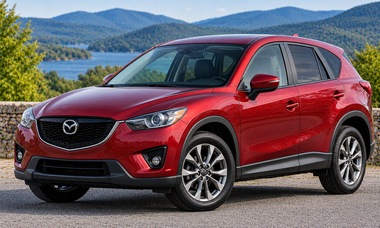
The Mazda CX-5 deserves a place alongside the Honda CR-V and Toyota RAV4, especially for buyers who want an SUV that's enjoyable to drive.
Introduced for 2013, the CX-5 combines responsive handling, an attractive interior, good fuel economy, and a strong reliability record. It also offers something many used-car buyers appreciate: a conventional automatic transmission rather than a CVT.
I'd concentrate on 2014–2016 CX-5s equipped with the naturally aspirated 2.5-liter four-cylinder. These offer a particularly appealing balance of performance, durability, and mechanical simplicity.
Another advantage is value. Depending on local prices and condition, a CX-5 may cost less than a comparable RAV4 or CR-V.
Potential Problems to Check: Brake wear, suspension noises, infotainment issues, corrosion on vehicles from road-salt regions, and evidence of neglected fluid changes.
Bottom Line: The CX-5 is one of my favorite alternatives for buyers who find older Toyotas and Hondas overpriced. See our Mazda Reliability Guide for additional model information.
4. Toyota Highlander: Best Older Family SUV
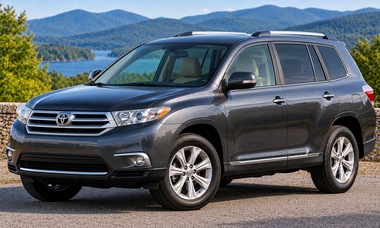
For families needing more room than a compact SUV provides, the Toyota Highlander is one of the strongest older used-vehicle choices.
The Highlander's biggest attraction is its combination of Toyota reliability, a comfortable ride, and a proven naturally aspirated V6 engine. Unlike the truck-based 4Runner, the Highlander emphasizes everyday comfort and family transportation.
I'd look closely at 2009, 2012–2013, and 2014–2016 Highlanders. The 3.5-liter V6 is particularly appealing for buyers who regularly carry passengers or travel on highways.
Hybrid versions can also be very durable, but on a vehicle approaching 15 or 20 years old, I'd want the hybrid battery and related systems carefully evaluated.
Potential Problems to Check: Oil-line service history on certain older V6 models, water-pump leaks, suspension wear, AWD components, and hybrid battery condition where applicable.
Bottom Line: A well-maintained V6 Highlander is an excellent choice for families who value reliability and comfort more than towing capacity or serious off-road ability.
5. Honda Pilot: Best Affordable Three-Row Alternative
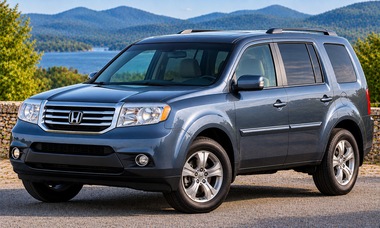
The Honda Pilot is another appealing older family SUV, especially for buyers who need three rows of seating but don't want a full-size truck-based vehicle.
Honda's 3.5-liter V6 has excellent high-mileage potential, and the Pilot offers generous interior space, a comfortable driving position, and generally manageable ownership costs.
I'd consider 2007–2008 models with excellent transmission and timing-belt records, along with selected 2012–2015 Pilots that have no history of unusual oil consumption or repeated engine misfires.
The second-generation Pilot is particularly practical, but its Variable Cylinder Management system deserves attention. Certain vehicles experienced oil consumption and misfires associated with piston-ring problems.
Potential Problems to Check: Automatic-transmission operation, oil consumption, misfire history, engine mounts, and documented timing-belt replacement.
Bottom Line: The Pilot can be an excellent family bargain, but I'd be more selective about maintenance history and engine behavior than I would with a comparable Highlander.
6. Toyota 4Runner: Best for Rugged Long-Term Durability
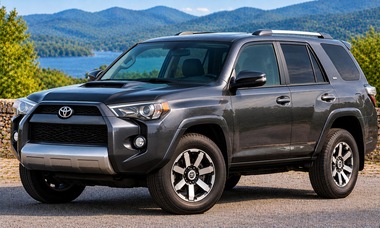
Few SUVs have earned a stronger reputation for durability than the Toyota 4Runner.
Unlike most crossovers, the 4Runner uses traditional body-on-frame construction. It's designed for tougher conditions, and its relatively conservative engines and transmissions have helped many examples reach very high mileage.
I'd favor the 2006–2009 models with documented maintenance or the 2012–2016 fifth-generation 4Runner with Toyota's proven 4.0-liter V6.
The 4Runner's durability does come with compromises. Fuel economy is modest, the ride is less car-like than a Highlander's, and used prices can remain surprisingly high.
Potential Problems to Check: Frame corrosion, suspension wear, transfer-case and four-wheel-drive operation, previous off-road damage, and timing-belt maintenance on older V8 versions.
Bottom Line: The 4Runner is one of the best older SUVs for buyers who need genuine toughness. For ordinary commuting, however, a Highlander or RAV4 will generally be more economical.
7. Toyota Sequoia: Best Older Full-Size SUV
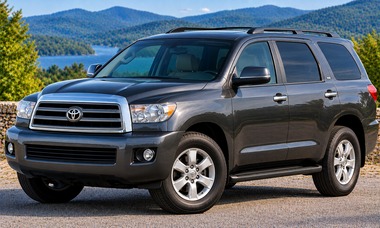
Need a large SUV with room for the family, substantial towing ability, and the potential for very high mileage? The Toyota Sequoia deserves serious consideration.
The Sequoia is one of the strongest performers in long-term vehicle durability research. Its truck-based construction and proven V8 engines help explain why so many examples remain in service after accumulating substantial mileage.
I'd concentrate on 2009–2016 Sequoias, particularly well-maintained 5.7-liter V8 models. These provide generous interior space and strong performance without the complexity of some newer turbocharged full-size SUVs.
Of course, a Sequoia isn't inexpensive to operate. Fuel consumption is high, tires and brakes can be costly, and neglected suspension or drivetrain components may require substantial repairs.
Potential Problems to Check: Frame rust, radiator and water-pump condition, suspension wear, four-wheel-drive operation, and evidence of heavy towing or neglected maintenance.
Bottom Line: For buyers who genuinely need a large SUV, the Sequoia is one of the most appealing older choices. If you don't need its size or towing capacity, a smaller crossover will probably save you considerably more money.
8. Lexus RX 350: Best Older Luxury SUV
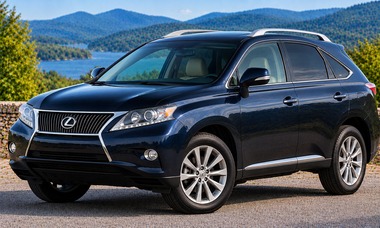
One of my favorite ways to get luxury at a reasonable used-car price is to consider an older Lexus RX 350.
The RX combines a comfortable, quiet ride with the mechanical dependability that has helped make Lexus one of the most respected luxury brands for long-term ownership.
I'd particularly favor the 2010–2015 RX 350. These vehicles use Toyota's proven naturally aspirated 3.5-liter V6, and many have accumulated substantial mileage without major engine problems.
The RX also tends to age gracefully inside. Even older examples can feel comfortable and well equipped compared with similarly priced mainstream SUVs.
Potential Problems to Check: Water-pump leaks, engine oil leaks, worn engine mounts, suspension components, and the condition of AWD equipment where fitted.
Bottom Line: A well-maintained third-generation RX 350 may be one of the best combinations of comfort, reliability, and used luxury value available.
9. Acura MDX: Best Older Three-Row Luxury Value
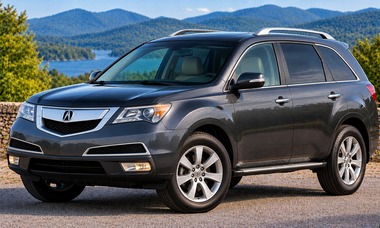
The Acura MDX is an appealing alternative to the Lexus RX for buyers who want a more athletic driving experience and an additional row of seats.
Its 3.7-liter V6 provides strong performance, while Acura's available Super Handling All-Wheel Drive system gives the MDX unusually capable handling for a family-oriented luxury SUV.
I'd focus primarily on 2010–2013 MDXs. These are mature second-generation vehicles that can provide excellent value compared with newer luxury crossovers.
However, the MDX is not simply a more luxurious Honda Pilot. Its sophisticated AWD system and luxury equipment can add repair expense, and some 3.7-liter engines have experienced oil consumption.
Potential Problems to Check: Engine oil consumption, timing-belt replacement, AWD fluid service, suspension condition, and operation of the numerous electronic accessories.
Bottom Line: The MDX can be an excellent older luxury SUV, especially when the purchase price reflects its age and the seller can document consistent maintenance.
10. Acura RDX: Best Compact Luxury Bargain
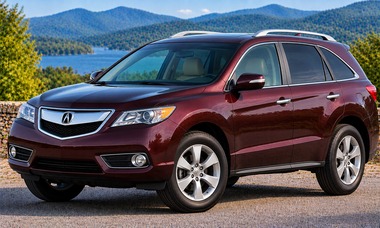
The Acura RDX is another older luxury SUV worth considering, particularly for buyers who want something smaller and less expensive to operate than a three-row MDX.
My preference would be the 2013–2016 second-generation RDX. Acura replaced the original turbocharged four-cylinder with a naturally aspirated 3.5-liter V6, creating a vehicle with strong performance and a relatively straightforward engine design.
These RDX models offer a comfortable cabin, good acceleration, and a useful amount of cargo space. Depending on local market conditions, they may also be priced attractively compared with similarly aged Lexus SUVs.
Potential Problems to Check: Timing-belt maintenance, transmission behavior, AWD fluid service, engine mounts, suspension wear, and electrical accessories.
Bottom Line: A well-maintained second-generation RDX is an appealing choice for someone who wants luxury features without moving into a particularly expensive or complicated European SUV. See our Acura Reliability Guide for more on Acura's used SUV lineup.
Which Older SUV Should You Buy?
All 10 SUVs on this list are worth considering, but the best choice depends on how you plan to use the vehicle.
| Your Priority | My Recommendation |
|---|---|
| Best overall older SUV | 2013–2014 Honda CR-V |
| Low ownership costs | 2014–2016 Toyota RAV4 |
| Best value alternative | 2014–2016 Mazda CX-5 |
| Family comfort | 2012–2016 Toyota Highlander |
| Three rows on a tighter budget | Well-maintained Honda Pilot |
| Off-road durability | 2012–2016 Toyota 4Runner |
| Large SUV and towing | 2009–2016 Toyota Sequoia |
| Luxury and comfort | 2010–2015 Lexus RX 350 |
| Three-row luxury | 2010–2013 Acura MDX |
| Compact luxury value | 2013–2016 Acura RDX |
For the average buyer, I'd begin with the CR-V, RAV4, and CX-5. They provide the most sensible combination of practicality, fuel economy, repair costs, and proven durability.
For families needing additional room, the Highlander would be my first stop. The Pilot is worth comparing, especially if a well-maintained example is available at a meaningfully lower price.
How Many Miles Is Too Many on an Older SUV?
There's no single mileage figure that makes an older SUV a bad purchase. A vehicle with 150,000 miles and excellent maintenance records can be a considerably better investment than one with 85,000 miles and a history of neglect.
As a general guideline:
- Under 100,000 miles: Potentially attractive, but age-related repairs can still be necessary. Low mileage doesn't guarantee good maintenance.
- 100,000–150,000 miles: Often an excellent shopping range for durable older SUVs, provided major maintenance has been completed.
- 150,000–200,000 miles: Still worth considering, but inspection findings and repair history become especially important.
- Over 200,000 miles: Possible to buy successfully, but I'd expect a meaningful repair reserve and unusually thorough documentation.
Some of the SUVs on this list are capable of exceeding 250,000 miles. That doesn't mean every example will, or that reaching those mileages will be inexpensive.
The important question isn't simply how many miles the engine can last. It's whether the transmission, suspension, cooling system, electronics, and rest of the vehicle can remain economical to maintain.
Older SUV Mechanical Inspection Checklist
In addition to a normal used-car inspection, I'd pay particular attention to these potential trouble spots when evaluating an SUV that's 10 to 20 years old.
1. Rust and Structural Corrosion
Inspect the frame or unibody structure, rocker panels, suspension mounting points, brake lines, and underbody. This is especially important for vehicles that spent years in states where roads are heavily salted during winter.
Serious structural corrosion can make an otherwise mechanically sound SUV a poor purchase.
2. Engine and Cooling System
Look for oil leaks, coolant loss, overheating history, unusual exhaust smoke, and evidence of poor maintenance. A cold start is especially useful because certain noises or symptoms disappear once the engine warms up.
Ask for records of major services such as timing-belt replacement where applicable.
3. Transmission Operation
During the test drive, check for delayed engagement, slipping, shuddering, unusually harsh shifts, and abnormal noises. A transmission that already exhibits serious symptoms can quickly eliminate any savings from a low purchase price.
4. AWD and Four-Wheel-Drive Systems
Check maintenance records for transfer cases, differentials, and AWD systems. Listen for unusual noises and investigate binding or vibration during turns.
On truck-based SUVs, verify that the four-wheel-drive system operates correctly using the manufacturer's recommended procedure.
5. Suspension, Steering, and Brakes
Worn struts, control arms, bushings, wheel bearings, steering components, and brakes are ordinary expenses on older vehicles. However, several needed repairs at once can add thousands of dollars to the real purchase cost.
6. Electronics and Interior Equipment
Test every power window, door lock, seat adjustment, climate-control function, warning light, and other major accessory. Luxury SUVs can be particularly expensive to repair when electronic components fail.
7. Accident History and Maintenance Records
Review the vehicle's history, but don't rely exclusively on a vehicle history report. Not every accident or repair is necessarily recorded.
Have an independent mechanic inspect the vehicle before purchase, and check its VIN for outstanding safety recalls through the NHTSA recall lookup.
Is Buying a 15- or 20-Year-Old SUV Really a Good Idea?
It certainly can be, but I wouldn't recommend buying an older SUV simply because its purchase price is attractive.
Let's say you find a well-maintained older SUV for $8,000. If it needs only routine maintenance and occasional modest repairs, it may provide excellent transportation value.
But another $8,000 SUV that immediately needs a transmission, major suspension work, and extensive cooling-system repairs could become far more expensive than purchasing a better vehicle in the first place.
That's why I'd set aside part of the budget for an independent inspection and potential repairs rather than spending every available dollar on the purchase itself.
Also consider safety. A dependable 2008 SUV may have a strong engine and transmission, but a newer vehicle can offer substantially improved crash protection, driver-assistance technology, and lighting. Reliability is important, but it shouldn't be the only consideration.
Final Verdict: What Is the Best Older SUV to Buy?
For most people shopping for an older SUV, I'd start with a 2013–2014 Honda CR-V, 2014–2016 Toyota RAV4, or 2014–2016 Mazda CX-5. All three offer strong reliability, manageable ownership costs, and the practicality most SUV buyers actually need.
If you need more passenger room, the Toyota Highlander would be my first choice, with the Honda Pilot close behind when its maintenance history and price are especially attractive.
For buyers prioritizing exceptional durability or towing, the Toyota 4Runner and Sequoia deserve consideration. And for affordable luxury, the Lexus RX 350, Acura MDX, and Acura RDX can be excellent values when carefully selected.
Ultimately, I'd rather buy a well-maintained example of any SUV on this list than a neglected example of the model with the strongest reputation. Buy the condition, maintenance history, and mechanical inspection results—not just the nameplate.
Your Trade-In
It's good to always know the value of your trade-in while you're evaluating your next possible purchase. Here's a good source for a quick and accurate appraisal: free trade-in appraisal.
What's Next?
Understand Questionable Dealer Fees
Beware of "dealer fees". Before agreeing to a dealer's numbers, see which dealer fees are legitimate, which can be negotiated, and which can be avoided.