


Which Toyota 4Runner years are the most reliable? Which years should you avoid? And if you're shopping for a used 4Runner, which generation and engine offer the best combination of durability, capability, and long-term value?
The Toyota 4Runner has one of the strongest reliability reputations in the SUV market. Its body-on-frame construction, naturally aspirated engines, conventional automatic transmissions, and relatively conservative mechanical design have helped many examples exceed 200,000 miles with routine maintenance.
But not every 4Runner is equally desirable. Some early fourth-generation models deserve extra inspection for engine and rust concerns, while older V8 models require timing-belt maintenance that buyers shouldn't overlook. Later fifth-generation 4Runners are generally extremely durable, but suspension wear, 4WD components, X-REAS systems, and corrosion can still create expensive repairs as mileage increases.
This guide covers Toyota 4Runner model years from 2003 through 2022, including reliability by generation, common problems, engine differences, years to avoid or inspect carefully, repair costs, expected lifespan, and the best years to buy.
In This Guide You'll Learn
- How reliable the Toyota 4Runner is over the long term
- Which Toyota 4Runner years are the best choices
- Which 4Runner years require extra inspection
- The most common problems by generation
- Which Toyota 4Runner engines are the most reliable
- What to know about the 4.7-liter V8 timing belt
- Why frame and underbody rust matter so much
- How 4WD systems and suspension components age
- How much common 4Runner repairs can cost
- How long a Toyota 4Runner can realistically last
Is the Toyota 4Runner Reliable?
Overall, the Toyota 4Runner is one of the more dependable midsize SUVs you can buy used. Many examples remain mechanically sound at mileage levels where other SUVs begin requiring major engine or transmission work.
The 2003-2009 fourth generation offers two durable engine choices: a 4.0-liter V6 and an available 4.7-liter V8. Both are capable of very high mileage, but they have different maintenance considerations.
The 4.0-liter V6 is simpler from a scheduled-maintenance standpoint because it uses a timing chain rather than a timing belt. Early versions, however, deserve additional inspection for potential head-gasket problems.
The 4.7-liter V8 is one of Toyota's most durable truck engines and is highly regarded for smoothness and towing ability. Its biggest maintenance requirement is the timing belt, which should be replaced at the appropriate interval along with related components such as the water pump when practical.
The fifth-generation 4Runner introduced for 2010 simplified the lineup by using the 4.0-liter V6 across most U.S. models. The drivetrain is extremely durable, and the five-speed automatic transmission has developed a strong long-term reputation.
As these vehicles age, however, rust can become just as important as drivetrain condition. A 4Runner with an excellent engine and transmission can still be a poor purchase if the frame, suspension mounts, brake lines, or underbody components are heavily corroded.
Bottom Line: The Toyota 4Runner is generally an excellent long-term SUV, but buyers should pay close attention to rust, maintenance history, and the specific engine and suspension configuration they're considering.
Reliability at a Glance
| Category | Our Assessment |
|---|---|
| Overall Reliability | Excellent |
| Strong Older Years | 2006-2009 |
| Strong Newer Years | 2014-2022 |
| Years Requiring Extra Inspection | 2003-2005 and heavily rusted examples from any year |
| Strong V6 Choice | 4.0-liter V6 |
| Strong V8 Choice | 4.7-liter V8 with documented timing-belt service |
| Expected Lifespan | 250,000-300,000+ miles with excellent maintenance |
| Maintenance Costs | Moderate |
Buyer Tip: On an older 4Runner, frame condition can matter more than mileage. We'd rather buy a rust-free 200,000-mile truck with extensive records than a 120,000-mile example with serious structural corrosion.
Finding a Good Used 4Runner Is Only Half the Deal
Mechanical condition should come first, particularly with an older SUV where potential mechanical problems and maintenance regularity can dramatically affect value. But once you've found the right one, the next question is whether you're paying the right price. Understanding how to negotiate a used car price without giving the dealer the upper hand can be just as important as identifying the best 4Runner years.
Reliability by Generation
2003-2009: Fourth Generation
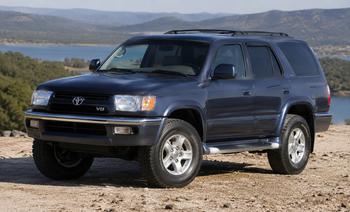
The fourth-generation Toyota 4Runner arrived for 2003 with a larger body, more refined interior, improved ride quality, and a choice between a 4.0-liter V6 and 4.7-liter V8.
This generation is especially appealing today because it combines modern enough comfort and safety with relatively simple mechanical systems and two very durable engines.
The biggest factors now are age, rust, maintenance history, and whether major scheduled services have been completed.
4.0-Liter V6
The 4.0-liter naturally aspirated V6 is one of the most common engines in the 4Runner and has a very good long-term durability record.
It uses a timing chain rather than a timing belt, which eliminates one major scheduled maintenance item. With regular oil changes and cooling-system care, these engines can commonly exceed 200,000 miles.
Early 2003-2005 examples deserve additional attention for head-gasket concerns. A developing problem may show up as unexplained coolant loss, overheating, rough running, or combustion gases entering the cooling system.
Not every early V6 develops this problem, but the possibility is significant enough that buyers should inspect carefully rather than assuming all fourth-generation 4Runners are equally trouble-free.
Possible Head-Gasket Warning Signs
- Unexplained coolant loss
- Overheating
- Rough startup or misfire
- White exhaust smoke
- Coolant odor
- Pressure building unusually quickly in the cooling system
Buyer Tip: A compression or cooling-system test can be worthwhile on an early 4.0-liter V6 if there is any evidence of coolant loss or overheating history.
4.7-Liter V8
The 4.7-liter naturally aspirated V8 is one of the standout engines in the fourth-generation 4Runner. It provides more torque, smoother power delivery, and stronger towing performance than the V6.
Long-term durability can be excellent, but the engine uses a timing belt. That means documentation matters.
If the belt, tensioners, pulleys, and water pump haven't been serviced at the appropriate interval, the buyer should budget for that work soon after purchase.
Because timing-belt service can be expensive, a 4Runner with documented recent replacement may actually be worth paying more for.
Buyer Tip: If a seller says the timing belt has been replaced, ask for the receipt. A verbal claim isn't as valuable as documentation showing when the work was done and what components were replaced.
Automatic Transmission
The automatic transmissions used in the fourth-generation 4Runner generally have a strong reputation for longevity.
That doesn't mean they are maintenance-free. High-mileage examples should shift smoothly without flaring, harsh engagement, shuddering, or hesitation.
Transmission fluid condition and service history are useful clues, especially on trucks that have been used for towing or off-road driving.
4WD System
Four-wheel-drive 4Runners are extremely capable, but the system should be exercised and tested periodically.
Actuators and related components can become troublesome if the 4WD system is rarely used. A truck that has spent years in two-wheel drive may develop issues when the next owner finally tries to engage four-wheel drive.
Common 2003-2009 4Runner Problems
- Head-gasket concerns on some early 4.0-liter V6 engines
- Timing-belt maintenance required on 4.7-liter V8 models
- Frame and underbody rust
- 4WD actuator issues
- Wheel bearing wear
- Suspension bushing and ball-joint wear
- Brake caliper problems
- Air conditioning and electrical repairs with age
- Oil and coolant leaks on higher-mileage vehicles
Buyer Tip: On any 2003-2009 4Runner, get the vehicle on a lift. Structural rust, suspension-mount corrosion, and brake-line condition can be more important than cosmetic appearance.
Bottom Line: The fourth-generation 4Runner is one of the strongest older SUV choices on the market, especially from 2006-2009. The V6 is durable and relatively simple, while the V8 is excellent when timing-belt service is documented.
2003-2005: Early Fourth-Generation Models
The earliest fourth-generation 4Runners deserve slightly more scrutiny because they combine first-year production with the higher likelihood of early 4.0-liter V6 head-gasket concerns.
Age also becomes a major factor. These trucks are now old enough that suspension, cooling systems, seals, bushings, electrical components, and rust may matter more than the original design.
That doesn't make a clean 2003-2005 4Runner a bad purchase. It simply means the inspection should be more thorough.
Buyer Tip: A well-maintained 2004 V8 with a recently replaced timing belt and minimal rust can easily be a better buy than a neglected 2008.
2006-2009: Later Fourth-Generation Models
The later fourth-generation 4Runners are among the best older choices because they benefit from several years of platform refinement while retaining the same basic durable drivetrain.
These years also tend to be easier to recommend because they are slightly newer and generally less associated with early V6 head-gasket concerns.
Condition still matters enormously. Rust, previous towing, off-road use, and suspension wear can create major differences between two trucks with similar mileage.
Bottom Line: If you're shopping for a reasonably priced older 4Runner, 2006-2009 models deserve to be near the top of the list.
2010-2022: Fifth Generation
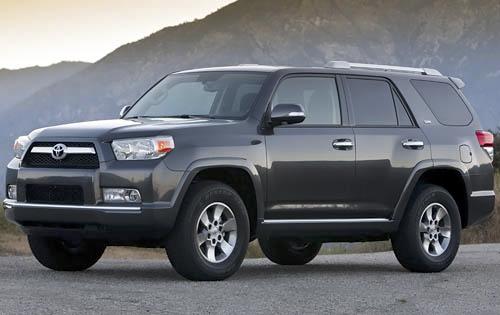
The fifth-generation Toyota 4Runner arrived for 2010 with a more rugged design, updated interior, stronger off-road identity, and continued body-on-frame construction.
In the U.S., the 4.0-liter naturally aspirated V6 became the dominant engine, paired with a five-speed automatic transmission.
This drivetrain is one of the main reasons the fifth-generation 4Runner has such a strong reliability reputation. It is not especially advanced by modern standards, but that relative simplicity has become a major long-term advantage.
Many examples exceed 200,000 miles without requiring major engine or transmission repairs, and 250,000-mile trucks are not unusual when maintenance has been consistent.
4.0-Liter V6
The 4.0-liter V6 continued into the fifth generation and has developed an excellent durability record.
It is naturally aspirated, uses a timing chain, and avoids turbocharger complexity. The engine is not especially fuel efficient, but its conservative design contributes to long-term reliability.
Routine oil changes, cooling-system service, spark plugs, and other scheduled maintenance are usually more important than major internal engine repairs.
Five-Speed Automatic Transmission
The five-speed automatic used in the fifth-generation 4Runner is another strong point.
It may seem outdated compared with newer eight- and ten-speed transmissions, but its proven design is one reason these trucks age well.
As with any high-mileage automatic, fluid condition and towing history deserve attention. Harsh shifts, slipping, delayed engagement, or unusual vibration should be investigated.
X-REAS Suspension
Some 4Runner trims use Toyota's X-REAS linked shock-absorber system to improve handling and reduce body roll.
When functioning properly, the system can improve ride and cornering behavior. As the vehicle ages, however, leaking X-REAS components can become expensive to replace.
Some owners eventually convert worn X-REAS systems to conventional shocks rather than repairing the original system.
Buyer Tip: If you're considering a 4Runner equipped with X-REAS, inspect the shocks and hydraulic lines for leakage and ask whether any suspension work has already been performed.
4WD and Off-Road Hardware
Many fifth-generation 4Runners are purchased specifically for off-road use, which makes previous use an important buying consideration.
Inspect skid plates, frame rails, suspension components, wheels, tires, and underbody panels for signs of repeated rock impacts, deep mud use, or hard trail driving.
Four-wheel-drive systems should engage correctly in every available mode. Vehicles equipped with locking differentials, terrain systems, or crawl-control features should be tested according to the owner's manual.
Common 2010-2022 4Runner Problems
- Frame and underbody rust in salt-heavy climates
- X-REAS suspension leaks on equipped models
- Wheel bearing wear
- Brake caliper and brake-system repairs
- Suspension bushing and ball-joint wear
- 4WD actuator or engagement problems
- Door-lock actuator and electrical issues
- Air conditioning and infotainment problems on older examples
- Normal oil and coolant leaks at very high mileage
Buyer Tip: Don't assume a lifted or heavily modified 4Runner is automatically better. Suspension lifts, oversized tires, aftermarket wheels, and aggressive off-road modifications can accelerate wear if installed or aligned poorly.
Bottom Line: The 2010-2022 4Runner is one of the most durable modern SUVs available. Later model years offer newer safety and convenience features, but drivetrain reliability is strong throughout the generation when maintenance has been consistent.
Best Toyota 4Runner Years to Buy
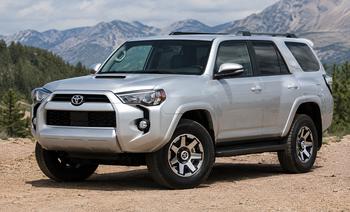
The best Toyota 4Runner years depend partly on your budget and whether you prefer the smaller, somewhat more refined fourth generation or the newer and more rugged fifth generation.
For an older 4Runner, we'd concentrate heavily on 2006-2009 models. These later fourth-generation trucks combine proven drivetrains with fewer concerns about the early 4.0-liter V6 head-gasket issue.
For buyers who can spend more, the fifth-generation 4Runner is one of the safest used-SUV choices available. The basic 4.0-liter V6 and five-speed automatic drivetrain remained remarkably consistent for many years, so condition and maintenance history can matter more than choosing one specific model year.
| Model Years | Why We Recommend Them |
|---|---|
| 2006-2009 | Excellent older 4Runner choices with proven V6 and available V8 engines. Later fourth-generation production and strong long-term durability make these especially appealing when rust is minimal. |
| 2013-2016 | Good value within the fifth generation. Proven 4.0-liter V6 and five-speed automatic with fewer age-related concerns than the earliest 2010-2012 trucks. |
| 2017-2019 | Excellent balance of age, proven reliability, equipment, and used-market availability. |
| 2020-2022 | Among the newest vehicles covered here, with the same fundamentally durable drivetrain plus newer safety and convenience technology. |
Buyer Tip: Don't pay thousands more for a particular model year while ignoring condition. A rust-free 2015 with complete maintenance records may be a considerably better long-term purchase than a neglected 2019.
Bottom Line: For an older bargain, we'd start with 2006-2009. For the best overall combination of reliability, age, and modern features, 2017-2022 models are particularly strong choices.
Also, late-model used 4Runners can also command surprisingly strong prices, sometimes not much less than a properly negotiated new 4Runner purchase. You may want to compare both alternatives rather than assume used is automatically the better value.
Toyota 4Runner Years to Avoid or Inspect Carefully
There aren't many 4Runner years we'd automatically tell a buyer to avoid. The more useful approach is identifying years and configurations that deserve additional inspection.
That's especially important with the 4Runner because overall condition can vary enormously. A vehicle that spent its life in a dry climate and received regular maintenance is very different from an identical-year truck exposed to road salt, heavy towing, neglect, or aggressive off-road use.
| Model Years | Why Extra Inspection Is Important |
|---|---|
| 2003-2005 V6 | Inspect carefully for coolant loss, overheating history, or other signs of an early 4.0-liter V6 head-gasket problem. |
| 2003-2009 V8 | Excellent engine, but verify timing-belt maintenance. Lack of documentation should be reflected in the purchase price. |
| Older Rust-Belt 4Runners | Frame and underbody corrosion can be more serious than engine mileage and may make an otherwise good-running vehicle a poor purchase. |
| Modified Off-Road Vehicles | Inspect carefully for suspension wear, underbody damage, poor-quality modifications, oversized tire stress, and evidence of hard use. |
Buyer Tip: We'd be reluctant to buy any older 4Runner without inspecting the underside. Fresh undercoating can sometimes hide corrosion rather than correct it, so look closely at the frame itself rather than judging by appearance alone.
Bottom Line: The 2003-2005 V6 models are the primary years we'd approach with additional mechanical caution, but severe rust can make any model year one to avoid.
Which Toyota 4Runner Engine Is Most Reliable?
Choosing between 4Runner engines is unusual because there really isn't a weak engine among the major choices covered here.
Both the 4.0-liter V6 and 4.7-liter V8 are capable of extremely high mileage. The better choice depends on whether you prioritize simpler scheduled maintenance, towing performance, fuel economy, or the character of the V8.
4.0-Liter V6
For most used 4Runner buyers, the naturally aspirated 4.0-liter V6 is our overall recommendation.
It combines strong durability with a timing-chain design and is available across both generations covered in this guide. Later versions have accumulated an enormous real-world track record in 4Runners, Tacomas, and other Toyota trucks and SUVs.
It's not particularly economical, sophisticated, or powerful by today's standards, but those aren't necessarily disadvantages for someone shopping primarily for longevity.
The absence of turbochargers and other increasingly common engine technologies keeps the basic drivetrain relatively straightforward.
Early fourth-generation V6 engines deserve additional head-gasket scrutiny, but later versions have an excellent long-term reputation.
4.7-Liter V8
The naturally aspirated 4.7-liter V8 available in the fourth-generation 4Runner is arguably even more appealing to enthusiasts.
It delivers smooth power, excellent torque, and very strong longevity. Properly maintained examples can accumulate exceptionally high mileage.
The tradeoff is timing-belt maintenance and somewhat greater fuel consumption.
If you're considering a V8, documentation showing timely timing-belt and water-pump service adds meaningful value. If that documentation isn't available, we'd assume the service may be needed and negotiate accordingly.
Buyer Tip: Don't avoid the V8 because it uses a timing belt. A documented timing-belt replacement is scheduled maintenance, not evidence of an unreliable engine.
Bottom Line: The 4.0-liter V6 is our best overall recommendation because of its durability, availability, and timing-chain design. But a properly maintained 4.7-liter V8 is one of the most desirable high-mileage Toyota powertrains of this era.
Toyota 4Runner Repair & Maintenance Costs
The 4Runner isn't necessarily inexpensive to maintain simply because it's reliable. It's a body-on-frame SUV with substantial brakes, tires, suspension components, and four-wheel-drive hardware.
What reliability can do is reduce the likelihood that routine ownership will be interrupted by major engine or transmission failures.
As mileage increases, suspension, wheel bearings, brakes, cooling-system components, seals, and 4WD hardware can still require significant investment.
| Maintenance or Repair | Typical Cost |
|---|---|
| Oil change | $70-$130 |
| Brake pads and rotors | $500-$1,000 |
| Wheel bearing replacement | $400-$800 |
| Shock or strut replacement | $700-$1,500+ |
| V8 timing belt and water pump service | $900-$1,500+ |
| X-REAS suspension repair | $1,500-$3,000+ |
| 4WD actuator repair | $800-$2,500+ |
| Major suspension overhaul | $1,500-$3,000+ |
These are general budgeting ranges rather than repair quotes. Actual costs vary significantly by model year, location, labor rates, parts selection, drivetrain, and the amount of work required.
One advantage of the 4Runner's popularity is excellent parts availability and widespread familiarity among independent repair shops. There is also a large aftermarket for suspension and off-road components.
Buyer Tip: Set aside money for maintenance even if you're buying a highly reliable 4Runner. A 180,000-mile truck may have an excellent engine and transmission while still needing $2,000 in tires, brakes, suspension components, and fluid services.
How Long Does a Toyota 4Runner Last?
A properly maintained Toyota 4Runner can realistically reach 250,000 miles, and 300,000 miles or more is achievable for particularly good examples.
This is one of the vehicles where 150,000 miles shouldn't automatically be considered high mileage.
A well-maintained 150,000-mile 4Runner may still have many years of useful service remaining, particularly if the frame is solid and the drivetrain has received consistent maintenance.
As mileage increases, however, longevity becomes less about whether the engine can continue running and more about the condition of the entire vehicle.
Typical 4Runner Lifespan
- 150,000 miles: Very achievable and not necessarily high mileage for a well-maintained 4Runner.
- 200,000 miles: A realistic expectation for a good example.
- 250,000 miles: Commonly achievable with consistent maintenance.
- 300,000+ miles: Realistic for exceptionally well-maintained vehicles.
Rust can dramatically change those expectations. A drivetrain capable of another 100,000 miles doesn't help much if structural corrosion makes the vehicle unsafe or uneconomical to repair.
The same principle applies to neglected maintenance. A high-mileage 4Runner can be an excellent purchase, but only if the previous owner has kept up with the repairs that naturally accumulate as a truck ages.
Bottom Line: We'd consider 250,000 miles a very realistic lifespan for a properly maintained 4Runner, with 300,000 miles or more entirely possible. Frame condition may ultimately determine the vehicle's lifespan before the engine does.
What Usually Needs Attention After 100,000 Miles?
One reason 4Runners command unusually high used prices is that 100,000 miles doesn't represent the end of their useful life. But it does mark the point where buyers should begin looking more closely at accumulated maintenance.
Depending on age and previous service, a 100,000-150,000-mile 4Runner may need considerably more than routine oil changes.
- Inspect the cooling system, hoses, radiator, and water pump.
- Check spark-plug replacement history.
- Inspect transmission and drivetrain fluids.
- Check front and rear differential fluids.
- Inspect transfer-case operation and fluid condition on 4WD models.
- Check wheel bearings for noise or play.
- Inspect shocks, bushings, ball joints, and control arms.
- Inspect brake calipers, pads, rotors, and brake lines.
- Check steering components for looseness or leakage.
- Inspect the frame and underbody carefully for corrosion.
- Verify timing-belt history on the 4.7-liter V8.
- Inspect X-REAS components for leakage on equipped models.
Buyer Tip: A 4Runner that has already received major suspension, brake, cooling-system, and scheduled maintenance can be worth substantially more than another truck with the same mileage that still needs all of it.
Buying a Used Toyota 4Runner: What Matters Most?
Used 4Runners often command higher prices than comparable midsize SUVs because buyers recognize their durability and resale value.
That makes careful inspection even more important. Paying a premium for Toyota reliability only makes sense if the individual vehicle is actually in good condition.
Before You Buy
- Review maintenance and repair records.
- Inspect the frame and underbody for rust.
- Look closely at suspension mounting points and structural areas.
- Check for evidence of fresh coatings that may conceal corrosion.
- Test the 4WD system in every appropriate mode.
- Check for 4WD warning lights or actuator problems.
- Inspect engine oil and coolant condition.
- Look for unexplained coolant loss on early 4.0-liter V6 models.
- Verify timing-belt history on 4.7-liter V8 models.
- Check the automatic transmission for smooth operation.
- Inspect X-REAS shocks and hydraulic lines on equipped models.
- Check wheel bearings and suspension components.
- Inspect for underbody damage from off-road use.
- Evaluate aftermarket lifts, wheels, and suspension modifications carefully.
- Check tires for uneven wear that could indicate alignment or suspension problems.
- Check the VIN for outstanding recalls.
- Have an independent mechanic perform a pre-purchase inspection.
Be particularly cautious with heavily modified trucks. A quality suspension lift installed correctly isn't necessarily a problem, but poorly chosen components, extreme lift heights, oversized tires, and incorrect alignment can accelerate wear on wheel bearings, steering, suspension, and drivetrain components.
Buyer Tip: When possible, we'd favor a stock or lightly modified 4Runner with extensive maintenance records over a heavily modified truck whose previous use is unknown.
Trading Your Current Vehicle?
The price you negotiate on a 4Runner is only one side of the transaction. A dealer can appear to give you an excellent price while actually recovering a significant portion of that money through the trade. Before negotiating both numbers together, understand what your trade-in is really worth and how dealers determine trade-in offers. Keeping the 4Runner price and your trade value separate makes it much easier to judge the actual deal.
Pros & Cons of Buying a Used Toyota 4Runner
Pros
- Excellent long-term reliability
- 250,000-300,000+ miles possible with proper maintenance
- Durable naturally aspirated engines
- Strong automatic transmissions
- Excellent off-road capability
- Body-on-frame construction
- Strong towing capability for a midsize SUV
- Excellent parts availability
- Strong resale value
- Large enthusiast and aftermarket support network
- Relatively simple fifth-generation drivetrain
- Available 4.7-liter V8 in the fourth generation
Cons
- Used prices are often considerably higher than competing SUVs
- Poor fuel economy
- Frame rust can become serious on older vehicles
- Early 4.0-liter V6 engines deserve additional head-gasket scrutiny
- 4.7-liter V8 requires timing-belt maintenance
- X-REAS suspension repairs can be expensive
- 4WD actuator repairs can be costly
- Truck-like ride and handling compared with crossover SUVs
- Older examples may have substantial off-road or towing wear
- High resale values can encourage sellers to overprice mediocre vehicles
Don't Let Dealer Fees Change a Good Prius Deal
Once you've found the right 4Runner and properly negotiated its price, pay close attention to what happens before the final paperwork is signed. Documentation charges, dealer-installed accessories and other additions can substantially change what looked like an attractive price. Comparing the complete out-the-door number, and knowing which dealer fees you must pay, can negotiate, or should avoid, makes it much easier to tell whether you're actually getting the deal you negotiated.
Final Verdict
The Toyota 4Runner deserves its reputation as one of the longest-lasting SUVs on the used market. Both generations covered here offer durable engines, strong automatic transmissions, genuine off-road capability, and the potential to exceed 250,000 miles with proper maintenance.
For buyers seeking an older and less expensive 4Runner, we'd concentrate on 2006-2009 models. The 4.0-liter V6 is an excellent all-around choice, while the 4.7-liter V8 is particularly desirable for buyers who appreciate its additional torque and smoothness and don't mind timing-belt maintenance.
We'd inspect 2003-2005 V6 models somewhat more carefully because of the possibility of early head-gasket problems. That doesn't make every early fourth-generation 4Runner a bad purchase, but cooling-system condition deserves additional attention.
The 2010-2022 fifth generation is even easier to recommend. Toyota retained the naturally aspirated 4.0-liter V6 and proven five-speed automatic for years while many competitors moved toward increasingly complicated powertrains. The result is an SUV that may feel mechanically conservative but has an excellent record for long-term durability.
For the best combination of age, reliability, and used-market value, we'd give particular consideration to 2017-2019 models. Buyers with larger budgets may prefer 2020-2022 versions for their newer technology and safety equipment, while shoppers looking for value can find excellent vehicles among earlier fifth-generation years.
But model year should never override condition. On an older 4Runner, rust, maintenance history, previous off-road use, and accumulated repairs can matter far more than whether the vehicle is one or two years newer.
A clean 4Runner with 170,000 miles, a solid frame, extensive maintenance records, and a healthy drivetrain can easily be a better purchase than a 100,000-mile example with corrosion, poor maintenance, and questionable modifications.
Choose carefully, and a Toyota 4Runner can realistically provide 250,000-300,000 miles or more of service, making it one of the strongest long-term used-SUV choices available.
Still comparing Toyota models? See our Toyota reliability guide for the best used Toyota models and years, common problems to watch for, and how the major Toyota models compare.