

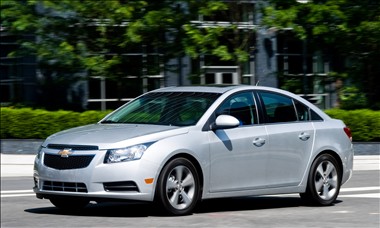
2012 Chevy Cruze Reliability
The 2012 Chevy Cruze can be an economical and comfortable used compact car, but reliability is mixed and depends heavily on engine choice, maintenance history, and how well previous cooling-system problems have been addressed. Many examples have accumulated substantial mileage, but the Cruze has several recurring trouble areas that make a careful pre-purchase inspection particularly important.
The two primary engines are a naturally aspirated 1.8-liter four-cylinder and a turbocharged 1.4-liter four-cylinder. The 1.8-liter is mechanically simpler and avoids the turbocharger and several of the 1.4-liter engine's additional components. For a buyer primarily interested in long-term simplicity, I generally prefer the 1.8-liter engine.
The 1.4-liter turbo provides stronger low-rpm torque and was the more popular choice in many Cruze trim levels, but its cooling and crankcase ventilation systems deserve close attention. Water pump leaks, thermostat housing and coolant outlet problems, hoses, and other plastic cooling-system components can lead to repeated coolant loss. An overheating history is a major concern on any used Cruze.
The 1.4-liter engine can also develop problems involving its PCV system. A failed diaphragm or other crankcase ventilation problem can cause vacuum leaks, rough idle, whistling noises, oil leaks, increased oil consumption, or check-engine lights. Because components of the system are integrated into other engine parts, what initially appears to be a small PCV problem can sometimes require more extensive repairs.
The 1.8-liter engine isn't trouble-free. Buyers should still inspect for cooling-system leaks, oil leaks, ignition problems, and timing belt maintenance. Unlike the 1.4-liter turbo, the 1.8-liter uses a timing belt that requires scheduled replacement, so documentation becomes increasingly important on a 2012 vehicle.
Both six-speed manual and six-speed automatic transmissions were available. The automatic can provide good service but should be checked carefully for harsh shifts, hesitation, delayed engagement, or fluid leaks. Manual-transmission cars eliminate some automatic transmission concerns but can require clutch and related repairs as mileage increases.
Overall, I would rate the 2012 Cruze as below average to average for long-term reliability. It can still make sense as an inexpensive commuter, particularly when maintenance and repair history are well documented, but I wouldn't buy one simply because it has low mileage or an attractive asking price.
- Overall reliability: Below Average to Average
- Expected lifespan: 150,000 to 200,000+ miles with good maintenance, with some well-maintained examples going farther
- Best choice: Well-maintained 1.8-liter model for mechanical simplicity, or a carefully maintained 1.4-liter turbo with documented cooling-system and PCV repairs
- Watch for: Coolant leaks, overheating history, 1.4-liter PCV problems, turbocharger issues, transmission behavior, oil leaks, and neglected timing belt service on the 1.8-liter
Bottom line: The 2012 Chevy Cruze isn't one of the strongest compact cars of its era for reliability, but a well-maintained example can still provide inexpensive transportation. I'd favor condition and repair history over mileage. A Cruze with documented cooling-system maintenance and no overheating history is much more attractive than a lower-mileage car showing unexplained coolant loss or multiple unresolved warning lights.
- Why it's a good choice: Good fuel economy, comfortable highway ride, solid interior for its era, affordable purchase price, and widely available parts
- Biggest concern: Cooling-system problems, particularly on the 1.4-liter turbo, can lead to overheating and more serious engine damage if ignored
- Best version: For simplicity, a well-maintained 1.8-liter with documented timing belt service; a 1.4-liter turbo can also be worthwhile if known problem areas have already been addressed
- Buy only if: The cooling system holds pressure, there is no evidence of overheating, the engine runs smoothly, and the transmission operates correctly
Is the 2012 Chevy Cruze a Good Year or One to Avoid?
The 2012 Chevy Cruze is best described as a "buy selectively" year. I wouldn't automatically avoid every example, because plenty of these cars have provided long service and their low used prices can make them appealing to budget-conscious buyers. However, reliability isn't consistent enough for me to recommend buying one without a thorough inspection.
The 1.4-liter turbo requires the most careful evaluation. A car with documented replacement of known cooling-system and PCV components may actually be more attractive than an apparently untouched lower-mileage example. At this age, properly completed repairs can be an advantage rather than a reason to reject the car.
The naturally aspirated 1.8-liter engine is appealing because of its relative simplicity, but buyers need to account for timing belt maintenance. If there is no proof of replacement and the service is due or overdue, I'd treat that as an immediate maintenance expense when negotiating the purchase price.
Price matters as well. The Cruze makes the most sense when it sells at a meaningful discount compared with a similarly maintained Toyota Corolla or Honda Civic. If the prices are close, I'd generally favor the stronger long-term reliability record of the Toyota or Honda.
Buyer Takeaway: The 2012 Cruze can be a reasonable budget purchase, but don't buy one without checking the cooling system carefully. For the 1.4-liter turbo, investigate PCV operation and coolant loss in addition to ordinary engine and transmission condition. For the 1.8-liter, verify timing belt history. A well-documented Cruze can be worth considering; an inexpensive one with unexplained coolant loss is a car I'd leave behind.
When it comes to exploring the Cruze market or actually buying, it's usually best to visit one of the major online car listing sites and contact dealers about two or three specific vehicles that interest you. Once they respond, you'll get a better feel for how flexible their prices really are. And if you're closer to buying, it's an excellent way to create competition among dealers for your business, which can then lead to an even better price.
I happen to like Edmunds for this, but any of the major car listing websites can work.
2012 Chevy Cruze Common Mechanical Problems
The 2012 Cruze has several recurring problems that deserve specific attention. Cooling-system and PCV problems are especially important on the 1.4-liter turbo because ignoring relatively small leaks or failed components can eventually create much more expensive engine problems.
- Water pump leaks: Coolant leakage from the water pump is a well-known problem on the 1.4-liter turbo. Symptoms can include a falling coolant level, visible coolant residue, a coolant smell, insufficient cabin heat, or eventual overheating. Any unexplained coolant loss should be diagnosed rather than repeatedly topping off the reservoir.
- Thermostat housing problems: Thermostat housings and related cooling-system components can leak or fail. Because several components incorporate plastic housings and fittings, age and repeated heat cycles can eventually cause cracking or leakage.
- Coolant outlet and plastic fitting leaks: Plastic coolant outlets, connections, hoses, and seals can deteriorate with age. A Cruze with multiple small cooling-system leaks may require more work than simply replacing the first visibly leaking component.
- PCV diaphragm failure: The 1.4-liter turbo's crankcase ventilation system can develop diaphragm and related failures. Symptoms may include whistling noises, rough idle, excessive vacuum, oil leaks, check-engine lights, or unusual fuel-trim readings.
- Valve cover and PCV-related problems: Part of the crankcase ventilation system is associated with the valve cover assembly. Depending on the failure, correcting a PCV problem may require replacement of the valve cover or additional components rather than simply installing a small standalone valve.
- Intake manifold PCV problems: Problems elsewhere in the 1.4-liter engine's PCV system can contribute to recurring symptoms even after another component has been replaced. If a Cruze has repeated PCV-related repairs, the entire system should be evaluated rather than treating each symptom separately.
- Turbocharger problems: Higher-mileage 1.4-liter engines can develop turbocharger or boost-control problems. Symptoms can include reduced power, underboost codes, unusual noises, smoke, or inconsistent acceleration. Turbo replacement can significantly change the economics of buying an inexpensive Cruze.
- Oil leaks: Valve cover areas, turbocharger oil lines, seals, and other components can begin leaking with age. Check the oil level before starting the car and inspect for both visible leakage and a burning-oil smell after the test drive.
- 1.8-liter timing belt maintenance: The naturally aspirated 1.8-liter uses a timing belt rather than the timing-chain arrangement found on the 1.4-liter turbo. Verify replacement history. An overdue timing belt shouldn't be ignored simply because the engine is currently running normally.
- Ignition coil and spark plug problems: Misfires, hesitation, rough running, and check-engine lights can result from worn spark plugs or ignition components. These are generally manageable repairs, but persistent misfires deserve proper diagnosis.
- Automatic transmission shifting problems: The six-speed automatic can develop harsh shifts, delayed engagement, hesitation, slipping, or other drivability problems. Test the transmission from cold through full operating temperature and under several throttle conditions.
- Transmission fluid leaks: Check around the transmission and underneath the vehicle for evidence of fluid leakage. A transmission that has repeatedly operated with insufficient fluid may have sustained additional internal wear.
- Manual transmission clutch wear: Manual-transmission Cruzes can require clutch replacement as mileage increases. Slipping under acceleration, chatter when starting from a stop, or an unusually high engagement point can indicate significant wear.
- Engine mount deterioration: Worn engine or transmission mounts can cause excessive vibration at idle or clunking when shifting between Reverse and Drive. Mount replacement is usually manageable but should be considered when evaluating a rough-running car.
- Wheel bearing wear: A humming or growling noise that increases with road speed can indicate a worn hub or wheel bearing. This is a relatively routine higher-mileage repair.
- Suspension wear: Struts, sway bar links, bushings, ball joints, and other components can wear as mileage accumulates. Listen for clunks and check the tires for uneven wear.
- Electrical and sensor problems: Sensors, switches, power windows, door locks, infotainment equipment, and other accessories can develop faults. Test all electrical equipment before buying because several small repairs can add substantially to the cost of an inexpensive car.
- Brake vacuum assist recall concern: Certain 2011-2012 Cruzes equipped with the 1.4-liter turbo and six-speed automatic were recalled for a condition that could reduce brake assist and increase pedal effort. Verify by VIN that all applicable safety recalls have been completed.
The most important warning sign on a 2012 Cruze is repeated coolant loss without a clear explanation. A seller who says the car "just needs a little coolant every once in a while" is describing a problem, not normal maintenance. Coolant should remain in the system, and the source of any recurring loss should be identified before purchase.
Buyer Tip: Inspect the Cruze when the engine is completely cold. Check the coolant level before startup and look around the reservoir, water pump, thermostat housing, coolant outlets, hoses, and engine compartment for dried coolant residue. On the 1.4-liter turbo, listen for PCV-related whistling and check for rough idle or warning lights. A cooling-system pressure test is a particularly worthwhile part of a pre-purchase inspection.
2012 Chevy Cruze Pros and Cons
The 2012 Cruze offers a lot of car for relatively little money. It has a more substantial highway feel and a nicer interior than many inexpensive compact cars of the same period. Its weakness is that several seemingly minor engine and cooling-system problems can accumulate, making the cheapest example considerably more expensive to own than expected.
Pros
- Affordable used prices: The Cruze often costs substantially less than a comparable Corolla or Civic, making it accessible to buyers on a tight budget.
- Good fuel economy: Both four-cylinder engines can provide economical commuting, with the 1.4-liter turbo particularly efficient when operating properly.
- Comfortable highway ride: The Cruze has a relatively substantial and composed feel for an economy car of its era.
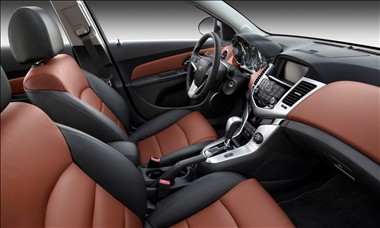
- Good interior quality: Cabin materials and design were competitive when new and remain reasonably attractive today.
- Conventional automatic transmission: Buyers who prefer a traditional geared automatic don't have to deal with an aging CVT.
- Simple 1.8-liter option: The naturally aspirated engine eliminates the turbocharger and some of the additional plumbing and components found on the 1.4-liter.
- Widely available parts: The Cruze sold in large numbers, making replacement components readily available from GM, aftermarket suppliers, and salvage sources.
- Easy to find: Because so many were sold, buyers can afford to be selective rather than settling for the first Cruze they encounter.
Cons
- Cooling-system leaks are a major weakness: Water pumps, thermostat housings, coolant outlets, hoses, and related components can create recurring coolant-loss problems.
- 1.4-liter PCV system can be troublesome: Failure can cause several different symptoms and sometimes requires more than replacing a single inexpensive component.
- Turbocharger adds repair risk: The 1.4-liter provides good efficiency and torque, but an aging turbo system adds expense that the 1.8-liter doesn't have.
- Overheating can turn a small problem into a large one: Ignoring coolant loss can eventually damage the engine and transform an inexpensive repair into a major expense.
- 1.8-liter requires timing belt service: Its mechanical simplicity comes with a scheduled maintenance item that buyers need to verify.
- Automatic transmission behavior deserves scrutiny: Harsh or delayed shifts can indicate repairs that aren't worthwhile on a very inexpensive example.
- Reliability isn't class-leading: The Cruze can provide substantial service, but it generally requires more careful selection than the best Corolla and Civic years.
- Cheap examples can be false bargains: A Cruze needing cooling-system, PCV, turbocharger, transmission, and suspension work can quickly consume far more than the amount saved on the purchase price.
Buyer Takeaway: The 2012 Chevy Cruze can make sense as inexpensive transportation, but I'd be selective. For maximum mechanical simplicity, I prefer a well-maintained 1.8-liter with documented timing belt service. A 1.4-liter turbo can also be a reasonable purchase when its cooling system and PCV system have been properly maintained and repaired. Whichever engine you choose, unexplained coolant loss, overheating history, poor maintenance records, or questionable transmission behavior are good reasons to keep shopping.
And it's always a good idea to check out rivals to help make the most informed buying decision. Top models also worth considering include the newly redesigned the Honda Civic, the also redesigned Hyundai Elantra as well as the Mazda3 and VW Jetta.
More On Chevy Cruze Reliability
For more detailed information on the reliability of the Cruze, visit our Used Chevy Cruze Reliability Guide, a comprehensive look at the model years, engines, common problems, maintenance costs, expected lifespan, and the best years to buy or those to avoid.
What's Next?
It's good to always know the value of your trade-in while you're evaluating your next possible purchase. Here's a good source for a quick and accurate appraisal: free trade-in appraisal.
Lastly, More On Chevrolet Reliability: If you'd like to compare different Chevy models, or model years, including the Cruze, be sure to read our Chevrolet Reliability & Problems: Best Used Chevys & Years Guide. It highlights the models, best years to buy, common problems, and helps identify the best overall choices.
Some Insider Insights: