

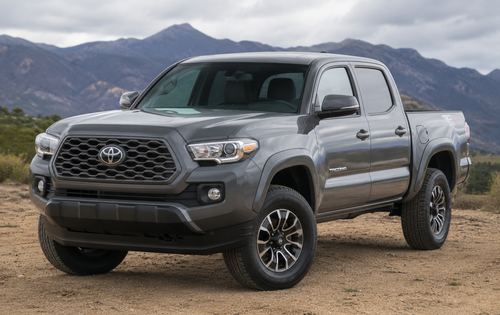
Which Toyota Tacoma years are the most reliable? Which years should you avoid? And if you're shopping for a used Tacoma, which engine and generation offer the best combination of durability, capability, and long-term value?
The Toyota Tacoma has one of the strongest reliability reputations of any midsize pickup. Its naturally aspirated four-cylinder and V6 engines, relatively straightforward drivetrains, and rugged construction have helped many Tacomas remain on the road well beyond 200,000 miles. A properly maintained truck reaching 250,000 or even 300,000 miles isn't unusual enough to surprise an experienced Tacoma buyer.
But the Tacoma's reputation can also make buyers too confident. Serious frame corrosion affected portions of the older Tacoma population, some engines have specific maintenance requirements, and the 2016 redesign brought a new 3.5-liter V6 and six-speed automatic that changed the driving experience considerably from the highly regarded 4.0-liter V6 used previously.
This guide covers U.S.-market Toyota Tacoma model years from 1995 through 2023, including reliability by generation, common problems, frame rust, engine differences, transmission concerns, years to avoid or inspect carefully, repair costs, expected lifespan, and the best years to buy.
In This Guide You'll Learn
- How reliable the Toyota Tacoma is over the long term
- Which Toyota Tacoma years are the best choices
- Which Tacoma years require extra inspection
- The most common problems by generation
- Why frame rust is so important on older Tacomas
- Which Tacoma engines are the most reliable
- How the 3.4-liter, 4.0-liter, and 3.5-liter V6 engines compare
- What to know about Tacoma automatic transmission behavior
- What usually needs attention on a high-mileage Tacoma
- How much common Tacoma repairs can cost
- How long a Toyota Tacoma can realistically last
Is the Toyota Tacoma Reliable?
Overall, the Toyota Tacoma is one of the more durable used pickup trucks you can buy. Its strongest engines have demonstrated the ability to accumulate extremely high mileage, and major transmission failures aren't normally what define Tacoma ownership.
The first-generation Tacoma established much of this reputation. The 2.4-liter and 2.7-liter four-cylinder engines are simple and durable, while the 3.4-liter V6 became particularly well known for longevity.
The second-generation Tacoma introduced for 2005 became larger and more powerful. Its available 4.0-liter V6 is one of our favorite Tacoma engines and can easily make a 150,000-mile truck worth considering when maintenance and condition are strong.
The third generation arrived for 2016 with a new 3.5-liter V6 and six-speed automatic. These trucks can also be very reliable, but some drivers have complained about gear hunting, hesitation, and shift behavior that makes the powertrain feel less responsive than the older 4.0-liter V6 combination.
The Tacoma's biggest long-term concern, however, isn't necessarily under the hood.
Frame condition can be more important than engine mileage.
Corrosion became a major issue for some older Tacomas, particularly vehicles operated for years in areas where road salt is heavily used. Toyota eventually established extensive inspection, corrosion-treatment, warranty-enhancement, and frame-replacement programs for certain affected trucks.
That's why we'd never buy an older Tacoma based solely on its mechanical reputation. A 250,000-mile engine may still have plenty of life remaining while severe frame corrosion can make the entire truck uneconomical or unsafe to own.
Bottom Line: The Tacoma deserves its reputation for excellent longevity, but the individual truck matters more than the badge. Frame condition, maintenance history, previous use, modifications, and drivetrain condition should determine whether a used Tacoma is actually a good purchase.
Reliability at a Glance
| Category | Our Assessment |
|---|---|
| Overall Reliability | Excellent |
| Strong First-Generation Years | 2001-2004 |
| Strong Second-Generation Years | 2012-2015 |
| Strong Third-Generation Years | 2020-2023 |
| Years Requiring Extra Inspection | 1995-2000 due largely to age and corrosion; 2005-2010 for frame condition; 2016-2017 for early third-generation concerns |
| Most Important Older-Truck Concern | Frame and underbody corrosion |
| Most Proven V6 Choices | 3.4-liter V6 and 4.0-liter V6 |
| Expected Lifespan | 250,000-300,000+ miles with excellent maintenance |
Buyer Tip: Never assume a Tacoma is worth a premium simply because it has low mileage. We'd rather buy a 180,000-mile truck with a solid frame and excellent maintenance history than a 90,000-mile example with serious structural corrosion.
If you may be buying soon, I'd recommend reading my most effective negotiation method for used cars. It explains a quick way to identify the dealerships most motivated to deal, no matter how busy they may seem, and how to follow up once you've found them. That can be the difference between getting a good price and getting a great one.
And, if you'd consider buying a brand-new Tacoma if you could get a lower-than-expected price, learn how to shop the dealer, not just the car.
Reliability by Generation
1995-2004: First-Generation Toyota Tacoma
The Tacoma debuted for the 1995 model year and quickly established itself as a durable compact pickup. Compared with later Tacomas, first-generation trucks are smaller, lighter, simpler, and increasingly difficult to find in excellent original condition.
Three engines are especially relevant to used buyers: the 2.4-liter four-cylinder, 2.7-liter four-cylinder, and 3.4-liter V6.
All three can provide excellent longevity. At this age, however, the question isn't simply whether the engine design is reliable. These trucks are now old enough that rust, cooling systems, suspension components, steering parts, seals, hoses, electrical equipment, and previous repairs can matter just as much.
What Are the Warning Signs of Premature Lower Ball Joint Failure on Older Tacomas?
Warning signs of a worn Toyota Tacoma lower ball joint can include clunking over bumps, looseness or wandering in the steering, vibration through the steering wheel, uneven front-tire wear, and abnormal movement when the front suspension is checked with the truck raised correctly. In advanced cases, the joint can separate and allow the front wheel and steering knuckle to collapse outward, causing a sudden loss of steering control.
Certain 2001–2004 Tacomas were included in a Toyota safety recall involving premature lower ball-joint wear, but ordinary age and mileage can also wear the joints on other older trucks. Check the VIN to determine whether an applicable recall repair was completed, and do not assume that a replacement part is still in good condition merely because the recall was performed years ago. During a pre-purchase inspection, have a technician check both lower ball joints for excessive play, damaged dust boots, lost grease, corrosion, and evidence of low-quality replacement parts. Noise alone cannot confirm ball-joint failure, but any looseness in this safety-critical component should be corrected before the truck is driven regularly.
2.4-Liter Four-Cylinder
The naturally aspirated 2.4-liter four-cylinder is one of the simplest Tacoma engines covered in this guide.
Performance is modest, especially compared with later V6 trucks, but simplicity is part of its appeal. A well-maintained example can accumulate very high mileage without requiring unusually complicated repairs.
For someone who wants a basic two-wheel-drive work truck and doesn't need strong towing or acceleration, a good 2.4-liter Tacoma can still make sense.
Today, however, condition is likely to matter much more than choosing between the older four-cylinder engines.
2.7-Liter Four-Cylinder
The naturally aspirated 2.7-liter four-cylinder is another excellent durability choice and provides somewhat stronger performance than the smaller engine.
It's particularly attractive for buyers who value mechanical simplicity and don't need the additional power of the V6.
These engines can reach extremely high mileage when oil changes, cooling-system maintenance, and other routine services haven't been neglected.
Buyer Tip: Don't dismiss a four-cylinder Tacoma because it feels slow compared with a modern truck. If your priorities are durability and inexpensive operation rather than towing or acceleration, simplicity can be an advantage.
3.4-Liter V6
The naturally aspirated 3.4-liter V6 is one of the standout engines in Tacoma history.
It provides substantially better power than the four-cylinder engines while retaining excellent long-term durability. Properly maintained examples can exceed 200,000 miles without major internal engine work, and significantly higher mileage is achievable.
The important maintenance consideration is the timing belt.
Unlike later Tacoma V6 engines that use timing chains, the 3.4-liter V6 uses a timing belt that requires periodic replacement. Buyers should ask for documentation showing when the belt was last changed.
Timing-belt service is often combined with water-pump replacement and related components because much of the labor overlaps.
Buyer Tip: A 3.4-liter V6 Tacoma with documented recent timing-belt and water-pump service may be worth paying more for than an otherwise similar truck with no service records.
How Do I Inspect for Frame Rust on 1st and 2nd Generation Toyota Tacomas?
Inspect the entire frame of a 1995–2015 Toyota Tacoma, not merely the easily visible sections behind the front wheels. Serious corrosion frequently begins in areas that trap road salt, mud, and moisture, including the inside and underside of the frame rails, crossmembers, suspension mounting points, leaf-spring hangers, cab and bed mounting areas, and the frame near the fuel tank and rear axle. Surface discoloration is common on an older truck, but heavy scaling, swelling seams, flaking metal, perforation, previous patchwork, or distortion around mounting points can indicate structural deterioration.
Use a bright flashlight and inspection mirror, and look through factory openings to examine the inside of the frame where possible. Do not rely on fresh black undercoating, which can conceal corrosion or repairs. Without damaging the seller’s truck, look for metal that is separating in layers, crumbling edges, suspicious welds, or areas that sound unusually dull when evaluated by a qualified inspector. Ask whether the truck received a Toyota frame inspection, corrosion treatment, buyback, or frame replacement, and verify the history using the VIN. Any older Tacoma from a salt-belt state should receive an inspection on a lift before purchase because severe frame corrosion can make an otherwise dependable truck unsafe or uneconomical to repair.
Where to Look for Tacoma Rust
- Main frame rails
- Frame crossmembers
- Suspension mounting points
- Leaf-spring mounting areas
- Rear frame sections
- Brake and fuel lines
- Body mounting points
- Areas previously coated or repaired
Fresh black coating underneath an old Tacoma isn't automatically reassuring. It may represent responsible corrosion protection, but it can also make existing deterioration harder to evaluate.
Buyer Tip: If you're seriously considering an older Tacoma, have it inspected on a lift by someone who understands truck-frame corrosion. This isn't an area we'd evaluate solely from photographs.
Common 1995-2004 Tacoma Problems
- Premature lower ball joint failure
- Frame and underbody corrosion
- Timing-belt maintenance on the 3.4-liter V6
- Valve-cover and other oil leaks as engines age
- Cooling-system deterioration
- Starter and alternator wear
- Suspension bushing and ball-joint wear
- Wheel bearing wear
- Steering component wear
- Clutch wear on manual-transmission trucks
- Electrical and accessory problems associated with age
Bottom Line: The first-generation Tacoma can be an exceptionally durable older pickup, and the 3.4-liter V6 is particularly appealing. But these trucks should now be purchased primarily on frame condition, maintenance history, and overall preservation rather than reputation alone.
2005-2015: Second-Generation Toyota Tacoma
The Tacoma was completely redesigned for 2005. It became larger, more powerful, and more capable while retaining the rugged body-on-frame construction that Tacoma buyers expected.
The second generation offered a naturally aspirated 2.7-liter four-cylinder and a 4.0-liter V6.
For many used-truck shoppers, the 4.0-liter V6 is the engine that defines this generation.
Why Do the Front Parking Light Lenses Melt on 2nd-Generation Toyota Tacomas?
Heat damage around a second-generation Toyota Tacoma’s front parking-light or daytime-running-light area can occur when the bulb and socket generate enough sustained heat to discolor, distort, or melt nearby plastic. The condition may be made worse by an incorrect high-wattage bulb, a damaged or loose socket, corrosion that increases electrical resistance, poor-quality replacement housings, or wiring modifications. Symptoms can include browned plastic, a cloudy or deformed lens, a bulb that repeatedly fails, or a socket that appears brittle or burned.
When inspecting a 2005–2015 Tacoma, compare both front lamp assemblies and look closely around the bulb sockets for heat discoloration, warping, cracked plastic, damaged wiring, or evidence that a previous owner installed nonstandard bulbs. Replacing only the bulb may not solve the problem if the socket or housing has already been damaged. An appropriate LED conversion may produce less heat, but the bulb must be compatible with the housing and electrical system and must provide proper light output. Treat significant heat damage as an electrical repair issue rather than merely a cosmetic flaw.
2.7-Liter Four-Cylinder
The 2.7-liter naturally aspirated four-cylinder continued Toyota's tradition of offering a relatively simple base Tacoma engine.
It's generally durable, but performance can feel modest in a heavier second-generation truck, particularly with four-wheel drive, larger tires, or substantial cargo.
For a basic work truck or buyer who doesn't tow frequently, it can still be an excellent choice.
Its greatest appeal is simplicity. Buyers aren't dealing with turbochargers or other complicated power-adding technology, and routine maintenance is straightforward.
4.0-Liter V6
The naturally aspirated 4.0-liter V6 is our favorite engine in the 2005-2015 Tacoma.
It combines strong low-speed torque, good towing capability, a timing-chain design, and an excellent high-mileage record.
Fuel economy isn't particularly impressive, but buyers shopping for a used Tacoma primarily because they want a truck capable of lasting 200,000 miles or more may consider that an acceptable tradeoff.
The 4.0-liter V6 also pairs well with the truck's conventional automatic and available manual transmissions.
At higher mileage, normal age-related issues can develop. Water pumps, accessory-drive components, seals, ignition components, and cooling-system parts won't last forever simply because the basic engine is durable.
But major internal engine failure isn't generally what makes us hesitant about a well-maintained 4.0-liter Tacoma.
Buyer Tip: If you find a clean 2012-2015 Tacoma with the 4.0-liter V6, a solid frame, and extensive maintenance records, mileage substantially above 100,000 shouldn't automatically discourage you.
Frame Corrosion: The Critical Second-Generation Issue
As in the previous generation, frame corrosion deserves especially prominent attention on the second-generation Tacoma.
Toyota received reports of more-than-normal frame corrosion affecting certain Tacomas operated in cold-climate states with heavy road-salt use. Certain 2005-2010 trucks were eventually included in extensive inspection and corrosion-related programs, and qualifying frames with significant rust perforation could require replacement.
That history doesn't mean every 2005-2010 Tacoma has a bad frame. Climate, road-salt exposure, washing, storage, previous corrosion treatment, and whether the frame was replaced can produce enormous differences between two trucks of the same year.
In fact, finding an older Tacoma with a documented replacement frame can materially change how we'd evaluate the vehicle.
What we wouldn't do is assume that because a truck survived until today, its frame must be fine.
Frame Questions to Ask the Seller
- Has the frame ever been inspected for corrosion?
- Was corrosion-resistant treatment previously applied?
- Was the frame ever replaced?
- Is there documentation for the work?
- Where has the truck spent most of its life?
- Was it regularly driven on salted winter roads?
- Has any welding or structural frame repair been performed?
Buyer Tip: A Tacoma with a replacement frame isn't automatically a truck we'd avoid. If the replacement was performed properly and documented, a newer frame underneath a mechanically healthy older Tacoma can actually be a significant advantage.
2005-2010: Inspect the Frame Before Anything Else
These trucks can have excellent drivetrains, particularly with the 4.0-liter V6, but we'd make frame condition one of the first steps in the buying process.
There's little reason to spend time debating engine condition, trim level, tires, or negotiating price if structural corrosion makes the truck unsuitable.
Once the frame passes inspection, then we'd evaluate the engine, transmission, four-wheel-drive system, suspension, maintenance history, and previous use.
Bottom Line: We wouldn't automatically avoid a 2005-2010 Tacoma, but we'd never buy one without a thorough frame inspection.
2011-2015: Some of Our Favorite Used Tacoma Years
The later second-generation Tacoma is particularly attractive because buyers get the proven 2.7-liter four-cylinder or 4.0-liter V6 without moving into the substantially changed third-generation drivetrain.
The 2012 model year also brought updated exterior styling and interior changes, making 2012-2015 trucks look somewhat newer while retaining the basic mechanical package.
These later trucks can command surprisingly high prices because many Tacoma buyers specifically seek them out.
That doesn't mean you should overpay simply because a truck has the 4.0-liter V6. Frame condition, service history, accident history, previous towing, off-road use, and modifications still matter.
But if we were shopping for a used Tacoma primarily for long-term durability, a clean 2012-2015 V6 would be high on our list.
What Causes Drivetrain Vibration and Shaking Between 25 and 70 MPH in Second and Third-Gen Tacomas?
Vibration in a 2005–2023 Toyota Tacoma does not have one universal cause. A shake that changes with road speed commonly points toward tires, wheels, driveshaft balance, U-joints, the carrier bearing on applicable models, axle components, or driveline angles. A vibration tied more closely to engine speed, acceleration, or a particular gear can involve engine or transmission mounts, torque-converter behavior, or another powertrain component. Lift kits and other suspension modifications can also change driveshaft angles and create a vibration that was not present at the factory ride height.
During a test drive, note the exact speed at which the vibration begins, whether it occurs while accelerating or coasting, and whether it is felt through the steering wheel, seat, or floor. Inspect the tires for uneven wear or separated belts and check the wheels, driveshaft, U-joints, carrier bearing, axle seals, and differential for damage or looseness. Do not assume that a carrier-bearing drop, shim, or wheel balance will automatically fix the problem; those remedies only help when they address the actual cause. A mild vibration may have a relatively simple solution, but a pronounced shake, clunk during takeoff, or vibration from an unidentified source deserves professional diagnosis before purchasing the truck.
Common 2005-2015 Tacoma Problems
- Frame corrosion, particularly on older salt-exposed trucks
- Drivetrain vibration
- Heat damage to parking lights
- Wheel bearing wear
- Suspension bushing and ball-joint wear
- Driveshaft and driveline vibration or clunking
- Water pump and cooling-system repairs at higher mileage
- Brake and caliper wear
- Starter and alternator replacement as mileage accumulates
- 4WD actuator or engagement problems
- Air-conditioning and electrical repairs with age
- Normal oil and gasket seepage at high mileage
Buyer Tip: Tacoma resale values can encourage sellers to ask premium prices for average trucks. Reliability is valuable, but it doesn't make deferred maintenance, rust, worn suspension, old tires, or accident damage disappear.
Bottom Line: The second-generation Tacoma is one of the strongest used midsize pickups available. We'd give particular consideration to 2012-2015 models with the 4.0-liter V6, but frame condition remains important on every older Tacoma.
2016-2023: Third-Generation Toyota Tacoma
The third-generation Tacoma arrived for 2016 with significantly updated styling, a redesigned interior, additional technology, and an important powertrain change.
The familiar 2.7-liter four-cylinder remained available, but Toyota replaced the previous 4.0-liter V6 with a 3.5-liter naturally aspirated V6.
The new V6 was paired with a six-speed automatic transmission on most trucks, while a six-speed manual remained available on selected V6 configurations.
This drivetrain can be reliable, but it feels different from the older 4.0-liter combination.
3.5-Liter V6
The naturally aspirated 3.5-liter V6 introduced for 2016 uses more sophisticated valve timing and operating strategies than the outgoing 4.0-liter engine.
It produces adequate power and can provide excellent longevity, but many Tacoma enthusiasts prefer the low-speed character of the older 4.0-liter V6.
That preference shouldn't automatically be interpreted as evidence that the 3.5-liter engine is unreliable.
Much of the criticism surrounding the third-generation powertrain involves how the engine and six-speed automatic work together rather than widespread catastrophic engine failure.
The engine often needs more rpm to produce its power than the older 4.0-liter V6, which can make the truck feel busier during acceleration or climbing grades.
Six-Speed Automatic Transmission Behavior
The six-speed automatic is one of the most discussed aspects of the 2016-2023 Tacoma.
Some owners describe frequent shifting, hesitation, or a tendency to search for the appropriate gear, particularly when terrain, speed, or throttle position changes.
This is an important distinction for a used buyer: unsatisfying shift programming isn't necessarily the same thing as a failing transmission.
A properly operating truck may still feel different from the older five-speed automatic Tacoma.
During a test drive, we'd nevertheless watch for genuinely abnormal behavior such as slipping, severe shuddering, delayed engagement, harsh mechanical noises, or transmission warning lights.
What to Check During the Test Drive
- Hesitation during acceleration
- Excessive gear hunting
- Harsh or abrupt shifts
- Delayed engagement into Drive or Reverse
- Shuddering under load
- Abnormal transmission noises
- Transmission warning lights
- Behavior at highway speeds and on hills
Buyer Tip: If you're moving from a second-generation 4.0-liter Tacoma into a third-generation 3.5-liter truck, don't assume the different power delivery means something is wrong. Drive several examples so you can distinguish normal characteristics from an actual mechanical problem.
2016-2017: Early Third-Generation Trucks
We'd inspect 2016 and 2017 Tacomas somewhat more carefully because they're the earliest years of the redesigned truck and introduced the new V6 and six-speed automatic combination.
That doesn't make them automatic years to avoid. Many have accumulated substantial mileage successfully.
But when prices are similar, we'd generally favor a later third-generation truck because Toyota had more time to refine the vehicle and its calibration.
These early trucks should also be checked carefully for previous software updates, service history, drivetrain behavior, and any unresolved recalls or campaigns applicable to the individual VIN.
Bottom Line: A good 2016-2017 Tacoma can still be an excellent truck, but we'd be more selective than we would with a comparably maintained later third-generation example.
2018-2019: More Established Third-Generation Years
By 2018 and 2019, the third-generation Tacoma was better established, making these years appealing to buyers who want the newer body style without paying the premium commanded by the newest trucks.
The same basic 3.5-liter V6 and six-speed automatic characteristics remain, so a thorough test drive is still important.
At this age, we'd also begin paying closer attention to tires, brakes, suspension wear, battery condition, fluids, and whether modifications have altered the way the truck drives.
2020-2023: Strong Later Third-Generation Choices
The 2020-2023 Tacomas are among our preferred years for buyers who want a third-generation truck.
They benefit from several years of production experience while retaining the established naturally aspirated engine choices and conventional transmission designs.
They're also new enough that serious age-related deterioration is less likely than on first- and second-generation trucks, although hard off-road use and modifications can make even a relatively new Tacoma require substantial repairs.
For 2023, the Tacoma still offered the naturally aspirated 2.7-liter four-cylinder and 3.5-liter V6, making it the final model year before the completely redesigned 2024 Tacoma introduced turbocharged four-cylinder powertrains.
Common 2016-2023 Tacoma Problems and Concerns
- Automatic transmission gear hunting or hesitation complaints
- Driveline vibration or clunking on some trucks
- Wheel bearing and suspension wear as mileage increases
- 4WD actuator or engagement problems
- Infotainment and electronic issues
- Battery and charging-system problems as trucks age
- Brake wear and rotor vibration
- Damage or accelerated wear from off-road use
- Suspension and steering wear on heavily modified trucks
- Uneven tire wear from poor alignment or oversized tires
Buyer Tip: Don't assume a Tacoma with an expensive lift kit, oversized tires, aftermarket wheels, and off-road accessories is worth more than a stock truck. Modifications can increase stress on wheel bearings, steering, suspension, CV joints, and other components if they weren't selected and installed properly.
Bottom Line: The 2016-2023 Tacoma remains a strong reliability choice. We'd give 2020-2023 particular consideration, while 2016-2017 trucks deserve a somewhat more careful test drive and inspection. Buyers who prioritize the simplest, most proven V6 drivetrain may still prefer a clean 2012-2015 Tacoma with the 4.0-liter V6.
Why Does the 4th-Gen Toyota Tacoma 8-Speed Automatic Transmission Feel Sluggish or Jump Into Neutral?
Some owners of fourth-generation Toyota Tacomas have reported delayed shifts, hesitation, abrupt gear changes, or—in a smaller number of cases—an unexpected loss of drive accompanied by the transmission appearing to shift into Neutral. The 8-speed automatic may sometimes feel busy or reluctant to downshift because its programming attempts to balance performance, fuel economy, emissions, and turbocharged-engine response. Mild hesitation is not necessarily evidence of transmission failure, but slipping, repeated loss of drive, warning messages, or an unexpected shift into Neutral is not normal.
When test-driving a 2024–2026 Tacoma, operate it from a cold start and under light acceleration, stop-and-go traffic, highway merging, and moderate uphill driving. Pay attention to delayed engagement when selecting Drive or Reverse, unusually harsh shifts, engine-speed flaring without corresponding acceleration, or warning lights. Because some reported problems may involve software, sensors, control components, or an internal transmission defect, check the truck’s VIN for recalls and service campaigns and ask a Toyota dealer whether updated transmission-control software or technical guidance applies. Do not accept repeated loss of drive as normal break-in behavior.
Best Toyota Tacoma Years to Buy
The best Toyota Tacoma years depend partly on your budget and whether you prefer the smaller first generation, the highly regarded 4.0-liter V6 of the second generation, or the newer features and safety technology of the third generation.
For buyers primarily interested in long-term reliability, we'd put particular emphasis on later examples from each generation. By that point, Toyota had several years to refine the basic platform, and the trucks are generally easier to recommend than the earliest years of a redesign.
| Model Years | Why We Recommend Them |
|---|---|
| 2001-2004 | Some of the most desirable first-generation Tacomas. Excellent engine choices and simple mechanicals, but frame condition is absolutely critical at this age. |
| 2012-2015 | Our favorite overall older Tacoma range. These trucks combine the proven 4.0-liter V6 with the mature second-generation platform and updated styling. |
| 2018-2019 | Worth considering for buyers who want the third-generation design without paying for the newest trucks. Test the six-speed automatic carefully to make sure you like its behavior. |
| 2020-2023 | Our preferred third-generation years. Later production, newer safety and convenience features, and less age-related deterioration than earlier Tacomas. |
Buyer Tip: Don't automatically pay thousands more for a Tacoma simply because it has lower mileage. Condition, frame integrity, maintenance history, accident history, modifications, and previous use can matter much more than a 30,000- or 40,000-mile difference.
Bottom Line: If we were shopping for maximum proven durability at a reasonable used price, we'd look especially hard at 2012-2015 Tacomas with the 4.0-liter V6. If we wanted a newer truck, 2020-2023 would be our preferred third-generation range.
Toyota Tacoma Years to Avoid or Inspect Carefully
There isn't one large group of Tacoma years we'd automatically tell every buyer to avoid. The more useful approach is identifying years where specific problems or age-related concerns justify a more thorough inspection.
That's particularly important with the Tacoma because the difference between two trucks of the same year can be enormous. One may have spent its life in a dry climate and received meticulous maintenance, while another may have endured years of road salt, heavy towing, hard off-road use, or questionable modifications.
| Model Years | Why Extra Inspection Is Important |
|---|---|
| 1995-2000 | Not inherently poor trucks, but age, corrosion, previous repairs, and accumulated mechanical wear now make condition especially important. |
| 2005-2010 | Inspect the frame particularly carefully for corrosion. Determine whether any previous Toyota corrosion inspection, treatment, or frame replacement was performed. |
| 2016-2017 | Early years of the third-generation redesign. Pay additional attention to 3.5-liter V6 performance, six-speed automatic behavior, service history, and applicable recalls or campaigns. |
| Heavily Modified Tacomas | Any year can become a questionable purchase if poor-quality lifts, oversized tires, drivetrain modifications, or hard off-road use have accelerated wear. |
Buyer Tip: We wouldn't reject a 2008 Tacoma simply because of its model year. We'd reject one because the frame is badly corroded. Likewise, we wouldn't reject every 2016 because some owners dislike the transmission calibration. We'd test the individual truck and evaluate how it actually operates.
Bottom Line: Frame corrosion is the biggest reason we'd walk away from an older Tacoma. Among newer trucks, we'd simply be more selective with 2016-2017 examples rather than labeling the entire model years unreliable.
Which Toyota Tacoma Engine Is Most Reliable?
Toyota has used several extremely durable engines in the Tacoma, which makes choosing a single winner difficult.
The 2.7-liter four-cylinder deserves recognition for simplicity, while the 3.4-liter V6 has an outstanding high-mileage reputation. But if we were choosing one Tacoma engine based on the combination of power, longevity, availability, and maintenance requirements, we'd give the advantage to the 4.0-liter V6 used from 2005 through 2015.
2.7-Liter Four-Cylinder
The naturally aspirated 2.7-liter four-cylinder is one of the simplest and most durable Tacoma engines.
It isn't particularly powerful, especially in later and heavier trucks, but it doesn't need sophisticated technology to make its power. For buyers who use their Tacoma primarily for commuting, light hauling, or basic work duties, that simplicity can be appealing.
High-mileage examples can still need normal repairs such as water pumps, ignition components, seals, sensors, and accessory-drive parts, but the basic engine has an excellent durability record.
3.4-Liter V6
The naturally aspirated 3.4-liter V6 used in first-generation Tacomas is one of Toyota's classic high-mileage truck engines.
It's smooth, relatively simple, and capable of running well beyond 200,000 miles when properly maintained.
The main scheduled-maintenance consideration is its timing belt. When buying one today, we'd want documentation showing when the belt was last replaced and preferably whether the water pump and related components were serviced at the same time.
The engine itself is excellent. The greater challenge today is finding a first-generation Tacoma around it that hasn't suffered serious rust, neglect, accident damage, or decades of hard use.
4.0-Liter V6
The naturally aspirated 4.0-liter V6 used in the 2005-2015 Tacoma is our favorite overall Tacoma engine from the years covered in this guide.
It provides substantially stronger torque than the four-cylinder, uses a timing chain rather than a timing belt, and has accumulated an excellent high-mileage track record.
It's also relatively straightforward compared with increasingly complicated modern truck engines.
The major downside is fuel economy. The 4.0-liter V6 isn't especially efficient, but many used Tacoma buyers willingly accept that in exchange for its durability and driving characteristics.
A properly maintained 4.0-liter Tacoma with 150,000 miles can still be a very appealing truck.
3.5-Liter V6
The naturally aspirated 3.5-liter V6 used in the 2016-2023 Tacoma is also capable of long service life, but it has a different personality from the 4.0-liter engine it replaced.
It tends to produce its power higher in the rpm range, and the accompanying six-speed automatic can shift more frequently to keep the engine in its stronger operating range.
That's one reason some owners who have driven both generations prefer the older 4.0-liter truck even though the newer engine isn't necessarily less reliable.
By the later third-generation years, the 3.5-liter V6 had accumulated a substantial real-world history, making a properly maintained 2020-2023 Tacoma a strong long-term choice.
Buyer Tip: If maximum simplicity and proven durability are your priorities, we'd favor the 4.0-liter V6. If you want a substantially newer Tacoma with more modern equipment, the 3.5-liter V6 remains a reasonable long-term choice.
Bottom Line: Toyota gave Tacoma buyers several excellent engines. The 3.4-liter V6 is outstanding in the first generation, while the 4.0-liter V6 is our favorite overall. The 3.5-liter V6 is also durable, but its driving characteristics and six-speed automatic aren't universally loved.
Toyota Tacoma Repair & Maintenance Costs
The Tacoma generally has reasonable repair and maintenance costs for a body-on-frame pickup, particularly because Toyota used its major engines and drivetrain components for many years.
Parts availability is excellent, and most independent repair shops are familiar with Tacoma maintenance and common repairs.
That doesn't mean an older Tacoma is inexpensive to restore after years of neglect. Suspension components, wheel bearings, brakes, steering parts, cooling-system components, four-wheel-drive hardware, tires, and rust-related repairs can quickly add up.
| Maintenance or Repair | Typical Cost |
|---|---|
| Oil change | $60-$120 |
| Brake pads and rotors | $450-$900 |
| Wheel bearing replacement | $400-$800 |
| 3.4-liter V6 timing belt and water pump | $800-$1,400+ |
| Water pump replacement | $600-$1,200+ |
| Shock replacement | $500-$1,200+ |
| Major suspension work | $1,000-$2,500+ |
| 4WD actuator repair | $700-$2,000+ |
| Major transmission repair or replacement | $3,500-$6,500+ |
These are general budgeting ranges rather than repair quotes. Actual costs vary by model year, drivetrain, labor rates, location, parts selection, and the extent of the repair.
Rust is much harder to price because minor corrosion treatment and major structural frame repair are completely different situations. Serious structural corrosion is often a reason to find another truck rather than attempt to repair it.
Buyer Tip: Don't spend your entire budget purchasing the Tacoma. A 150,000-mile truck may have an excellent engine and transmission while still needing tires, brakes, shocks, wheel bearings, fluids, and other maintenance shortly after purchase.
How Many Miles Does a Toyota Tacoma Last?
A properly maintained Toyota Tacoma can realistically last 250,000-300,000 miles, and some examples travel considerably farther.
This is one of the vehicles where 100,000 miles isn't particularly alarming and 150,000 miles doesn't automatically make a truck undesirable.
A well-maintained 150,000-mile Tacoma with a healthy frame and documented service history may still have many years of useful life remaining.
But mileage alone doesn't determine Tacoma lifespan.
Frame corrosion, previous towing, off-road use, modifications, maintenance quality, accidents, and climate can all shorten the useful life of the truck even when the engine itself remains healthy.
Typical Tacoma Lifespan
- 100,000 miles: Relatively routine for a properly maintained Tacoma.
- 150,000 miles: Still very reasonable when maintenance and frame condition are strong.
- 200,000 miles: A realistic expectation for a good example.
- 250,000 miles: Commonly achievable with consistent maintenance.
- 300,000+ miles: Realistic for particularly well-maintained trucks.
The 3.4-liter and 4.0-liter V6 engines are especially noteworthy for high-mileage potential, but the four-cylinder engines can also accumulate exceptional mileage.
For many older Tacomas, the question eventually becomes whether the rest of the truck remains worth maintaining rather than whether the engine can continue running.
Bottom Line: We'd consider 250,000 miles a realistic target for a properly maintained Tacoma, with 300,000 miles or more entirely possible. On an older truck, frame condition may ultimately determine lifespan before the engine does.
What Usually Needs Attention After 100,000 Miles?
A Tacoma passing 100,000 miles isn't necessarily approaching the end of its useful life, but this is where maintenance history begins to separate good used trucks from expensive ones.
A carefully maintained Tacoma may already have received fluid services, brakes, suspension work, cooling-system maintenance, and other wear items. A neglected truck may still be running worn original components that the next owner will have to replace.
- Review engine oil-change history.
- Check transmission fluid service history.
- Inspect differential and transfer-case fluids.
- Inspect coolant and cooling-system components.
- Check spark-plug replacement history.
- Verify timing-belt history on the 3.4-liter V6.
- Inspect the water pump for leakage.
- Check wheel bearings for noise or play.
- Inspect shocks, bushings, ball joints, and control arms.
- Check steering components for looseness.
- Inspect brake pads, rotors, calipers, and brake lines.
- Inspect CV boots and axles on four-wheel-drive trucks.
- Test the four-wheel-drive system.
- Inspect driveshaft and U-joint condition.
- Check the frame and underbody carefully for corrosion.
Buyer Tip: A long list of recently replaced wear components isn't necessarily bad news. New shocks, wheel bearings, brakes, tires, cooling-system parts, and other components can make a higher-mileage Tacoma considerably more attractive than a lower-mileage truck that still needs all of them.
Buying a Used Toyota Tacoma: What Matters Most?
The Tacoma's exceptional resale value makes careful shopping particularly important.
Some sellers price average or even below-average trucks as though every Tacoma automatically deserves a premium. It doesn't.
A Tacoma is valuable because of what it can potentially provide: durability, utility, capability, and strong resale value. If rust, neglect, accident damage, or poor modifications compromise those advantages, the Toyota name shouldn't persuade you to overpay.
Buyer Tip: On an older Tacoma, we'd strongly prefer an inspection performed with the truck on a lift. Looking underneath from the driveway simply doesn't provide the same view of frame rails, crossmembers, suspension mounts, leaks, and previous repairs.
Pros & Cons of Buying a Used Toyota Tacoma
Pros
- Excellent long-term reliability
- 250,000-300,000+ miles possible with proper maintenance
- Several extremely durable engine choices
- Excellent 3.4-liter and 4.0-liter V6 engines
- Simple and durable four-cylinder options
- Strong off-road capability
- Good towing and hauling capability for a midsize truck
- Excellent parts availability
- Large aftermarket and enthusiast community
- Strong resale value
- Manual transmissions available on selected configurations
- Wide selection of cab, bed, drivetrain, and trim configurations
Cons
- Used prices can be exceptionally high
- Frame corrosion can be serious on older trucks
- Fuel economy is mediocre, particularly with older V6 engines
- 3.4-liter V6 requires timing-belt maintenance
- Some drivers dislike the third-generation six-speed automatic calibration
- 2016-2017 models deserve additional inspection
- Ride quality is more truck-like than a crossover or SUV
- Older examples may have substantial towing or off-road wear
- Modified trucks can have accelerated suspension and drivetrain wear
- Strong resale value can encourage unrealistic asking prices
And several others ... There are also other numbers that can significantly affect the final out-the-door cost. A well-negotiated selling price can quickly lose its advantage if the dealer makes up for the concession with a below-market trade-in offer. Also, dealer fees and add-ons can further increase the final cost, making it important to learn which fees you must pay, can negotiate, or should avoid.
To become better informed about these important but often-confusing parts of the deal, be sure to see my articles on trade-ins and dealer fees.
In addition, used-car interest rates are typically higher than new-car rates, and can leave you owing much more than the vehicle is worth. Before buying, it's a good idea to review how car-loan rates affect your total cost and your alternative choices for substantial savings.
Final Verdict
The Toyota Tacoma deserves its reputation as one of the longest-lasting midsize pickups, but that reputation shouldn't replace a careful inspection.
The first-generation Tacoma can still be an excellent choice for someone who wants a smaller and mechanically straightforward pickup. The 2.7-liter four-cylinder is extremely durable, while the 3.4-liter V6 is one of Toyota's standout older truck engines. At this age, however, frame condition and overall preservation are more important than choosing a particular model year.
The 2005-2015 second generation is arguably the sweet spot for buyers primarily interested in proven drivetrain longevity. The naturally aspirated 4.0-liter V6 is powerful, relatively straightforward, and capable of very high mileage.
Among those trucks, we'd give particular consideration to 2012-2015 models. They combine the mature second-generation platform with updated styling and one of the most proven Tacoma drivetrains.
The 2016-2023 third generation remains a strong used-truck choice, but it's important to understand that the 3.5-liter V6 and six-speed automatic have different driving characteristics from the older 4.0-liter combination. Gear hunting or frequent shifting doesn't automatically indicate a failing transmission, although genuinely abnormal behavior should always be investigated.
We'd be somewhat more selective with 2016-2017 trucks because they're the earliest years of the redesign. For buyers who want a newer Tacoma, 2020-2023 models are particularly appealing.
But across all three generations, one rule matters more than almost anything else: inspect the frame.
A beautifully running Tacoma with serious structural corrosion isn't a good long-term purchase. Conversely, an older Tacoma with 180,000 miles, a solid frame, extensive maintenance records, and a healthy drivetrain may still have a great deal of useful life remaining.
Don't let the Tacoma's resale value pressure you into overpaying. Compare multiple trucks, evaluate condition rather than reputation alone, and factor upcoming maintenance into the price.
Choose carefully, and a Toyota Tacoma can realistically provide 250,000-300,000 miles or more of service, making it one of the strongest long-term used-pickup choices available.
Still comparing Toyota models? See our Toyota reliability guide for the best used Toyota models and years, common problems to watch for, and how the major Toyota models compare.